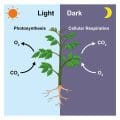

The primary gas that plants absorb during photosynthesis is carbon dioxide. They take this gas from the air through tiny pores in their leaves. This process is essential for plant growth and releases oxygen, which we need to live.
Understanding Photosynthesis: The Plant’s Food Factory
Photosynthesis is like a magic show happening inside every green leaf. It’s how plants create their own food. Think of it as their kitchen. They use simple ingredients from their surroundings to whip up energy-rich sugars. These sugars are what help them grow, bloom, and produce the fruits and vegetables we enjoy.
This amazing process relies on a few key things. Plants need sunlight, water, and a specific gas from the air. Without any of these, photosynthesis just can’t happen. It’s a delicate balance, much like following a recipe. Get one ingredient wrong or miss a step, and the dish won’t turn out right.
The entire system is incredibly efficient. Plants are masters at capturing light energy. They then use this energy to convert water and that special gas into glucose, which is a type of sugar. A vital byproduct of this food-making is also released back into the air.
My Own “Aha!” Moment with Plant Gas
I remember being in my backyard one summer afternoon. The sun was beating down, and my tomato plants were looking a bit droopy. I’d watered them, of course, but I started thinking about what else they needed. I recalled learning about photosynthesis in school, but the details felt fuzzy.
I sat there, watching a bee buzz around a bright red tomato flower. The air felt warm and thick. I thought about how much was happening unseen. The plants were working hard, converting sunlight into life. But what exactly were they “breathing in”? It felt like a puzzle I couldn’t quite solve just by looking.
That’s when I decided to really dig into it. I pulled out an old biology textbook and started reading. The diagrams were helpful, showing little arrows going into the leaves. Seeing that carbon dioxide arrow pointing in made it click. It wasn’t oxygen they were absorbing; it was the gas we exhale. It was such a simple, yet profound, realization. It changed how I looked at every plant from that day forward.
The Role of Carbon Dioxide
So, let’s focus on that key ingredient: carbon dioxide. This gas is all around us in the atmosphere. We exhale it when we breathe out. Cars, factories, and even natural processes like volcanic eruptions release it. While it’s a natural part of our air, too much of it can cause problems for the planet.
But for plants, carbon dioxide is a lifesaver. They have tiny openings on their leaves called stomata. Think of these like little mouths or pores. These stomata are usually on the underside of the leaves. They open and close to let gases in and out.
When stomata are open, carbon dioxide from the air enters the leaf. Water, which the plant has absorbed through its roots, is also inside the leaf. Then, with the help of sunlight captured by a green pigment called chlorophyll, the plant works its magic. It rearranges the atoms in water and carbon dioxide to make glucose (sugar) and oxygen.
The glucose is the plant’s food. It uses it for energy and to build its structure. The oxygen is released back into the air through the same stomata. It’s a beautiful cycle. Plants take in what we and other animals breathe out, and they give us back the oxygen we need to breathe in.
Did You Know?
Chlorophyll, the green stuff in plants, is what makes photosynthesis possible. It acts like a solar panel, capturing sunlight’s energy. Without chlorophyll, plants couldn’t use light to make food.
Why Not Oxygen?
It’s a common mix-up. We know plants give off oxygen, and we need oxygen to live. So, it’s easy to think they must be absorbing oxygen. However, that’s not the main gas for their food-making process. Plants do use oxygen, but not for photosynthesis. They use oxygen for something called respiration.
Respiration happens in all living things, including plants and animals. It’s how organisms break down sugars (like the glucose plants make) to release energy. This energy is needed for all life functions. Plants respire all the time, both day and night.
So, during photosynthesis (which happens only in the presence of light), plants absorb carbon dioxide and release oxygen. During respiration, they absorb oxygen and release carbon dioxide. However, the amount of oxygen they release during photosynthesis is much greater than the amount they absorb for respiration. This is why forests are often called the “lungs of the Earth.” They produce a net surplus of oxygen.
Contrast: Photosynthesis vs. Respiration
Photosynthesis:
Uses: Sunlight, Water, Carbon Dioxide
Produces: Glucose (Sugar), Oxygen
When: During daylight hours
Respiration:
Uses: Glucose (Sugar), Oxygen
Produces: Energy, Water, Carbon Dioxide
When: All the time (day and night)
The Science Behind the Stomata
Let’s look a bit closer at those stomata. They are truly remarkable. Each stoma is surrounded by two special cells called guard cells. These guard cells control the opening and closing of the stoma. They work like tiny bouncers at a club.
When there’s plenty of sunlight and water, the guard cells swell up. This makes them bend and pull away from each other. This action opens the stoma. It’s like opening a door to let fresh air in. This is when carbon dioxide can enter the leaf.
But if the plant is losing too much water (like on a very hot, dry day), the guard cells can lose water too. They become limp. This causes the stoma to close. This is a survival mechanism. It helps the plant conserve water and prevent wilting. However, it also stops carbon dioxide from entering, which slows down photosynthesis.
The number of stomata on a leaf can vary greatly. Some plants have thousands per square centimeter. Usually, they are more numerous on the underside of leaves. This helps reduce water loss from direct sunlight.
Quick Scan: What Plants Need
Sunlight: The energy source for photosynthesis.
Water: Absorbed by roots, travels to leaves.
Carbon Dioxide: Taken from the air through stomata.
Chlorophyll: Green pigment that captures sunlight.
The Importance of This Gas Exchange
The exchange of gases in plants is crucial for life on Earth. Photosynthesis, driven by carbon dioxide absorption, is the primary source of oxygen in our atmosphere. Without it, the air we breathe would be very different.
Think about the vastness of forests, the green cover of grasslands, and the algae in the oceans. All of these are performing photosynthesis. They are constantly taking in carbon dioxide and releasing oxygen. This process helps regulate the Earth’s climate by removing carbon dioxide, a greenhouse gas, from the atmosphere.
It’s a continuous, natural cycle. Animals and humans release carbon dioxide, and plants use it. Plants release oxygen, and animals and humans use it. This interdependence is what makes our planet so unique and habitable.
Real-World Scenarios
Imagine a farmer tending to a vast field of corn. The corn plants are diligently absorbing carbon dioxide from the air. The sunlight helps them convert it into sugars to grow tall and strong. This process directly impacts the yield the farmer will harvest.
Consider a city park. The trees and grass are working overtime, especially on a sunny day. They are cleaning the air by taking in pollutants and carbon dioxide. They are also producing the oxygen that city dwellers breathe in. This is why green spaces are so vital in urban areas.
In a greenhouse, growers control the environment. They might even pump extra carbon dioxide into the air. This can boost plant growth and crop yields. It shows how vital this gas is for plant productivity. They understand that more carbon dioxide can mean more growth, given enough light and water.
Observational Flow: A Plant’s Day
Morning: Sun rises. Stomata begin to open.
Daytime: Sunlight is strong. Carbon Dioxide enters leaves. Photosynthesis is at its peak, producing sugar and oxygen.
Evening: Sun sets. Stomata begin to close.
Night: Stomata are mostly closed. Respiration continues, using stored sugar and oxygen, releasing a small amount of Carbon Dioxide.
What This Means for You
Understanding which gas plants absorb helps us appreciate their role. It’s not just about pretty greenery. It’s about the very air we breathe. Knowing that plants use carbon dioxide highlights the importance of conservation. Protecting forests and green spaces helps maintain the balance of gases in our atmosphere.
It also explains why certain conditions affect plant health. If there’s not enough sunlight, water, or if pollution clogs the stomata, photosynthesis suffers. This can lead to weaker plants. It can also mean less oxygen production.
So, the next time you see a plant, remember the silent, vital work it’s doing. It’s taking in carbon dioxide and turning it into life. It’s a powerful reminder of nature’s intricate systems.
Quick Tips for Happy Plants
While we can’t directly control the carbon dioxide intake of our houseplants (beyond the natural air in our homes), we can ensure they have the other essentials.
Provide enough light: Most plants need bright, indirect light to photosynthesize effectively.
Water wisely: Don’t over or underwater. Check the soil moisture.
Use good soil: Well-draining potting mix helps roots absorb water and nutrients.
Allow air circulation: Good airflow helps prevent diseases and keeps leaves clean.
Consider a humidifier: Some plants thrive in higher humidity, which can help stomata function better.
Frequent Questions About Plant Gas Absorption
What gas do plants absorb the most?
Plants absorb the most carbon dioxide (CO2) from the atmosphere during photosynthesis. They use this gas as a key ingredient to create their own food.
Do plants absorb oxygen?
Yes, plants do absorb oxygen, but not for photosynthesis. They absorb oxygen for respiration, which is how they break down sugars to get energy. This happens all the time, day and night.
What gas do plants release during photosynthesis?
During photosynthesis, plants release oxygen (O2) as a byproduct. This is the gas that most animals and humans need to breathe.
Where do plants get carbon dioxide?
Plants get carbon dioxide from the air. It enters their leaves through tiny pores called stomata.
Why is carbon dioxide important for plants?
Carbon dioxide is vital for plants because it is one of the main raw materials they use, along with water and sunlight, to produce glucose (sugar) for energy and growth through photosynthesis.
Can plants survive without carbon dioxide?
No, plants cannot survive without carbon dioxide. It is an essential component for photosynthesis, the process by which they make their food. Without it, they cannot create the energy they need to live.
The Big Picture
So there you have it. The gas plants absorb for photosynthesis is carbon dioxide. It’s a simple answer to a complex and beautiful process. This gas exchange is the engine that powers much of life on our planet. It’s a constant, quiet miracle happening all around us. From the smallest blade of grass to the mightiest redwood tree, they are all working to create food and provide the oxygen we depend on. It’s a reminder of our deep connection to the natural world and the importance of protecting it.