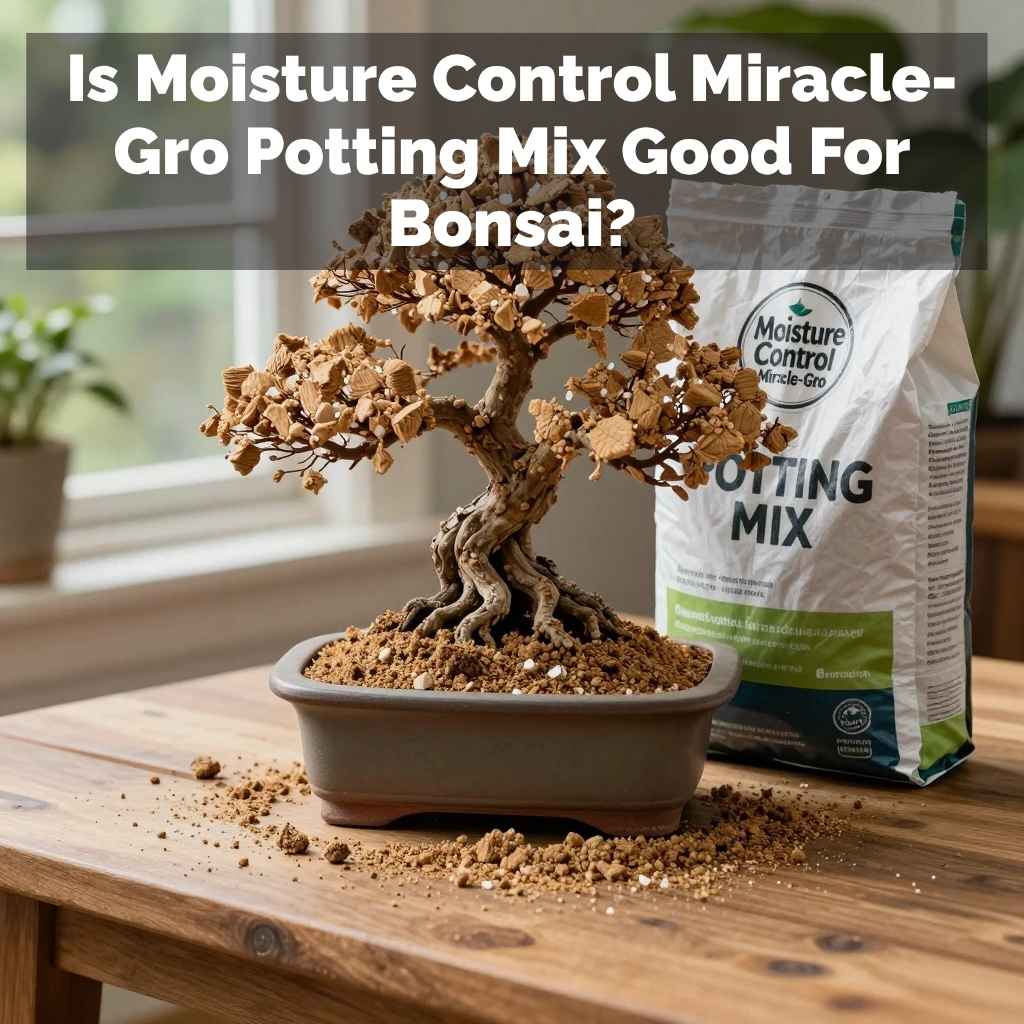
Is Moisture Control Miracle-Gro Potting Mix Good For Bonsai?
Dealing with your bonsai can feel like a puzzle sometimes. You want the best for these tiny trees. You search for the right soil.

Miracle-Gro
Miracle-Gro Moisture Control Potting Mix, 8 qt.…
- FEEDS UP TO 6 MONTHS: Miracle-Gro Moisture Control Potting Soil Mix feeds plants for up to 6 months and Grows Plants Twice As Big…
- MOISTURE CONTROL: This container planting soil protects against over and under watering and absorbs up to 33% more water than basi…
- FOR POTTED PLANTS: Use this outdoor potting soil mix gardening product with all types of container plants, including flowers, vege…
As an Amazon Associate I earn from qualifying purchases.
Readers comparing bonsai options may also find Can Potting Soil With Miracle-Gro Actually Work for Bonsai? useful before choosing a tree or pot.
Readers comparing bonsai options may also find Are Juniperus Horizontalis Bonsai Good For Beginners? useful before choosing a tree or pot.
Then you see a bag that says “moisture control.” It sounds good, right? But is it really good for your delicate bonsai? We’re here to help you figure this out.
Let’s dive deep and make sure your bonsai thrives.
Miracle-Gro Potting Mix with moisture control is generally not the best choice for bonsai trees. Bonsai require specific soil mixes that drain exceptionally well to prevent root rot, a common issue that moisture-retaining soils can exacerbate.
Understanding Bonsai Soil Needs
Bonsai are special. They live in small pots for a long time. This means their soil needs to do a lot of work.
It holds water, but it also lets extra water drain away fast. This is super important for healthy roots. Too much water stuck around the roots can make them rot.
Rotting roots are very bad for any plant, especially a bonsai.
Think of it like this. If you wore wet socks all day, your feet would get uncomfortable and maybe even sick. Roots are similar.
They need air and a chance to dry out a bit between waterings. The soil is their whole world. So, we need to pick the right soil to keep that world healthy and happy for them.

What is Miracle-Gro Potting Mix with Moisture Control?
Miracle-Gro is a popular brand. Many gardeners use their products. Their potting mixes are designed to help plants grow well.
The “moisture control” part means it’s made to hold onto water longer. This can be good for plants that like consistently damp soil. It often contains things like peat moss or special crystals that soak up water.
The idea is to reduce how often you need to water. This is handy for busy people or for plants that get thirsty quickly. It’s a helpful feature for many common houseplants.
However, bonsai are not like common houseplants. Their needs are very different. That’s where the problem can start for your bonsai.
Why Moisture Control is a Problem for Bonsai
Bonsai need sharp drainage. This means water should pass through the pot and out the bottom quickly. This stops water from building up around the roots.
If water stays too long, the roots can’t breathe. They can start to die or rot. This condition is called root rot, and it’s a major threat to bonsai health.
It can weaken the tree and eventually kill it.
Moisture control mixes do the opposite. They are designed to keep soil moist for longer periods. This is great for a tomato plant in a big garden pot.
But for a tiny bonsai in a shallow pot, it means water can sit there for days. This creates a perfect environment for fungi and bacteria to grow. These can attack the roots.
It’s a risk that bonsai enthusiasts try hard to avoid.
I remember working with a client who was new to bonsai. They had a beautiful little Juniper. They used a regular potting mix that said “holds moisture.” Within a few weeks, the needles started turning brown and brittle.
I asked about their watering habits. They said they only watered every few days because the soil felt moist. That’s when I knew.
The soil was keeping too much water. The roots were struggling. We had to repot it immediately into a proper bonsai mix.
It was a close call.
The Ideal Bonsai Soil Mix
So, what soil do bonsai actually need? It’s not just one thing. It’s usually a mix.
This mix aims for three main goals: drainage, aeration, and a bit of water retention. We want it to drain so fast that water just flows through. We want air pockets so roots can breathe easily.
And we want it to hold just enough water to keep the roots hydrated without drowning them.
Common ingredients in good bonsai soil include:
- Akadama: This is a hard-baked clay from Japan. It’s great for drainage and aeration. It breaks down over time, which also adds nutrients.
- Pumice: This is a volcanic rock. It’s very porous. It adds drainage and aeration. It’s light and doesn’t compact.
- Lava Rock: Similar to pumice, lava rock is porous. It improves drainage and aeration. It’s heavier than pumice.
- Organic Matter (in small amounts): Things like compost or fine bark can be added. They help hold a little moisture and nutrients. But it’s usually a small part of the mix for bonsai.
The exact mix can change depending on the type of bonsai tree. Some trees like it a bit wetter. Others need it to dry out more.
But the key is always excellent drainage. These components are what give the soil that gritty, free-draining texture that bonsai roots love.
Bonsai Soil Components: A Quick Look
Akadama: Clay granules for drainage and structure.
Pumice: Volcanic rock for aeration and light weight.
Lava Rock: Porous rock for drainage and stability.
Organic Compost (limited): For slight moisture and nutrient hold.
What About “All-Purpose” or “Cactus/Succulent” Mixes?
Some people might think of using an “all-purpose” potting mix. Others might consider a cactus or succulent mix. An all-purpose mix is often too heavy.
It tends to hold too much water. It’s usually made for plants in much larger containers. The soil particles are often too fine.
This can lead to compaction.
Cactus and succulent mixes are better. They usually have more sand or perlite. This helps with drainage.
However, they might still not be ideal for all bonsai. They might not have the right balance of aeration and water retention that a specific bonsai needs. They are a step in the right direction, though.
If you can’t find a dedicated bonsai mix, a good quality cactus mix might work in a pinch. But it’s best to aim for a true bonsai soil.
Can You “Modify” Miracle-Gro Potting Mix?
You might be wondering if you can just add things to the Miracle-Gro mix to make it work. You could try adding a lot of perlite or pumice to it. The goal would be to break up the heavy parts.
You want to make it drain much faster. This is possible to some extent. However, it’s hard to get the balance just right.
The base of the Miracle-Gro mix is still designed to hold moisture. Even with added perlite, it might still retain more water than ideal. You also risk diluting any nutrients that are in the mix too much.
Plus, you’re spending money on a mix that isn’t quite right. It’s often more straightforward and effective to buy a soil mix made for bonsai. This saves you the guesswork and potential mistakes.
I once saw someone try to “fix” a peat-based potting mix for a maple bonsai. They added so much perlite that the soil became very light. It looked okay at first.
But when they watered, the water just ran through the perlite and didn’t really wet the peat. The tree started to look dry very quickly. Then, when it finally did get wet, it stayed wet for too long.
The roots suffered from both extremes. It taught me that a balanced mix is key, not just adding one component.
Quick Check: Is Your Soil Draining?
Test: Water your bonsai thoroughly. Watch how quickly the water drains from the bottom.
Good Sign: Water flows out freely and quickly within a minute or two.
Bad Sign: Water pools on the surface or drips out very slowly. The soil looks muddy.
When is Moisture Control Slightly Okay (with major caveats)?
There are very few situations where a moisture-control mix might be considered for bonsai. This would typically be for specific species that naturally prefer consistently moist conditions. Think of some tropical species like Ficus or certain ferns.
Even then, it’s usually not a standard moisture-control potting mix. It’s more about using a custom mix that includes components that hold moisture without becoming waterlogged.
For example, a mix for a very wet-loving tropical bonsai might include a higher proportion of organic material like coco coir or fine bark. But it would still be combined with a large amount of grit like pumice or lava rock to ensure aeration. You would also need to adjust your watering schedule significantly.
You’d water more frequently, but still watch carefully for signs of overwatering.
It’s crucial to understand that “moisture control” on a bag of potting mix is for general plants. It’s not tailored for the very specific needs of bonsai. So, while there might be edge cases, for the vast majority of bonsai owners, this type of soil is best avoided.
It’s better to be safe than sorry when it comes to the roots of your bonsai tree.
Signs Your Bonsai Soil Isn’t Working
Your bonsai will tell you if its soil is not right. You just need to know what to look for. These signs can be subtle at first.
But they can become more serious if ignored. They often point to problems with watering or soil drainage.
Yellowing Leaves: This is a common sign. If leaves turn yellow and fall off, it could mean the roots are drowning. The roots can’t absorb nutrients properly when they’re waterlogged.
This can happen even if you’re watering “correctly” for a plant that likes damp soil.
Wilting: This might sound strange. Why would a plant wilt if it has too much water? When roots are drowning, they start to die.
Damaged roots can’t take up water. So, the plant shows signs of being dry and wilting, even though the soil is wet. It’s a sign of root distress.
Foul Smell: If the soil smells sour or like rot, it’s a clear indicator of anaerobic conditions. This means there’s no oxygen in the soil. This is usually due to waterlogging and the decay of organic matter.
It’s a serious warning sign.
Fungus or Mold: Seeing mold or fungus growing on the soil surface is another sign. This thrives in damp, stagnant conditions. While not all surface mold is harmful, it indicates that the soil is staying too wet for too long.
Slow Growth or Stunted Growth: Healthy roots lead to healthy growth. If your bonsai isn’t growing well, or its leaves are small and weak, the soil might be the culprit. Poor drainage or aeration can prevent roots from developing properly.
My Experience with Overly Wet Soil
I remember my first really difficult bonsai. It was a Ficus. I’d read that Ficus likes consistent moisture.
So, I was very careful not to let it dry out. I used a generic potting mix that felt a bit dense. I watered it whenever the top of the soil looked dry.
I thought I was doing a great job.
Then, I started noticing a few leaves yellowing and dropping. I got a bit worried. I checked the soil.
It still felt damp. I thought maybe I wasn’t watering enough, so I watered it again! Big mistake.
The yellowing got worse. I could smell a faint, unpleasant odor from the pot. Panic set in.
I carefully took the tree out of the pot. The roots were dark, mushy, and fragile. They smelled awful.
It was root rot, plain and simple. I had almost lost the tree because my soil was holding too much water. I had to trim away all the rotted roots.
I repotted it into a much grittier mix. It took a long time for that Ficus to recover. That experience taught me a vital lesson about bonsai soil.
Drainage is king, even for trees that like moisture.
When to Repot Your Bonsai
Frequency: Young, fast-growing bonsai: every 1-2 years.
Frequency: Older, slower-growing bonsai: every 3-5 years.
Signs: Roots growing out of the drainage holes.
Signs: Water not draining well (soil stays wet).
Signs: Tree looks generally unhealthy or unstable.
What This Means for Your Miracle-Gro Potting Mix
So, what does all this mean for that bag of Miracle-Gro Potting Mix with Moisture Control you might have? It means it’s likely not the best choice for your bonsai. While it’s great for many other plants, the properties that make it “moisture control” work against the needs of bonsai roots.
You’re risking root rot and other problems.
Instead of using it directly, you should look for specialized bonsai soil. You can buy pre-mixed bonsai soil from reputable garden centers or online suppliers. Alternatively, you can mix your own using components like akadama, pumice, and lava rock.
This gives you the control you need to provide the perfect environment for your bonsai.
When to Worry and When It’s Okay
You should worry if you’re using a standard potting mix, especially one designed to hold moisture, for your bonsai. The signs of distress we talked about – yellowing leaves, wilting, bad smells – are all reasons to be concerned. If you notice these, it’s time to check the soil and potentially repot.
It’s okay if you’re using a mix specifically designed for bonsai. It’s also okay if you’ve successfully created your own bonsai soil mix. Even with the right soil, you still need to water correctly.
Understanding your specific tree’s needs and its soil is the key. Don’t be afraid to check the soil moisture by finger or by lifting the pot. It’s better to check too often than not enough.
Quick Fixes and Tips for Better Soil
If you’ve already used Miracle-Gro or a similar mix and your bonsai seems fine, don’t panic. However, keep a very close eye on it. Water very carefully.
Let the top layer of soil dry out more than usual before watering again. You might get away with it for a while, especially if your bonsai is very young and robust.
Tip 1: Drainage Hole Check Always ensure your bonsai pot has adequate drainage holes. If it doesn’t, drilling some carefully might be necessary, or you’ll need to repot into a suitable pot.
Tip 2: Aerate Gently If you suspect your soil is a bit too compacted, you can gently poke a chopstick or skewer down into the soil. Do this carefully to avoid damaging roots. This creates tiny air channels.
Tip 3: Monitor Watering Adjust your watering. Water thoroughly when needed, but allow more drying time between waterings than you might with other plants.
Tip 4: Consider Repotting Soon If your bonsai is in a questionable soil mix, plan to repot it into a proper bonsai soil within the next growing season. This is the best long-term solution.
Tip 5: Research Your Tree Species Different bonsai trees have slightly different soil preferences. Research your specific tree species to understand its ideal soil requirements.

Frequent Questions About Bonsai Soil and Miracle-Gro
Can I use Miracle-Gro potting soil for any bonsai?
Generally, no. Standard Miracle-Gro potting mixes, especially those with moisture control, are not ideal for bonsai. They tend to retain too much water, which can lead to root rot.
Bonsai require well-draining soil. It’s best to use a specialized bonsai soil mix.
What is the best soil for a Ficus bonsai?
Ficus bonsai, while preferring consistent moisture, still need excellent drainage. A good mix might include akadama, pumice, and a small amount of organic compost or coco coir. The key is to have a mix that drains well but also retains some moisture.
Avoid heavy, water-retaining potting soils.
How often should I water my bonsai if I’m using a moisture-control mix?
If you are stuck using a moisture-control mix, you should water much less frequently. Wait until the top inch or two of soil feels dry to the touch. Be very cautious, as this soil is prone to overwatering.
Always check the moisture level before watering.
Can I mix perlite into Miracle-Gro potting mix for my bonsai?
You can try to improve drainage by adding a significant amount of perlite or pumice to Miracle-Gro potting mix. However, it’s difficult to achieve the correct balance this way. The base of the mix still aims to retain moisture, which may not be ideal.
Buying a dedicated bonsai soil is a more reliable solution.
What are the signs of root rot in a bonsai tree?
Signs of root rot include yellowing leaves, wilting (even when the soil is wet), stunted growth, and a foul smell coming from the soil. The roots themselves may appear dark, mushy, and fragile instead of firm and white or light brown.
Where can I buy good bonsai soil?
You can find bonsai soil at many local garden centers, nurseries, or specialized horticultural supply stores. Online retailers that focus on bonsai supplies are also a great source for high-quality pre-mixed bonsai soil or individual components.
Conclusion: Choose Wisely for Your Bonsai
Your bonsai is a living work of art. It deserves the best care. While Miracle-Gro potting mix with moisture control is a fine product for many common plants, it’s usually not the right choice for bonsai.
The risk of root rot and poor aeration is simply too high. Opt for a specialized bonsai soil mix to ensure your tiny tree has a healthy foundation for growth and beauty. Happy growing!
Related pick: Check today's price on Amazon