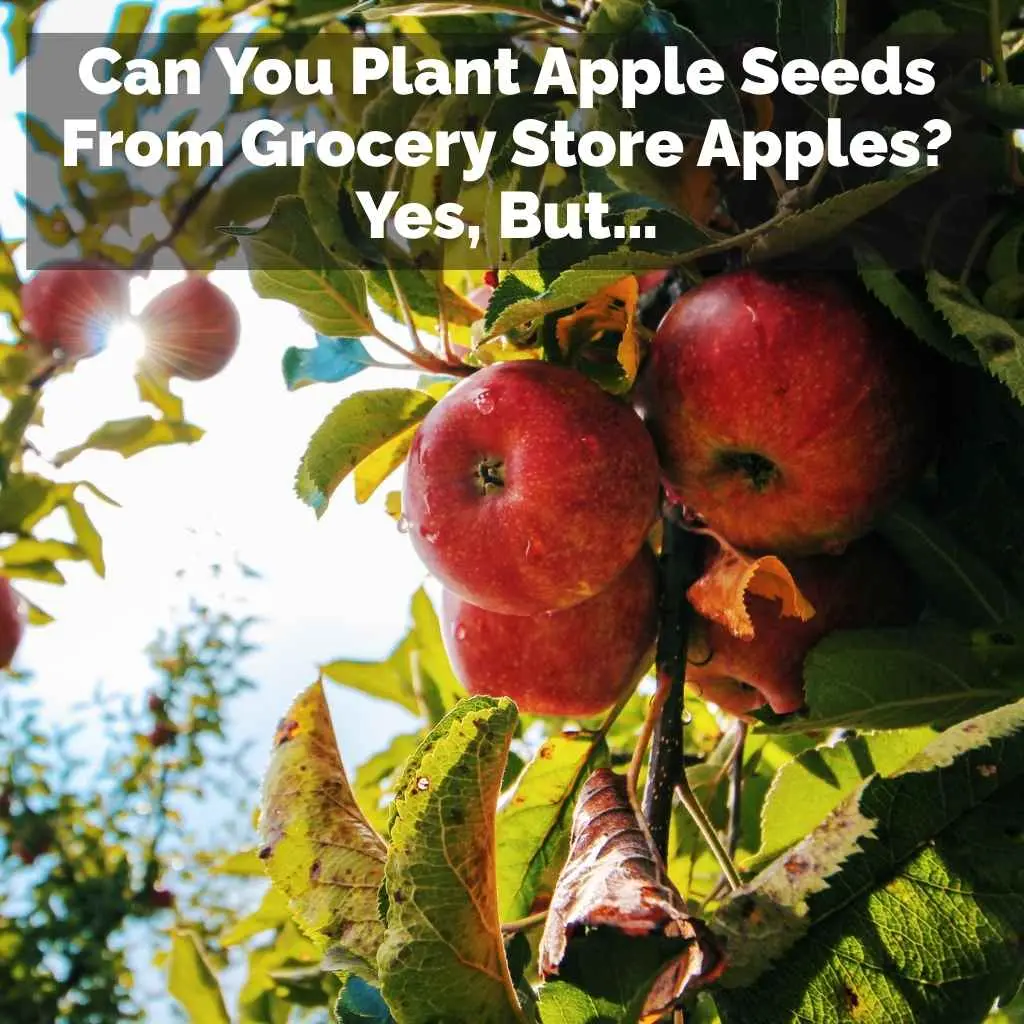
Can You Plant Apple Seeds From Grocery Store Apples? Yes, But…
So, you’ve been enjoying a crisp apple from the grocery store. Maybe you sliced it up for a snack, baked a pie, or just ate it on the go. As you get to the core, you notice those little seeds.

Seeds Of Strength
Red Apple Seed 100 pcs Pack -…
- Fresh Orchard in Your Backyard: Immerse yourself in the experience of growing your very own apple orchard, providing you with an e…
- Crisp and Juicy Delights: Enjoy the crispness and juiciness of homegrown apples, far superior in taste and quality compared to sto…
- Health and Nutritional Benefits: Indulge in the nutritional goodness of apples, packed with fiber, vitamins, and antioxidants that…
As an Amazon Associate I earn from qualifying purchases.
For a related plant-care question, Plant Pepper Seeds From a Fresh Pepper? Yes, Here's How gives readers a more focused follow-up.
For a related plant-care question, Can You Plant Black-Eyed Susan Seeds In The Fall? Yes, But… gives readers a more focused follow-up.
For a related plant-care question, Why Is It Illegal To Plant Pink Pineapple Seeds? Explained gives readers a more focused follow-up.
A thought pops into your head: “Can I plant these and grow my own apple tree?” It’s a wonderful, almost magical question. You imagine a whole orchard springing up from your kitchen scraps. But, like many things in gardening, the answer isn’t as simple as just popping a seed in the dirt.
Let’s dig into what really happens when you try to grow an apple tree from a seed you found in a supermarket apple. We’ll look at the science, the fun, and the reality of it all.
Growing Apples: More Than Just Seeds
The idea of growing a whole new apple tree from a seed you find in a store-bought apple is really exciting. Who wouldn’t want to do that? It feels like a direct link to nature, a way to bring a bit of the farm right into your backyard.
You might have seen it in movies or heard stories. It paints a picture of simple, natural growth. But the world of apple trees is a bit more complicated.
It involves a lot of careful planning and specific methods to get the kind of apples we love to eat.
Think about the apples you buy. They all look so perfect. They taste just right, too.
That’s not an accident. These apples are the result of something called grafting. It’s a way that farmers make sure they get a tree that produces the exact same kind of apple, year after year.
They take a piece of a known good apple variety and attach it to the root of another tree. This way, the fruit that grows is always the same. Planting a seed from one of these apples doesn’t guarantee that same perfect apple.
It’s a bit like a surprise gift from nature.
So, can you plant those seeds? Absolutely! It’s a fun project.
It’s great for kids to learn about plants. But if your goal is to get a tree that gives you the same Fuji, Gala, or Honeycrisp apples you just ate, you’ll likely be disappointed. The seeds from grocery store apples are a genetic mix-up.
They are the result of pollination between different apple varieties. This means the tree that grows from the seed will be unique. It will have its own traits, which might be wonderful, or they might be… well, not so wonderful for eating.
Most of the time, a seed-grown apple tree will produce fruit that is small, sour, or even bitter. These are often called “crabapples” or just not very tasty apples. Commercial apple growers don’t rely on seeds for their crops.
They use grafting to ensure consistency and quality. This is a key point many people miss when they first get excited about planting apple seeds from the grocery store. It’s important to know the real deal so you don’t get frustrated later on.
We’ll cover all the details about why this happens and what you can expect.
Planting seeds from grocery store apples can lead to a new apple tree, but the fruit produced will likely be different from the parent apple due to genetic variation. These trees are grown from seed and won’t be true to the original variety.

What Makes an Apple an “Apple”? The Science Bit
Apples are amazing fruits. We have thousands of different kinds, called varieties. Each variety has a unique taste, color, and texture.
Think about a Granny Smith compared to a Red Delicious. They are both apples, but they are very different. This difference comes from their genes.
Genes are like tiny instruction manuals inside every living thing. They tell the plant how to grow and what to be like.
When apple trees make seeds, they are doing it to reproduce. They mix their genes with another apple tree. Usually, this happens through pollination.
Bees or other insects carry pollen from one flower to another. Pollen contains genes from the male part of the flower. This mixing of genes is how nature creates variety.
It helps species adapt and survive over time. For apples, this means that each seed inside an apple is a potential new tree with a unique blend of genes.
The apples you buy at the store come from trees that were carefully chosen. Farmers select trees that produce apples with specific traits. They want them to be sweet, firm, and good for shipping.
To keep these special traits, they don’t use seeds. Instead, they use a method called grafting. Grafting is like taking a cutting from the desired apple tree and attaching it to the root system of another sturdy apple tree.
This way, the new branch grows into a tree that is genetically identical to the parent tree.
So, if you plant a seed from a Honeycrisp apple, the tree that grows will not be a Honeycrisp tree. It will be something new. Its genes are a mix of the Honeycrisp parent and whatever apple tree pollinated its flower.
This is why seed-grown apples are often a gamble. The seeds contain a lottery of genetic possibilities. Most of these possibilities don’t result in an apple that’s as good as the ones we buy.
This is a fundamental concept in understanding why planting grocery store apple seeds is more of an experiment than a reliable way to grow fruit trees.
Commercial apple growers rely on this knowledge. They buy grafted trees from nurseries. These nurseries guarantee that the trees will produce the specific variety they promise.
They don’t plant seeds because they can’t control the outcome. The seeds are unpredictable. This genetic uncertainty is the main reason why apple seeds from the grocery store are not the way to get a specific apple variety like Fuji or Gala.
It’s a genetic lottery, and most tickets aren’t winners for delicious eating apples. Understanding this genetic makeup helps set realistic expectations.
The seeds are technically viable. They contain the building blocks for a new apple tree. However, their future fruit is highly unpredictable.
This is because apples are naturally cross-pollinated. A flower needs pollen from a different apple variety to make a fertile seed. So, the seed inside your Gala apple is a product of Gala genes and the genes of whichever apple variety the bee visited before or after the Gala flower.
This cross-pollination is what creates the genetic diversity that makes each seed unique. It’s a biological fact that directly impacts the outcome of planting those seeds.
My Own Seed-Growing Adventure
I remember one summer, I was really inspired by a gardening show. They talked about growing your own food from scratch. I had just finished a beautiful, bright red apple.
I looked at the seeds in the core. My mind immediately went to “what if?”. What if I could grow a whole tree from this single seed?
I imagined a small tree in my yard, full of perfectly red apples, just like the one I ate.
So, I carefully scooped out a few of the plumpest seeds. I rinsed them off and let them dry a bit. Then, I did what seemed like the logical thing.
I poked them into some potting soil in a small pot. I put the pot on my sunny windowsill. I watered them regularly.
I felt like a real gardener. It was exciting to see tiny green sprouts push through the soil a few weeks later. They looked so delicate and full of promise.
I felt a surge of pride. “This is going to be amazing,” I thought.
Those little seedlings grew. They looked like tiny apple trees. I nurtured them, moved them to bigger pots, and dreamed of the fruit they would one day bear.
I even imagined them giving me apples for my morning oatmeal. I pictured the crisp bite, the sweet juice. Fast forward a few years.
These trees were finally big enough to produce fruit. I waited with bated breath. The tiny blossoms appeared, then small green nubs.
And finally, tiny apples started to form. They were small. And the color was a dull, sort of brownish-red, not vibrant like I’d hoped.
I picked one, took a bite, and… pucker! It was incredibly tart. It tasted nothing like the apple I had planted the seed from.
It was more like a sour berry than an apple. My dream of a perfectly red, sweet apple tree from a grocery store seed had not come true. It was a bit disappointing, honestly.
But it was also a powerful lesson. It taught me that nature has its own plans. And for apples, those plans involve a lot more than just the seed.
That experience didn’t stop me from gardening. It just changed my expectations. Now, I appreciate seed-grown trees for what they are: a genetic experiment.
They might produce edible fruit, or they might not. They might produce beautiful flowers. They might even grow into a strong, healthy tree that adds beauty to the landscape.
But they won’t reliably produce the specific variety you bought. It’s a journey of discovery, not a guarantee of a specific outcome. This is the experience many gardeners have when they first try planting apple seeds from the store.
Seedling vs. Grafted: What’s the Difference?
When you talk about apple trees, there are two main ways they come to be: from a seed or from a grafted tree. Understanding this difference is key to knowing what to expect from your planting efforts. It’s not just a small detail; it’s the whole story behind why your grocery store apple seeds behave the way they do.
Apple Tree Origins: Seedling vs. Grafted
Seedling Apple Trees:
- Grow from seeds.
- Genetically unique.
- Fruit taste and quality are unpredictable.
- May take 7-10 years to produce fruit.
- Often produce smaller, tarter fruit (like crabapples).
Grafted Apple Trees:
- Made by joining two parts: a rootstock and a scion (branch from a specific variety).
- Fruit is identical to the parent variety of the scion.
- Reliable fruit production.
- Fruit quality and taste are known.
- Can produce fruit much sooner (3-5 years).
Think of it like this: imagine you have a favorite cookie recipe. If you bake a batch of cookies and then try to plant a crumb, you won’t get a cookie tree that grows the exact same cookies. The crumb is just a small piece.
The actual cookie recipe is the genetic code. For apple trees, the seed is like that crumb. It has the potential to grow something, but it’s a brand new mix of genes.
A grafted tree is like buying a cookie from a bakery that guarantees it uses that specific recipe. The bakery takes a piece of the original cookie dough (the scion) and bakes it. It will taste exactly like the original.
When you buy an apple tree from a nursery for your orchard, it’s almost always a grafted tree. This ensures you get the apples you want, like Gala, Fuji, or Granny Smith. The nursery has done the grafting work to make sure the tree’s fruit will be true to its name.
This is why planting seeds from your grocery store apple is such a gamble. You’re planting a seedling. The tree that grows will be a brand new, unique apple variety.
It might be delicious, or it might be something you wouldn’t want to eat. There’s no way to know until the tree fruits, which can take many years. This is a crucial point for anyone hoping to harvest their own apples.
The effort and time involved in growing from seed mean you should have patience and be open to surprises. It’s a different kind of reward than a predictable harvest.
The seed contains the genetic material from both parent trees involved in pollination. So, the resulting apple is a hybrid, a completely new entity. This genetic shuffling is what makes sexual reproduction exciting for nature, but it’s a challenge for fruit growers who want consistency.
The traits like sweetness, acidity, size, color, and disease resistance are all determined by this genetic lottery. That’s why you won’t find commercially grown apples being produced from seed for the market. The consistency of grafted trees is vital for the industry.
The Journey from Seed to Sapling
So, you’ve decided you want to give planting apple seeds a try. Even if you know the fruit won’t be like the store-bought apple, the process itself can be very rewarding. It’s a fun experiment and a great way to connect with nature.
Here’s how you can get your seeds ready and give them the best chance to sprout.
Getting Your Apple Seeds Ready
1. Collect and Clean:
- Take out the seeds from a ripe apple.
- Rinse them thoroughly under cool water.
- Remove any bits of apple flesh.
2. Stratification (Winterizing):
- Apple seeds need a cold period to break dormancy. This is called stratification.
- Mix seeds with a damp (not wet) paper towel or peat moss.
- Place the mix in a sealed plastic bag or container.
- Store in the refrigerator (not the freezer) for 8-10 weeks.
- Check the paper towel every week or two to ensure it stays damp.
3. Planting:
- After stratification, plant the seeds in small pots.
- Use a good quality potting mix.
- Plant seeds about 1/2 inch deep.
- Keep the soil moist and warm.
- Place in a sunny spot.
You might see little sprouts in a few weeks. Or it might take longer. Be patient!
Once you have a small seedling, you can keep it in the pot for a while. As it grows, you’ll want to give it more space. This usually means moving it to a larger pot.
Eventually, if you have the space and the climate is right, you can plant it outside.
It’s important to remember that apple trees grown from seed need time. They won’t produce fruit for many years, often 7 to 10 years or even longer. This is a significant commitment.
During this time, the tree is growing its roots and its structure. It’s becoming a mature tree. The fruit it eventually bears will be its own unique variety.
It might be small and tart, or it could be something surprisingly good. But it won’t be the apple you originally got the seed from. This long wait is part of the gamble.
The soil needs to be just right. It needs to drain well. Apple trees don’t like wet feet.
They need sunshine too. Lots of it. Most apple varieties need at least 6-8 hours of direct sunlight per day.
This is why choosing the right spot for planting is important. If you live in a region with harsh winters, you’ll need to protect your young tree. Winter can be tough on a new sapling.
Proper care during these early years is crucial for its survival and eventual growth.
The process of stratification mimics what happens naturally in the wild. Seeds fall in autumn and are exposed to cold temperatures through winter. This cold period tells the seed that spring is coming and it’s time to grow.
Without this cold treatment, many apple seeds won’t germinate. So, it’s a vital step in helping them sprout indoors. It’s like giving them a head start on the natural cycle.
This is a common practice for many temperate climate fruit seeds.
What Kind of Fruit Can You Expect?
This is the big question, isn’t it? What will the apples from your seed-grown tree actually taste like? As we’ve discussed, they will be a surprise.
They will be genetically unique. Most of the time, the fruit from these trees is not what we would consider high-quality for eating fresh. It’s a known fact among horticulturists and gardeners that the offspring of a very flavorful apple are often not as good.
This is a general rule in genetics.
So, what are the possibilities? Here’s a breakdown of what you might end up with:
Possible Outcomes for Seed-Grown Apples
- Crabapples: These are often small, tart, and sometimes bitter. Many seed-grown apples fall into this category. They might be okay for jelly or cider but not for eating raw.
- Usable but Not Great: Some seeds might produce apples that are edible. They could be tart or bland. They might be okay in baking or cooking, but they won’t be the star of the show.
- A New Variety: Very rarely, a seed-grown apple might turn out to be surprisingly good. It could have a unique flavor and texture. This is how new apple varieties are sometimes discovered! But this is the exception, not the rule.
- Non-Fruiting Tree: It’s also possible the tree grows but never produces fruit, or the fruit is so small and unappetizing it’s not worth mentioning.
Commercial apple growers aim for consistency. They need to know exactly what kind of apple they are selling. A Fuji apple tree always produces Fuji apples.
This is because it’s grafted. The seed-grown tree is an experiment. It’s like adopting a puppy from a mixed-breed rescue.
You love the puppy, but you don’t know exactly what breeds went into it. You can guess, but you won’t know for sure.
The term “heirloom” often comes up with gardening. Heirloom fruits and vegetables are varieties that have been passed down for generations. They are usually open-pollinated.
However, even heirloom apples typically come from grafting. The variety itself was developed from a seed long ago, but then it was propagated through grafting to ensure purity. So, “heirloom” doesn’t mean it came directly from a seed found in a modern grocery store.
The sweetness, acidity, and aroma are all determined by the specific genes the seed inherits. Since apple trees are cross-pollinated, the seeds are highly heterozygous. This means they have a wide mix of genes.
This genetic diversity is great for the species in the wild. It allows adaptation. But for a gardener wanting a specific apple, it’s the main challenge.
The parent apple from the store is just the “mother” tree. The “father” tree is unknown, and its contribution is significant. The resulting apple is a gamble on that unknown father’s genes.
When to Plant: Timing is Everything
The best time to start thinking about planting apple seeds from your grocery store apple is actually after you’ve enjoyed the apple. The seeds need a period of cold to break their dormancy. This process is called stratification.
So, collecting them in the fall or winter is ideal, as you can then begin the stratification process right away.
Here’s a general timeline for planting:
Apple Seed Planting Timeline
Late Fall / Winter:
- Enjoy your apple.
- Collect and clean seeds.
- Start stratification (refrigerator).
Late Winter / Early Spring (after 8-10 weeks of cold):
- Plant stratified seeds indoors in pots.
- Provide warmth and moisture.
Spring:
- Seeds sprout.
- Keep seedlings indoors or in a protected area.
Late Spring / Early Summer (when frost danger has passed):
- Acclimate seedlings to outdoor conditions.
- Plant outdoors in a prepared spot.
7-10+ Years Later:
- Your tree may finally produce fruit.
Starting seeds indoors is generally recommended, especially if your climate has unpredictable spring frosts. This gives the young plants a sheltered start. You want to avoid planting them directly outside until the danger of frost has completely passed.
Young apple seedlings are delicate and can be easily damaged by cold weather. They need consistent warmth to thrive.
The process of stratification is crucial. If you skip it, or don’t stratify them long enough, the seeds are unlikely to germinate. They need that cold treatment to signal that it’s time to grow.
Think of it as a natural cue from the changing seasons. Without that cue, the seed’s internal clock won’t tell it to sprout. So, patience and following the stratification steps are key to success.
It’s a bit like setting an alarm for spring.
When you do plant the seeds, use a good quality potting mix. It should be light and drain well. This helps prevent the seeds from rotting.
Overwatering is a common mistake, so make sure the pot has drainage holes. The soil should be kept consistently moist, but not waterlogged. The environment should be warm, ideally around 70°F (21°C), to encourage germination.
Once they sprout, they need plenty of light, so a sunny window or grow lights are necessary.
Remember that these trees will grow large. Even dwarf rootstocks, which are used in grafting, result in trees that are larger than a houseplant. A full-sized apple tree can reach 20-30 feet or more in height and width.
So, even if you are just planting seeds as an experiment, think about the long-term space requirements. This isn’t a project for a tiny balcony unless you plan to keep the tree small through pruning and container growing, which itself is an advanced gardening technique.
Environmental Factors for Growth
Once your apple seedling is ready to go outside, or if you are lucky enough to have a climate where direct sowing after stratification is possible, you need to think about the environment. Apple trees, even those grown from seeds, have specific needs to thrive. These needs relate to where you plant them, how much sun they get, and the quality of the soil.
Sunlight: Apple trees need a lot of sun. Aim for a spot that gets at least 6 to 8 hours of direct sunlight every day. More sun generally means better growth and, eventually, better fruit production.
If your tree doesn’t get enough sun, it might grow tall and leggy, and it will be much less likely to produce flowers and fruit.
Soil: Good soil is vital. Apple trees prefer well-draining soil. This means that when it rains, the water shouldn’t sit around the roots for too long.
Soggy soil can lead to root rot, which is a death sentence for apple trees. If your soil is heavy clay, you might need to amend it with compost and other organic matter to improve drainage. You can also plant on a slight mound to help water run off.
Climate: Apple trees are temperate climate trees. This means they need a certain number of “chill hours” during the winter to set fruit properly. Chill hours are the total number of hours below a certain temperature (usually 45°F or 7°C) during winter.
Different apple varieties have different chill hour requirements. While you can’t predict the fruit quality of a seed-grown tree, its ability to produce fruit at all will depend on whether your climate provides enough winter chill.
Water: Young trees need consistent watering, especially during their first few years. Water deeply, but less frequently, to encourage roots to grow deeper into the soil. As the tree matures, it becomes more drought-tolerant, but during dry spells, even established trees benefit from supplemental watering.
The amount of water needed will depend on your climate and soil type.
Protection: Young trees are vulnerable to pests, diseases, and damage from animals like deer or rabbits. You may need to use guards or fencing to protect the trunk from gnawing. Proper pruning techniques are also important for shaping the tree and promoting good air circulation, which can help prevent fungal diseases.
For seed-grown trees, their genetic makeup might also make them more or less resistant to certain local pests and diseases compared to common commercial varieties.
These environmental factors are important for any apple tree, but for a seed-grown tree, they are critical. Since the tree’s genetics are unknown, giving it the best possible growing conditions maximizes its chances of survival and eventual fruiting. You are essentially giving its unique genetic potential the best chance to express itself.
This includes providing a healthy environment where it can establish a strong root system and healthy canopy. It’s about setting the stage for nature to do its unpredictable work.
Is It Worth Planting Grocery Store Apple Seeds?
So, the big question: is it worth the effort to plant those seeds from the apples you buy at the store? My answer, after years of gardening and experimenting, is yes, but with a very clear understanding of what you’re getting into.
For the Experience: If you’re looking for a fun project, especially with kids, then absolutely. It’s a fantastic way to teach about plant life cycles, patience, and genetics in a hands-on way. Watching a tiny seed sprout and grow into a tree is incredibly rewarding.
It’s about the journey of growth and discovery, not necessarily the destination of delicious fruit.
For the Genetics Lesson: It’s a living biology lesson. You’ll learn firsthand about genetic variation and why not all seeds produce true-to-type plants. This is a core concept in horticulture and genetics.
Understanding this helps you appreciate the science behind the perfect apples we find in stores.
For a Unique Tree: You will create a truly unique tree. It will have its own characteristics. It might not produce fruit you love to eat, but it could become a beautiful shade tree, or produce small, tart apples that are perfect for making jelly or homemade cider.
It’s a chance to contribute a new, albeit likely unproven, genetic line to the world.
If You Expect Specific Apples: If your goal is to have a tree that reliably produces Fuji, Gala, or Honeycrisp apples, then planting seeds from the grocery store is not the way to go. You will be disappointed. For that, you need to buy grafted trees from reputable nurseries.
My advice is to approach it with curiosity and a spirit of experimentation. Plant the seeds, nurture the seedlings, and see what happens. Enjoy the process of watching a tree grow.
Celebrate the small victories, like the first sprout or the first blossom. When it finally fruits, taste it with an open mind. It might not be your new favorite apple, but it will be your apple tree.
That’s a special kind of magic all on its own. It’s about the satisfaction of nurturing life and observing nature’s incredible diversity.
Remember that the journey from seed to fruit can take a decade or more. This means it requires long-term commitment. If you are willing to invest that time and effort, and you are prepared for an unknown outcome, then planting grocery store apple seeds can be a very rewarding endeavor.
It’s a project that teaches patience, resilience, and the wonders of the natural world. It’s a living testament to the fact that nature loves to surprise us, and that sometimes, the most interesting things come from the unexpected.

Frequently Asked Questions About Planting Apple Seeds
Can I really grow any apple tree from grocery store seeds?
You can grow an apple tree, yes. But it will be a new, unique variety. It won’t be the same kind of apple you ate.
This is because apple seeds are the result of cross-pollination, creating a new genetic mix.
How long does it take for a seed-grown apple tree to produce fruit?
It can take a long time, often 7 to 10 years, or even more. Some trees may never produce fruit, or the fruit might not be edible. It requires significant patience.
Will my seed-grown apple tree taste like the apple I got the seeds from?
No, almost certainly not. The seeds carry genes from both the parent apple and the pollen donor tree. This results in a completely new and unpredictable flavor profile.
What are the best conditions for germinating apple seeds?
Apple seeds need a cold period (stratification) for 8-10 weeks, typically in a refrigerator. After that, plant them in moist soil in a warm, sunny location. Consistent moisture and warmth are key.
Can I plant apple seeds directly in the ground outside?
It’s generally better to start them indoors after stratification. This gives them a protected start. Plant them outside only after the danger of frost has passed and the soil has warmed up.
Direct sowing without stratification is unlikely to work.
What if my seed-grown apple tree produces bad fruit? Can I fix it?
If the fruit is not good, you can’t “fix” the tree itself because its genetics are set. However, you could potentially graft a known good variety onto the tree’s branches. This is a more advanced gardening technique.
Final Thoughts on Your Apple Seed Journey
So, planting seeds from grocery store apples is a fascinating experiment. It’s a lesson in genetics and patience. You can absolutely grow a tree.
Just remember, it’s a surprise package from nature. You won’t get the same apple you bought. But you will get a new tree.
And that’s pretty amazing in itself. Enjoy the process of learning and growing. It’s a rewarding adventure, no matter what kind of apples your tree eventually yields.
Related pick: Check today's price on Amazon