Do Plants Produce Oxygen As A Waste Product Of Photosynthesis?
Plants produce oxygen as a crucial byproduct of photosynthesis. This process converts light energy into chemical energy for the plant. Oxygen is released into the atmosphere when water molecules are split. It’s a vital part of plant life and essential for most other life on Earth.

Cool Springs Press
The Plant Propagator's Bible: A Step-by-Step Guide…
As an Amazon Associate I earn from qualifying purchases.
For a related plant-care question, Why Do Plants Algae And Microorganisms Conduct Photosynthesis? gives readers a more focused follow-up.
For a related plant-care question, Do Plants Use Oxygen When They Are Not Photosynthesizing? gives readers a more focused follow-up.

The Science Behind Plant Oxygen Production
Plants have an amazing ability. They can create their own food. This is called photosynthesis. It’s like magic, but it’s science. This process happens mostly in the leaves. Tiny openings on the leaves let in air. These openings are called stomata. Plants need a few things for photosynthesis. They need sunlight, water, and carbon dioxide. Sunlight gives them energy. Water comes up from the roots. Carbon dioxide comes from the air.
Inside the plant’s leaves are special parts called chloroplasts. These are like tiny solar panels. They contain a green stuff called chlorophyll. Chlorophyll is what makes leaves green. It also helps capture the sun’s light energy. This energy is the key to the whole process. It powers the conversion of simple ingredients into food for the plant.
Photosynthesis has two main stages. The first stage needs light. It’s called the light-dependent reaction. During this stage, light energy splits water molecules. This is where oxygen is made. The plant uses the energy from the sun. It also releases oxygen gas. This oxygen is what we breathe. It’s a waste product for the plant. But it’s a gift for us.
The second stage doesn’t directly need light. It’s called the light-independent reaction. Or sometimes it’s called the Calvin cycle. In this stage, the plant uses the energy captured earlier. It combines carbon dioxide from the air. This creates sugars. These sugars are the plant’s food. They provide energy for the plant to grow. They also help it build new leaves and stems.
So, to be clear, oxygen isn’t the main goal for the plant. The main goal is to make sugars for food. The oxygen is something left over. It’s released into the air through those same stomata. It’s a wonderful coincidence for the rest of us. This constant release of oxygen by plants is what makes our planet habitable.

What Exactly is Photosynthesis?
Photosynthesis is the process. Plants use sunlight, water, and carbon dioxide. They turn these into food. This food is sugar. It’s also oxygen. Think of it like a plant’s kitchen. The kitchen uses a special recipe. The ingredients are simple. The energy comes from the sun. The finished meal is energy-rich sugar. The leftover item is oxygen.
Let’s break down the main players.
First, sunlight. This is the power source. Without sun, photosynthesis stops.
Second, water (H2O). Plants absorb this through their roots. It travels up to the leaves.
Third, carbon dioxide (CO2). Plants take this gas from the air. It enters the leaves through small pores.
Fourth, chlorophyll. This green pigment captures the sunlight. It’s inside the chloroplasts.
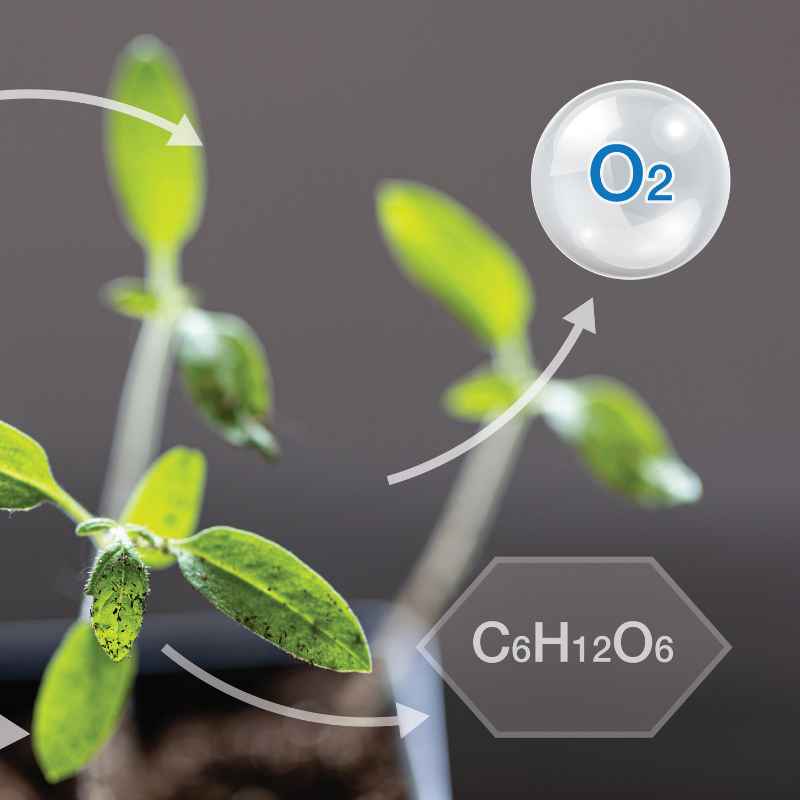
When sunlight hits chlorophyll, it gets excited. This energy is used to split water molecules. A water molecule has two hydrogen atoms and one oxygen atom. The oxygen atoms join together. This forms oxygen gas (O2). This is the “waste product.” The plant doesn’t need it for this step. It lets it go.
The hydrogen atoms are also important. They are used later. They combine with carbon dioxide. This makes glucose. Glucose is a type of sugar. It’s the plant’s food. Plants can store this sugar. They can use it right away for energy. They can also use it to build parts of themselves. Like leaves, stems, and roots.
The overall chemical equation for photosynthesis looks like this:
6CO2 + 6H2O + Light Energy → C6H12O6 + 6O2
This means six molecules of carbon dioxide plus six molecules of water. With light energy. They make one molecule of glucose (sugar) and six molecules of oxygen.
It’s a complex dance of chemistry. But the result is simple and beautiful. Plants feed themselves. And they give us the air we need to live. It’s a perfect system of give and take.
A Personal Story: The Day I Realized the “Waste”
I remember a time in college. I was taking an introductory biology class. We were deep into cellular respiration and photosynthesis. My professor was brilliant. He made complex things seem almost simple. We were discussing photosynthesis. He drew the equation on the board. He talked about how plants make their own food. Then he mentioned oxygen. He said it was a byproduct. A waste product.
My mind stopped. Waste product? I always thought of oxygen as the purpose of plants. Like that’s their whole job. To make the air good for us. The idea that it was just something they had to get rid of to make their own food felt. revolutionary. And a little bit funny. I pictured a plant with little nostrils. Puffing out oxygen with a sigh of relief. “Finally, this stuff is out of my system!”
I went home that day. I looked at the big oak tree outside my window. I saw it differently. It wasn’t just standing there, looking pretty. It was working. It was a tiny factory. Busy converting sunlight and air. And with every little puff of breeze, it was exhaling oxygen. It was like a secret conversation happening all around me. The tree was saying, “Here’s some leftovers for you!”
It made me appreciate plants even more. It showed me nature’s cleverness. How what seems like a simple act of growth for one organism can be fundamental to another. It was a small moment. But it changed how I saw the natural world. It was a reminder that even things we think of as simple have deep, intricate processes behind them. And that “waste” from one can be “life” for another.
Infographic-Style Section 1: Photosynthesis Breakdown
What Plants Need & What They Give
Ingredients In:
- Sunlight (Energy)
- Water (H2O)
- Carbon Dioxide (CO2)
Products Out:
- Glucose (Sugar – Plant Food)
- Oxygen (O2 – Released)
Where it Happens: Chloroplasts in plant cells, mostly in leaves.
Key Pigment: Chlorophyll (captures light).
The Role of Water in Oxygen Production
Water is incredibly important. It’s not just for drinking. For plants, water is a vital ingredient. It’s one of the main things used in photosynthesis. And it’s where the oxygen comes from. Let’s look closer at how.
When light energy hits the chlorophyll, it gets absorbed. This energy is used to break apart water molecules. A water molecule has the formula H2O. It has two hydrogen atoms and one oxygen atom. The energy from sunlight is used to split these bonds.
Think of it like snapping a stick. The energy is used to break the stick into smaller pieces. In this case, the “stick” is water. The pieces are hydrogen atoms, oxygen atoms, and electrons.
The oxygen atoms are the ones we care about here. Two oxygen atoms come together. They form an oxygen molecule (O2). This molecule is too big for the plant to use in making sugar at this stage. So, the plant releases it. It exits the leaf through the stomata. This is the oxygen we breathe.
The hydrogen atoms and electrons are also used. They are carried along. They go to the next part of photosynthesis. They help convert carbon dioxide into sugar. So, water is split. Oxygen is released. Hydrogen is saved for later. It’s a very efficient process.
The splitting of water molecules is called photolysis. “Photo” means light. “Lysis” means to break apart. So, it’s breaking apart with light. This is a critical step. It provides the electrons and protons (hydrogen) needed. It also generates the oxygen gas that fills our atmosphere. Without water, plants couldn’t perform this essential function.
Infographic-Style Section 2: The Water Molecule’s Journey
Water’s Transformation During Photosynthesis
Start: A water molecule (H2O) enters the plant.
Step 1: Light energy hits chlorophyll.
Step 2: This energy splits the water molecule.
Result A: Oxygen atoms join to form O2 gas. This is released.
Result B: Hydrogen atoms and electrons are kept for making sugar.
Think of it: Water is broken down, oxygen escapes, hydrogen helps build food.
Why Oxygen Isn’t the Plant’s Main Goal
It might seem strange. If plants make oxygen, and we need it to live, why isn’t that their main purpose? The answer is simple: survival. Plants, like all living things, are driven by the need to survive and reproduce. Their primary goal is to get energy and build their bodies.
Photosynthesis is how they achieve this. They need to create sugars. Sugars are like the plant’s fuel. They power all its activities. Growing new leaves, making flowers, producing seeds. All of this requires energy. This energy comes from the sugars made during photosynthesis.
The oxygen is a byproduct. It’s like the steam that comes from a boiling pot. The pot is boiling to cook food. The steam is just released. It’s not the main goal of cooking. Similarly, oxygen is released because it’s not needed for the next step. The next step is making sugars.
If a plant could make sugar without producing oxygen, it probably would. But that’s not how the chemistry works. The way sunlight’s energy is used to split water and then combine carbon dioxide forces the release of oxygen. It’s an unavoidable part of the process.
Consider a factory. The factory’s main product is cars. Along the way, they produce some scrap metal. They don’t aim to make scrap metal. It’s just a result of the car-making process. They then sell or dispose of the scrap metal. Plants “sell” their oxygen to the atmosphere.
This focus on sugar production is key to understanding photosynthesis. It explains why plants are fundamental to ecosystems. They are the base of most food chains. They convert light energy into chemical energy that other organisms can then consume.
Personal Experience: The Garden That Changed My View
I once helped a friend set up a new vegetable garden. It was a small plot in her backyard. We spent a weekend digging, amending the soil, and planting. As we worked, she kept talking about “feeding the plants.” She meant giving them water and fertilizer. She was so focused on what the plants needed to grow.
We planted tomatoes, peppers, and herbs. As the season went on, I visited often. I watched the plants grow taller. I saw them flower and then fruit. My friend was meticulous. She watered them regularly. She checked for pests. She pulled weeds. She was really dedicated to making sure her plants had everything they needed.
One hot afternoon, we were harvesting basil. The air was thick and still. The basil plants were lush and green. I looked at the leaves. They were covered in tiny little pores. I remembered my biology lessons. I thought about how those pores were breathing in the air. Taking in carbon dioxide. And breathing out oxygen.
I said to my friend, “Isn’t it amazing? All this hard work to grow food. And as they grow, they’re making the air we breathe too.” She smiled and said, “Yes, but I’m mostly focused on getting enough tomatoes for my sauce!”
Her answer struck me. It was so practical. So focused on the direct benefit to her. And it reminded me that for the plant, the tomatoes are the goal. The oxygen is just a wonderful, accidental gift. It made me see her garden not just as a food source, but as a small, buzzing ecosystem. A place where life was actively creating the conditions for more life. It was a powerful visual. The green leaves working hard. Not for us, but for themselves. And in doing so, helping us immensely.
Infographic-Style Section 3: Contrast Matrix – Photosynthesis Myths vs. Reality
Common Misconceptions About Plant Oxygen
| Myth | Reality |
| Plants make oxygen because they are kind to animals. | Oxygen is a byproduct of their energy-making process (photosynthesis). Their primary goal is survival. |
| Plants “breathe” oxygen like we do. | Plants take in carbon dioxide (CO2) and release oxygen (O2) during photosynthesis. They do respire, using oxygen at night or when photosynthesis isn’t active, but their net effect during the day is oxygen production. |
| All parts of a plant produce oxygen equally. | Oxygen production happens during photosynthesis, which mainly occurs in green parts, especially leaves, where chlorophyll is abundant. |
| Plants only make oxygen when the sun is shining. | Photosynthesis, and thus oxygen release, primarily happens in sunlight. At night, plants respire, using oxygen. |
The Importance of Oxygen for Life on Earth
This “waste product” of photosynthesis is actually the most critical element for most life forms on our planet. Humans and animals need oxygen to survive. We breathe it in. Our bodies use it to break down food. This process releases energy. It’s called cellular respiration.
Without oxygen, our cells can’t function. We wouldn’t be able to live for more than a few minutes. The same is true for most animals. Fish use oxygen dissolved in water. Insects have a different system, but it also relies on oxygen.
Even many microorganisms need oxygen. The planet’s atmosphere is about 21% oxygen. This high level of oxygen is a direct result of billions of years of photosynthesis. Before plants evolved this process, the Earth’s atmosphere was very different. It had much less oxygen.
The evolution of photosynthesis was a turning point. It changed the planet. It allowed for the development of complex life. Life that relies on aerobic respiration. This means life that uses oxygen.
So, when we think about plants, it’s easy to focus on their beauty. Or their role in providing food. But their most profound contribution might be the oxygen they continuously supply. It’s the invisible foundation of our world.
This constant cycle is amazing. Plants take in carbon dioxide. This is a gas that we and other animals exhale. It’s also a greenhouse gas. Plants use it. They turn it into food. And they release oxygen. We then use that oxygen. And we exhale carbon dioxide. It’s a perfect partnership. It keeps the air balanced. It supports vast ecosystems.
Infographic-Style Section 4: The Oxygen Cycle Simplified
How Plants and Animals Stay Connected
Plants Do:
- Absorb CO2 from the air.
- Use sunlight and water.
- Perform Photosynthesis.
- Release O2 (Oxygen).
Animals (Including Us) Do:
- Inhale O2.
- Use O2 for energy (Respiration).
- Exhale CO2.
The Cycle: Plants use our exhale. We use their exhale. It’s a natural loop!
What This Means for Us: The Big Picture
Understanding that plants produce oxygen as a byproduct changes our perspective. It highlights their essential role. It’s not just about pretty flowers or fresh produce. It’s about the very air we breathe.
This realization can lead to a deeper appreciation for nature. It makes us understand why protecting forests and green spaces is so important. These aren’t just nice-to-have places. They are vital oxygen factories. They are critical for a healthy planet.
When we talk about climate change, the role of plants is huge. Trees absorb carbon dioxide. This helps regulate the atmosphere. Their oxygen production is a constant, life-sustaining service. Losing forests means losing both CO2 absorption and oxygen production.
It also means we shouldn’t take oxygen for granted. We rely on a complex, interconnected system. Plants are a huge part of that system. Their needs and processes directly impact our survival.
Thinking about oxygen as a “waste product” of a plant’s self-serving goal is also humbling. It reminds us that the natural world doesn’t revolve around us. We are part of it. We benefit from its processes. But the processes are driven by the needs of the organisms involved.
This knowledge can empower us. It can encourage us to:
Plant more trees and plants.
Support conservation efforts.
Reduce our own carbon footprint.
Educate others about the importance of plant life.
Every plant, from a tiny blade of grass to a giant redwood, is contributing. They are performing a complex chemical reaction. They are creating the air that sustains us. It’s a beautiful, ongoing miracle.
When is Oxygen Production Highest?
Plant oxygen production is directly linked to photosynthesis. So, factors that boost photosynthesis will boost oxygen output.
Here’s when plants are working overtime to produce oxygen:
Sunny Days: Sunlight is the energy source. More sun means more photosynthesis. Cloudy days slow things down.
Warm Temperatures: Plants have an optimal temperature range for photosynthesis. Too cold, and it slows down. Too hot, and they can stress and close their stomata.
Plenty of Water: Water is a key ingredient. If a plant is thirsty, it can’t photosynthesize effectively.
Ample Carbon Dioxide: Plants need CO2 from the air. In enclosed spaces with limited fresh air, CO2 levels can become low, slowing the process.
Healthy Plants: Well-nourished, pest-free plants with lots of green leaves are the best oxygen producers.
Young, rapidly growing plants and trees generally produce more oxygen than older, slower-growing ones. This is because growth requires a lot of energy, which comes from sugar made during photosynthesis.
Trees are often highlighted for their oxygen production. This is because they are large, have vast numbers of leaves, and live for a long time. A mature forest is a powerful oxygen generator. Algae and phytoplankton in the oceans are also massive oxygen producers. In fact, they produce a significant portion of the Earth’s oxygen.
So, while all plants contribute, environments that support robust, healthy, and abundant plant life will have the highest rates of oxygen production.
Infographic-Style Section 5: Quick Scan – Factors Affecting Oxygen Output
Boost Your Plant’s Oxygen Power!
Conditions That Help:
- Sunlight: Bright and steady.
- Water: Regular and sufficient.
- Temperature: Moderate and warm (not too hot or cold).
- CO2: Good air circulation.
- Health: Lush green leaves, no pests.
Think of it: A happy, healthy plant in good weather makes the most oxygen.
Can Plants Produce Too Much Oxygen?
This is a great question. We know oxygen is vital. But can there be too much of a good thing? For plants themselves, the answer is generally no. The process of photosynthesis is self-regulating. They only produce oxygen when they are actively photosynthesizing. And they need sunlight, water, and CO2 to do that. They don’t just pump out oxygen uncontrollably.
For the atmosphere as a whole, oxygen levels have been relatively stable for a very long time. The balance between photosynthesis (producing oxygen) and respiration/combustion (using oxygen) keeps things in check.
There are some specific, rare circumstances where oxygen levels could potentially be problematic. For example, in extremely oxygen-rich environments, fires can spread much more rapidly. This is because fire needs oxygen to burn. Higher oxygen levels fuel fires.
However, in our everyday environment, and for the vast majority of plant life, the oxygen they produce is perfectly balanced by the needs of other organisms and natural processes. The Earth’s systems are very good at maintaining this balance. We don’t need to worry about your houseplants accidentally creating an oxygen overload in your living room.

Infographic-Style Section 6: Stacked Micro-Sections – Key Takeaways
Oxygen & Plants: The Core Facts
Nature’s Process: Oxygen is a byproduct of photosynthesis.
Plant’s Goal: To make sugars for energy and growth.
Water’s Role: Splitting H2O releases O2.
Vital for Us: Oxygen is essential for animal life.
Balance is Key: Earth’s systems maintain oxygen levels.
Common Questions About Plant Oxygen
Do all plants produce oxygen?
Click for answer
Yes, all green plants that perform photosynthesis produce oxygen. This includes trees, flowers, grasses, vegetables, and even algae and phytoplankton in the oceans. The only exceptions would be plants that do not photosynthesize, such as parasitic plants that get their nutrients from other plants, but these are rare.
Is oxygen produced all day and all night?
Click for answer
Photosynthesis, the process that releases oxygen, requires sunlight. So, plants primarily produce oxygen during daylight hours when the sun is shining. At night, plants still live.
They respire, meaning they use oxygen and release carbon dioxide, just like animals do. So, the net effect is oxygen production during the day and oxygen consumption at night.
Does the type of plant affect how much oxygen it produces?
Click for answer
Yes, the type of plant, its size, and its health all influence oxygen production. Larger plants with more leaves, like mature trees, tend to produce more oxygen than smaller plants. Plants that are actively growing and are healthy will produce more oxygen than stressed or dormant plants.
For example, a thriving forest produces significantly more oxygen than a single potted plant.
What happens if a plant doesn’t get enough sunlight?
Click for answer
If a plant doesn’t get enough sunlight, its ability to perform photosynthesis is reduced. This means it will produce less sugar for food and, consequently, less oxygen. In severe cases, a plant might become weak and eventually die if it cannot get enough light to sustain itself.
Do indoor plants help much with oxygen production in a house?
Click for answer
Indoor plants do contribute to oxygen production, but the amount is generally very small compared to the oxygen we consume. They can help improve air quality by filtering out some pollutants. However, for significant oxygen changes, you would need a vast number of plants.
Think of them more as lovely air fresheners and mood boosters rather than primary oxygen providers for a home.
Why is oxygen called a “waste product” if it’s so important?
Click for answer
It’s called a waste product from the plant’s perspective. The plant’s main goal in photosynthesis is to create sugars (food) for its own energy and growth. Oxygen is released because it is not needed for the subsequent steps in sugar production.
It’s like when you bake cookies; the heat from the oven is necessary for baking, but the steam released is a byproduct. The plant doesn’t “intend” to produce oxygen for us; it’s a consequence of its vital food-making process.
Conclusion: A Cycle of Life and Breath
So, there you have it. Plants do indeed produce oxygen as a byproduct of photosynthesis. It’s not their main mission, but it’s a crucial part of how they make their own food. This elegant, natural process, driven by sunlight and water, releases the very air we need to live. It’s a powerful reminder of the interconnectedness of life on Earth. What a plant “discards” sustains us. And what we “discard” (carbon dioxide) sustains the plants. It’s a beautiful, ongoing cycle. A testament to nature’s incredible design. Appreciating this process helps us value our green planet even more.
Related pick: Check today's price on Amazon