Which Plant Cell Organelle Uses Light Energy To Produce Sugar?
The plant cell organelle that uses light energy to produce sugar is the chloroplast. This organelle is the site of photosynthesis, the process by which plants convert light, water, and carbon dioxide into glucose (sugar) and oxygen.

Leitee
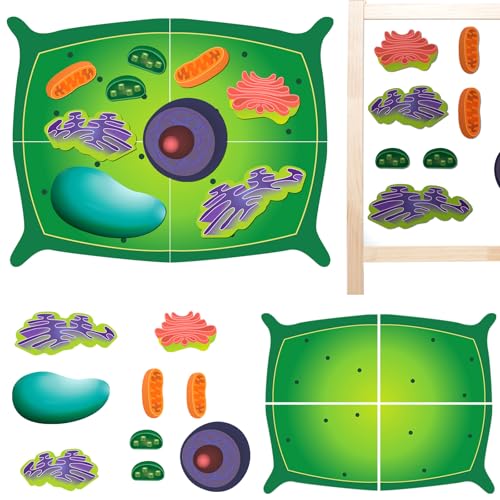
Leitee 18 Pcs Magnetic Plant Cell Model…
- Comprehensive Exploratory Learning Tool: these magnetic plant models come in packs of 18; Dig into the secrets of life science wit…
- Easy Handling and Display: the plant cell models are made of magnetic material, allowing that they can be easily placed and displa…
- Lifelike: the giant magnetic plant cell anatomical model is richly colored and accurately replicates the real cell structure; This…
As an Amazon Associate I earn from qualifying purchases.
The Mighty Chloroplast: Powerhouse of the Plant Cell
So, we know it’s the chloroplast. But what exactly is a chloroplast, and how does it do such a remarkable job? Think of it as a tiny solar-powered factory within the plant’s cells.
It’s not just any factory; it’s one that builds life-sustaining food.
Chloroplasts are a type of organelle. Organelles are like little organs within a cell, each with a specific job. You might have heard of other organelles like the nucleus (the cell’s control center) or mitochondria (the cell’s energy producers for animals).
Chloroplasts are special to plants and some other organisms like algae.
Their main job is something called photosynthesis. This is the big word for how plants make their own food. Photosynthesis literally means “making things with light.” Without light, plants couldn’t do it.
They are masters at capturing the sun’s energy and turning it into something useful.
What makes them so good at this? Chloroplasts have a special green pigment called chlorophyll. Chlorophyll is what gives plants their green color.
But it does more than just color. Chlorophyll is like a tiny antenna. It absorbs sunlight.
It’s particularly good at soaking up red and blue light. It reflects green light, which is why we see plants as green.
Inside the chloroplast, there are even more intricate structures. There are stacks of flattened sacs called grana (singular: granum). These grana are where the light-capturing reactions happen.
The space around the grana is called the stroma. This is where the sugar is actually made using the energy captured earlier.
So, to recap, the chloroplast is the star player. It’s packed with chlorophyll to catch sunlight. It has internal structures that work together to convert that light energy.
It uses simple ingredients like water and carbon dioxide. And it creates sugar (glucose) and oxygen. It’s a truly amazing biological feat.
My First Brush with Photosynthesis: A Garden Mystery
I remember when I was a kid, maybe seven or eight. I loved helping my grandma in her garden. She had this huge tomato plant that grew taller than me.
I’d watch her water it, pull weeds, and tie up the stems. But I never really understood how those leaves could feed the big, juicy tomatoes.
One sunny afternoon, I asked her, “Grandma, how does the plant make tomatoes?” She smiled and said, “Oh, the leaves make food from the sun, dear.” I was so confused. How could leaves, which felt like paper, make food? They didn’t have mouths or ovens!
She tried to explain it in simple terms, talking about sunshine and water. But my young mind couldn’t quite grasp it. It seemed like magic.
The leaves were so still, yet they were doing this incredible work. It felt like a big secret the plants kept from us.
Later, in school, we learned about chloroplasts and photosynthesis. Suddenly, my grandma’s simple words made so much sense. That green color was the chlorophyll, the sun was the energy source, and the leaves were indeed tiny food factories.
It was no longer magic; it was science. But that childhood wonder about the silent work of leaves has stayed with me. It reminds me how much we can learn by just observing the world around us.
Photosynthesis: The Quick Picture
What it is: Plants making their own food using light.
Where it happens: Inside chloroplasts.
Key Ingredient: Sunlight.
Other Needs: Water and Carbon Dioxide.
What’s Made: Sugar (glucose) and Oxygen.
The Process: How Light Becomes Sugar
Let’s dive a little deeper into the actual process. Photosynthesis is not just one single step. It’s a series of complex reactions.
But we can break it down into two main stages. This makes it easier to understand how light energy is transformed into chemical energy stored in sugar.
The first stage is called the light-dependent reactions. As the name suggests, this part needs light to happen. It takes place within the grana inside the chloroplast.
Here, chlorophyll and other pigments absorb light energy. This energy is used to split water molecules (H₂O).
When water splits, it releases oxygen (O₂), which is what we breathe. It also releases electrons and protons. These energized electrons then move through a series of proteins.
This movement is like a tiny electrical current. It generates energy-carrying molecules. These are called ATP (adenosine triphosphate) and NADPH (nicotinamide adenine dinucleotide phosphate).
Think of ATP and NADPH as rechargeable batteries. They have captured the light energy. They are now ready to power the next stage.
This first stage is all about converting light energy into chemical energy in a usable form.
The second stage is called the light-independent reactions, also known as the Calvin cycle. This part doesn’t directly need light, but it needs the ATP and NADPH produced in the first stage. This occurs in the stroma of the chloroplast.
In the Calvin cycle, the plant takes carbon dioxide (CO₂) from the air. Using the energy from ATP and NADPH, it combines this CO₂ with existing molecules. This process builds sugar molecules.
The main sugar produced is glucose (C₆H₁₂O₆). Glucose is a simple sugar. It’s the plant’s primary food source.
Plants can then use this glucose immediately for energy. They can also store it as starch for later use. Or they can convert it into other building blocks the plant needs to grow.
This entire process is a beautiful cycle of energy capture and conversion.
Real-World Context: Why This Matters to Us
It’s easy to think of chloroplasts and photosynthesis as just something happening in textbooks or far-off rainforests. But they are incredibly important for our everyday lives. We often forget that humans and most other animals cannot make their own food.
We depend on plants for survival. This dependence starts with photosynthesis. Every breath we take has oxygen that was released by plants during photosynthesis.
Without this constant supply of oxygen, the air would not be breathable for us. It’s a direct benefit from those green factories.
Then there’s food. When you eat a salad, a piece of fruit, or even meat from an animal that ate plants, you are consuming energy that originally came from the sun. Plants capture that solar energy and store it in the chemical bonds of sugar.
When we eat plants, we are getting that stored energy. When we eat animals, we are getting energy that was passed up the food chain.
So, the simple act of a leaf converting light energy into sugar supports entire ecosystems. It’s the foundation of most food webs on our planet. Even fossil fuels like coal and oil are ancient stores of solar energy captured by plants and other organisms millions of years ago.
Consider the impact on climate. Plants absorb carbon dioxide, a greenhouse gas, from the atmosphere during photosynthesis. This helps to regulate Earth’s climate.
Forests and oceans full of algae act as massive carbon sinks. This makes them crucial in the fight against climate change.
The health of our planet, our food supply, and the air we breathe are all intrinsically linked to the work of chloroplasts. It’s a reminder of our deep connection to the natural world.
The Role of Chlorophyll
Color: Makes plants green by reflecting green light.
Function: Absorbs light energy, especially red and blue wavelengths.
Location: Found within chloroplasts, specifically in the thylakoid membranes.
Importance: Essential for capturing the initial energy needed for photosynthesis.
Factors Affecting Sugar Production
While chloroplasts are designed to make sugar, they don’t always operate at peak performance. Several factors can influence how much sugar a plant can produce. Understanding these can help explain why plants grow differently in various conditions.
Light Intensity: This is a big one. Plants need enough light for photosynthesis. Too little light, and the process slows down.
Too much light, especially intense, direct sunlight, can actually damage the chlorophyll and the chloroplasts. This is why plants in shady areas grow slower than those in full sun, but plants in deserts have adaptations to handle intense light.
Carbon Dioxide Levels: CO₂ is a raw material for making sugar. If there isn’t enough CO₂ in the air, photosynthesis will be limited. Greenhouses often pump extra CO₂ into the air to boost plant growth.
Water Availability: Water is essential for splitting molecules in the first stage of photosynthesis. Drought conditions can severely reduce sugar production. Plants will often close their stomata (tiny pores on leaves) to conserve water.
But this also limits the intake of CO₂.
Temperature: Photosynthesis involves enzymes, which are proteins that help chemical reactions happen. Enzymes work best within specific temperature ranges. If it’s too cold or too hot, the enzymes don’t work properly.
This slows down or stops photosynthesis. Most plants have an optimal temperature range for growth.
Nutrient Availability: Plants need various nutrients from the soil to build and maintain their chloroplasts and to carry out photosynthesis. For example, magnesium is a key component of chlorophyll. Nitrogen is needed for making proteins, including enzymes.
Without these nutrients, the plant cannot function efficiently.
These elements work together. A lack of just one can limit the whole process. It’s a delicate balance that plants constantly manage to survive and thrive.
Quick Scan: Photosynthesis Needs
| Essential Input | Source | Role |
|---|---|---|
| Light Energy | Sun | Powers the first stage, splits water. |
| Water (H₂O) | Soil (via roots) | Provides electrons and hydrogen for sugar building. Releases oxygen. |
| Carbon Dioxide (CO₂) | Atmosphere (via stomata) | Provides carbon atoms to build sugar molecules. |
| Chlorophyll | Chloroplasts | Absorbs light energy. |
| Enzymes | Chloroplasts | Speed up chemical reactions in both stages. |
What This Means for You: Normal vs. Concerning
Understanding photosynthesis helps us appreciate plant health. It also tells us when a plant might be struggling. Most of the time, a plant’s green color and ability to grow are signs of healthy chloroplasts at work.
When it’s Normal:
- Healthy Green Color: A vibrant green usually means plenty of chlorophyll is present and functioning well.
- Steady Growth: If a plant is growing at a reasonable pace for its species and season, its chloroplasts are likely producing enough sugar.
- Flowering and Fruiting: Producing flowers and fruits requires a lot of energy, meaning lots of sugar is being made.
- Seasonal Changes: Many plants change color or lose leaves in fall. This is a normal part of their life cycle, often to conserve energy or prepare for winter. It doesn’t mean the chloroplasts failed.
When to Worry:
- Yellowing Leaves (Chlorosis): If leaves turn yellow but the veins stay green, or the whole leaf turns pale, it often indicates a lack of chlorophyll. This can be due to nutrient deficiencies (like iron or magnesium), poor light, or disease.
- Brown or Crispy Edges: This often points to water stress or nutrient problems that are affecting the plant’s ability to function.
- Stunted Growth: If a plant isn’t growing much, or at all, despite good conditions, its sugar production might be severely limited.
- Unusual Spots or Patches: While some spots can be natural, unusual discolored patches might signal disease or pest issues that are damaging the chloroplasts or the leaf tissue.
Simple Checks:
- Check the Light: Is the plant getting enough light for its type? Or too much direct sun?
- Check the Water: Is the soil too dry or too wet?
- Check the Soil: Does the soil look healthy? Has it been fertilized recently?
- Look for Pests: Are there any visible bugs or signs of infestation?
By observing these signs, you can get a better idea of how your plants are doing. It’s like a plant’s way of telling you if its tiny food factories are running smoothly.
Quick Tips for Supporting Your Plants
While you can’t directly change a plant’s chloroplasts, you can create the best environment for them to do their job. This helps them produce sugar efficiently.
- Provide the Right Light: Research the specific light needs of your plants. Some love full sun, others prefer shade.
- Water Wisely: Water deeply when the top inch of soil feels dry. Avoid letting plants sit in soggy soil.
- Feed Them Nutrients: Use a balanced fertilizer according to package directions, especially during the growing season.
- Good Airflow: Proper air circulation helps prevent diseases and can aid in CO₂ exchange.
- Choose the Right Pot: Ensure pots have drainage holes. Repot plants when they outgrow their containers.
Myth vs. Reality: Photosynthesis
Myth: Plants breathe in oxygen and breathe out carbon dioxide, just like us.
Reality: Plants take in carbon dioxide and release oxygen during photosynthesis. They do respire (like animals), using oxygen and releasing carbon dioxide, but photosynthesis is their dominant process in daylight, and it produces much more oxygen than respiration consumes.
Myth: All green plants are the same when it comes to photosynthesis.
Reality: Different plants have evolved to photosynthesize optimally under different conditions. Some are adapted to low light, others to intense heat or dryness. The efficiency and specific needs can vary.

Frequently Asked Questions About Plant Sugar Production
What is the main product of photosynthesis?
The main product of photosynthesis is glucose, a type of sugar. This sugar serves as the plant’s food source for energy and growth.
Can plants make sugar without sunlight?
No, plants cannot make sugar without sunlight. Sunlight provides the essential energy required to drive the process of photosynthesis. While some bacteria can perform photosynthesis using artificial light, plants rely on natural sunlight.
Are chloroplasts found in all plant cells?
Chloroplasts are found in most plant cells, especially those that are green and exposed to light, like leaves and young stems. Cells in roots or flowers, for example, may not have chloroplasts or have very few.
What happens to the sugar plants make?
The sugar, or glucose, is used by the plant in several ways. It can be used immediately for energy through respiration. It can be converted into starch for storage.
It can also be used to build other important molecules the plant needs, like cellulose for cell walls.
Why is photosynthesis important for animals?
Photosynthesis is crucial for animals because it produces the oxygen we breathe and forms the base of most food chains. Animals either eat plants directly or eat other animals that have eaten plants, obtaining energy that originated from sunlight.
Can plants store excess sugar?
Yes, plants can store excess sugar. They often convert glucose into starch, which is a more stable form of stored energy. This starch can be broken down later when the plant needs energy, such as during the night or in winter.
Final Thoughts on the Green Machines
So, to wrap it up, the answer to “Which plant cell organelle uses light energy to produce sugar?” is the chloroplast. These incredible structures are the workhorses behind photosynthesis. They convert sunlight, water, and carbon dioxide into the food plants need and the oxygen we breathe.
It’s a constant, quiet miracle happening all around us.
Related pick: Check today's price on Amazon