
The primary molecule that functions as energy storage in plants is starch. Starch is a complex carbohydrate that plants create from glucose, the sugar they produce during photosynthesis. It serves as a readily accessible fuel source for growth, repair, and reproduction.
For a related plant or gardening question, Air-Purifying Plants vs Air Purifier: Which Is Better? gives readers a focused next step.
For a related plant or gardening question, Which Of The Following Is Not A Characteristic Of Plants? gives readers a focused next step.
For a related plant or gardening question, Which Two Biomes Contain Plants Adapted To Dry Conditions? gives readers a focused next step.
What is Starch and How Does it Work?
Starch is basically how plants save their extra food. Think of it like a pantry for the plant. When plants make food using sunlight, water, and air through photosynthesis, they create sugars.
This sugar is called glucose. Glucose is great for quick energy. But plants can’t use all that sugar right away.
So, they store it for later.
They link many glucose units together. This makes a long chain. This long chain is what we call starch.
It’s a complex carbohydrate. This means it’s made of many simple sugars put together. Starch is stored in different parts of the plant.
Common places include roots, seeds, and stems. It’s like the plant’s emergency reserve fuel.
When the plant needs energy, it breaks down the starch. It turns the starch back into glucose. Then, the plant can use this glucose to power its activities.
This includes growing new leaves, making flowers, or producing fruits. It’s a clever system that helps plants survive different conditions. It ensures they have energy when sunlight is scarce or when they need to grow quickly.
Starch vs. Other Plant Molecules
It’s important to know that plants have other molecules too. But starch is the main storage form. Cellulose is another big molecule in plants.
It makes up their cell walls. Cellulose provides structure. It’s like the building blocks of the plant’s body.
But it’s not easily broken down for energy. That’s why it’s not our primary energy storage.
Sugars like glucose are used for immediate energy. They are the “cash” of the plant’s energy system. Starch is more like the “savings account.” It’s held for future use.
This distinction is key to understanding plant life.
My Experience with Starch in Plants
I remember a time when I was trying to grow potatoes. I’d always known potatoes were starchy. But I didn’t fully grasp why they were so starchy.
I was planting them in late spring. The weather was perfect. The little potato eyes sprouted well.
I kept them watered. Everything seemed fine.
Then, a really hot spell hit. It was July, and the sun was blazing. The leaves started to look a bit droopy.
I worried the plants wouldn’t make it. I watered them more. I even put up shade cloths.
I felt a bit helpless watching them struggle in the heat. I thought, “Are they getting enough energy to survive this?”
A few weeks later, the heat broke. The plants perked up. When it was time to harvest, the potatoes were plentiful.
They were smooth and firm. It struck me then. The potato plant had been busy storing energy all along.
Even during the tough, hot weeks, it was building up its reserves. It was creating all that starch underground. This allowed it to survive the stress and then grow those beautiful tubers.
That’s when I really saw starch in action. It was a plant’s lifeline.
The Photosynthesis Connection
How Plants Make Food: Plants use sunlight, water, and carbon dioxide. They convert these into glucose (sugar). This process is called photosynthesis.
It usually happens in the leaves. Chlorophyll, the green stuff in leaves, helps capture sunlight.
Glucose is the Building Block: The glucose made is the plant’s first food. It gives the plant quick energy for its immediate needs. Any extra glucose is then converted.
Starch Formation: The plant links many glucose molecules together. This forms starch. This is a chemical process within the plant cells.
It’s stored for longer periods.
Where Plants Store Their Starch
Plants are smart about where they keep their energy. They store starch in places that make sense for survival and future growth. These storage areas are often protected.
They are also in parts of the plant that can be easily accessed when needed.
One of the most common places is in the roots. Think about carrots, beets, or sweet potatoes. These are all root vegetables.
They are packed with starch. The roots are underground. This protects them from damage.
It also keeps them cool and moist. When winter comes, or when a plant needs to regrow after a fire, the stored starch in the roots is vital.
Seeds are another major starch storage site. Seeds need energy to sprout and grow into a new plant. Grains like wheat, rice, and corn are essentially seeds packed with starch.
This starch feeds the young seedling until it can start photosynthesizing on its own. That’s why grains are so important to us. They are energy-rich food for us and for the new plants.
Some plants also store starch in their stems or tubers. Potatoes are a classic example of tubers. They are swollen underground stems.
These tubers store large amounts of starch. This allows the potato plant to survive harsh conditions. It can then regrow new shoots from the tubers.
It’s a reliable way to ensure the plant’s lineage continues.
| Plant Part | Examples | Why it’s stored there |
|---|---|---|
| Roots | Carrots, Beets, Sweet Potatoes | Protection, stable temperature, future regrowth |
| Seeds | Wheat, Rice, Corn, Oats | Nourishment for seedling’s first growth |
| Tubers | Potatoes, Yams | Survival through dormancy, regrowth |
| Fruits (some) | Bananas (when green) | Energy reserve for ripening or dispersal |
The Role of Starch in Different Plant Parts
Starch plays a crucial role in almost every part of a plant’s life. It’s not just a passive storage. It’s an active resource that powers development and survival.
In leaves, while photosynthesis is happening, some glucose is converted to starch. This starch might be used by the leaf itself later in the day. Or it can be transported to other parts of the plant.
Leaves are the “food factories.” So, they often have immediate needs and storage.
In flowers and fruits, starch plays a role too. When a plant is ready to reproduce, it needs a lot of energy. This energy comes from stored starch.
It fuels the development of flowers. It also helps in the growth and ripening of fruits. The fruits then often contain starch.
This provides energy for the seeds inside. It also makes the fruit attractive to animals that can help spread the seeds.
For seeds, as I mentioned, starch is their first meal. It’s the fuel that helps them germinate. It powers the tiny root and shoot.
This allows the seedling to break through the soil. It can then start making its own food. Without this stored energy, many seeds wouldn’t stand a chance.
Starch for Us!
Food Source: Humans and many animals rely heavily on plant-based starch. Foods like bread, pasta, rice, potatoes, and corn are staples worldwide. They provide essential energy.
Industrial Uses: Starch has many uses beyond food. It’s used in paper making, textiles, and even as a binder in medicines. It’s a versatile plant product.
Starch vs. Other Carbohydrates: Why Starch Wins for Storage
You might wonder why plants don’t just store glucose or other sugars. There are good reasons for this. Starch is a much better choice for long-term energy storage.
Solubility: Glucose is very soluble in water. If a plant stored a lot of glucose, its cells would become too watery. This could cause problems.
Starch, on the other hand, is not very soluble. It forms solid granules. This makes it easier to store large amounts without affecting the cell’s water balance.
Osmotic Potential: Storing glucose would significantly change the sugar concentration inside the plant cells. This can affect how water moves in and out of the cells. This is called osmotic pressure.
Starch, being less soluble, has a much lower impact on osmotic pressure. This is crucial for maintaining healthy plant cells.
Molecular Size: Starch is a polymer. It’s made of many glucose units linked together. This large molecule is less likely to leak out of storage cells.
It’s like packing things into a large box instead of leaving them as loose items. The box keeps them contained.
Efficiency of Breakdown: While starch needs to be broken down into glucose to be used, plants have special enzymes for this. These enzymes efficiently convert starch back into glucose when needed. So, the plant has a way to access its stored energy quickly enough.
Quick Scan: Starch Storage Advantages
- Less Soluble: Prevents cells from becoming too watery.
- Lower Osmotic Effect: Maintains cell water balance.
- Larger Molecule: Stays within storage cells better.
- Efficient Conversion: Can be broken down to glucose when needed.
The Science Behind Starch Granules
When plants store starch, they don’t just let it float around. They pack it into neat little structures called starch granules. These granules are like tiny energy pellets within the plant cells.
This organized storage has several benefits.
Starch is made up of two main types of molecules: amylose and amylopectin. Amylose is a straight chain. Amylopectin is a branched chain.
The ratio of these two affects the properties of the starch. These molecules pack together in a semi-crystalline structure. This creates the granule.
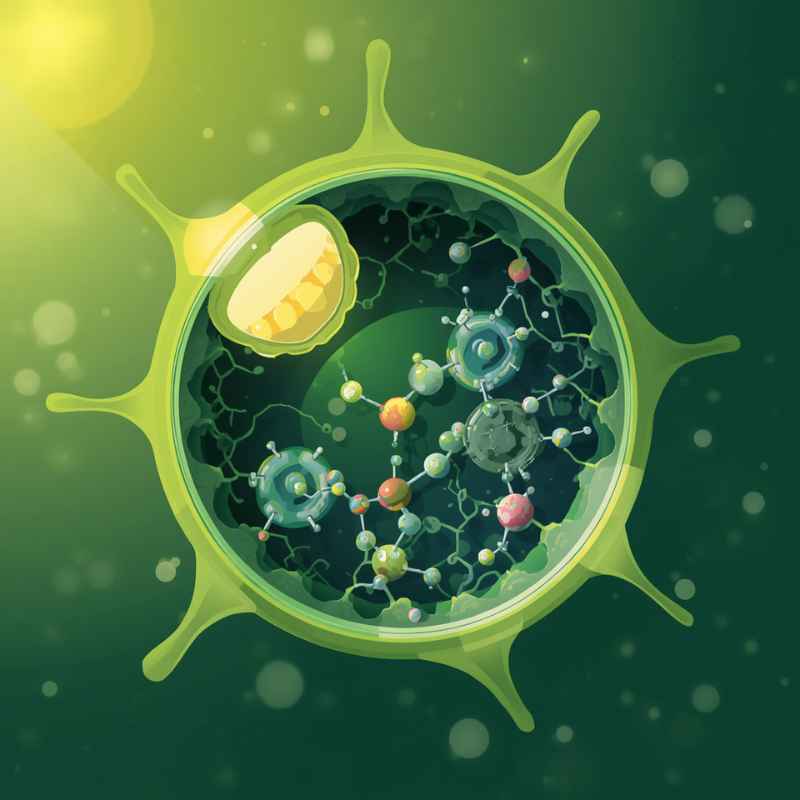
These granules are typically found in specialized compartments within plant cells called plastids. In many cases, these are specifically amyloplasts. Amyloplasts are like the starch factories and warehouses of the cell.
They are responsible for producing and storing starch granules.
The size and shape of starch granules can vary. This depends on the plant species and the type of tissue. Some granules are small and round.
Others can be large and irregularly shaped. This variation is not just random. It’s a result of how the starch molecules are assembled during synthesis.
When the plant needs energy, enzymes break down the starch granules. They start from the outside and work their way in. This controlled breakdown ensures that energy is released efficiently and only when required.
It’s a highly regulated process. It shows the intricate design of plant metabolism.
Starch Granule Facts
Location: Primarily stored in amyloplasts within plant cells.
Composition: Made of amylose and amylopectin chains.
Structure: Semi-crystalline granules.
Function: Efficient, organized energy storage.
When is Starch Not Enough?
While starch is the primary energy storage molecule, plants can face situations where their stored energy isn’t enough. This often happens during extreme stress or prolonged lack of resources.
Severe Drought: If a plant experiences a long period without water, photosynthesis will stop. Even stored starch might be used up trying to keep vital functions going. If the drought is too long, the plant may die from lack of water and energy.
Extended Darkness: Plants need light to make glucose. If a plant is kept in darkness for too long, it will consume its starch reserves. Eventually, without photosynthesis, it will starve.
This is why seedlings need light soon after sprouting.
Disease or Pests: When a plant is attacked by diseases or pests, it uses a lot of energy to fight them off or repair damage. This can drain its energy reserves faster than they can be replenished. In severe cases, the plant may weaken and die.
Nutrient Deficiency: If a plant lacks essential nutrients, it cannot perform photosynthesis efficiently. It also struggles to produce or store starch. This can lead to stunted growth and a lack of energy reserves.
In these extreme cases, the plant’s stored starch becomes a critical survival tool. But if the stress is too great or lasts too long, even these reserves can be depleted. The plant then enters a state of decline.
What This Means for You and Your Plants
Understanding that starch is the main energy store helps us care for plants better. It also explains a lot about the foods we eat.
For Gardeners: Knowing that roots, tubers, and seeds store starch helps you understand why these plant parts are often dense and provide energy. When you’re growing plants like potatoes or carrots, you’re essentially growing their energy reserves. Providing good soil, water, and sunlight helps them build these reserves effectively.
For Home Cooks: The starchy foods we eat are direct sources of energy derived from plant storage. When you eat a potato or a slice of bread, you’re consuming the energy that plant stored for its own growth. This is why these foods are so filling and provide sustained energy for us.
Understanding Plant Stress: If your plants look weak, it might be that they’ve used up their energy stores. This could be due to lack of sunlight, water, or nutrients. Addressing these basic needs helps them rebuild their starch reserves.
It allows them to thrive again.
Importance of Seeds: The energy stored in seeds is vital for propagation. When you plant a seed, you’re giving it a head start with that stored energy. This ensures the new plant can begin its journey successfully.
Plant Care Tips Based on Starch Storage
Sunlight: Ensure plants get enough light for photosynthesis. This is how they make the glucose to store as starch.
Water: Proper watering is crucial. It’s needed for photosynthesis and to transport nutrients. But too much can drown roots.
Soil Nutrients: Healthy soil provides the building blocks for plant growth, including energy storage.
Rest Periods: Some plants benefit from periods of less activity. This allows them to conserve or rebuild reserves.
Quick Fixes and Tips
While there aren’t really “fixes” for a plant’s primary energy storage mechanism itself, there are ways to support it. These tips help your plants build and maintain healthy starch reserves.
Provide Consistent Light: For most plants, consistent access to adequate sunlight is key. This fuels photosynthesis, creating the glucose that turns into starch. If a plant is indoors, ensure it’s near a sunny window.
Rotate it so all sides get light.
Balanced Watering: Avoid extremes of too much or too little water. Water when the top inch of soil feels dry. This allows roots to function well and transport nutrients needed for energy storage.
Good Soil Health: Use nutrient-rich potting mix or compost. Healthy soil provides essential minerals. These minerals are like tools plants need to make and store energy efficiently.
Avoid Over-Fertilizing: Too much fertilizer, especially nitrogen, can encourage leafy growth. This might deplete energy reserves faster than they can be built if other conditions aren’t optimal.
Proper Pruning: Prune only when necessary. Excessive pruning can shock a plant. It forces it to use energy for healing rather than for energy storage.
Tip Sheet: Supporting Starch Storage
Tip 1: Check light levels. Most plants need 6+ hours of sun daily.
Tip 2: Feel the soil. Water only when the top layer is dry.
Tip 3: Add compost annually. It’s like a vitamin boost for soil.
Tip 4: Observe your plant. Learn its signs of needing water or more light.
Frequently Asked Questions About Plant Energy Storage
What is the main sugar plants make for energy?
The main sugar plants make is glucose. They create it through photosynthesis. Glucose is used for immediate energy or converted into starch for storage.
Can plants store energy as fat?
No, plants do not store energy as fat. Fats are common in animals. Plants primarily store energy as starch.
Some lipids are present, but not for main energy storage.
Are all plants the same when storing energy?
Most plants use starch. However, the exact location and amount can vary greatly. Plants in drier or colder climates might store more.
Those in tropical, sunny areas might rely more on immediate photosynthesis.
What happens to starch when a plant dies?
When a plant dies, the stored starch begins to break down. Microbes and fungi in the soil decompose the plant matter. They use the starch as a food source.
Is starch the only form of stored carbohydrate in plants?
Starch is the main long-term storage carbohydrate. Plants also store some sugars directly. However, starch is preferred for bulk storage due to its properties.
It’s more stable and less disruptive to cell water balance.
Why is starch important for human diets?
Starch is a major source of calories for humans. It provides sustained energy. Many staple foods like rice, wheat, corn, and potatoes are rich in starch.
Conclusion
So, the mystery is solved! The humble molecule that serves as the primary energy storage in plants is indeed starch. It’s a complex carbohydrate, carefully crafted from glucose.
This allows plants to save food for later. Whether it’s for a seedling’s first sprout or a plant’s survival through tough times, starch is the backbone. It fuels growth and sustains life in the plant kingdom.
Understanding this helps us appreciate plants even more.