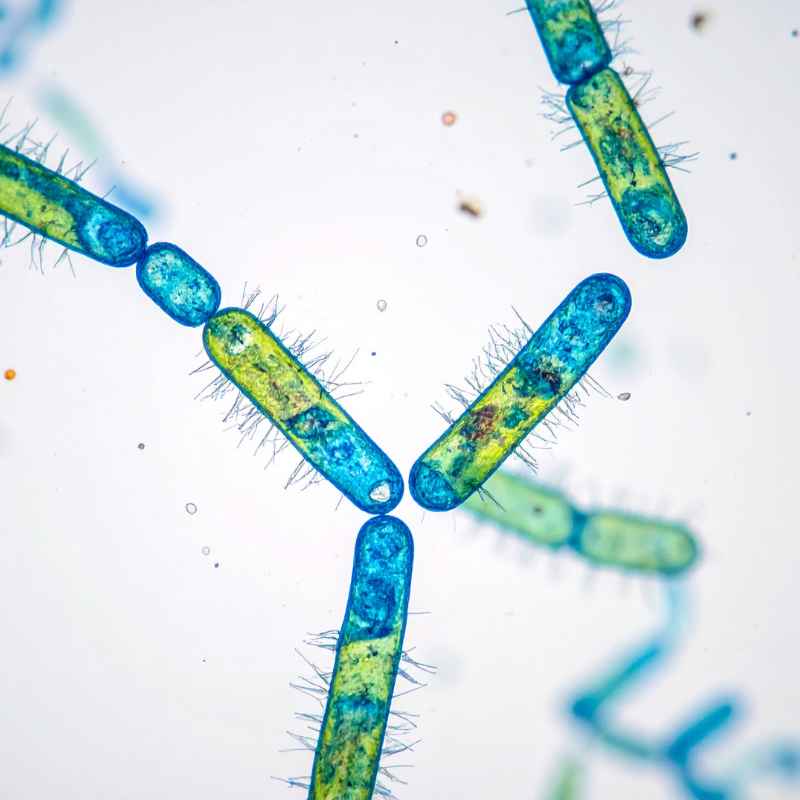

Sometimes, sorting out these living things can feel like a puzzle. You might have heard terms like “prokaryote” and “eukaryote.” Knowing which organisms fit into which group helps us understand the big picture of life. We’ll break down which living things are prokaryotes and which are not, using simple terms.
For a related plant or gardening question, Which Of The Following Is Not A Characteristic Of Plants? gives readers a focused next step.
Prokaryotes are simple, single-celled organisms that lack a true nucleus and other membrane-bound organelles. Of the groups listed, only Archaea are prokaryotes. Fungi, Protists, and Plants are all eukaryotes, meaning their cells have a nucleus and complex structures.
What Are Prokaryotes?
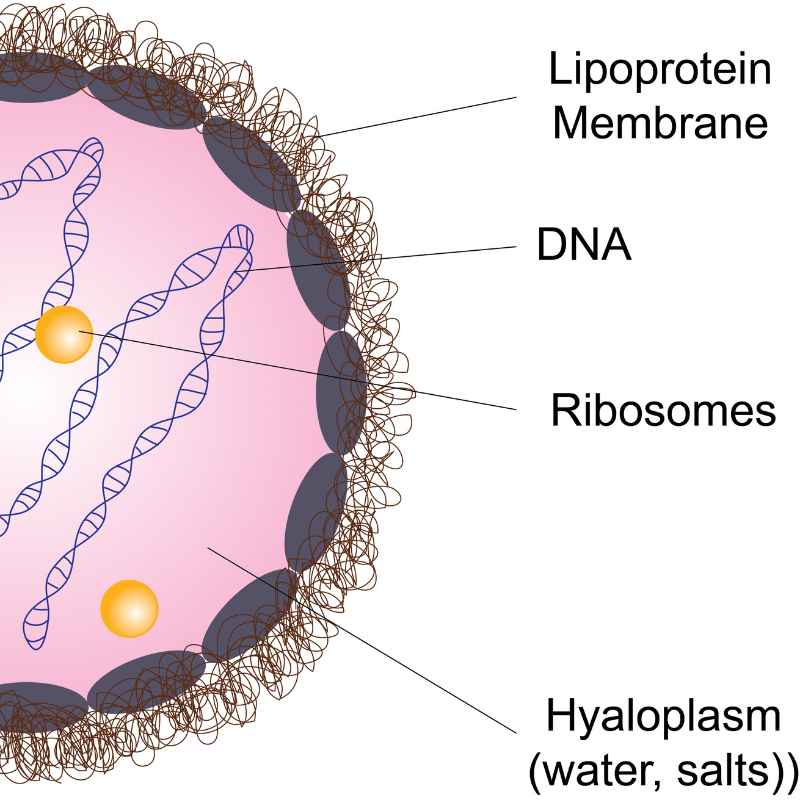
Let’s start with what a prokaryote is. Think of a cell as a tiny factory. A prokaryotic cell is like a very basic factory.
It has the essential parts to do its job, but it’s missing some of the specialized rooms and machines you find in more complex factories.
The biggest difference is the nucleus. In more complex cells (eukaryotes), there’s a special room called the nucleus. This room holds all the important instructions, like the DNA.
Prokaryotic cells don’t have this dedicated room. Their DNA floats around in the main factory floor.
They also lack other little compartments called organelles. These are like specialized work areas within the cell. Prokaryotes have the bare necessities.
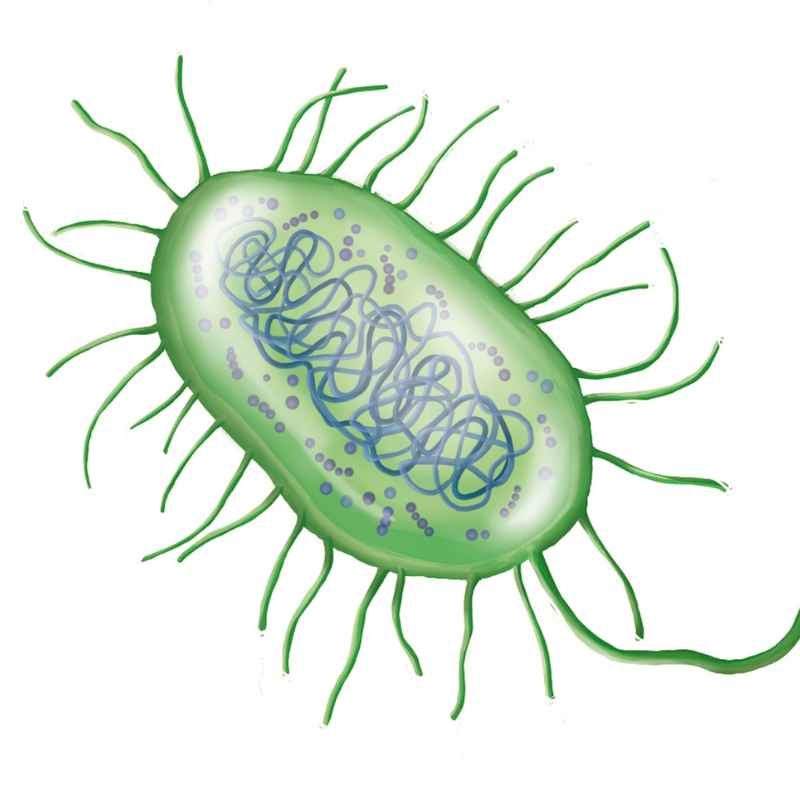
They have a cell wall, a cell membrane, and the machinery to make energy and proteins. But they don’t have things like mitochondria or a Golgi apparatus. This makes them very simple and ancient forms of life.
The Two Main Types of Life
Scientists sort most life into two big categories based on cell structure. These are prokaryotes and eukaryotes. Everything alive today falls into one of these groups.
It’s like sorting LEGO bricks into “small basic shapes” and “larger complex shapes.”
Prokaryotes came first, billions of years ago. They are the ancestors of all life. Eukaryotes appeared later.
They are more complex and include all animals, plants, fungi, and protists we see today. Understanding this difference helps us see the history of life on our planet.
Archaea: The True Prokaryotes
Now, let’s talk about Archaea. These are the organisms that are definitely prokaryotes. They are single-celled and incredibly old.
In fact, they are some of the oldest life forms on Earth.
You might not see Archaea every day. They often live in extreme places. Think super hot springs, salty lakes, or deep-sea vents.
These places are harsh for most other life forms. But Archaea thrive there. This ability to live in tough spots is what makes them so interesting to scientists.
Even though they are prokaryotes, Archaea are different from another group of prokaryotes called Bacteria. They look similar on the outside, but their internal chemistry and genetics are quite distinct. For a long time, scientists grouped them together.
Now, we know they are separate domains of life. They are as different from each other as humans are from fungi.
What Makes Archaea Unique?
Archaea have special cell membranes. These membranes help them survive extreme conditions. They also have different types of RNA and proteins.
These differences are key to their survival in hot, cold, or salty environments. Their DNA also has some unique features. It’s structured more like eukaryotic DNA than bacterial DNA in some ways, which is a bit of a puzzle for scientists.
They play important roles in nature. Some Archaea help break down waste. Others help in the soil or oceans.
They are a vital part of Earth’s systems, even if we don’t often think about them. Their simple structure allows them to do big jobs.
Archaea: The Extremophiles
Habitat: Harsh environments like hot springs, salt flats, deep-sea vents, swamps.
Cell Type: Prokaryotic (no nucleus, no complex organelles).
Key Feature: Cell membranes designed for extreme conditions.
Role: Crucial in nutrient cycles, especially in unique ecosystems.
Fungi: Eukaryotes, Not Prokaryotes
When you think of fungi, you probably picture mushrooms or mold on old bread. Fungi are fascinating, but they are not prokaryotes. They belong to a completely different category of life: eukaryotes.
What’s the big difference? Fungi cells have a nucleus. This is where their DNA is safely stored.
They also have other specialized compartments within their cells, like mitochondria, which generate energy. This makes their cells much more complex than prokaryotic cells.
Think of a fungal cell like a well-organized office. It has a private office for the boss (the nucleus), a power plant (mitochondria), and shipping/receiving areas (other organelles). This organization allows fungi to do complex tasks, like growing long threads (hyphae) to seek out food.
Why Fungi Are Eukaryotes
The presence of a nucleus is the main giveaway. Also, fungal cells have chromosomes, which are structures made of DNA and proteins. These chromosomes are housed inside the nucleus.
Prokaryotes just have a circular piece of DNA floating around.
Fungi can be single-celled, like yeast, or multicellular, like mushrooms. But even their single-celled forms are eukaryotes. Yeast cells, for example, are much more complex than bacteria or archaea.
They have all the eukaryotic machinery.
Their cell walls are also different. Fungal cell walls are made of chitin. This is the same tough material found in insect exoskeletons.
This is very different from the cell walls of bacteria and archaea.
Fungi: A Closer Look
Examples: Mushrooms, yeasts, molds.
Cell Type: Eukaryotic (has a nucleus and membrane-bound organelles).
Cell Wall: Made of chitin.
How they eat: Absorb nutrients from their surroundings (heterotrophic).
Protists: A Diverse Eukaryotic Group
Protists are a really varied group. They include things like algae, amoebas, and paramecia. They are often described as “the eukaryotes that are not animals, plants, or fungi.” This might sound a bit like a catch-all category, but it’s true.
Like fungi, protists are eukaryotes. This means their cells have a nucleus and other organized parts. They are not prokaryotes.
Their cells are much more complex than those of Archaea.
Protists can be single-celled or simple multicellular organisms. Some protists, like algae, can make their own food using sunlight (photosynthesis). Others, like amoebas, eat other organisms.
This diversity is a hallmark of the eukaryotic cell plan.
The Protist Puzzle
The reason protists are so varied is that they represent many different evolutionary paths that led to eukaryotic cells. Some protists are more closely related to plants, while others are closer to animals or fungi. This makes the group a bit messy for classification.
Think about an amoeba. It can change its shape. It eats by engulfing food particles.
It has a nucleus and other little parts working inside. This is very different from a simple bacterial cell.
Algae are also protists. They can be single cells or form colonies. They are important producers of oxygen in aquatic environments.
Their cellular structure is eukaryotic, with chloroplasts for photosynthesis.
Protists: The “Other” Eukaryotes
Examples: Amoeba, paramecium, algae, slime molds.
Cell Type: Eukaryotic (has a nucleus and membrane-bound organelles).
Diversity: Can be single-celled or simple multicellular. Wide range of lifestyles.
Importance: Crucial in aquatic food webs and oxygen production.
Plants: Complex Eukaryotes
Plants are one of the most familiar groups of living things. From tiny mosses to giant redwood trees, they all share a fundamental characteristic: their cells are eukaryotic.
This means plant cells have a nucleus containing their genetic material. They also have specialized organelles like chloroplasts, which are essential for photosynthesis. They have mitochondria for energy production, and a cell wall made of cellulose.
These are all features of complex eukaryotic cells.
Plants are multicellular organisms. Their cells are organized into tissues and organs like leaves, stems, and roots. This level of organization is only possible with the complex cellular machinery found in eukaryotes.
Plant Cells vs. Prokaryotic Cells
Comparing a plant cell to a prokaryotic cell highlights the vast difference. A prokaryote is like a one-room studio apartment. A plant cell is like a multi-story house with many specialized rooms.
The nucleus is the master bedroom. Chloroplasts are the solar panels and kitchen combined. Mitochondria are the power generators.
Plants do not have a nucleus if they are prokaryotes. This statement is fundamentally incorrect. All plants are eukaryotes.
Their cells have a true nucleus. This is a defining feature of plant life and all other complex life forms.
Plants: The Green Eukaryotes
Examples: Trees, flowers, grasses, ferns.
Cell Type: Eukaryotic (has a nucleus and membrane-bound organelles).
Key Organelle: Chloroplasts for photosynthesis.
Cell Wall: Made of cellulose.
Organization: Complex multicellular organisms with tissues and organs.
Real-World Context: Why This Matters
Understanding the difference between prokaryotes and eukaryotes isn’t just for textbooks. It helps us understand how life works on a much deeper level. Think about how we fight diseases.
Many antibiotics are designed to kill bacteria. Bacteria are prokaryotes. These medicines target specific parts of bacterial cells that are different from our own cells or the cells of other eukaryotes.
For example, some antibiotics block the creation of bacterial cell walls. Since our cells and fungal cells have different kinds of walls (or none at all in the case of animal cells), these drugs don’t harm us.
This shows the practical importance of knowing these distinctions. If we didn’t understand that bacteria are prokaryotes and that their cells have unique features, we wouldn’t have developed effective medicines to combat bacterial infections.
Comparing Cell Structures: A Quick Look
Let’s quickly lay out the main differences we’ve talked about. It’s easy to get confused, so having a simple chart can really help.
| Feature | Prokaryotes (e.g., Archaea) | Eukaryotes (Fungi, Protists, Plants, Animals) |
|---|---|---|
| Nucleus | Absent | Present |
| Membrane-bound Organelles | Absent | Present (mitochondria, ER, Golgi, etc.) |
| DNA | Circular, in cytoplasm | Linear, in nucleus |
| Cell Size | Generally smaller | Generally larger |
| Reproduction | Binary fission (simple division) | Mitosis and meiosis |
What This Means for Your Understanding
So, to be super clear: when we ask which organisms are prokaryotes among Archaea, Fungi, Protists, and Plants, the answer is just Archaea. They are the only group on that list that fits the definition of a prokaryote.
Fungi, Protists, and Plants are all eukaryotes. This means they have cells with a nucleus and other internal, membrane-enclosed structures. They are more complex.
Archaea are simpler. They have been around much longer.
This fundamental difference shapes everything about these organisms. It affects how they function, how they reproduce, and how they interact with their environment. It’s a core concept in understanding the diversity of life.
When to Be Concerned (and When Not To)
For the most part, understanding these classifications is for learning and appreciating the natural world. You don’t need to “worry” about whether a mushroom is a prokaryote or not in your daily life.
However, if you’re dealing with health or environmental issues, this knowledge can be very important. For instance, if you have a persistent infection, knowing if it’s caused by bacteria (prokaryotes) or a fungus (eukaryote) dictates the type of treatment needed.
If you find a strange mold growing in your home, recognizing it as a fungus (eukaryote) rather than bacteria (prokaryote) informs your approach to cleaning it up. This helps in choosing the right cleaning agents and understanding the potential risks.
Quick Tips for Remembering
Here’s a simple way to keep it straight:
- Prokaryote = NO nucleus (think “pro = no”)
- Eukaryote = YES nucleus (think “eu = true/yes”)
Also, remember that Archaea often live in extreme places. This is a good clue they are very ancient and simple life forms.
Fungi, Protists, and Plants are all part of the more complex eukaryotic branch of life. They all have that organized “office” inside their cells.
Frequently Asked Questions
Are all single-celled organisms prokaryotes?
No, not all single-celled organisms are prokaryotes. While many prokaryotes are single-celled (like bacteria and archaea), many eukaryotes are also single-celled. Examples of single-celled eukaryotes include yeast (a type of fungus) and many protists like amoebas and paramecia.
What is the main difference between Archaea and Bacteria?
Although both Archaea and Bacteria are prokaryotes (lacking a nucleus), they are very different. Their cell walls have different structures, their cell membranes use different types of lipids, and their genetic material (DNA) and protein synthesis machinery have distinct differences. These differences are significant enough that they are classified into separate domains of life.
Can fungi be prokaryotes?
No, fungi are never prokaryotes. All fungi, from microscopic yeasts to large mushrooms, are eukaryotes. This means their cells have a true nucleus and other membrane-bound organelles, making them much more complex than prokaryotic cells.
Are protists prokaryotes or eukaryotes?
All protists are eukaryotes. They are a diverse group of organisms that possess a nucleus and other membrane-bound organelles. They are not animals, plants, or fungi, but they share the basic eukaryotic cell structure with these groups.
Do plants have a nucleus?
Yes, absolutely. All plants are eukaryotes, which means their cells have a well-defined nucleus that contains their genetic material (DNA). This is a fundamental characteristic of all plant life.
If Archaea are prokaryotes, why are they not grouped with Bacteria?
Archaea and Bacteria were once grouped together as prokaryotes. However, genetic and biochemical studies revealed significant differences. Archaea have unique cell membrane structures and genetic sequences that are more distinct from Bacteria.
They are now recognized as separate domains of life, indicating a deep evolutionary divergence.
Putting It All Together
It’s really interesting to see how life is organized at its most basic level. Knowing that Archaea are our planet’s prokaryotic inhabitants helps us appreciate the vastness of Earth’s history. The other groups—Fungi, Protists, and Plants—show us the power and complexity that evolved later with eukaryotic cells.
This clear distinction is key to understanding biology. It’s a foundation for learning about ecosystems, evolution, and even medicine. So next time you see a mushroom or a tree, you’ll know a bit more about the amazing cellular world they come from!