
Weathering changes the landscape of the Earth over time through a combination of physical, chemical, and biological processes that break down rocks and reshape the surface. This article explores how these forces gradually alter mountains, valleys, coastlines, and soil, creating the diverse landforms we see today.

As an Amazon Associate I earn from qualifying purchases.
For a related follow-up, How Diffusion Changes The Cultural Landscape Over Time gives readers a useful next step.
For a related follow-up, How Does Runoff Contribute To Shaping The Earth'S Landscape? gives readers a useful next step.
Readers comparing bonsai options may also find Which Sentence Reflects The Original Meaning Of Bonsai? useful before choosing a tree or pot.
Simply put, weathering is the natural breakdown of rocks and minerals at or near Earth’s surface. Unlike erosion (which moves the broken pieces), weathering stays in place and prepares the material for transport, setting the stage for landscape evolution over thousands to millions of years.
Key Takeaways
- Weathering changes the landscape by breaking rocks into smaller pieces through physical, chemical, and biological actions.
- Physical weathering (e.g., freeze-thaw, exfoliation) cracks rocks without altering their composition.
- Chemical weathering (e.g., oxidation, hydrolysis) transforms minerals into new substances, dissolving parts of the rock.
- Biological weathering involves plants, animals, and microbes that weaken or break rock surfaces.
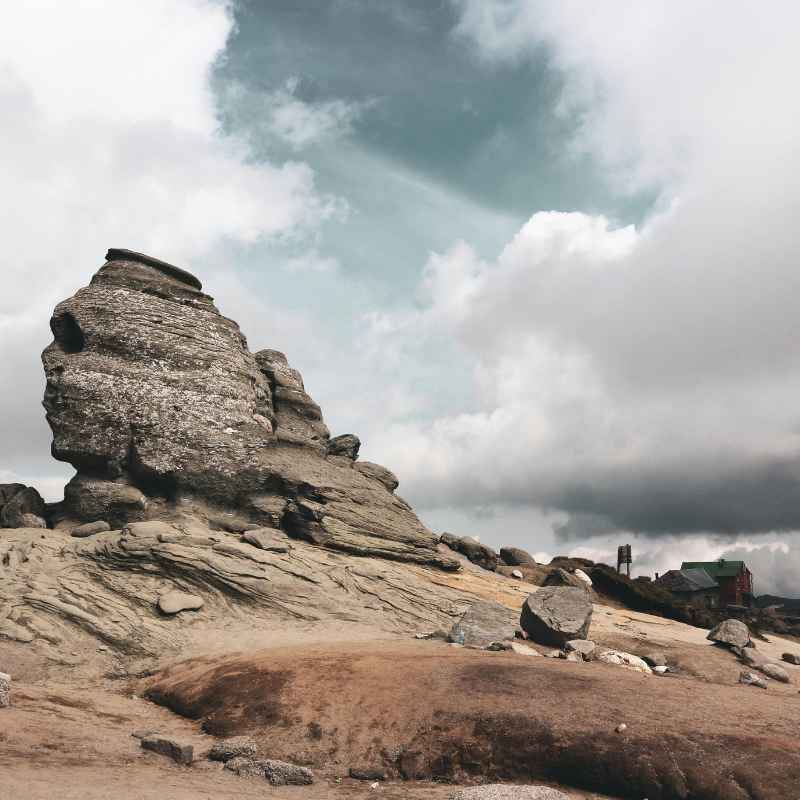
- Over time, weathering creates distinct landforms such as arches, caves, hoodoos, and soil horizons.
What Is Weathering?
Weathering is the natural process that breaks down rocks, minerals, and other Earth materials at or near the surface. It happens everywhere – from the highest peaks to the deepest canyons – and it never stops. Unlike erosion, which carries material away, weathering simply weakens or disintegrates the rock in place.
The term “weathering changes the landscape” captures the essence of this process. Over centuries, a solid granite cliff can become a pile of loose sand, and a limestone plateau can transform into a jagged karst landscape dotted with sinkholes. Weathering prepares the material for erosion, but its primary role is chemical and physical breakdown.
- Physical (mechanical) weathering: Cracks, fractures, and abrasion without chemical change.
- Chemical weathering: Reactions that alter the mineral composition (e.g., dissolution, oxidation).
- Biological weathering: Living organisms contribute through root wedging, burrowing, and organic acid release.
- Key agents: Water, temperature changes, oxygen, carbon dioxide, acids, and pressure.
- Timescales: From a few years (in soft sandstone) to millions of years (in hard granite).
Important: Weathering is often confused with erosion. Remember: weathering breaks, erosion moves. Both work together to shape landscapes.
How Does Weathering Change the Landscape?
Weathering changes the landscape by constantly wearing down and reshaping solid rock. The process starts when cracks and fissures appear in the rock, allowing water, air, and organisms to penetrate. Over time, the rock becomes weaker, pieces break off, and the surface texture alters.
One of the most visible ways weathering changes landforms is through the creation of soil. As rock particles mix with organic matter, a fertile layer forms that supports plant life. The type of weathering present determines the texture and chemistry of the soil.
For example, chemical weathering in tropical climates produces deep red laterite soils, while physical weathering in cold regions yields shallow, rocky regolith.
Beyond soil, weathering carves out iconic features like the granite domes of Yosemite, sandstone arches of Utah, and limestone caves throughout the world. According to the U.S. National Park Service, more than 80% of the world’s caves are formed by chemical weathering of limestone (dissolution).
- Step 1: Rock exposed at the surface becomes vulnerable to atmospheric agents.
- Step 2: Small cracks allow water and gases to enter.
- Step 3: Physical and chemical processes enlarge cracks and disintegrate minerals.
- Step 4: Weathered material accumulates as regolith or is removed by erosion.
- Step 5: New landforms emerge as the process repeats over geologic time.
| Weathering Type | Main Agent | Landscape Impact | Example Location |
|---|---|---|---|
| Physical (freeze-thaw) | Water ice | Talus slopes, shattered peaks | Alps, Rocky Mountains |
| Chemical (dissolution) | Acidic water | Caves, sinkholes, karst | Mammoth Cave, Kentucky |
| Biological (root wedging) | Plant roots | Cracked boulders, rockfall | Redwood forests, California |
These three types of weathering rarely work alone. In most landscapes, physical fractures speed up chemical attack by exposing fresh surfaces, and biological activity enhances both.
Physical Weathering: Breaking Rocks Apart
Physical (mechanical) weathering fractures rocks without changing their chemical makeup. It’s driven by pressure changes, temperature fluctuations, and the force of ice. The most dramatic example is frost wedging (freeze-thaw).
Water seeps into cracks, freezes at night, expands by about 9%, and pushes the crack wider. Repeated cycles eventually split rock apart.
Another form is exfoliation (sheeting), where pressure release causes layers of rock to peel away like an onion. This creates dome-shaped mountains like Stone Mountain in Georgia. Thermal expansion from wildfire or day-night temperature swings can also cause rocks to spall.
According to the Geological Society of America, freeze-thaw weathering affects over 20% of Earth’s land surface (permafrost and alpine regions).
- Frost wedging: Most effective in mountains with daily freeze-thaw cycles.
- Salt crystal growth: Saltwater evaporates in pores, forming crystals that pry rocks apart.
- Abrasion: Wind or water carries particles that scrape against rock surfaces.
- Pressure release: Erosion of overlying rock allows deeper rock to expand and crack.
- Thermal stress: Rapid temperature changes cause differential expansion and contraction.
Warning: Physical weathering can produce sharp, angular fragments that pose hazards for hikers and climbers. Always check for loose rock in talus fields.
The intensity of physical weathering depends on climate. Cold, wet regions with many freeze-thaw cycles experience rapid breakdown, while dry deserts rely more on thermal stress and salt wedging. The debris from physical weathering often forms scree slopes at the base of cliffs.
Chemical Weathering: Dissolving and Transforming
Chemical weathering changes the very composition of rocks. It’s most active in warm, humid environments because chemical reactions speed up with heat and moisture. The main processes include dissolution (rock dissolving in water), oxidation (like rusting), and hydrolysis (reaction with water to create new minerals).
Limestone and marble are especially vulnerable to dissolution. Rainwater absorbs carbon dioxide from the air and soil, forming a weak carbonic acid that slowly eats away carbonate rocks. Over thousands of years, this creates caves, sinkholes, and the jagged karst topography found in places like Carlsbad Caverns.
The U.S. Geological Survey notes that chemical weathering is responsible for removing up to 10 billion tons of rock material globally each year.
- Dissolution: Calcite in limestone dissolves in acidic water.
- Oxidation: Iron-rich minerals turn reddish (rust) and weaken the rock.
- Hydrolysis: Feldspar minerals in granite convert to clay.
- Carbonation: Carbon dioxide reacts with minerals to form carbonates.
- Hydration: Water molecules attach to minerals, causing expansion.
| Rock Type | Chemical Process | Result | Example |
|---|---|---|---|
| Limestone | Dissolution | Caves, sinkholes | Phong Nha, Vietnam |
| Granite | Hydrolysis | Clay minerals, rounded domes | Yosemite, California |
| Basalt | Oxidation | Red iron oxides | Columbia River Basalts |
Chemical weathering not only softens rock but also produces important secondary minerals like clay and iron oxides. These form the basis of rich soils in tropical regions, though they can also lead to land degradation if the original rock is exhausted.
Biological Weathering: Life’s Role in Shaping Earth
Living organisms are powerful weathering agents. Tree roots wedge into cracks and grow, prying apart rocks. Lichens and moss secrete acids that slowly dissolve rock surfaces.
Burrowing animals like earthworms and ants mix and break down soil particles, enhancing exposure to chemical and physical forces.
Biological weathering often acts as a catalyst. For example, the organic acids released by decaying plant matter accelerate chemical reactions. A study from the University of Zurich in 2020 found that microbial activity in soils increases the rate of silicate weathering by up to 30%, which in turn helps regulate atmospheric CO₂ levels over geologic time.
- Root wedging: Tree and shrub roots grow into cracks, exerting pressure up to 30 atmospheres.
- Lichens: Produce chelating compounds that extract minerals from rock surfaces.
- Burrowing: Earthworms and insects bring fresh rock fragments to the surface and mix organic matter.
- Animal acids: Bat guano in caves is rich in nitric acid, which etches limestone.
- Human activity: Mining, quarrying, and construction accelerate weathering dramatically.
Tip: To see biological weathering in action, examine an old stone wall. Look for moss growing on the surface and small cracks where plant roots have penetrated. The wall will slowly break apart over decades.
Biological weathering is especially important in temperate and tropical forests, where vegetation is dense. It creates microenvironments that increase the total surface area of rock exposed to chemical attack, making the landscape evolve faster than in barren areas.
How Weathering Creates Unique Landforms
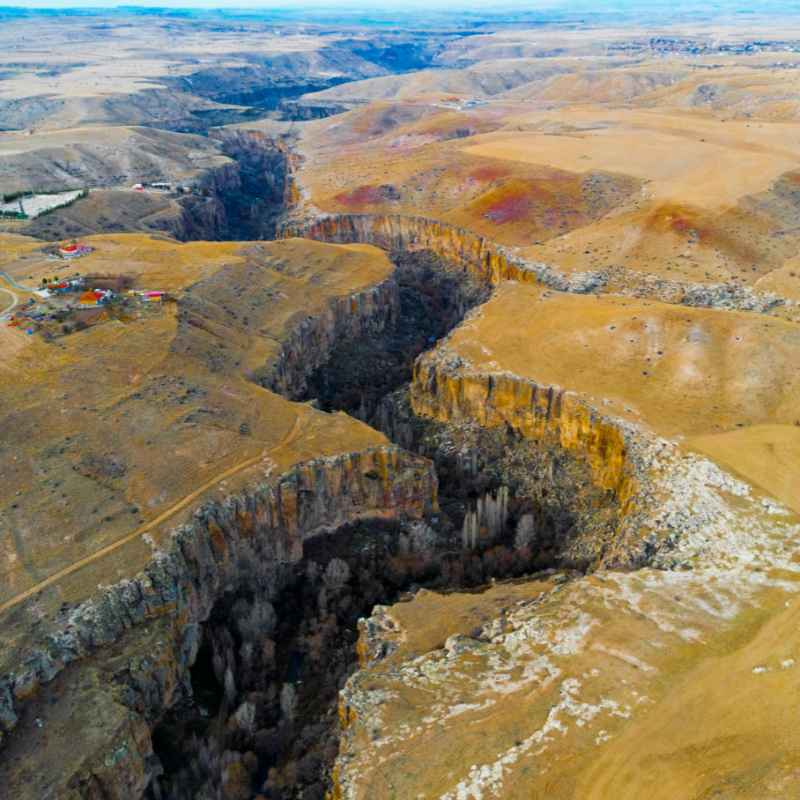
Weathering changes the landscape into a variety of distinct landforms. From towering arches to deep canyons, the pattern of breakdown determines the final shape. Arches and natural bridges form when vertical joints in sandstone are widened by frost wedging and wind abrasion, eventually creating a hole through the rock.
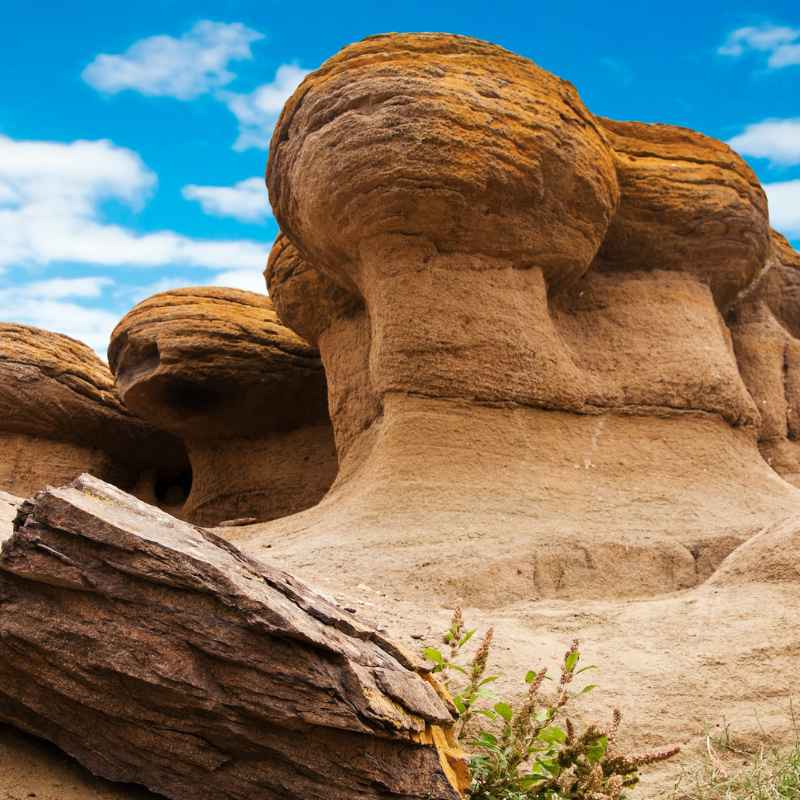
Another classic weathering landform is the hoodoo – a tall, thin pillar of rock often topped with a harder capstone. Hoodoos form when differential weathering attacks the softer layers beneath a resistant cap. Bryce Canyon in Utah is a world-famous example, with thousands of hoodoos carved by frost wedging and chemical dissolution.
The National Park Service estimates that weathering and erosion have lowered the Bryce Canyon landscape by over 60 meters in the last million years.
- Arches: Created when weathering erodes a weak spot in a fin of rock.
- Caves: Formed by dissolution of limestone along bedding planes and joints.
- Sea stacks: Left behind when headlands are weathered and eroded by waves.
- Inselbergs: Isolated rock hills in deserts, remnants of differential weathering.
- Karst towers: Steep limestone hills weathered by tropical rain.
The rate of landform development depends on rock hardness, climate, and time. Hard granite may take tens of millions of years to form a dome, while soft sandstone can develop an arch in only a few thousand years.
The Connection Between Weathering and Soil Formation
Soil is the ultimate product of weathering. Without the breakdown of rock, there would be no mineral component for soil. Physical weathering creates small particles, while chemical weathering transforms them into clay minerals and releases nutrients like potassium, calcium, and phosphorus.
Biological weathering adds organic matter.
According to the Food and Agriculture Organization (FAO), it can take 500 to 1,000 years to form just 2.5 centimeters of topsoil in a temperate climate. This underscores how slowly weathering shapes the landscape and how vital it is for agriculture. The type of soil that forms depends on the parent rock, climate, and the dominant weathering processes.
For example, granite weathers into sandy, nutrient-poor soil, while limestone often yields rich, alkaline soils.
- Regolith: The loose layer of weathered rock fragments that covers bedrock.
- Clay formation: Hydrolysis of feldspar creates kaolinite and other clays.
- Nutrient release: Weathering breaks down minerals to make nutrients available to plants.
- Acid rain impact: Human-made pollution can accelerate chemical weathering and soil acidification.
- Soil horizons: Distinct layers (O, A, B, C) form as weathering progresses.
Tip: If you dig a hole in your garden, you can see the topsoil (dark, organic) and subsoil (lighter, more clay). The lowest layer contains broken parent rock – evidence of ongoing weathering.
The interplay between weathering and soil creation is a fundamental Earth system process. It supports ecosystems, filters water, and stores carbon. Without it, landscapes would remain barren rock.
How Weathering Affects Human Structures
Weathering doesn’t stop at natural rocks – it also attacks buildings, monuments, and infrastructure. Stone and concrete are vulnerable to the same physical, chemical, and biological processes. Acid rain, in particular, accelerates the weathering of limestone and marble structures.
The Acropolis in Athens and the Taj Mahal have suffered significant damage from air pollution and weathering.
The rate of weathering on artificial structures is often much faster than on natural rock because of the smooth surfaces and concentrated exposure to pollutants. The National Institute of Standards and Technology reports that concrete can show signs of chemical weathering within just 20 years in harsh environments. Freeze-thaw cycles cause spalling (chipping) on roads and sidewalks, while salt crystallization attacks bricks and mortar.
- Limestone buildings: Dissolve quickly in acidic rain, losing detail and strength.
- Concrete: Steel reinforcement rusts (oxidation) and expands, cracking the concrete.
- Bricks: Freeze-thaw cycles cause flaking (spalling) of the surface.
- Gravestones: Used by geologists to measure weathering rates over centuries.
Warning: Ignoring weathering on your home can lead to costly repairs. Check for cracks in foundations, efflorescence (white salt deposits) on brick walls, and peeling paint that exposes wood or concrete to moisture.
Understanding how weathering changes the landscape helps engineers design more durable structures. They choose weather-resistant stones, apply sealants, and plan for drainage to reduce water infiltration.
Frequently Asked Questions
What is the difference between weathering and erosion?
Weathering breaks down rocks in place. Erosion moves the broken pieces away by wind, water, ice, or gravity. Weathering comes first and prepares material for erosion.
How long does it take for weathering to change a landscape?
It varies widely. Soft sandstone can show visible change in a few years. Hard granite may require millions of years.
Most significant landscape features take tens of thousands to millions of years to form.
Which type of weathering is fastest?
Physical weathering by frost wedging can act rapidly – a single night of freezing can widen a crack. Chemical weathering is generally slower but can be faster in warm, wet climates. Biological weathering rates fall in between.
Can human activity speed up weathering?
Yes. Pollution creates acid rain, which accelerates chemical weathering. Mining and construction expose fresh rock surfaces.
Agriculture alters soil chemistry. Human actions have increased weathering rates in many regions.
What role does weathering play in the carbon cycle?
Chemical weathering of silicate rocks consumes CO₂ from the atmosphere. Over geological timescales, this process helps regulate Earth’s climate. Scientists estimate that weathering draws down about 100 million tons of carbon per year.
Final Thoughts
Weathering is a relentless, planet-shaping force that transforms hard rock into soil, carves caves, and sculpts mountains. Understanding how weathering changes the landscape helps us appreciate the slow dance of geological time and informs everything from farming to construction. Whether you’re hiking through a granite dome or exploring a limestone cavern, you’re witnessing weathering in action.
Related pick: Check today's price on Amazon