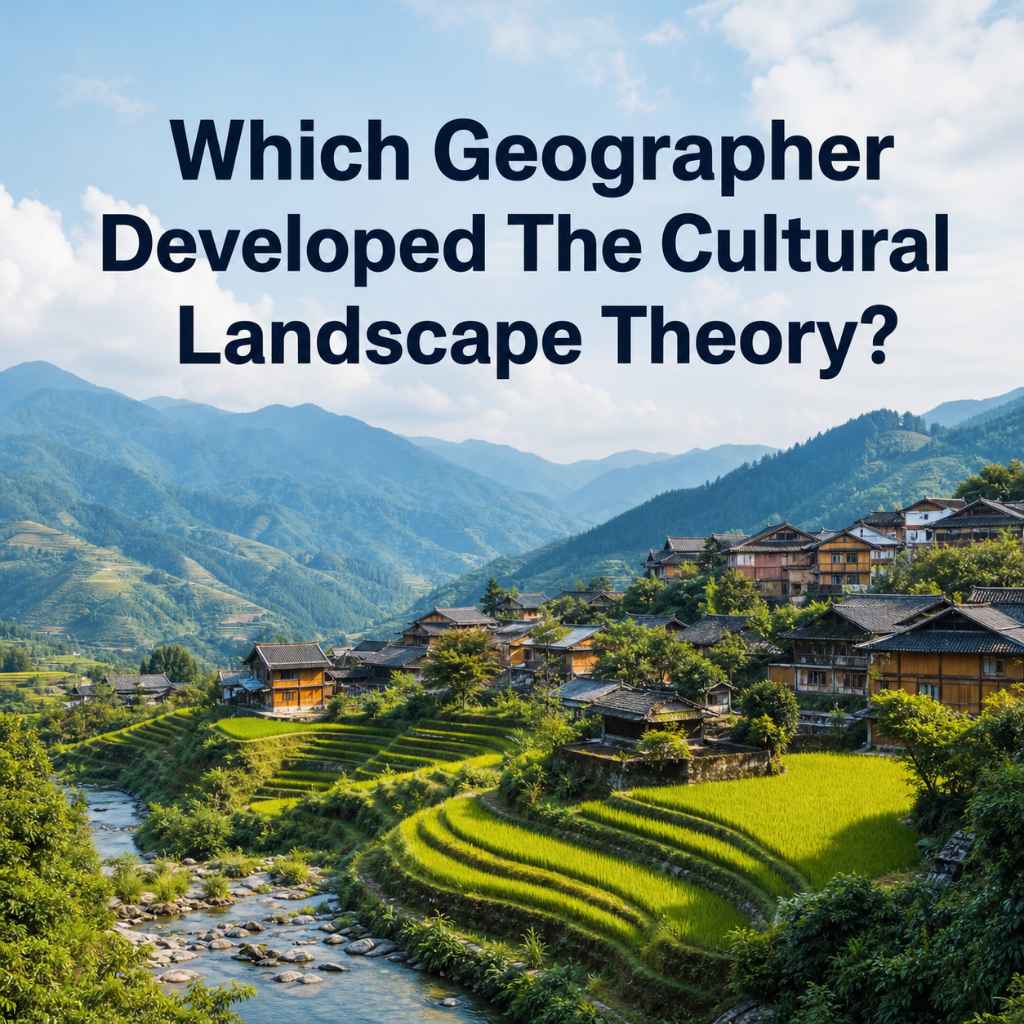

The concept of the cultural landscape was significantly developed and popularized by Carl Sauer. He argued that landscapes are the result of the interaction between human societies and their natural environment, with culture being the active agent shaping the land over time.
What is the Cultural Landscape Theory?
The cultural landscape theory is all about how people and places change each other. It’s a way to look at the world. We see how humans act on the land.
We also see how the land affects what humans do. This theory says that the world we see today is not just natural. It’s also built by people over a long time.
Think about a forest. A natural forest is one thing. But if people plant trees in rows, that’s different.
If they build houses and roads in it, it becomes a cultural landscape. The land shows the history of human use. It shows the cultures that lived there.
It’s a record of their choices and their lives.
Carl Sauer: The Pioneer
When we talk about the cultural landscape theory, one name comes up most often. That is Carl Sauer. He was a geographer in the United States.
He worked a lot in the early to mid-1900s. Sauer was interested in how humans interact with nature. He didn’t see nature as just something static.
He saw humans as the main force changing the land. He thought about how different groups of people used the land over time. He called this the “cultural landscape.” For Sauer, a landscape was not just pretty hills or rivers.
It was a space shaped by human actions and beliefs.
My First Encounter with Sauer’s Ideas
I remember reading about Carl Sauer for the first time. It was during a college geography class. The professor was talking about human geography.
He mentioned “cultural landscapes.” I pictured it as just farms or cities. But then he introduced Sauer. He explained Sauer’s idea that the land itself tells a story.
It tells the story of the people who lived there.
This clicked for me. I had always seen places as just “natural” or “man-made.” But Sauer’s view was richer. It showed how human culture is woven into the very fabric of the earth.
He talked about how different tools, farming methods, and even beliefs left their mark. It felt like unlocking a new way to see the world around me. I started noticing these human imprints everywhere.
Key Concepts from Sauer’s Work
Culture as the Agent: Sauer emphasized that culture is the driving force behind landscape change. It’s not just random human activity, but learned behaviors and values that direct how people use resources.
Time and Accumulation: Landscapes develop over long periods. The present landscape is a result of many layers of human action, each adding to the story.
The Cultural Process: He looked at how people acquire new tools, technologies, and ideas. Then, how they apply them to the land. This process shapes what the landscape looks like.
Why Does This Matter?
Understanding the cultural landscape is important. It helps us see how we have changed the planet. It shows that what we see is not always “natural.” It is the result of human choices.
This is true for big things like cities. It’s also true for small things like a park or a backyard garden.
It also helps us understand different cultures. How people use the land tells us about their needs and their values. It can show their history and their traditions.
For example, a rice paddy in Asia looks very different from a cornfield in the Midwest. This difference is a cultural landscape difference.
Sauer’s Influence on Geography
Shifting Focus: Sauer helped move geography away from just studying physical features. He pushed for more focus on human impact and cultural elements.
Regional Studies: His ideas led to more detailed studies of specific regions. These studies looked at how human cultures shaped those areas.
Understanding Change: He provided a framework for understanding how landscapes evolve. This is useful for planning and for conservation today.
Real-World Context: Farms and Fields
Think about farming. It’s a prime example of a cultural landscape. Across the world, farmers use different methods.
In some places, you see small, hand-tilled plots. In others, large machines work vast fields. The shape of fields can also tell a story.
Some are square or rectangular from modern planning.
Others might be long and narrow, following ancient property lines or terrain. The types of crops grown also show cultural choices. They depend on what people eat, what they can sell, and what grows well in that climate.
This is all part of the cultural landscape.
Contrast Matrix: Natural vs. Cultural Landscape
Natural Landscape
Characteristics: Primarily shaped by natural forces like weather, geology, and biology. Minimal human intervention.
Examples: Remote rainforests, untouched mountain ranges, vast deserts.
Cultural Landscape
Characteristics: A blend of natural and human elements. Reflects human activities, beliefs, and technologies.
Examples: Agricultural fields, cities, villages, roads, parks.
What This Means for You
When you look around your own town or city, you’re seeing a cultural landscape. The streets were planned. The buildings were built.
Even parks were designed. The trees might have been planted. Everything has a human story behind it.
This idea can make you see your surroundings differently. You might notice how roads follow old paths. Or how certain plants are common because people planted them.
It helps you understand why places look the way they do. It also makes you think about the choices people made.
Quick Scan Table: Landscape Types
| Type | Primary Influences | Human Role |
|---|---|---|
| Natural | Geology, Climate, Biology | Minimal to none |
| Cultural | Human Culture, Technology, Economy | Dominant |
When is it Normal vs. Concerning?
Seeing a cultural landscape is normal. It’s how humans live. They adapt the land to their needs.
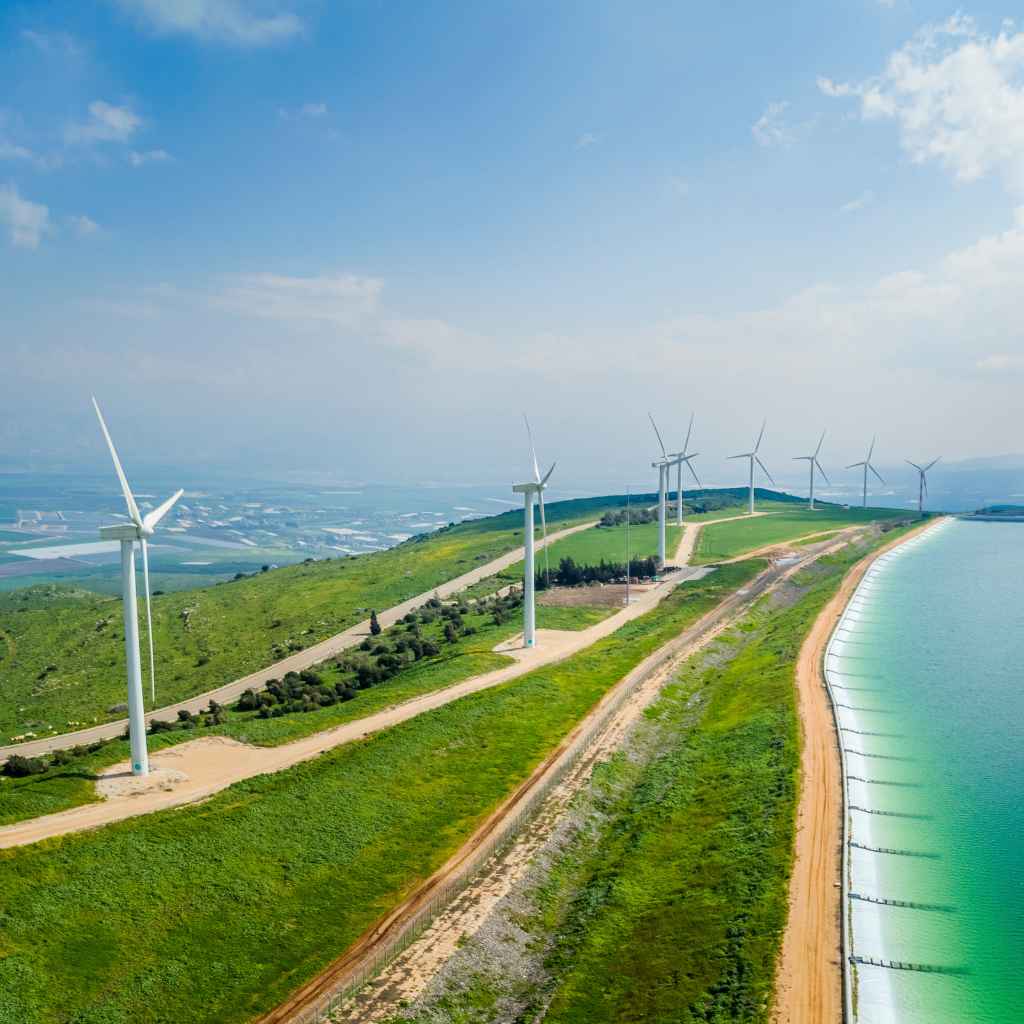
What might be concerning is the scale and speed of change. Sauer studied a time when changes were often slower. Today, human impact can be very rapid and widespread.
For example, deforestation for farming is a cultural process. It’s normal for humans to farm. But if it happens so fast that it causes soil erosion and loss of biodiversity, then it becomes concerning.
It’s about balance. It’s about the long-term effects on both the environment and human well-being. Understanding the cultural landscape helps us make better choices.
Observational Flow: How Landscapes Evolve
Initial State: A natural environment with little human touch.
First Humans Arrive: Small groups, hunters, gatherers, or early farmers. Minimal impact, perhaps small clearings.
Settlement and Agriculture: More permanent homes. Farming practices begin to shape fields, water systems. Small villages form.
Growth and Technology: Villages become towns, then cities. Roads, infrastructure, new building materials appear. Larger-scale resource use.
Modern Era: Industrialization, globalization. Rapid changes, large infrastructure projects, widespread resource extraction. Global impact.
Common Questions About Cultural Landscapes
Who is Carl Sauer and why is he important in geography?
Carl Sauer was an American geographer. He is famous for developing the concept of the cultural landscape. He showed how human culture actively shapes the land over time, making it a central idea in human geography.
What is the main idea behind the cultural landscape theory?
The main idea is that the land we see is not just natural. It’s a product of human actions, beliefs, and history. Humans and their cultures are the main forces that shape and change the environment around them.
Can you give an example of a cultural landscape?
Yes, think of the rice terraces in Southeast Asia. They were built by humans over centuries. They show how people adapted to steep terrain for farming.
This is a classic example of a cultural landscape.
How does culture influence the landscape?
Culture influences the landscape by providing the ideas, values, and technologies that guide human actions. For instance, a culture that values wood for building will create a different landscape than one that uses stone or concrete.
Is the concept of cultural landscape still relevant today?
Absolutely. It’s very relevant. Today’s environmental challenges, like climate change and land degradation, are deeply tied to human actions.
Understanding cultural landscapes helps us see the roots of these problems and find better solutions.
What is the difference between a physical landscape and a cultural landscape?
A physical landscape is shaped mainly by natural forces. A cultural landscape is shaped by both natural forces and human activities. The human element is what makes it “cultural.”
Conclusion
So, the geographer most linked to developing the cultural landscape theory is Carl Sauer. His work opened our eyes. It showed us that the world around us is a canvas.
Humans paint on it with their lives and their cultures. It’s a deep way to see our connection to the Earth.