Landscape Gardening: Theory And Practice From The Classic Text
Landscape gardening involves understanding design principles, plant needs, and site conditions. It aims to create beautiful, functional, and sustainable outdoor environments. This guide explores the foundational theory and practical application from classic perspectives.
The Foundational Ideas of Landscape Gardening
Landscape gardening is more than just planting flowers. It’s about art and science mixed together. It’s about making the best use of land.
It’s about working with nature, not against it. Old books talk about important ideas. These ideas still hold true today.
They help us build gardens that look good and work well.
Think about a painter. They don’t just splash colors on a canvas. They think about balance.
They think about shapes. They think about what feeling they want to create. A landscape gardener does the same for the earth.
They use plants, stones, water, and paths. They arrange them to make a pleasing scene.
The goal is often to create a beautiful picture. It should feel natural, even if it’s carefully planned. It should feel right for the place it’s in.
This means looking at the land itself. What is the soil like? How much sun does it get?
Is it windy? Are there big trees already there? These are all clues.
Classic texts often talk about ‘form’ and ‘function’. Form is how it looks. Function is how it works.
A garden needs to look good. It also needs to be easy to use. Maybe you want a place to eat outside.
Or a path to walk on. Or a quiet spot to read. The design must support these uses.
Another key idea is harmony. This means all the parts should fit together. The house should look good with the garden.
The plants should look good together. The style of the garden should match the style of the house. It should also fit the area around it.
Consider the feeling a garden gives you. Some gardens feel grand and formal. Others feel wild and natural.
Some feel cozy and secret. The gardener chooses plants and shapes to create this feeling. This is called atmosphere.
It’s a very important part of garden design.
These old ideas are not just old-fashioned. They are timeless. They teach us to look closely at our spaces.
They teach us to plan carefully. They help us make outdoor areas that are both lovely and useful for a long time.
My First Big Garden Project: A Real Wake-Up Call
I remember my first real attempt at a big garden design. I was maybe 25. I had just bought a small house.
It had a decent yard, but it was totally bare. Just grass and a sad little bush. I had read a few gardening books.
I thought I knew it all. I pictured a vibrant cottage garden. Lots of flowers spilling everywhere.
It felt so exciting.
I bought plants. So many plants. All different colors and sizes.
I dug holes and stuck them in the ground. I didn’t think much about how tall they would get. Or how much sun they really needed.
I just placed them where they looked pretty in the pot. It was a hot July day. The sun was beating down.
I worked for hours. By the end, I was exhausted but so proud. It looked like a messy jumble, but to me, it was art.
Fast forward a few weeks. Disaster. Some plants wilted.
Others grew so fast they choked out their neighbors. The ones I put in full sun were burning. The ones in shade were leggy and weak.
I had picked plants that looked nice next to each other in the store. But they had totally different needs. I had created chaos, not a garden.
That’s when I realized that just picking pretty plants wasn’t enough. I needed to understand the real theory behind it all. It was a humbling, sweaty lesson.
Key Landscape Design Principles
Balance: How elements are arranged. Symmetrical balance is like a mirror image. Asymmetrical balance is more natural, with different elements balancing each other.
Scale: How the size of things fits the space. Large elements in a small garden can feel overwhelming. Small elements in a large garden can get lost.
Harmony: How all parts work together. This includes colors, shapes, and textures. It makes the garden feel unified.
Rhythm: The repetition of elements. This can be seen in repeating colors, shapes, or plants. It guides the eye through the garden.
Emphasis: A focal point. This is something that draws attention. It could be a statue, a special tree, or a bright flower bed.
Understanding Your Site: The Groundwork
Before you even think about what plants to buy, you must understand your site. This is what the old masters emphasized. Your site has unique features.
It has strengths and weaknesses. Working with these makes a much better garden. It also means less work for you later.
First, look at the sun. Where does the sun hit your yard during the day? When is it shady?
Some plants need full sun all day. Others need shade in the hot afternoon. Knowing this is vital.
You can even track the sun. Note down what parts of the yard get sun at 9 AM, noon, and 3 PM. This tells you a lot.
Next, check the soil. Is it sandy? Clay?
Loamy? Sandy soil drains fast. Clay soil holds water.
Loamy soil is usually best. You can do a simple test. Grab a handful of moist soil.
Squeeze it. If it forms a ball that crumbles easily, it’s good. If it stays in a hard clump, it’s likely clay.
If it won’t even hold a shape, it’s sand.
Drainage is also key. Does water pool after rain? Poor drainage can kill many plants.
You can test this by digging a hole. Fill it with water. Let it drain.
Fill it again. Time how long it takes to drain. If it takes many hours, you have drainage issues.
Think about the wind. Is your yard very windy? Strong winds can dry out plants.
They can break branches. You might need to plant a windbreak. This is a row of trees or shrubs.
They block the wind. Consider the natural slope of the land. This affects water flow and where you might place paths or patios.
Also, look at existing features. Are there mature trees? A nice rock outcropping?
A charming old wall? These can be assets. You can design your garden around them.
Don’t just tear everything out. Sometimes, the best gardens use what’s already there.
Finally, think about water. Do you have a water source nearby? Will you need to water often?
Some plants are very drought-tolerant. They are good choices if you live in a dry area. Or if you don’t want to water a lot.
Understanding your site is the first step to smart landscape gardening. It helps you choose the right plants. It helps you place them in the best spots.
It prevents problems down the road.
Site Analysis Checklist
- Sunlight: Full sun, partial shade, full shade areas? Track throughout the day.
- Soil Type: Sandy, clay, loam? Texture and drainage.
- Drainage: Does water stand after rain?
- Wind Exposure: Sheltered or exposed?
- Slope: Natural grade of the land.
- Existing Features: Trees, rocks, structures to keep or work with.
- Water Access: Proximity to hoses or irrigation.
- Views: What do you want to see? What do you want to hide?
Plant Selection: The Living Palette
Choosing the right plants is like a painter choosing colors. But these colors grow and change. They have needs and behaviors.
Classic landscape theory stressed using plants that fit the site. It also focused on plants that provide interest all year round.
You need to consider a plant’s mature size. A small shrub might look cute in a pot. But if it grows 20 feet tall and wide, it will overwhelm your garden.
Read plant tags carefully. Or research them online.
Think about the seasons. What will your garden look like in spring? Summer?
Fall? Winter? Some plants have beautiful flowers.
Others have striking fall color. Some have interesting bark or evergreen leaves for winter. A good garden has something to offer in every season.
This is called year-round interest.
Consider texture. Plants have different leaf shapes and textures. Some are fine and feathery.
Others are bold and waxy. Mixing textures adds depth and interest. A planting of only fine-textured plants can look flat.
Color is important, of course. But don’t just think about flowers. Leaves come in many colors too.
Reds, purples, yellows, and silvers can add color all season long. Think about how colors work together. Do you want a calm, cool garden?
Or a bright, energetic one?
Native plants are often a great choice. They are already adapted to your local climate and soil. They often need less water and care.
They also support local wildlife. They are a smart, sustainable choice.
Avoid problems. Some plants are prone to pests or diseases. Others spread aggressively.
Do your homework. Talk to local garden center experts. They can tell you what grows well in your area.
Remember the site analysis. Match plants to their conditions. Put sun-lovers in sunny spots.
Put shade-lovers in shady spots. Put plants that need good drainage in well-drained areas. This simple step saves so much heartache.
A classic principle is to group plants with similar needs together. This makes watering and care much simpler. It also helps plants thrive.
The Art of Arrangement: Form, Line, and Mass
Once you know your site and have some plant ideas, you can start arranging them. This is where the artistic side of landscape gardening really shines. It’s about creating pleasing shapes and spaces.
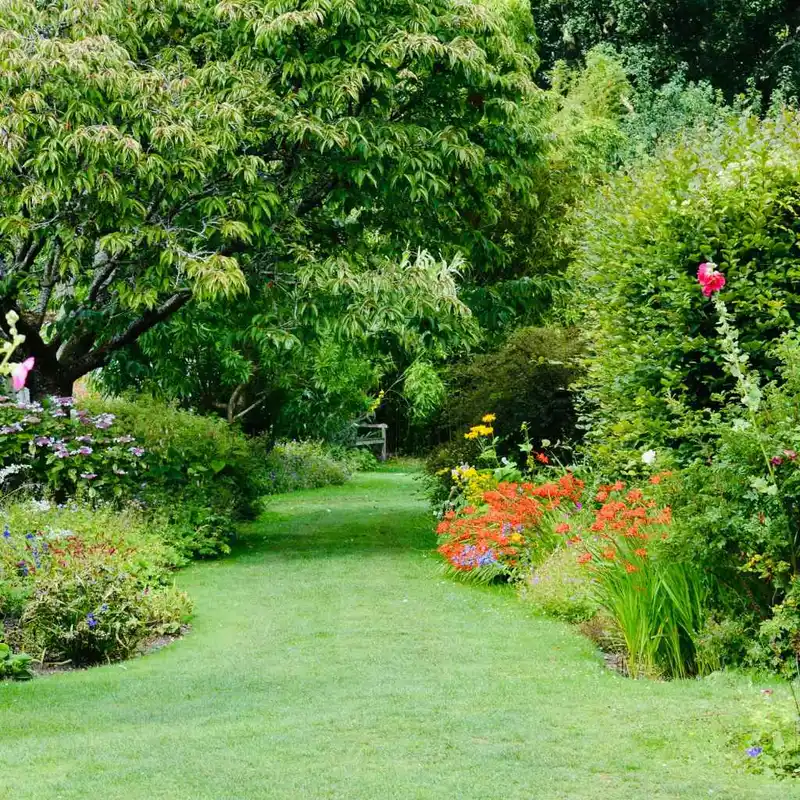
Line: Lines in a garden guide the eye. A winding path creates a sense of mystery. A straight path feels more direct and formal.
The shape of your lawn is a line. The edge of a flower bed is a line. The way branches of a tree fall creates lines.
Vertical lines, like tall narrow trees or flower spikes, draw the eye upward. Horizontal lines, like low hedges or wide borders, can make a space feel wider. Curved lines feel more natural and relaxed.
Form: This refers to the shape of plants and garden features. Think of a weeping willow. Its form is gracefully drooping.
A spiky ornamental grass has a spiky form. A round shrub has a rounded form. Mixing different plant forms adds visual interest.
A garden with only rounded shrubs can look monotonous.
You also arrange forms into larger masses. A mass is a grouping of plants. It creates a solid block of color, texture, or form.
Masses help define spaces in the garden. They create focal points. They can be used to screen unwanted views or to create intimate areas.
Mass: When you group plants together, you create a mass. This is a fundamental concept. Instead of planting single specimens everywhere, you plant in groups.
For example, you might plant three or five of the same perennial together. This creates a stronger visual impact than a single plant.
Masses can be used to create different effects. A large mass of colorful flowers can be very dramatic. A mass of green foliage can be calming.
The shape of the mass is important too. Is it a soft, natural mound? Or a sharp, geometric shape?
The size of the mass should relate to the scale of the garden. A tiny mass of flowers in a huge yard will disappear. A huge mass of shrubs in a small patio garden will feel overwhelming.
These elements – line, form, and mass – work together. They create the structure of your garden. They give it shape and flow.
It’s like building with living materials.
Arrangement Tips
- Use curves for a natural feel. Use straight lines for formality.
- Mix plant forms. Combine rounded, spiky, and upright shapes.
- Create plant masses. Group 3-5 of the same plant for impact.
- Define spaces with borders or masses of plants.
- Consider the view from different points.
Creating Outdoor Rooms: Function and Flow
One of the most satisfying aspects of landscape gardening is creating ‘outdoor rooms’. This means using plants, paths, and structures to define different areas. Each area has a purpose.
It feels like a distinct space within the larger garden.
Think about your needs. Do you want a place for dining? A quiet spot for reading?
A play area for kids? A place to grow vegetables? Each of these can be an outdoor room.
To create a room, you need boundaries. These can be hedges, fences, or even groups of tall plants. These boundaries create a sense of enclosure.
They make the space feel private and intimate.
The floor of the room can be grass, a patio, gravel, or wood decking. The ceiling might be the sky, or it could be the branches of a tree or a pergola. Sometimes, an overhead structure like a pergola with vines provides shade and defines the space.
Flow is how you move between these rooms. Paths are important. They connect different areas.
They guide people through the garden. Paths should be wide enough. They should be easy to walk on.
They can be made of many materials. Bricks, stone, gravel, or wood chips are common.
The transition between rooms is also important. Maybe a path leads from a sunny patio to a shady seating area under a tree. This change in light and atmosphere can be very pleasant.
Consider the views within each room. What do you see from your dining table? What do you see from your favorite chair?
You can use plants to frame views. You can also use them to hide less desirable views.
This concept of outdoor rooms makes a garden more useful. It becomes an extension of your home. It offers different experiences.
You can move from a lively entertaining area to a calm, reflective space.
Outdoor Room Ideas
Dining Patio: A flat paved area near the house. Add a table, chairs, and maybe an umbrella or pergola for shade.
Reading Nook: A small, quiet spot. Use comfortable seating, surrounded by calming plants. Maybe a small side table for a drink.
Kitchen Garden: Raised beds or ground plots for growing herbs and vegetables. Keep it accessible for harvesting.
Children’s Play Area: A safe, open space with soft surfacing like mulch or rubber. Add features like a swing or sandbox.
Fire Pit Gathering Space: A circular patio with seating around a fire pit. Great for evening relaxation.
The Importance of Structure and Framework
A beautiful garden needs more than just pretty flowers. It needs a strong underlying structure. This structure provides support.
It gives the garden shape and character. It’s like the bones of a building.
This structure comes from elements that are more permanent. Think about things that last for many years. These include:
Trees: They provide height, shade, and year-round interest. Their shapes and bark can be beautiful. They are the largest elements in most gardens.
Shrubs: These are the middle layer. They fill in spaces. They create hedges.
They provide evergreen color or seasonal flowers.
Walls and Fences: These provide boundaries. They can offer privacy. They can also add a formal or rustic element, depending on the material.
Paths and Patios: These are the circulation systems. They define movement. They create usable surfaces for sitting or walking.
Water Features: Ponds, fountains, or streams add sound and movement. They can be focal points.
Arbors and Pergolas: These structures add vertical interest. They can support climbing plants. They create shade and define spaces.
Why is this structure so important? Because it gives the garden a backbone. Even when plants die back in winter, the structure remains.
It gives the garden shape and interest all year long. It helps define the different areas or rooms.
When designing, think about the overall framework first. Where will the main paths go? Where will the large trees or shrubs be placed?
What materials will you use for hardscaping like patios and walls? Getting this right makes the rest of the design easier.
The scale of these structural elements must fit the garden. A massive stone wall might be too much for a tiny yard. A delicate trellis might get lost in a large park.
This structural framework is what turns a patch of ground into a garden. It’s the foundation upon which the more fleeting beauty of flowers and foliage is built.
Maintenance: Keeping Your Garden Alive and Well
Even the most beautifully designed garden needs care. Maintenance is not a dirty word. It’s what keeps your garden healthy, beautiful, and looking its best.
Classic texts often spoke of the gardener’s ongoing work.
Watering: This is crucial, especially for new plants. Water deeply but less often. This encourages roots to grow deeper.
Avoid shallow, frequent watering. Check the soil moisture before watering.
Weeding: Weeds compete with your plants for water, nutrients, and light. It’s easier to pull weeds when they are small. Mulching helps suppress weeds.
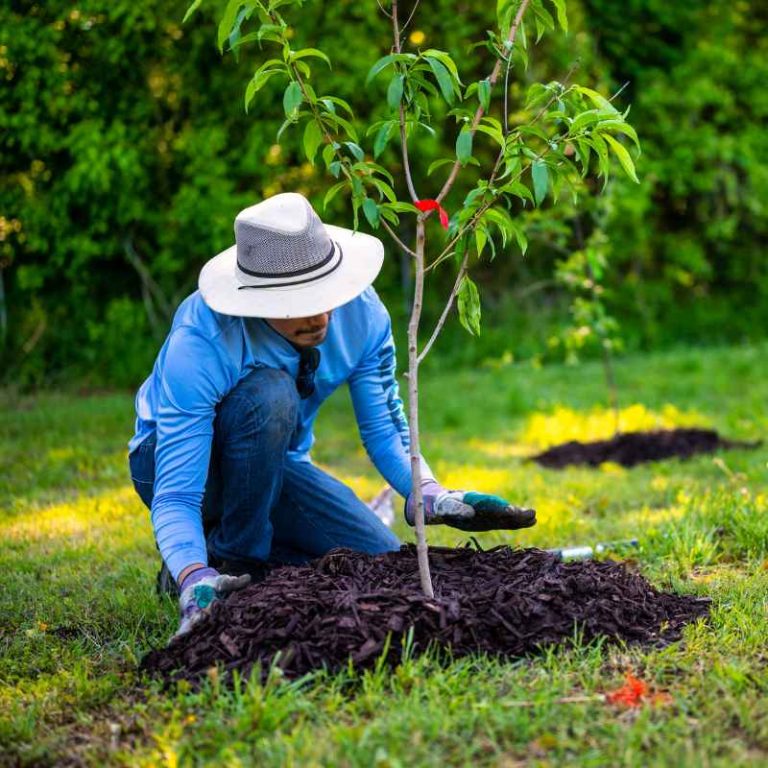
Mulching: A layer of mulch around plants is very beneficial. It helps retain soil moisture. It keeps soil temperatures more even.
It suppresses weeds. It also breaks down over time, adding nutrients to the soil. Good mulches include wood chips, shredded bark, compost, or straw.
Pruning: This involves cutting back plants. It can be done to shape plants. It can be done to remove dead or diseased branches.
It can encourage more flowers or fruit. Different plants need different pruning times and methods.
Fertilizing: Most plants benefit from some feeding. This is especially true for vegetables and heavy-flowering plants. Use a balanced fertilizer.
Follow the package directions. Over-fertilizing can harm plants.
Pest and Disease Control: Keep an eye out for problems. Healthy plants are less susceptible. Try to use natural methods first.
Companion planting can help deter pests. If you must use sprays, choose the least toxic options. Read labels carefully.
The amount of maintenance a garden requires depends on the design. A low-maintenance garden uses drought-tolerant plants. It has fewer fussy annual flowers.
It might use more groundcovers instead of lawns. It relies on structural elements that need little care.
Think about maintenance from the start. Choose plants that fit your climate and your willingness to work. A garden that is too demanding will become a chore.
The goal is to create a space you enjoy, not one you resent.
Quick Maintenance Guide
- Watering: Deeply, less often. Check soil first.
- Weeding: Pull when small. Mulch helps.
- Mulching: Conserves moisture, suppresses weeds.
- Pruning: Shape, remove dead, encourage growth. Know your plant.
- Feeding: Use balanced fertilizer. Don’t overdo it.
- Observe: Look for pests or diseases early.
When is a Garden “Right”? Normal vs. Concerning Signs
It’s helpful to know when things in your garden are behaving normally. And when you might need to pay closer attention. Most garden issues are common and fixable.
But some can signal a bigger problem.
Normal Signs:
Yellowing leaves on some older plants: Often, older leaves naturally die off as the plant grows. This is usually fine.
Slight wilting on a hot, dry day: Plants can wilt when it’s very hot and dry. If they perk up in the evening or when watered, they are likely okay.
A few chewed leaves: Most gardens have insects. A few nibbled leaves mean your garden is part of the ecosystem. It’s not a disaster.
Annual flowers fading: Annuals are meant to bloom for one season. It’s normal for them to fade and die back as the season ends.
New growth appearing: It’s always a good sign when plants are putting out fresh leaves or shoots.
Concerning Signs:
Widespread wilting: If many plants wilt and don’t recover, it could be a watering issue (too much or too little) or a root problem.
Leaves turning yellow and falling off rapidly: This can indicate disease, nutrient deficiency, or overwatering.
Visible pests in large numbers: If you see swarms of aphids, spider mites, or other pests, they can damage plants quickly. Act promptly.
Spots or strange growths on leaves or stems: This could be a fungal or bacterial disease that needs identification and treatment.
Plants not growing at all: If a healthy-looking plant shows no new growth for a long time, something might be wrong with the soil or roots.
Sudden death of a mature plant: This can sometimes be due to disease, pests, or environmental stress. It’s important to try and figure out why it happened.
Don’t panic if you see a concerning sign. Often, it’s a solvable problem. The key is to observe your garden regularly.
Early detection makes a huge difference. When in doubt, take a clear photo of the problem. Talk to an expert at your local garden center or extension office.
Normal vs. Worrying: A Quick Check
| Normal Sign | What to Watch For |
|---|---|
| Older leaf yellowing | Whole plant wilting without recovery |
| A few chewed leaves | Large infestations of pests |
| Seasonal die-back | Sudden, rapid decline of healthy plants |
| Occasional spot on leaf | Widespread spotting or unusual growth |
Bringing it All Together: Your Garden Vision
Landscape gardening is a journey. It’s about observation, planning, and ongoing care. It uses timeless principles to create beautiful, useful outdoor spaces.
By understanding your site, choosing plants wisely, and arranging them thoughtfully, you can create a garden that brings you joy.
Don’t be afraid to start small. Even a few well-chosen plants can make a difference. Learn as you go.
Your garden will evolve. Your understanding will grow. Enjoy the process of shaping your little piece of the world.
Frequently Asked Questions About Landscape Gardening
What is the most important principle in landscape gardening?
Many experts would say understanding and working with your site is most important. This includes sunlight, soil, drainage, and climate. A garden designed for its place will thrive with less effort.
How do I make my garden look professional?
Professional gardens often have a clear design and structure. They use repetition of plants and forms. They have clean edges and well-maintained beds.
Focus on balance, scale, and harmony in your design.
What are the best plants for beginners?
For beginners, choose hardy, low-maintenance plants. Examples include many hostas (for shade), daylilies (for sun), ornamental grasses, and certain shrubs like hydrangeas or potentilla. Always check if they are suited to your specific climate.
How much space do I really need for a garden?
You can create a garden in almost any space. Even a small balcony can have containers. A tiny yard can have a few well-placed beds.
The principles of design apply everywhere. Scale is just adjusted.
What is the difference between landscaping and gardening?
Landscaping often refers to the broader planning and design of outdoor spaces. It can include hardscaping like patios, paths, and walls. Gardening focuses more on the cultivation and arrangement of plants within those spaces.
Should I design my garden myself or hire a professional?
You can absolutely design your own garden! Start with understanding the basics. Many resources are available.
If you have a very large or complex project, or lack time, a professional designer can be very helpful.
How can I make my garden more sustainable?
Use native plants. Conserve water by mulching and choosing drought-tolerant species. Reduce lawn areas.
Compost kitchen and garden waste. Avoid chemical pesticides and fertilizers. Create habitats for local wildlife.