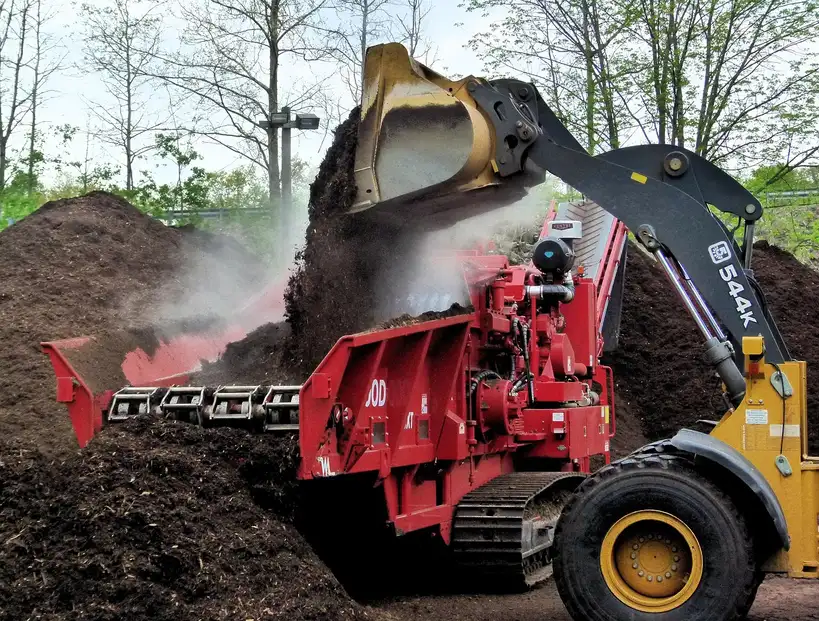
Landscaping Services for Mulch and Planting Beds
Landscaping services for mulch and planting beds usually include bed edging, weed removal, soil prep, planting, mulch delivery and spreading; price is driven most by bed size, access, mulch depth, and whether old mulch is removed. Done poorly, beds compact, weeds return quickly, and roots can suffer from too much or too little mulch. This guide explains what should be included, what changes the price, and what to ask before you hire.
What these services include


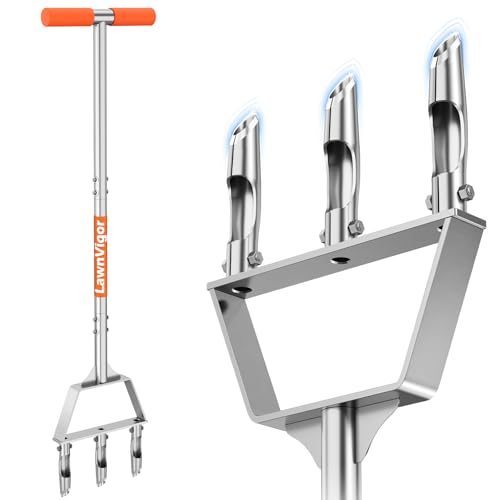
Good mulch and bed work is a cleanup, layout, and install job, not a quick dump-and-spread stop. It should cover cleanup, bed shaping, edge definition, plant fit, mulch placement, and haul-off, with the scope clearly split between a light refresh and a full renovation. If the quote does not say which one you are buying, the job can fall short fast.
Mulch refresh versus full bed renovation
A mulch refresh replaces or tops off mulch that is already in usable shape. A full bed renovation usually goes further: it removes dead material, addresses soil problems, adjusts drainage if needed, replaces poor plant material, and rebuilds the bed edge. If old mulch is matted, sour, or piled too deep, a refresh alone is usually the wrong scope.
Yard Masters describes itself as a “full-service, year-round” company, offers “Installation” as a service category, and says it can build “just about anything” from bed work to hardscape features, including “paver patios.” It also includes yard cleanup within maintenance services and provides a sprinkler service with a warranty. That mix is a reminder that bed work often connects to other systems, not just mulch.
Typical tasks in a bid
A solid bid usually includes bed cleanup, edging, weed removal, soil amendment where needed, plant installation or replacement, mulch delivery, spreading to target depth, irrigation checks, and haul-off. Seasonal maintenance may also be included, such as pruning, weed control, and a mulch top-off later in the year.
What should be excluded or priced separately?
Ask what is excluded. Grading correction, new irrigation zones, stump removal, extensive haul-away, erosion repair, and major plant replacement are often separate line items. If the crew must excavate compacted soil or rebuild a washed-out border, that is not the same job as a standard mulch refresh.
Mulch and bed scope checklist
Use this checklist to compare bids line by line. It keeps the quote focused on scope, not sales language. The goal is to see whether the installer is treating the job as a short cosmetic refresh or a bed system that needs prep, fit, and follow-through.
| Scope item | What it should include | What to confirm in the quote |
|---|---|---|
| Bed cleanup | Leaf removal, dead stems, trash, old debris, and loose weeds | Whether debris is bagged, hauled, or left on site |
| Edging | Clean border cut or installed edge along lawn and hardscape | Edge type, depth of cut, and whether erosion control is included |
| Depth target | Mulch depth stated in inches and kept off stems and trunks | Target depth for existing beds and around new plants |
| Soil amendment | Compost or organic matter mixed into planting zones where needed | How much material is added and whether pH is adjusted |
| Plant count | Number, size, and species of shrubs or perennials | Spacing plan and whether replacements are included |
| Irrigation check | Sprinkler coverage review or drip assessment near beds | Whether heads are adjusted and if drip conversion is priced |
| Haul-off | Removal of old mulch, roots, weeds, and leftover material | Dumpster, trailer, disposal fees, or on-site staging |
| Post-install maintenance | Return visit, weed control, pruning, and mulch top-off timing | What is covered after the first install window |

Which mulch should you choose?
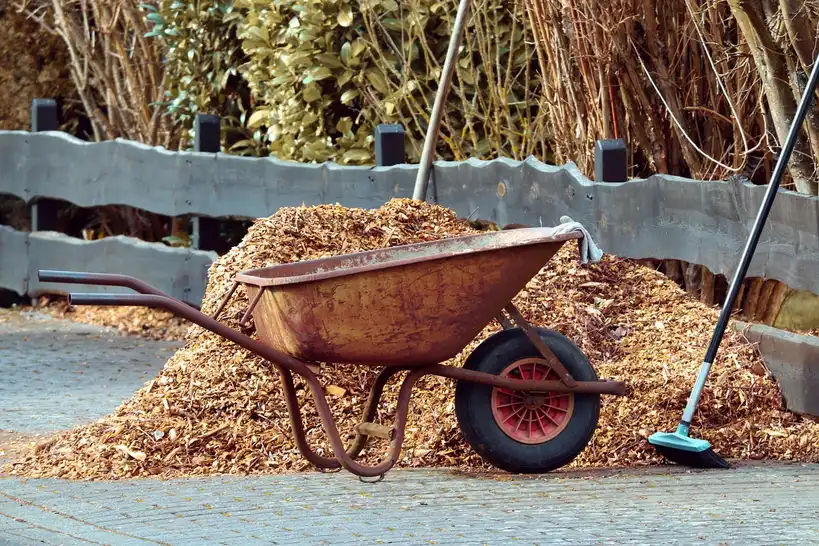
The right mulch depends on the bed’s function, the plants in it, and how often you want to refresh it. Wood mulch, shredded bark, pine bark, and similar organic mulches are common in planting beds because they suppress weeds, slow moisture loss, and break down over time. Color choice matters too, since dyed black, brown, and red mulches age differently.
Common mulch material types
Organic mulches are usually the best fit for planting beds because they can support the soil surface as they decompose. Inorganic options like rock are a different choice and can trap heat around some plants. For most shrub and perennial beds, ask whether the material matches the plant mix, drainage, and maintenance plan.
Color choices and fading
Black, brown, and red are common color options. Darker mulch can fade more visibly in full sun, and some dyed products can show uneven weathering if the bed receives strong irrigation overspray. Color should be a maintenance choice, not the first filter. A bed that needs drainage or soil correction will not be fixed by a darker mulch.
Depth, refresh frequency, and weed suppression
Most planting beds do best with mulch spread to a controlled depth, not piled up. A common target is about 2 to 3 inches deep, because less than that can leave soil exposed and more can smother stems or roots. Refresh frequency depends on material breakdown and exposure, but many beds need topping off about yearly or every other year.
Mulch helps with weed suppression, but it cannot replace cleanup and edge control. Weed seeds still move in from the lawn, the road, and nearby beds. If the border is loose or the mulch is too thin, weeds will reappear quickly.
A common first-timer mistake is to pile mulch in a cone around a shrub trunk. That “volcano” shape traps moisture against bark and can lead to decay. Keep mulch pulled back from stems and trunks so the root flare stays visible.
How planting beds are built
Planting beds fail when the soil, spacing, and drainage are ignored. A good bed install begins before the first plant goes in. The crew should prep the site, grade for water movement, amend the root zone, place plants with room to grow, and finish with mulch that supports the planting plan.
Site prep and grading
Site prep means removing weeds, old roots, and debris, then shaping the bed so water does not collect around stems or run hard into the lawn. If the yard holds water after rain, the bed may need minor grading or a drainage fix before planting starts. Plants in soggy soil fail for different reasons than plants in dry soil.
Soil amendment and drainage needs
Soil amendment usually means adding compost or other organic matter to improve the root zone. In some yards, pH also matters, especially when the soil is far outside the range preferred by the chosen shrubs or perennials. Good contractors explain whether the soil needs correction now or whether the existing grade and soil structure are acceptable.
Plant spacing and mature size
Plant spacing should be based on mature size, not the pot size at installation. If shrubs are planted too close, the bed fills in fast but becomes crowded, shaded, and hard to maintain. For perennials, spacing should also match sun exposure and drainage, so the bed does not become a patchwork of stressed plants.
Say your front bed is narrow and gets hot afternoon sun. A low-water shrub and a few sun-tolerant perennials will usually hold up better than shade plants forced into that spot, even if both choices look fine in the pot.
Should your quote include irrigation?
Yes, if the bed sits near sprinkler heads, if new plants need establishment watering, or if the plan includes drip conversion. Water delivery around beds affects survival, growth rate, and long-term water use. A planting bed quote that ignores irrigation can look cheaper at first and cost more later.
Sprinkler coverage near beds
Sprinkler heads near beds should be checked for coverage so water reaches the root zone without flooding mulch or spraying pavement. Poor coverage leaves dry pockets at the edge of the bed, which is where new plants often struggle first. Good crews adjust heads or note the issue in the proposal.
Drip conversion for new beds
Drip irrigation can improve water efficiency in planting beds, especially where shrubs and perennials are grouped by water need. It can also reduce overspray on mulch, which helps keep the bed edge from washing out. If the quote includes drip, confirm emitters, zones, and repair access.
Watering during plant establishment
New shrubs and perennials need a watering plan after install. That may mean hand watering, drip scheduling, or temporary sprinkler adjustments during establishment. Without it, even well-chosen plants can fail in the first season, especially in hot weather or windy sites.
What edging and cleanup should cover
Edging is not a decorative afterthought. It defines the bed, keeps turf from creeping in, and helps control washout after rain. Cleanup matters just as much, because debris and old roots can block a clean finish and make the bed harder to maintain later.
Steel, plastic, and paver edging
Steel edging gives a sharp border and usually holds a clean line well. Plastic edging is often less expensive, but it can move or warp if installed poorly. Paver edging creates a firmer visual border and can work well near patios or walkways. The best choice depends on the site, traffic, and how much line retention the bed needs.
Bed-to-lawn separation
A clean bed-to-lawn separation makes mowing easier and helps keep mulch in place. It also slows erosion at the edge, especially on slopes or in beds hit by sprinkler runoff. If the edge is shallow or broken, turf will migrate back into the bed and mulch will spill outward.
Weed control, pruning, and seasonal refresh
Landscape maintenance should include weed control, bed cleanup, mulch top-off, pruning, and a seasonal refresh if the bed is meant to stay tidy. Yard Masters includes yard cleanup within maintenance services, which is the kind of line item that matters when a bed has to stay functional after the install. Maintenance is not optional if the bed carries shrubs, perennials, and mulch together.
Picture a side yard bed that slopes toward a driveway. If the installer skips edging and lays mulch too high, the first heavy rain can move material onto the pavement and expose the bed line. That is a scope problem, not just a weather problem.
What affects the price?
Price often follows the scope of work, not just square footage alone. Bed size, access, mulch volume, haul-off, plant count, soil correction, edging type, and irrigation work all change labor and material totals. The cheapest quote often leaves out one of those pieces or prices it separately after the work starts.
Bed size and access
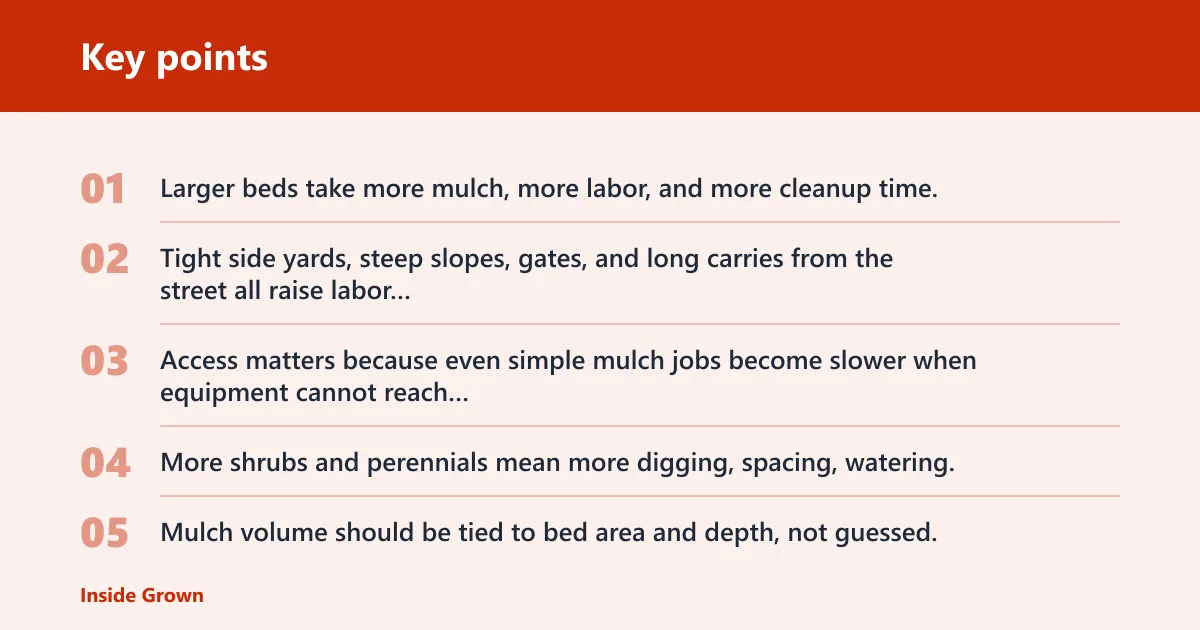
Larger beds take more mulch, more labor, and more cleanup time. Tight side yards, steep slopes, gates, and long carries from the street all raise labor needs. Access matters because even simple mulch jobs become slower when equipment cannot reach the bed easily.
Plant count and mulch volume
Plant count drives both labor and material. More shrubs and perennials mean more digging, spacing, watering, and protection during install. Mulch volume should be tied to bed area and depth, not guessed. If the quote does not specify depth, you cannot compare material amounts fairly.
Haul-off, soil amendment, edging, and irrigation work
Haul-off adds disposal labor and fees. Soil amendment adds material and mixing time. Edging can range from a simple cut edge to a more durable border system. Irrigation checks or drip conversion may be minor or significant depending on the layout. Simplified Landscaping says it works in a “Design. Build. Maintain.” model, serves residential and commercial properties, and lists a four-step process that starts with consultation, includes design and proposal submission, and ends with execution and management. That kind of sequence is useful when a bed quote needs to connect planning with installation and follow-up.
For a simple comparison, ask each bidder to state the bed cleanup scope, the mulch type, the target depth, the edging method, the planting plan, and whether old material is hauled away. If any one of those is missing, the low bid may not be the same job.
Frequently asked questions
What is included in landscaping services for mulch and planting beds?
At minimum, expect bed cleanup, edging, weed removal, soil prep, mulch delivery and spreading, and often basic planting or plant replacement. Stronger bids also include haul-off, irrigation checks, and post-install maintenance. If the quote only says “mulch install,” ask what is being cleaned, edged, planted, and removed.
How much does it cost to install mulch and planting beds?
Cost depends on bed size, access, mulch depth, old-mulch removal, plant count, edging, soil amendment, and irrigation work. A simple refresh costs less than a bed renovation because it skips correction and replacement. Compare bids by scope, not by a single total, or the cheapest offer may leave out needed work.
What kind of mulch is best for planting beds?
For most planting beds, an organic mulch such as shredded bark, wood mulch, or pine bark is a practical choice because it supports weed suppression and moisture retention while fitting shrubs and perennials better than hard surface cover. Match the mulch to the site’s sun, drainage, and maintenance plan, not just the color.
How deep should mulch be in planting beds?
A common target is 2 to 3 inches. Less than that weakens weed suppression and leaves soil exposed. More than that can bury stems, hold too much moisture near roots, and create the volcano-mulch problem around trunks. Ask the installer to state the depth target in the quote and at the edge.
When is the best time to refresh mulch and beds?
Spring and fall are the most common refresh windows because crews can clean the bed, repair edges, and top off mulch before heat or leaf drop adds more mess. The right timing also depends on plant stress, rainfall, and whether the bed needs renovation rather than a top-off. Freshening a failing bed is not the same as maintaining a healthy one.
What should I ask before hiring someone to install mulch beds?
Ask what is included, what is excluded, how deep the mulch will be, whether old mulch will be removed, what edging will be used, and whether irrigation and plant spacing are part of the scope. Also ask whether the bed is a refresh or a renovation. Those answers separate a durable install from a fast cosmetic patch.