How Far Can You Run 16 2 Landscape Wire
If you’re planning a landscape lighting project, understanding how far you can run 16/2 landscape wire is crucial for safe, reliable, and efficient installations. Lighting up a pathway, accenting garden features, or illuminating your home’s exterior all depend on delivering the right power to each fixture, without running into voltage drop or safety issues. But how do you calculate the maximum safe distance for 16/2 wire? And what factors influence your installation’s performance? This article breaks down the practical, technical, and safety considerations you must know, with real-world examples, comparison tables, and 16 dedicated sections on the key factors that determine just how far you can run 16/2 landscape wire.
Many DIYers and even professionals underestimate the complexity behind running low-voltage landscape wires. While 16/2 wire is one of the most popular choices for outdoor lighting due to its flexibility and cost-effectiveness, its limitations can impact your lighting system’s brightness and longevity.
Choosing the right wire gauge and understanding its range isn’t just about following a chart, it’s about weighing wire length, load, voltage, and environmental factors. By the end of this article, you’ll be equipped with actionable knowledge to make informed decisions, avoid common pitfalls, and ensure your landscape lighting shines bright for years to come.
Key Takeaways
- 16/2 landscape wire is commonly used for low-voltage outdoor lighting but has clear distance and load limitations.
- Voltage drop is the primary factor limiting how far you can safely run 16/2 wire.
- The maximum run length depends on total wattage, voltage (12V vs. 24V), and acceptable voltage drop.
- Environmental and installation factors, like temperature, burial depth, and wire quality, impact performance.
- Professional planning and periodic maintenance maximize lighting consistency and safety.
Credit: infinity-cable-products.com
Understanding 16/2 Landscape Wire And Its Limitations
What Is 16/2 Landscape Wire?
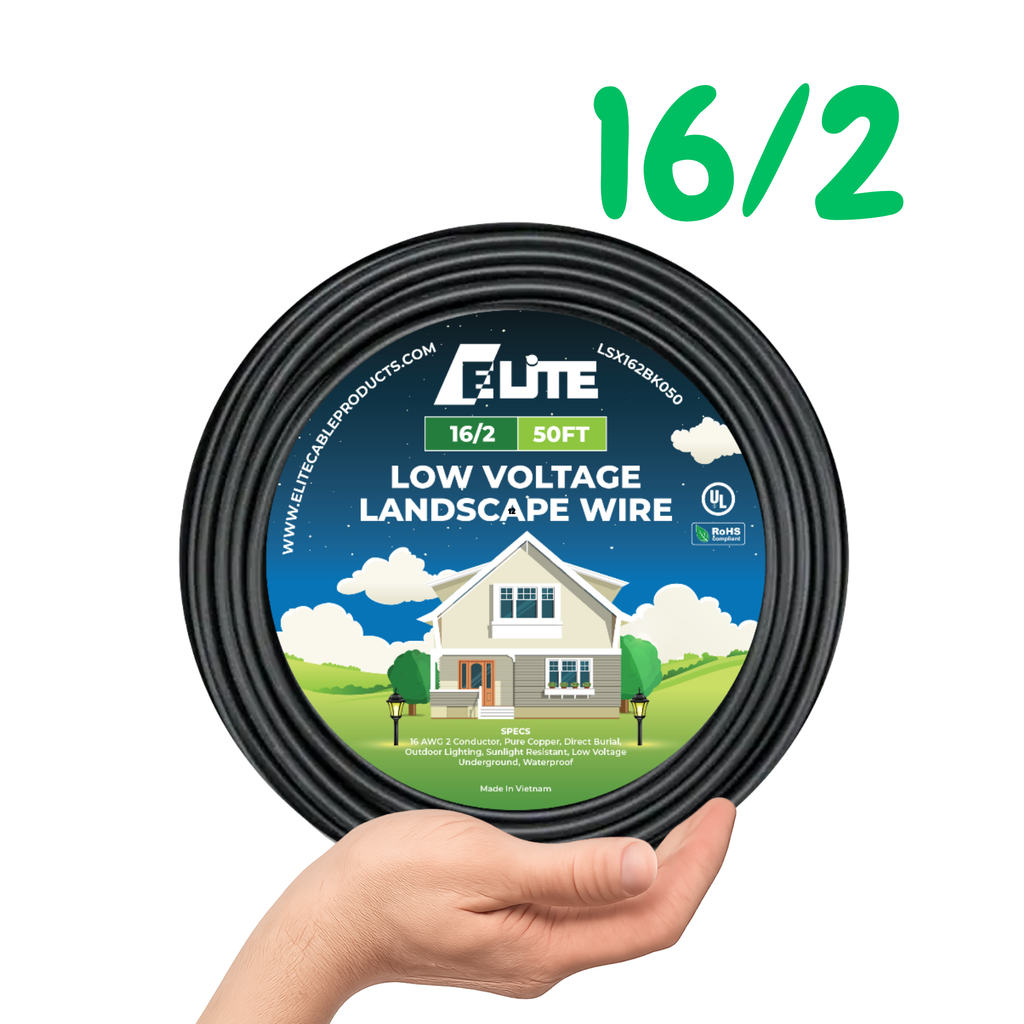
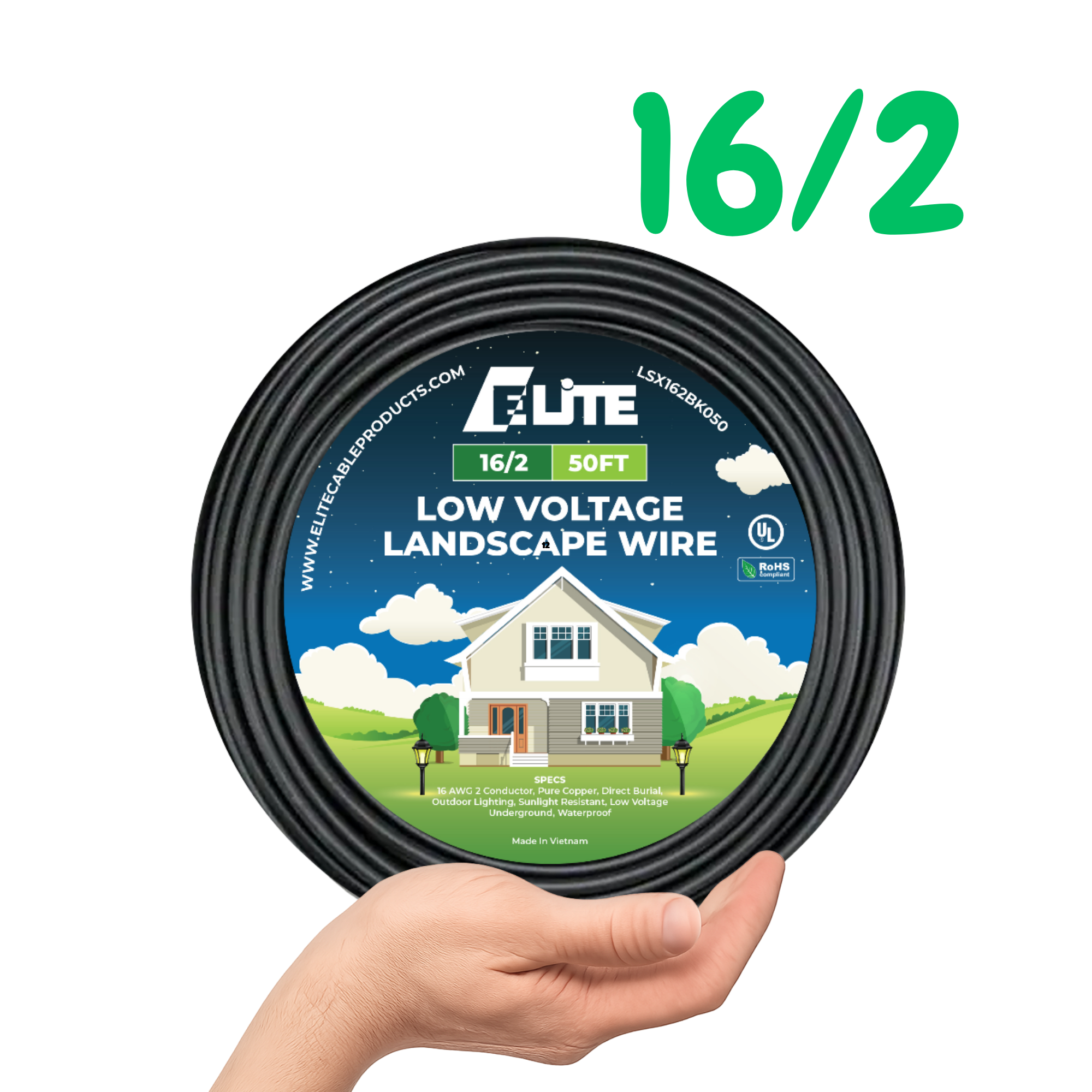
16/2 landscape wire refers to a cable with two conductors, each 16 American Wire Gauge (AWG) in size. The “2” denotes the number of wires, suitable for carrying low-voltage (typically 12V or 24V) power for outdoor applications. Its flexibility, affordability, and ease of use make it a staple for powering path lights, spotlights, and garden fixtures.
Physical And Electrical Characteristics
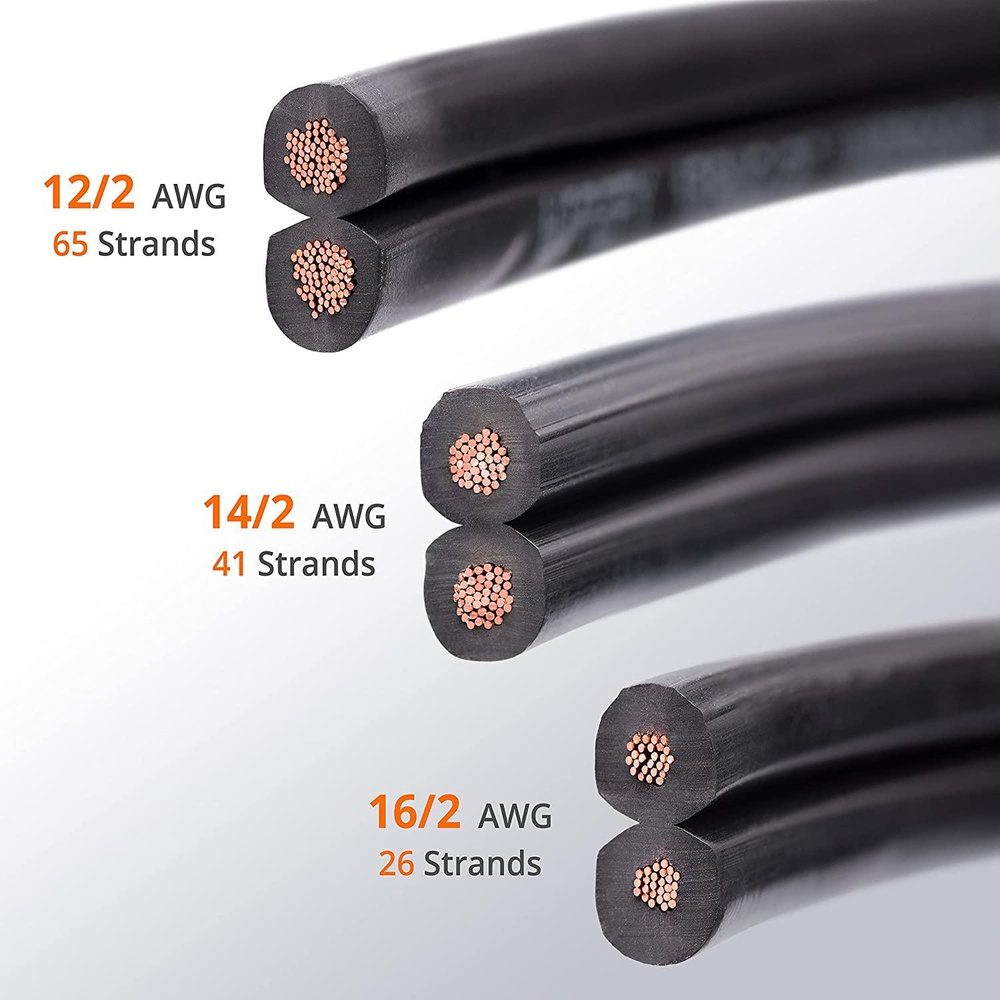
16/2 wire typically features stranded copper conductors, which offer greater flexibility for outdoor routing. It’s usually insulated with UV-resistant PVC or similar material to withstand outdoor conditions. The small diameter allows for easy concealment, but its current-carrying capacity is limited compared to thicker wires.
Common Uses For 16/2 Wire
- Pathway lighting
- Accent lighting
- Low-power spotlights
- Small garden installations
While it’s popular, using 16/2 wire beyond its rated capacity leads to voltage drop and dim, unreliable lights. Therefore, understanding the 16 key factors influencing its maximum run length is critical.
Credit: infinity-cable-products.com
16 Key Factors Influencing How Far You Can Run 16/2 Landscape Wire
1. Voltage Drop
Voltage drop is the single most important factor limiting the length of a 16/2 wire run. As electricity travels through the wire, resistance causes a gradual loss of voltage. If the voltage drops too far below the required level, lights dim or fail to function.
- Industry Standard: Keep voltage drop below 10% (typically 1.2V for 12V systems).
- Calculation Formula: Voltage Drop = (2 × Length × Amps × Ohms per 1000ft) / 1000.
For 16 AWG copper wire, resistance is about 4. 016 ohms per 1000 feet.
Example: For a 12V system drawing 4 amps over 100 feet:
Voltage Drop = (2 × 100 × 4 × 4. 016) / 1000 = 3. 21V (too high for most systems).
2. System Voltage (12v Vs. 24v)
Higher voltage means lower current for the same wattage, reducing voltage drop.
- 12V systems: Most common for residential landscape lighting.
- 24V systems: Allow longer runs for the same wire gauge, as voltage drop is less significant.
| System Voltage | Max Load on 16/2 (50 ft) | Max Distance for 50W Load |
|---|---|---|
| 12V | 48W | 34 feet |
| 24V | 96W | 68 feet |
3. Total Wattage Of Load
The more fixtures you attach to the wire, the greater the current, and the shorter the allowable run. A single high-wattage fixture will cause a greater voltage drop than several low-wattage ones with the same total.
Pro Tip: Always calculate the total wattage of all fixtures on a run to avoid exceeding wire capacity.
4. Maximum Allowable Current (amperage)
16/2 landscape wire is rated for about 10 amps under ideal conditions. However, to avoid overheating and excessive voltage drop, most experts recommend limiting it to 7-8 amps for outdoor use.
- Formula: Amps = Total Watts / System Voltage
- For 60W on a 12V system: 60 / 12 = 5A
5. Length Of The Wire Run
The longer the wire, the greater the resistance and the higher the voltage drop. For most 16/2 wire installations, runs over 50 feet require careful planning, especially at higher wattages.
Example: In my experience, running 16/2 wire more than 80 feet with a 60W load on a 12V system led to noticeably dimmer lights at the far end.
6. Acceptable Voltage Drop Threshold
Most lighting manufacturers recommend a maximum voltage drop of 10%. Exceeding this can cause poor performance and damage fixtures.
- 12V system: Max drop = 1.2V
- 24V system: Max drop = 2.4V
7. Quality And Type Of Copper Used
Not all 16/2 wires are created equal. Pure copper wire offers better conductivity and lower resistance compared to copper-clad aluminum (CCA) or lower-grade copper.
- Pure copper: Best for long runs and reliability.
- CCA: Cheaper, but higher resistance and more voltage drop.
8. Splice And Connection Quality
Poor connections introduce additional resistance, increasing voltage drop and the risk of failure.
- Always use waterproof, corrosion-resistant connectors.
- Check all splices for tightness and integrity.
9. Ambient Temperature
Wire resistance increases with temperature. Hot climates or direct sunlight exposure can reduce the effective run length.
- Example: For every 10°C increase, resistance increases by about 4%.
10. Burial Depth And Soil Conditions
Deeper burial can keep wires cooler, but rocky or corrosive soils may degrade insulation or conductors, increasing resistance over time.
- Standard depth: 6 inches for low-voltage, per the National Electrical Code.
- Wet soil: Can cause corrosion and increase resistance if insulation is damaged.
11. Wire Path Configuration
Straight runs are more efficient than winding or looping paths, which add distance and resistance.
- Minimize unnecessary bends and loops.
- Group fixtures to reduce total run length.
12. Fixture Placement And Distance
Placing high-wattage fixtures at the end of a long run increases voltage drop at the point where it’s most critical. Stagger high-load fixtures closer to the transformer when possible.
13. Transformer Capacity And Tap Selection
Using a transformer with multiple voltage taps allows you to compensate for voltage drop over long runs.
- Multi-tap transformers: Can output 12V, 13V, 14V, etc.
- Correct tap selection helps maintain proper voltage at distant fixtures.
14. Parallel Vs. Daisy Chain Runs
Running multiple wires in parallel (hub method) can reduce individual run lengths and voltage drop, compared to a single daisy-chain (in-series) run.
| Wiring Method | Max Run Length (16/2, 50W Load) | Voltage Consistency |
|---|---|---|
| Daisy Chain | 34 feet | Poor at end of line |
| Parallel/Hub | Up to 60 feet per leg | Much better |
15. Wire Age And Environmental Exposure
Over time, UV exposure, moisture, and physical damage can degrade insulation and increase resistance. Regular inspection extends wire life and prevents failures.
- Replace aged wire showing cracks or corrosion.
16. Local Electrical Codes And Regulations
Compliance with local codes ensures safety and legality. Some jurisdictions limit maximum wire run lengths or specify burial requirements for landscape wiring.
- Consult local codes before installation.
- National Electrical Code (NEC) serves as a guideline for safe practices.
Credit: www.laterredargence.fr
Real-world Examples And Case Studies
Example 1: Suburban Pathway Lighting (12v, 50w Load)
A homeowner wants to light a 45-foot walkway with five 10W LED path lights using 16/2 wire.
- Total load: 50W
- Voltage: 12V
- Amps: 50W / 12V = 4.17A
- Max run (10% drop): About 34 feet (per standard charts)
Result: The last fixture at 45 feet is noticeably dim. Solution: Switch to 14/2 wire for longer runs, or split into two parallel runs.
Example 2: Commercial Garden Accent (24v, 80w Load)
A small hotel installs eight 10W accent lights around a 60-foot perimeter, using a 24V system.
- Total load: 80W
- Amps: 80W / 24V = 3.33A
- Max run: 68 feet (per table above)
Result: All lights perform consistently, as the higher voltage reduces current and voltage drop.
Example 3: Hub Wiring For Large Yard
A landscape contractor wires 20 path lights (5W each, total 100W) using four parallel 16/2 runs from a central transformer hub.
- Each run: 5 lights, 25W, ~20 feet.
- Voltage drop: Minimal, with all lights equally bright.
Pro Tip: Hub wiring is ideal for large or complex layouts, improving brightness consistency and simplifying maintenance.
Calculating Maximum Run Length For 16/2 Landscape Wire
The Role Of Wire Gauge In Maximum Distance
Wire gauge directly affects resistance and, therefore, voltage drop. 16/2 is thinner and less capable than 14/2 or 12/2 wire. For longer runs or higher loads, moving up in wire gauge is often necessary.
Using Voltage Drop Calculators
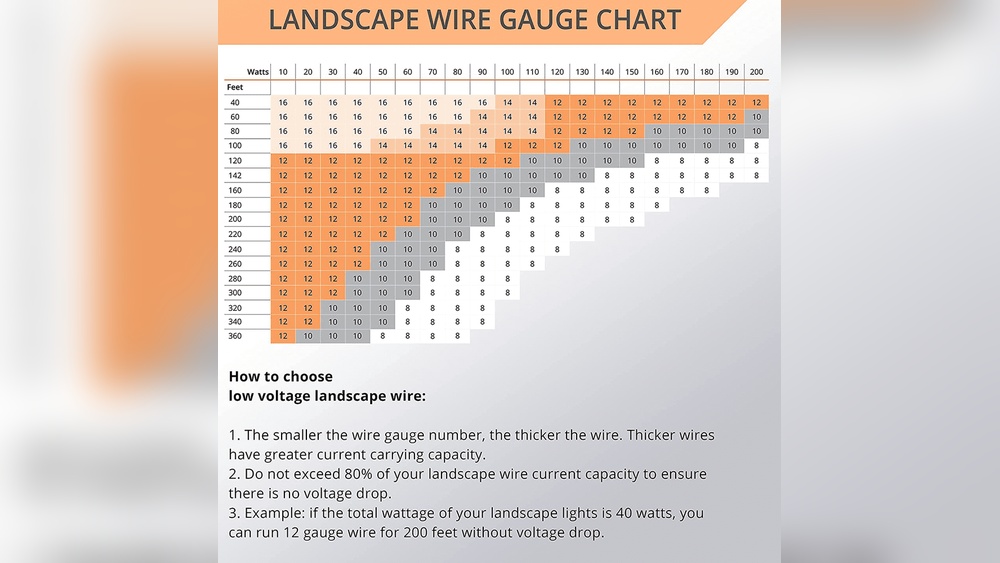
Several reliable online calculators and charts can help estimate the safe run length for your specific setup. For example, the Southwire Voltage Drop Calculator is a trusted resource for professionals.
Sample Calculation
Suppose you have a 12V system, 16/2 wire, and a total load of 36W (3A).
- Max voltage drop: 1.2V (10% of 12V)
- Resistance of 16AWG: 4.016 ohms/1000ft
Calculation:
Voltage Drop = (2 × Length × 3A × 4. 016) / 1000 ≤ 1. 2V
Solving for Length:
- 2V = (2 × L × 3 × 4.016) / 1000
L ≈ 50 Feet
This means you should not exceed 50 feet per run for 36W of load on 16/2 wire.
Comparison Table: Maximum Distance By Load
| Total Load (Watts) | 12V System (Max Distance, 16/2 Wire) | 24V System (Max Distance, 16/2 Wire) |
|---|---|---|
| 20W | 85 feet | 170 feet |
| 40W | 42 feet | 84 feet |
| 60W | 28 feet | 56 feet |
Best Practices For Installing 16/2 Landscape Wire
Planning Your Wire Layout
Map out all fixtures and measure the total length required for each wire run. Include extra length for turns, burial, and fixture leads.
- Group fixtures by proximity to reduce run lengths.
- Balance loads across multiple runs if possible.
Choosing The Right Transformer
Select a transformer rated for at least 20% more wattage than your total lighting load. Consider models with multiple voltage taps for longer runs.
- Example: For 80W of fixtures, use a 100W or higher transformer.
Installing And Protecting The Wire
- Bury wire at least 6 inches deep, per NEC guidelines.
- Use conduit in high-traffic or rocky areas.
- Avoid sharp bends and minimize exposure to direct sunlight.
Testing And Troubleshooting
After installation, test voltage at the farthest fixture. If voltage is below 10. 8V (for a 12V system), reduce load, shorten run, or upgrade wire gauge.
Warning: Never exceed the wire or transformer’s rated capacity; this can cause overheating and fire risks.
Cost, Performance, And Alternatives To 16/2 Landscape Wire
Cost Considerations
16/2 wire is affordable, but excessive runs increase material and labor costs. For longer runs, the additional expense of 14/2 or 12/2 wire may be justified by better performance and reduced troubleshooting.
Performance Vs. Thicker Gauges
Thicker wires (lower gauge numbers) offer lower resistance and support longer runs with less voltage drop. However, they are less flexible and more expensive.
Alternatives To 16/2 Wire
- 14/2 wire: Allows about 50% longer runs for the same load.
- 12/2 wire: Ideal for high-load or very long runs, but bulkier and pricier.
Example: Upgrading from 16/2 to 14/2 for a 60W load extends max run from 28 feet to about 45 feet.
When To Use 16/2 Wire
- Short runs (under 50 feet)
- Loads less than 60W per run
- Budget-sensitive projects
- When flexibility and concealment are priorities
Safety, Maintenance, And Regulatory Compliance
Preventing Overloads And Fire Hazards
Always stay within the rated ampacity of your wire and transformer. Overloading can cause excessive heat, melting insulation, or even fire.
Periodic Maintenance
- Inspect wires annually for damage or wear.
- Replace any corroded or exposed sections promptly.
- Test fixture brightness regularly to spot voltage drop issues early.
Regulatory Standards
Follow the National Electrical Code (NEC) and local regulations for burial depth, wire type, and connections. Some areas may require permits or inspections for large installations.
For further guidance, consult resources like the National Fire Protection Association.
Frequently Asked Questions
What Happens If I Exceed The Maximum Run Length For 16/2 Wire?
If you run 16/2 wire beyond its recommended distance for a given load, you’ll experience excessive voltage drop. This results in dim or flickering lights at the end of the run, and may also reduce the lifespan of your fixtures.
In severe cases, the transformer or wire may overheat, posing a fire risk.
Can I Bury 16/2 Landscape Wire Directly In Soil?
Yes, most 16/2 landscape wires are rated for direct burial. However, soil type, moisture, and depth all affect long-term durability. In rocky or high-traffic areas, consider using conduit for extra protection. Always check that the wire’s insulation is marked for direct burial before installation.
Is It Safe To Mix Wire Gauges In One System?
Mixing wire gauges is technically possible, but each segment’s ampacity and voltage drop must be calculated separately. Connecting thinner wire downstream of a thicker wire can lead to uneven voltage and increased risk of overload. For best results, use the same gauge throughout each run, or consult a licensed electrician for complex systems.
How Can I Extend The Run Length If I Need More Distance?
Options include upgrading to a thicker wire gauge (such as 14/2 or 12/2), using a 24V system to halve current and voltage drop, or splitting your fixtures into multiple parallel runs (hub method). Some advanced transformers also offer higher voltage taps to help compensate for drop, but this should be done with caution.
What’s The Difference Between Copper And Copper-clad Aluminum (cca) Wire?
Pure copper wire offers better conductivity, lower resistance, and greater durability compared to CCA, which is aluminum wire with a thin copper coating. CCA is less expensive but has higher voltage drop and is more prone to breakage and corrosion, especially in outdoor environments. For landscape lighting, pure copper is strongly recommended for reliability and performance.
When planning your landscape lighting project, the distance you can run 16/2 landscape wire is determined by a balance of load, voltage, installation quality, and environmental factors. By understanding the 16 key factors outlined above and using tables and calculators to guide your decisions, you can create a lighting system that’s both beautiful and reliable. Always prioritize safety, compliance, and professional advice when in doubt, and your landscape will remain brilliantly illuminated for years to come. For further technical data, reference authoritative sources like the American Wire Gauge Wikipedia page.