How Many Lumens Do You Need for Landscape Lighting?
Choosing the right landscape lighting can transform your outdoor space from ordinary to extraordinary. Yet, the most common question homeowners ask isn’t about fixture style or placement—it’s “How many lumens do I actually need for landscape lighting? ” The answer is more nuanced than simply picking a bulb.
It requires balancing safety, ambiance, and functionality, all while considering the unique features of your yard.
Proper outdoor illumination hinges on understanding lumens—the measure of visible light output from a source. Too dim, and pathways remain hazardous. Too bright, and your garden turns into a floodlit stadium. With so many fixture types, bulb technologies, and yard layouts, finding the perfect lumen output for each area can feel overwhelming.
This comprehensive guide will break down everything you need to know, from basic principles to real-world examples, so you can create a beautifully lit, energy-efficient landscape.
Key Takeaways
- Lumens measure the brightness of landscape lighting, directly impacting safety and ambiance.
- Different outdoor areas (paths, gardens, patios) require varying lumen ranges for optimal results.
- Fixture type, bulb technology, and color temperature all influence the perceived brightness.
- Strategic lumen layering—using multiple light intensities—creates depth and visual interest.
- Overlighting can cause glare and waste energy, while underlighting reduces safety and curb appeal.
- Real-world examples and tables in this article help you match lumen output to your specific landscape needs.

Credit: premierpond.com
Understanding Lumens And Outdoor Lighting Basics
What Are Lumens?
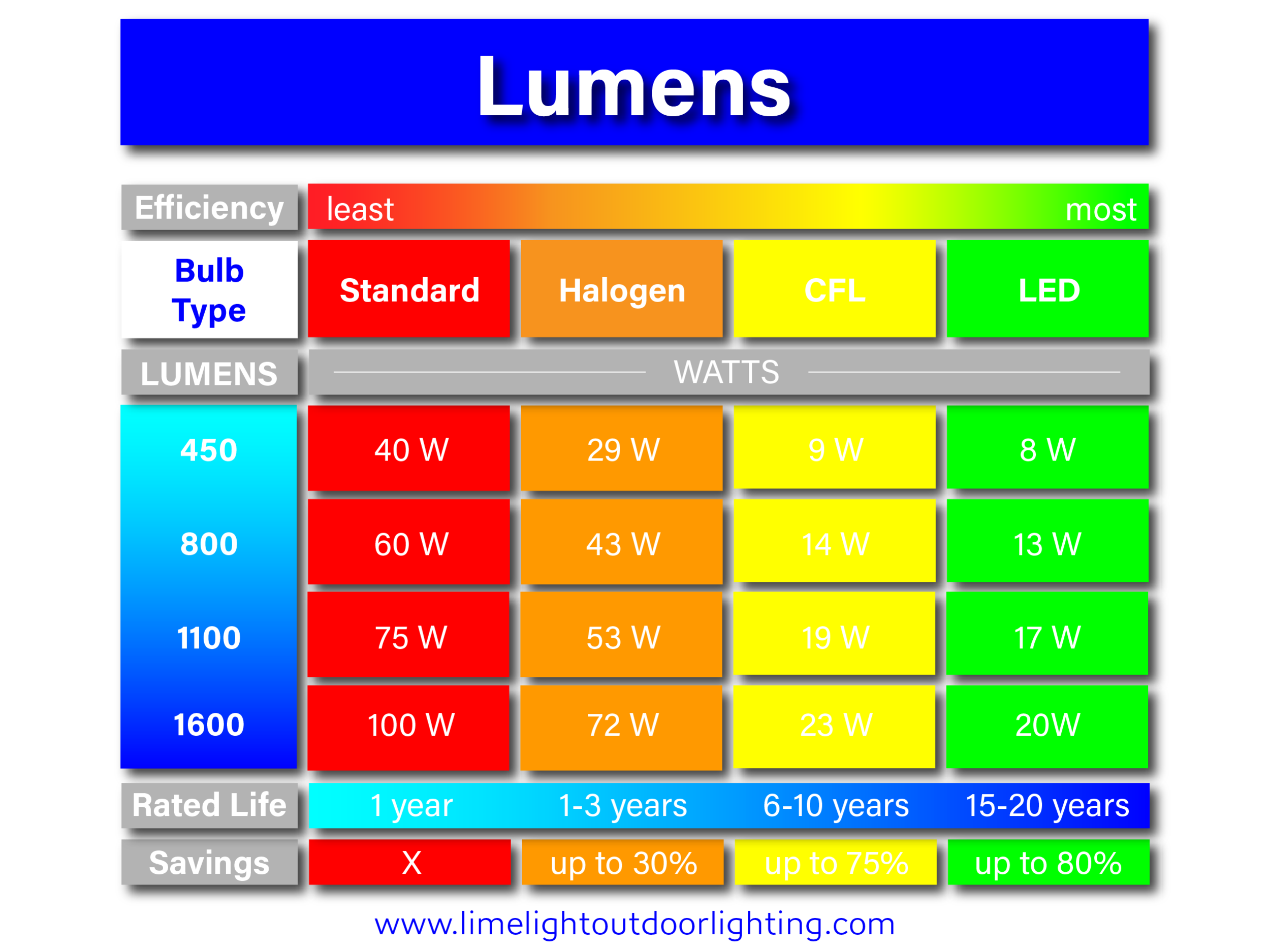
Lumens are the standard unit for measuring visible light output. Unlike watts—which indicate energy consumption—lumens tell you how bright a light source will appear. For example, a traditional 60-watt incandescent bulb emits about 800 lumens, but an LED can produce the same brightness at a fraction of the energy. This shift to lumens as the primary metric empowers homeowners to select lighting based on actual performance rather than relying on outdated wattage equivalencies.
Understanding lumens also helps you compare different bulb technologies. For instance, compact fluorescents (CFLs), halogens, and LEDs may all use different amounts of energy to produce the same lumen output. When evaluating bulbs for your landscaping project, always check the lumen rating for an accurate measure of brightness.
Why Lumens Matter For Landscape Lighting
Properly planned lumen output ensures that walkways, plants, and features are safely and attractively illuminated. Underlit areas can be hazardous, while overly bright spaces create glare, light pollution, and detract from the landscape’s beauty.
The right balance of lumens helps create welcoming, functional outdoor spaces. It’s not just about making sure people can see where they’re going—it’s about highlighting the best features of your landscape, setting the right mood, and ensuring safety for everyone who uses the space.
Inadequate or excessive brightness can also impact your energy bills and the longevity of your fixtures, so getting it right is key.
Lumens Vs. Watts: The Essential Difference
Modern lighting—especially LEDs—has rendered watts nearly obsolete as a measurement of brightness. Instead, focus on lumens to select the right intensity for your landscape. For reference:
- 100 lumens: Soft, subtle accent
- 400–700 lumens: General pathway or garden lighting
- 1,200+ lumens: Security or floodlighting
It’s important to note that older, incandescent bulbs required far more watts to achieve these lumen levels. For example, a 100-watt incandescent bulb produces about 1,600 lumens, while a comparable LED bulb uses only 16–20 watts. This efficiency means you can achieve effective outdoor lighting with much less energy, reducing both costs and environmental impact.
Color Temperature And Perceived Brightness
Lumens interact with color temperature (measured in Kelvins, K) to shape outdoor ambiance. Warm white (2700–3000K) appears softer and less harsh than cool white (4000–5000K), which can make the same lumen output seem brighter. The human eye is more sensitive to cooler, blue-toned light, which can make spaces seem more luminous even at the same lumen rating. Conversely, warm-toned lights are gentler, ideal for creating a relaxing environment.
Choosing the right color temperature can enhance the natural colors of your plants and architecture, while also influencing how inviting your outdoor areas feel. For a deeper dive, learn more about color temperature from the Wikipedia page on color temperature.
How Many Lumens Do You Need? Area-by-area Guide
The optimal lumen output for your landscape depends on each area’s function, size, and atmosphere. Here’s a breakdown of recommended lumen ranges for common outdoor spaces.
Pathways And Walkways
Recommended lumens: 100–200 per fixture
Pathway lighting should be bright enough to safely guide guests but subtle enough to avoid glare. Spacing fixtures 6–8 feet apart with 100–200 lumens each is typically ideal. Proper pathway lighting not only improves safety but also adds a welcoming touch to your home’s entrance.
For winding or curved paths, consider staggering fixtures to highlight turns and prevent shadows.
- Short, narrow paths: 80–120 lumens per fixture
- Wide or long walkways: 120–200 lumens per fixture
For added interest, combine path lighting with low-voltage accent lights to highlight adjacent flower beds or unique landscaping elements. Always ensure lights are shielded or directed downward to avoid blinding pedestrians.
Driveways And Entrances
Recommended lumens: 200–400 per fixture
Driveways require more brightness for visibility and security. Use uplights or bollards with higher lumen output. Lighting should clearly delineate the edges of the driveway and make it easy for drivers and pedestrians to navigate safely.
- Single-car driveways: 200–300 lumens per fixture
- Multi-car or long driveways: 300–400 lumens per fixture
For added security, consider integrating motion-sensor lights or floodlights at entry points. These not only provide ample illumination when needed but also deter unwanted visitors. In addition, well-lit entrances make your home more inviting for guests.
Garden Beds And Flower Borders
Recommended lumens: 50–300 per fixture
Accent lighting for garden beds should highlight plants without overpowering their natural beauty. The goal is to create visual interest and draw attention to textures, colors, and shapes in your landscape.
- Low shrubs/flowers: 50–100 lumens
- Medium plants/small trees: 100–200 lumens
- Large plants/ornamental trees: 200–300 lumens
Use spotlights or well lights to create dramatic up-lighting effects. For layered beds, stagger lights at varying heights and distances to add depth. Remember, less is often more—subtlety enhances the allure of your landscape after dark.
Patio And Deck Areas
Recommended lumens: 400–700 total
Patio lighting should create a comfortable, inviting environment for dining or entertaining. It’s important to provide enough light for safe movement and visibility without overwhelming the space or creating harsh shadows.
- Ambient (general) lighting: 200–400 lumens
- Task lighting (grill, bar): 300–700 lumens
Combine overhead fixtures, wall sconces, and string lights for a layered effect. Dimmable LEDs or smart lighting controls allow you to adjust brightness based on activities—brighter for cooking, softer for relaxing or conversation. Including lanterns or portable table lamps can add flexibility and charm to your outdoor gatherings.
Security And Floodlighting
Recommended lumens: 700–1,300 per fixture
Security lighting must deter intruders and illuminate large areas. Use motion-activated LED floodlights with at least 700 lumens, scaling up for bigger properties. These lights should be positioned to minimize shadows where intruders could hide.
- Small yards: 700–900 lumens
- Large yards/open lots: 900–1,300 lumens
Consider dual-technology fixtures that combine motion sensors with dusk-to-dawn sensors for maximum efficiency. Place floodlights to cover vulnerable areas such as side gates, garages, and backyards. Always angle lights downward to avoid light trespass into neighboring properties.
Accent And Feature Lighting
Recommended lumens: 100–400 per fixture
For statues, fountains, or architectural elements, adjust brightness to highlight without overwhelming. Feature lighting creates focal points that draw the eye and elevate your landscape design.
- Small focal points: 100–200 lumens
- Large features or trees: 200–400 lumens
Use adjustable spotlights to direct beams precisely where needed. Consider using color-changing LEDs for seasonal or holiday displays, but keep the base lumen output within recommended ranges to maintain visual harmony.
Landscape Lighting Lumen Recommendations Table
| Area | Recommended Lumens (per fixture) | Notes |
|---|---|---|
| Pathways | 100–200 | Safe navigation, avoid glare |
| Driveways | 200–400 | Brighter for security |
| Garden Beds | 50–300 | Accent plants, subtle highlights |
| Patio/Deck | 400–700 (total) | Ambient and task lighting combined |
| Security | 700–1,300 | Floodlights, motion-activated |
| Accent/Feature | 100–400 | Highlight statues, fountains |

Credit: www.lightingforgardens.com
Factors That Influence Lumen Requirements
Size And Layout Of Outdoor Space
A small courtyard requires fewer lumens than a sprawling estate. Measure your space and consider obstacles like trees, walls, and elevation changes that affect light distribution. Large, open areas may experience more light diffusion, requiring higher lumen fixtures or additional lights to avoid dark spots.
Complex layouts with multiple levels, stairs, or built-in features demand careful planning to ensure even coverage and avoid unsafe shadows.
Fixture Type And Placement
Spotlights, path lights, floodlights, and wall washers all distribute light differently. For example, spotlights focus lumens on a narrow area, while floodlights spread light over a wide expanse. Proper placement maximizes coverage with fewer fixtures.
- Spotlights are perfect for highlighting trees or sculptures with concentrated beams.
- Path lights provide low, even illumination for walkways.
- Floodlights offer broad, high-lumen coverage, ideal for security or large open areas.
- Wall washers evenly illuminate walls and fences, enhancing architectural features.
The height and angle of each fixture also impact how effectively lumens are used. Mounting lights too high can create harsh shadows, while placing them too low may result in dim, ineffective lighting.
Bulb Technology (led, Halogen, Solar)
- LEDs: Most efficient, long-lasting, and available in a wide range of lumen outputs. They also offer a variety of color temperatures and are compatible with smart controls.
- Halogen: Brighter but less energy efficient and shorter lifespan. These are being phased out in many regions due to higher energy consumption.
- Solar: Convenient but generally lower lumens; best for accent or path lighting. Newer models offer improved brightness and battery life, but performance still depends on adequate sunlight exposure.
Explore the energy efficiency differences in detail at the U.S. Department of Energy.
Color Temperature And Cri
A high Color Rendering Index (CRI) allows colors to appear more vibrant under artificial light. Warm white (2700K) is typically preferred for residential landscapes, while higher temperatures (4000K+) are used for security.
A CRI of 80 or above is ideal for most outdoor applications, ensuring that foliage and architectural features appear natural and vivid. For spaces where color accuracy is critical—such as outdoor art installations or garden beds with colorful blooms—choose fixtures with a higher CRI rating.
Ambient Light And Light Pollution
Consider neighboring streetlights or urban glow. In high-light areas, you may need higher lumens for features to stand out, but always balance against potential light pollution. Excessive brightness can spill into adjacent properties, affecting neighbors and wildlife. Use shields, baffles, and downward-facing fixtures to control light spread.
Weather And Seasonal Changes
Rain, fog, or snow can reduce perceived brightness. In such climates, choose fixtures with slightly higher lumens and weatherproof ratings (IP65+). For areas prone to heavy snowfall, position fixtures above anticipated snow levels to maintain consistent illumination. Durable materials such as stainless steel or powder-coated aluminum extend fixture life in harsh conditions.
Credit: www.limelightoutdoorlighting.com
How To Calculate The Total Lumens Needed
Step 1: Assess Your Landscape Zones
Divide your yard into zones—paths, gardens, patios, and features. Assign each area a purpose and desired ambiance. Consider how each zone is used: Is it for entertaining, relaxing, or security? Identifying the function guides you in choosing the right lumen range and fixture type.
Step 2: Match Zones To Lumen Ranges
Refer to the recommended ranges above for each zone. For multi-purpose spaces, consider layering light with fixtures of varying brightness. For example, a patio used for dining and relaxing may need both ambient and task lighting.
Step 3: Count Fixtures And Spacing
Calculate the number of fixtures needed based on your yard’s dimensions and recommended spacing.
- Pathway lights: Every 6–8 feet
- Spotlights/floodlights: Based on feature size and desired coverage
Account for overlapping light patterns to ensure even illumination and avoid dark patches. Use a site plan or landscape map to visualize fixture locations and spacing.
Step 4: Multiply And Sum Up
Multiply the number of fixtures by the lumen output per fixture for each zone, then sum all zones for your total system requirements. This total gives you a baseline for transformer sizing (in low-voltage systems) and helps estimate energy use.
Example Calculation
Suppose you have:
- 40 ft walkway (requires 6 fixtures, 150 lumens each): 6 × 150 = 900 lumens
- 2 garden beds (each needs 2 spotlights, 100 lumens): 4 × 100 = 400 lumens
- Patio (2 fixtures, 250 lumens each): 2 × 250 = 500 lumens
- Security light: 1 fixture, 1,000 lumens
Total landscape lumens needed: 900 + 400 + 500 + 1,000 = 2,800 lumens
Step 5: Adjust For Overlap And Reflection
Surfaces like white walls or water features reflect light, allowing you to use fewer lumens. Conversely, dark mulch or dense foliage absorbs light, requiring a higher output. Adjust your calculations by observing your landscape at night and making incremental changes.
If possible, test temporary fixtures or portable lights in different locations to fine-tune lumen levels before permanent installation. This hands-on approach ensures optimal results and can prevent costly mistakes.
Lumen Calculation Table Example
| Zone | Fixtures | Lumens per Fixture | Total Zone Lumens |
|---|---|---|---|
| Pathway | 6 | 150 | 900 |
| Garden Bed | 4 | 100 | 400 |
| Patio | 2 | 250 | 500 |
| Security | 1 | 1,000 | 1,000 |
| Total | 2,800 |
Real-world Examples And Case Studies
Case Study 1: Suburban Home With Small Yard
Scenario: A homeowner wants to illuminate a 25-foot walkway, a small patio, and a single ornamental tree.
- Walkway: 4 path lights at 120 lumens = 480 lumens
- Patio: 2 wall-mounted fixtures at 200 lumens = 400 lumens
- Tree: 1 spotlight at 300 lumens
Total: 1,180 lumens
Result: The homeowner achieved balanced illumination for safety and ambiance. The tree became a focal point without overpowering the space. By choosing warm white LEDs, the overall atmosphere remained cozy and inviting. The use of motion sensors on the patio lights also improved energy efficiency and extended bulb life.
Case Study 2: Large Rural Property With Security Focus
Scenario: A rural estate requires visibility for a 60-foot driveway, expansive gardens, and robust security lighting.
- Driveway: 8 bollard lights at 350 lumens = 2,800 lumens
- Gardens: 8 uplights at 200 lumens = 1,600 lumens
- Security: 2 motion-activated floodlights at 1,200 lumens each = 2,400 lumens
Total: 6,800 lumens
Result: The property owner used higher-output, energy-efficient LEDs to maximize visibility and safety. Strategic placement minimized light pollution and energy waste. The gardens benefited from layered lighting, highlighting both low groundcovers and tall ornamental grasses. The security lights were installed with shields to focus illumination on vulnerable access points, deterring wildlife and trespassers alike.
Case Study 3: Urban Courtyard With Entertaining Space
Scenario: A city townhouse features a 15-foot path, compact garden beds, and a deck for gatherings.
- Path: 2 low-glare lights at 100 lumens = 200 lumens
- Garden: 2 accent lights at 80 lumens = 160 lumens
- Deck: 2 string light sets at 300 lumens each = 600 lumens
Total: 960 lumens
Result: The homeowner achieved a cozy, intimate atmosphere perfect for entertaining, with all areas safely lit but not overexposed. String lights provided flexibility for various occasions, from quiet evenings to lively parties. The use of dimmers allowed for easy adjustment of brightness, matching the mood and occasion.
Best Practices For Effective Landscape Lighting Design
Layering Light For Depth And Visual Interest
Use a combination of ambient, task, and accent lighting to create layers. Layering prevents flat, harsh lighting and adds drama to your landscape.
- Ambient: General illumination (e.g., patio lights)
- Task: Functional light (e.g., pathway markers)
- Accent: Highlights (e.g., spotlighting a sculpture)
By combining different types of lighting, you add visual interest and dimension. Layering also allows you to tailor illumination to specific activities or highlight unique features without over-lighting the entire yard.
Avoiding Common Mistakes
- Overlighting: Excess lumens can cause glare and diminish night ambiance. This is particularly problematic in residential neighborhoods, where light trespass can disturb neighbors and wildlife.
- Underlighting: Too few lumens create shadows and safety risks, especially on steps, pathways, and around pools.
- Poor Placement: Incorrect spacing leads to patchy or uneven lighting. For instance, fixtures placed too close together can create hot spots, while those too far apart leave dark gaps.
- Ignoring energy efficiency: Choose LED fixtures for long-term savings. Not only do LEDs reduce operational costs, but they also require less frequent replacement, saving time and labor.
Using Controls And Smart Technology
Smart timers, motion sensors, and dimmers enable you to adjust lumen output based on time of day and activity. This optimizes energy use and extends fixture lifespan. For example, you might schedule pathway lights to dim late at night or use motion sensors to brighten security lights only when movement is detected.
Integrating your outdoor lighting system with a home automation platform allows you to control scenes, colors, and brightness remotely. Learn more about smart outdoor lighting at CNET.
Fixture Maintenance And Upgrades
Regularly clean lenses and replace aging bulbs to ensure you’re achieving the intended lumen output. Dirt, debris, and weathering can significantly reduce light transmission. Periodic upgrades (e. g. , swapping halogen for LED) can dramatically improve brightness and efficiency.
Check wiring and connections annually to prevent shorts or power loss. For solar fixtures, ensure solar panels are free from obstructions and clean for optimal charging.
Complying With Local Codes And Dark Sky Initiatives
Excessive outdoor light contributes to light pollution. Follow local ordinances and choose fixtures with shields or downward-facing designs to minimize impact. The International Dark-Sky Association offers best practices for eco-friendly lighting.
Adhering to these guidelines protects night skies, supports nocturnal wildlife, and fosters positive relationships with neighbors. Many municipalities now require dark-sky compliant fixtures for new outdoor installations.
Lumen Optimization: Balancing Efficiency, Cost, And Aesthetics
Led Vs. Solar Vs. Halogen: Pros And Cons
| Technology | Efficiency | Typical Lumens | Lifespan | Best Use |
|---|---|---|---|---|
| LED | Excellent | 50–2,000+ | 25,000–50,000 hrs | All applications |
| Solar | Good (free energy) | 10–200 | Varies, sun-dependent | Path, accent |
| Halogen | Fair | 200–1,500 | 2,000–5,000 hrs | Accent, flood |
LED technology continues to evolve, offering improved color options, higher CRI, and compatibility with smart controls. Solar lighting is best for areas where wiring is impractical, but is limited by weather and sun exposure. Halogen, while still available, is less efficient and is increasingly being replaced by LEDs.
Cost Analysis: Upfront Vs. Long-term Savings
While LEDs may cost more initially, their low energy use and longevity provide significant savings over time. For a detailed cost comparison, visit the U.S. Department of Energy’s lighting savings page.
The average homeowner can recoup the higher upfront cost of LEDs within 1–3 years through reduced electricity bills and fewer bulb replacements. For larger properties, the savings are even greater. Additionally, many utility companies offer rebates for upgrading to energy-efficient outdoor lighting.
Matching Lumen Output With Fixture Aesthetics
Select fixture designs that diffuse or focus light appropriately for their intended use. For example, bollard lights offer wide, low-glare coverage for paths, while spotlights provide focused, high-lumen output for features. Decorative fixtures can double as landscape accents during the day, so coordinate finishes and styles with your overall design scheme.
Consider the size and scale of fixtures in relation to your landscape. Oversized lights may appear out of place in a small garden, while undersized fixtures may be ineffective in large, open spaces.
Environmental Impact And Sustainability
Choosing energy-efficient fixtures and adhering to responsible lumen levels reduces carbon footprint and supports wildlife. Solar-powered lights are eco-friendly for low-lumen applications but may not suit security or floodlighting needs.
Look for fixtures made from recyclable or sustainably sourced materials. Low-voltage systems further reduce energy use and are safer for DIY installation. For more on sustainable lighting practices, see the EPA’s Green Lighting Guidelines.
Design Tips For Different Landscape Styles
Modern Landscapes
Opt for cool white LEDs (3000–4000K) with clean-lined fixtures and strategic, low-glare placement. Use uplighting to accent architectural features. Linear in-ground lights or recessed step lights add a contemporary touch, while smart controls enable creative color scenes for special occasions.
Traditional And Cottage Gardens
Warm white lights (2700–3000K) and lantern-style fixtures complement naturalistic plantings. Layer path lights with subtle accent lighting for a cozy feel. Integrate classic materials like copper or brass for an authentic look that ages gracefully over time.
Rustic And Woodland Yards
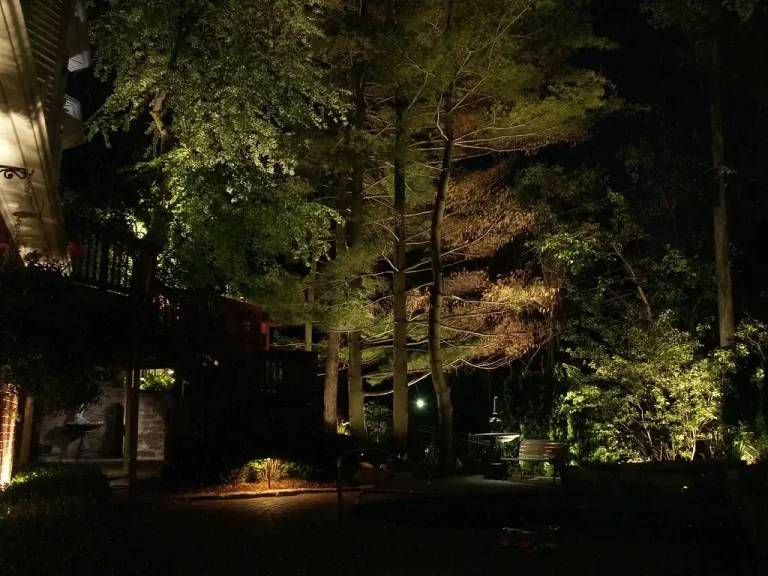
Select low-lumen, warm fixtures that blend with the environment. Use shielded bollards and tree-mounted downlights for minimal light pollution. Mimic moonlight by positioning fixtures high in trees, creating gentle pools of light on the ground below.
Coastal Or Tropical Landscapes
Choose corrosion-resistant fixtures and higher lumens to counteract reflective sand or foliage. Color-changing LEDs can highlight palm trees or water features. Ensure all fixtures have appropriate IP ratings to withstand humidity, salt, and extreme weather.
Urban And Small Spaces
Focus on targeted, low-lumen lighting to avoid over-illumination. Use wall sconces and string lights for vertical interest. Plan lighting to maximize usable space, such as illuminating seating alcoves, planters, or vertical gardens.
Frequently Asked Questions
How Do I Convert Watts To Lumens For Outdoor Lighting?
Watts measure energy use, while lumens measure brightness. For modern LEDs, you can expect about 80–100 lumens per watt. For example, a 10-watt LED produces approximately 800–1,000 lumens. Always check the packaging or manufacturer’s specs for accurate lumen ratings. For more details, visit the Wikipedia article on lumens.
Are More Lumens Always Better For Landscape Lighting?
Not always. Excessive lumens can cause glare, wash out features, and create light pollution. The goal is balanced illumination—bright enough for safety and ambiance, but not so intense that it overwhelms or disturbs neighbors. Layering different lumen outputs for various zones is the best practice.
Do Solar-powered Landscape Lights Provide Enough Lumens?
Solar lights are improving but generally offer lower lumens (10–200 per fixture). They are suitable for accent and path lighting in smaller yards but may not provide enough brightness for security or large-area illumination. For higher output, consider hardwired or low-voltage LED systems.
How Does Color Temperature Affect Landscape Lighting Brightness?
Cooler color temperatures (4000–5000K) often appear brighter and starker than warm whites (2700–3000K) at the same lumen output. Choose color temperature based on mood and landscape style. Warm whites create a cozy ambiance, while cool whites enhance visibility and modern appeal.
Can I Mix Different Lumen Outputs In One Landscape?
Absolutely. In fact, mixing varied lumen outputs is essential for effective lighting design. Use lower lumens for subtle accents and higher lumens for safety or focal points. This creates depth, avoids monotony, and ensures each zone fulfills its purpose.
Creating a beautifully illuminated landscape is about more than just numbers—it’s about thoughtfully matching lumen output to each area’s needs, your design style, and your personal preferences. With careful planning, the right fixture selection, and a focus on energy efficiency, you can achieve stunning results that enhance both safety and curb appeal, all while minimizing energy waste and light pollution.
Whether you’re updating a small garden path or lighting a grand estate, understanding lumens is your first step toward a magical nighttime retreat.