Which Insurers Offer Liability Coverage For Landscapers?
Several top-tier insurance companies offer specialized liability coverage for landscapers. These policies protect against property damage and bodily injury claims. Key insurers often include The Hartford, Hiscox, State Farm, Nationwide, and Liberty Mutual.
Independent insurance brokers can also access policies from smaller, niche providers tailored to landscaping businesses.
Understanding Landscaper Liability Insurance
Landscaper liability insurance is a safety net. It is also known as general liability insurance. It protects your business from lawsuits.
These suits can come from accidents. Accidents can happen anywhere. They can happen at a client’s home or business.
Or they can happen at your own shop.
This coverage is super important. Think about it. You’re on a job.
Maybe your team accidentally breaks a sprinkler head. That’s property damage. Or maybe a client trips over a tool left out.
That’s a bodily injury. Without insurance, you’d pay for these damages yourself. That could be a lot of money.
It could even put you out of business.
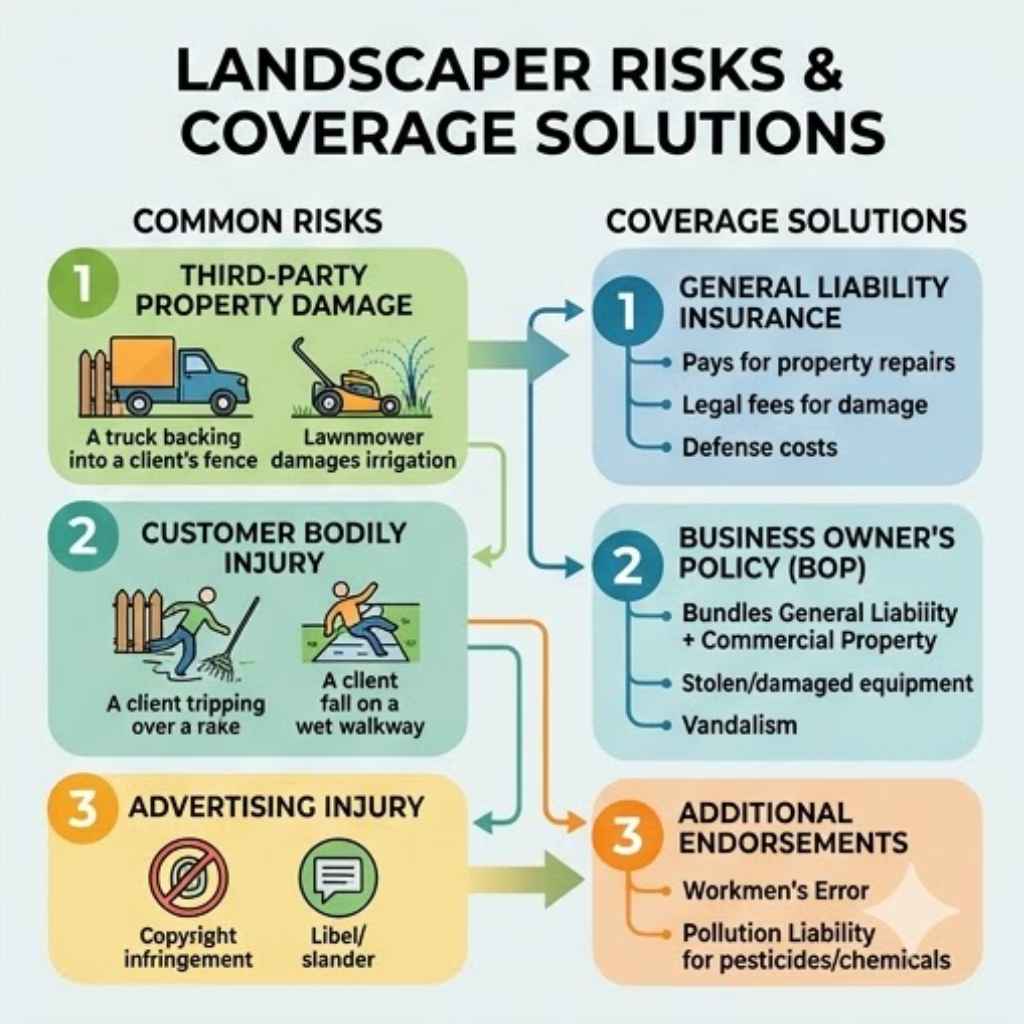
General liability covers a few main things. It covers third-party bodily injury. This means someone other than you or your employee gets hurt.
It also covers third-party property damage. This means you damage something that doesn’t belong to you. Sometimes, it even covers advertising injury.
This could be things like libel or slander.
For landscapers, specific risks are common. You use heavy equipment. You handle fertilizers and pesticides.
You work near homes and cars. These activities increase the chance of an accident. That’s why specialized policies are so valuable.
They are built for the risks you face every day.
Why Landscapers Need Specific Liability Coverage
As a landscaper, your work is hands-on. You are often on other people’s property. This means you have more chances for accidents to happen.
Standard business insurance might not cover all these risks well. Landscaper liability insurance is tailored for these exact situations.
For instance, imagine you are trimming a tree. A large branch falls and smashes a customer’s expensive patio furniture. That’s property damage.
Your general liability policy would likely step in. It would help pay to replace the furniture. It would also cover any legal fees if the customer decides to sue.
Another common scenario involves chemicals. If you apply fertilizer or pesticides, there’s a risk. What if the spray drifts and damages a neighbor’s prize-winning roses?
Or worse, what if someone has an allergic reaction to a chemical you used? These are risks that specialized policies are designed to address.
Many clients will ask for proof of insurance. This is especially true for commercial jobs. They want to know you are protected.
It gives them peace of mind. It shows you are a serious professional. Having the right insurance makes you more trustworthy.
It can help you land bigger contracts.
The coverage limits are also important. For landscapers, higher limits are often recommended. This is because the potential for damage can be significant.
A small mistake could lead to a very large claim. You need to make sure your policy limits are high enough. They should cover the worst-case scenario.
Beyond general liability, landscapers often need other coverages. These include commercial auto insurance. You use trucks and trailers for your business.
Workers’ compensation is also vital. This covers your employees if they get hurt on the job. Professional liability (errors & omissions) is also key.
This covers mistakes in your advice or services.
Who Offers Landscaper Liability Insurance?
Finding insurers that understand the landscaping industry is key. Some large, well-known insurance companies offer general liability. They often have options for small businesses, including landscapers.
Others specialize more in business insurance. They might have specific packages for trade professionals.
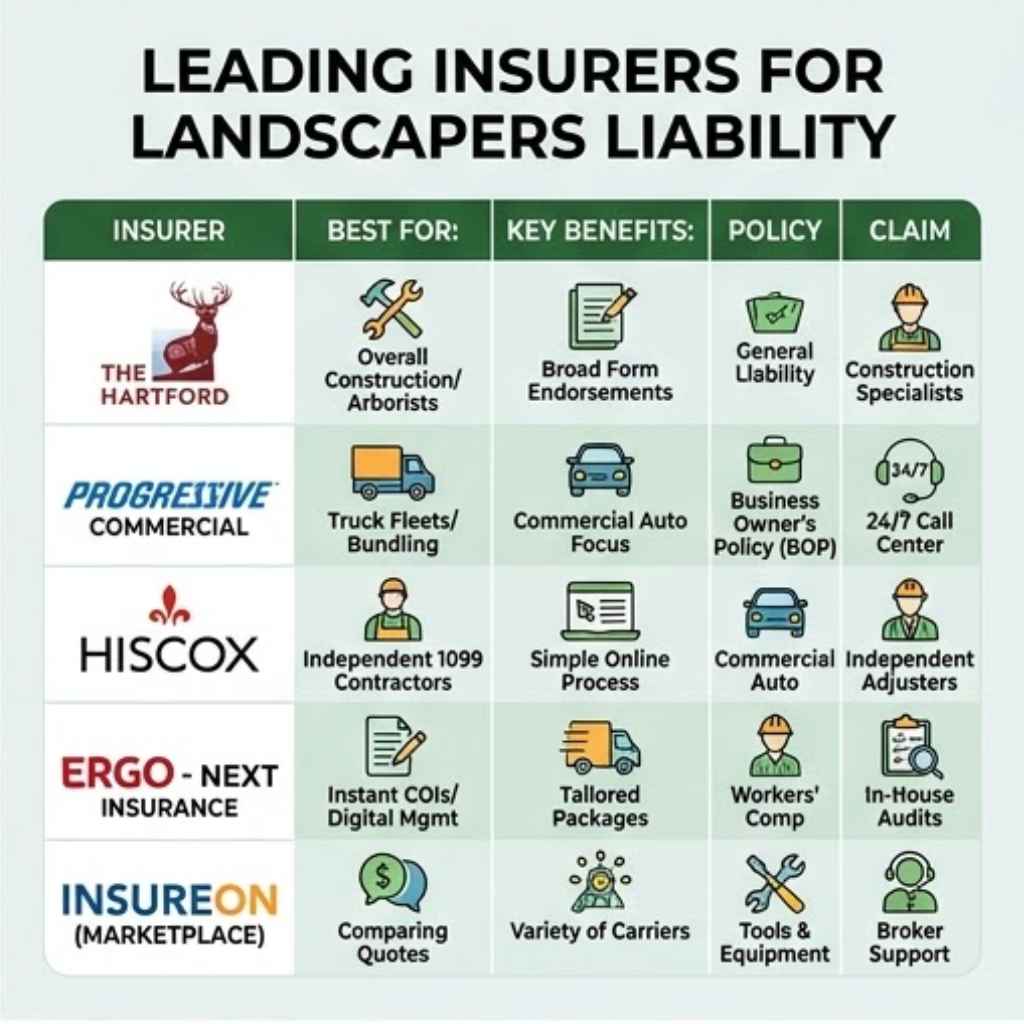
Here are some of the insurers that commonly provide liability coverage for landscapers:
Major Insurers with Broad Offerings
These companies have a wide reach. They serve many types of businesses. They often have robust online tools and local agents.
- The Hartford: The Hartford is a big name in small business insurance. They offer general liability policies. They also have business owner’s policies (BOPs). A BOP combines general liability and property insurance. They understand the needs of various trades.
- Nationwide: Nationwide provides a range of business insurance products. This includes general liability. They often work with independent agents. These agents can help tailor a policy to your specific landscaping operations.
- State Farm: While known for personal insurance, State Farm also offers business policies. They have agents across the country. They can help with general liability for small businesses.
- Liberty Mutual: Liberty Mutual has a strong commercial insurance division. They offer general liability and other business coverages. They often work with larger businesses but also serve small ones.
Insurer Spotlight: The Hartford
What they offer: General liability, Business Owner’s Policy (BOP), commercial auto, workers’ comp.
Why they’re good for landscapers: They have experience with trade contractors. They offer flexible policies. Their claims process is generally efficient.
What to consider: Policy costs can vary. It’s always best to get a direct quote.
Specialty Insurers and Brokers
Some companies focus more on niche markets. They might have deeper expertise in specific industries like landscaping. Working with an independent insurance broker is often the best way to find these insurers.
- Hiscox: Hiscox is known for its focus on small businesses and freelancers. They offer general liability and professional liability insurance. They make it easy to get quotes online. They understand the risks for service-based businesses.
- Progressive Commercial: While famous for auto insurance, Progressive also offers commercial policies. They provide general liability coverage for many trades.
- Travelers: Travelers is a large insurer with a dedicated small business unit. They offer a wide array of commercial coverages, including general liability.
An independent insurance broker is your best friend here. They don’t work for just one company. They work for you.
They can shop around. They can find policies from many different insurers. This includes smaller, regional companies that might offer competitive rates or specialized coverage.
Brokers understand the nuances of landscaping risks.
They can ask the right questions. They will help you assess your needs. This ensures you get the coverage that fits.
It saves you time and hassle. You might find a gem of a policy this way. It’s a policy that a big direct insurer wouldn’t even offer.
Finding Coverage: Broker vs. Direct
Independent Insurance Broker:
- Pros: Access to many insurers, personalized advice, helps find niche policies, can compare rates from multiple providers.
- Cons: May take a little longer than an instant online quote, commission-based.
Direct Insurer (Online/Phone):
- Pros: Quick quotes, often convenient for simple needs.
- Cons: Limited insurer options, may not fully understand specific trade risks, less personalized advice.
What Does Landscaper Liability Insurance Actually Cover?
It’s important to know what you’re paying for. Landscaper liability insurance, often part of a general liability policy, covers specific types of claims. These are claims made by people outside your business.
Here’s a breakdown of the core coverages:
Bodily Injury
This covers medical expenses and legal costs if someone gets hurt because of your business operations. This could be a client, a visitor at your office, or a passerby. For example, if a customer slips on a wet patch you created while working and breaks their arm, this coverage would help.
I remember a time when a client’s dog got spooked by some loud equipment. It ran off and got hit by a car. The owner was devastated.
They sued, not just for the dog, but for their emotional distress. Thankfully, our general liability policy covered the vet bills and our legal defense costs. It was a huge relief.
Property Damage
This covers the cost to repair or replace property that your business damages. Again, this is property that belongs to someone else. If your crew accidentally knocks over a fence, or a piece of equipment scratches a car, this coverage applies.
It helps pay for the repairs or replacement.
We had a close call once. We were moving a heavy statue for a client. One of the guys bumped it against their brick wall.
A few bricks chipped. It wasn’t a huge amount to fix, maybe a few hundred dollars. But the client was upset.
Our policy covered the repair work. It smoothed things over quickly.
Personal and Advertising Injury
This is a bit more complex. It covers things like libel, slander, copyright infringement in your ads, or wrongful eviction. For landscapers, this might be less common than bodily injury or property damage.
But it’s still a valuable part of the policy. For instance, if you made a false statement about a competitor that harmed their business, this could apply.
Products-Completed Operations Hazard
This is crucial for landscapers. It covers damages or injuries that happen after you have finished your work. This means if a problem arises from something you did (or failed to do) days, weeks, or even months later, this coverage can protect you.
For example, if you install a retaining wall and it fails a month later, causing damage to the client’s yard or a neighbor’s property, the completed operations hazard coverage would likely apply. This is different from the immediate on-site accidents. It covers the lingering effects of your work.
Quick Scan: What’s Covered?
Bodily Injury: Covers if someone gets hurt.
Property Damage: Covers if you break something that isn’t yours.
Personal & Advertising Injury: Covers things like slander or libel.
Products-Completed Operations: Covers issues that arise after your job is done.
Defense Costs: Pays for lawyers if you’re sued, even if the suit is baseless.
It’s also important to note that most liability policies will cover the cost of legal defense. This means if you are sued, the insurance company will pay for your lawyers and court costs. This defense coverage is often separate from the actual settlement amount.
It can be a huge financial help because legal fees add up quickly.
Factors Affecting Your Premium
The cost of your liability insurance, or your premium, isn’t one-size-fits-all. Several factors influence how much you’ll pay. Insurers look at the risk your business presents.
Your Business Size and Revenue
Larger businesses with higher annual revenues generally pay more. This is because they have more employees, more equipment, and potentially more exposure to risk. More sales mean more interaction with the public.
Services You Offer
Certain landscaping services are riskier than others. For example, tree removal services that involve climbing or using large machinery are considered higher risk. This is compared to just mowing lawns.
Spraying pesticides or installing complex irrigation systems also increases risk.
Your Claims History
If you have a history of filing claims or have had past lawsuits, your premiums will likely be higher. Insurers see this as a sign of higher risk. A clean history helps keep your rates down.
Location
Where your business operates matters. Areas with higher rates of accidents, lawsuits, or vandalism might have higher insurance costs. This can also be true for areas with specific climate risks, like heavy snowfall or frequent storms, which could impact your operations.
Coverage Limits and Deductibles
The amount of coverage you choose and the deductible you select play a big role. Higher coverage limits mean more protection, but also a higher premium. A deductible is the amount you pay out-of-pocket before insurance kicks in.
A higher deductible usually means a lower premium.
Years of Experience
More experienced businesses often get better rates. Insurers see longevity and a proven track record as signs of a stable, less risky operation. A brand new startup might pay more than a company that’s been around for 10 years.
Quick Check: What Impacts Price?
- Revenue: More money earned, often means higher cost.
- Services: High-risk jobs cost more to insure.
- Past Claims: A history of claims increases your rate.
- Location: Your area can affect the price.
- Coverage Amount: Higher limits cost more.
- Experience: More years in business can lower costs.
When you get a quote, be prepared to answer detailed questions about your business. The more accurate information you provide, the more accurate your quote will be. This prevents surprises down the line.
How to Get the Best Liability Coverage for Your Landscaping Business
Securing the right insurance is a process. It requires some research and careful consideration. You want coverage that’s adequate but also affordable.
1. Assess Your Needs Honestly
Before you even start looking, think about your business. What services do you offer? How many employees do you have?
What is your annual revenue? Do you use special equipment like sprayers or heavy machinery? Be thorough.
This assessment helps you talk to insurers more effectively.
2. Work With an Independent Insurance Broker
As mentioned before, brokers are invaluable. They have access to multiple insurance carriers. They can compare quotes for you.
They can also explain the differences between policies. They look out for your best interests, not just one company’s.
I once worked with a broker who found us a policy. It had better coverage for chemical application than we thought we could get. And it was cheaper than our previous one.
That’s the power of a good broker.
3. Get Multiple Quotes
Don’t settle for the first quote you receive. Even with a broker, it’s good to get quotes from a few different sources. This allows you to compare prices and coverage options side-by-side.
Pay attention not just to the price, but also to what is included and excluded.
4. Understand Your Policy Details
Read your policy carefully. Know your coverage limits. Understand your deductible.
What are the exclusions? Exclusions are things the policy won’t cover. For example, some policies might exclude damage from certain types of chemical applications if not handled properly.
I always highlight the sections on exclusions and conditions. This is where potential problems hide. A small phrase can mean a big difference if a claim arises.
5. Consider Additional Coverages
General liability is essential, but it might not be enough. Think about other types of insurance you might need:
- Commercial Auto Insurance: Covers your work vehicles.
- Workers’ Compensation: Covers employee injuries on the job. (Required in most states.)
- Professional Liability (Errors & Omissions): Covers mistakes in your professional advice or services.
- Inland Marine Insurance: Covers your tools and equipment when they are transported or stored off-site.
Essential Checks Before Buying
Coverage Limits: Are they high enough for your business?
Deductible: Can you afford this amount if a claim happens?
Exclusions: What specific risks are NOT covered?
Claims Process: How easy is it to file a claim with this insurer?
Reputation: Does the insurer have good reviews for customer service and claims handling?
By taking these steps, you can feel more confident that you have the right protection. It’s an investment in your business’s future. It gives you peace of mind.
This allows you to focus on growing your landscaping services.
Common Scenarios Where Landscaper Liability Insurance Helps
Let’s walk through a few more real-life scenarios where this insurance truly shines. These are situations that can happen to any landscaping business.
Scenario 1: The Falling Branch
You’re hired to prune a large oak tree in a client’s front yard. During the trimming, a heavy branch breaks unexpectedly. It crashes down onto the client’s car, causing significant damage to the windshield and roof.
The client is understandably upset and demands you pay for the repairs immediately.
Without liability insurance, you’d be on the hook for thousands of dollars. With it, you report the incident to your insurer. They will investigate.
If your fault is confirmed, they will handle the claim. This includes paying for the car repairs and any other associated costs. It prevents a major financial setback.
Scenario 2: The Chemical Spill
Your team is applying a weed killer in a client’s flower beds. A sudden gust of wind blows the spray onto the neighbor’s prize-winning rose bushes, killing them. The neighbor is furious.
They claim significant financial loss and demand compensation for the damaged plants.
Your general liability policy would likely cover this. It addresses property damage to a third party. Your insurer would assess the situation.
They would work with the neighbor to reach a fair settlement. This resolves the issue without you having to dip into your operating funds.
Scenario 3: The Slip and Fall
After finishing a lawn mowing job, your crew leaves a small pile of grass clippings near the edge of the client’s driveway. Later that day, a guest visiting the client doesn’t see the clippings. They slip, fall, and break their wrist.
They file a lawsuit against you, claiming negligence for not cleaning up properly.
This falls under bodily injury to a third party. Your liability insurance would cover the medical bills. It would also cover legal defense costs if the lawsuit proceeds.
This protects you from a potentially very expensive legal battle and medical expenses.
Scenario 4: The Irrigation System Mishap
You’re installing a new sprinkler system for a commercial property. While digging, your crew accidentally severs an underground gas line that wasn’t clearly marked on the plans. This causes an emergency situation, requiring costly repairs and temporary business shutdowns for the property owner.
This is a clear case of property damage caused by your operations. The cost to repair a gas line and the associated business interruption claims can be massive. Your completed operations coverage would be vital here, as the damage is directly related to your installed work.
Real-World Impact: Saved by Insurance
The Problem: Accidental damage to a client’s expensive outdoor kitchen during patio work.
The Solution: Liability insurance covered the $8,000 repair cost.
The Outcome: Client remained happy, business was protected from a huge expense.
The Problem: Employee leaves a hose across a walkway, leading to a customer’s fall and injury.
The Solution: Insurance covered medical bills and legal fees totaling $15,000.
The Outcome: Business survived a costly accident.
These examples show how easily things can go wrong. They also highlight the immense value of having the right insurance. It’s not just a piece of paper; it’s your business’s shield against unexpected disasters.
When Is It Normal to Worry About Landscaping Liability?
It’s normal to worry about liability all the time in landscaping. But there are certain situations where your concern should be heightened. This is when the risk of an accident or claim is significantly higher.
Before Taking On Risky Jobs
If you’re about to take on a job that involves significant risks, like:
- Large-scale tree removal.
- Working near power lines.
- Applying potent chemicals in sensitive areas.
- Operating heavy machinery on uneven terrain.
This is a good time to review your policy. Ensure your coverage is adequate. You might even need a rider or endorsement for that specific job.
When Expanding Services
If you decide to add new services to your offerings, like hardscaping, water feature installation, or pesticide application, and you didn’t offer them before. You need to update your insurance. These new services come with new risks that your current policy might not cover.
If You Notice an Increase in Near Misses
Are your employees having more “close calls” lately? Maybe tools are being dropped more often, or there are more instances of equipment malfunctions. This could signal a need for better training or a review of your safety protocols.
It also might mean your insurance needs are changing.
When Clients Request Higher Coverage Limits
Sometimes, larger clients, especially commercial ones, will require you to carry a certain amount of liability coverage. If they ask for limits higher than what you currently have, you need to address this immediately. It’s often a prerequisite for getting the contract.
After a Poor Safety Inspection or Audit
If your business has been subject to a safety inspection and some concerns were raised, it’s a clear signal. It means regulators or clients see potential hazards. You should proactively review your insurance.
You may need to bolster your coverage and safety training.
When to Double-Check Your Insurance
New Services: Offering something you haven’t before.
High-Risk Jobs: Projects with clear potential for major damage.
Client Demands: When a contract requires higher limits.
Safety Concerns: After an incident or a poor safety review.
Growing Your Team: More employees mean more potential for on-the-job incidents.
It’s always better to be proactive than reactive. Addressing potential risks before they become claims is the smartest approach. This includes having the right insurance in place.
Frequently Asked Questions About Landscaper Liability Coverage
What is the difference between general liability and professional liability for landscapers?
General liability covers incidents causing bodily injury or property damage during your operations. Professional liability covers errors or omissions in the advice or services you provide, like bad design plans or incorrect plant recommendations.
Do I need liability insurance if I’m a solo landscaper?
Yes, even as a solo operator, you face risks. Accidents can happen, and clients can still sue you for damages. Liability insurance protects your personal assets.
What is a typical coverage limit for landscaper liability insurance?
Coverage limits can range from $500,000 to $2 million or more. Many commercial clients require at least $1 million in coverage. The right limit depends on your business size and risk exposure.
How long does it take to get a quote for landscaper liability insurance?
With an independent broker, you might get quotes within a few business days. Some insurers offer instant online quotes, but these might be less tailored to your specific needs.
Does landscaper liability insurance cover damage to my own equipment?
No, general liability insurance typically does not cover damage to your own business property. You would need commercial property insurance or inland marine insurance for that.
What if I use subcontractors? Does my liability insurance cover them?
Generally, your liability insurance covers your business operations. It does not automatically cover subcontractors. You should require your subcontractors to carry their own insurance and provide you with proof.
Final Thoughts on Finding the Right Insurer
Choosing the right insurance is a critical step. It protects your livelihood. It ensures you can handle unexpected events.
By understanding what coverage you need and who offers it, you can make informed decisions. Don’t rush this process. Take your time.
Ask questions. Work with professionals who understand your business.