Best landscaping services for small yards: top picks
The best landscaping services for small yards are design-first planning, scale-fit hardscaping, and low-maintenance planting, with design and drainage handled first because they give the biggest space gains. Done poorly, small yards feel tight, need rework, and can waste thousands on plant choices or patio sizes that cut into usable space. This guide ranks the highest-impact services by priority and shows which upgrades make a compact yard look larger, work better, and avoid expensive mistakes.
This guide is part of our Landscaping services guide series.
Best landscaping services for small yards: the top pick
The top pick for a small yard is a design consultation followed by a tightly scoped install plan. I put this first because it sets scale, traffic flow, sun exposure, drainage, and planting limits before anyone buys material or digs a bed.
Why design consultation comes first
Small yards fail when the layout is guessed. A good consultation should include site measurement, sun and shade assessment, traffic flow planning, and a space-saving layout that shows where people actually walk, sit, and store things. That step prevents oversized patios, awkward paths, and plants that outgrow the bed in two seasons.
The service mix worth paying for first
If the yard is small, the best first spend is usually design consultation, drainage correction if needed, and a focused planting or hardscape install. Mulch and cleanup are useful, but they do not fix bad proportions. The highest return comes from shaping the yard so every square foot has a purpose.
Quick picks by yard need
The right package depends on the job the yard has to do. A front yard usually needs clarity and restraint. A back yard needs usable space. A drainage problem yard needs grading before anything decorative goes in.
- Best for a front yard: design consultation, bed cleanup, low-maintenance shrubs, pruning, and a narrow path or small planting border.
- Best for a back yard: design consultation, a scale-appropriate paver patio, compact planting design, drip irrigation, and container layers for vertical interest.
- Best for a yard with drainage problems: grading, downspout management, slope control, then planting and mulch after water issues are fixed.
- Best low-maintenance package: pruning, mulch refresh, compact shrubs and perennials, drip irrigation, and a simple layout with limited bed area.
What landscaping services are best for a small yard?
The best landscaping services for a small yard are design consultation, planting design, hardscaping, mulching and bed cleanup, and tree and shrub pruning. Those five control scale, function, and maintenance better than a long list of decorative add-ons.
Landscape design consultation
Design consultation should start with measurement, sun and shade mapping, traffic flow planning, and a layout that leaves room to move. In a compact yard, a few inches matter. A narrow passage, a misplaced bed edge, or a patio that is too deep can make the whole site feel smaller.
Planting design
Planting design matters because small yards punish poor plant choices quickly. A good plan should account for plant size at maturity, spacing, seasonal interest, and root spread. Compact cultivars and slower-growing species usually fit better than fast-growing shrubs that need constant correction.
Hardscaping
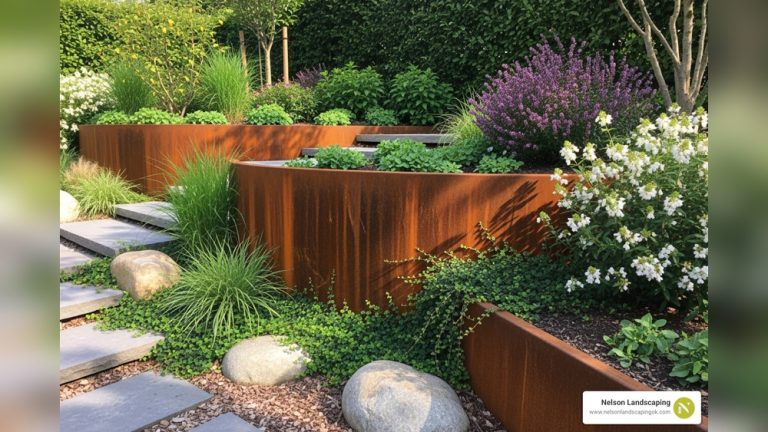
Hardscaping should be scale-appropriate. Small paver patios, short retaining walls, and narrow pathways can organize a yard without swallowing it. Oversized stone, wide steps, or a patio that extends too far often steals the very space people wanted to create.
Mulching and bed cleanup
Mulching and bed cleanup are lower cost and useful when the yard already has a decent layout. Clean edging, weed suppression, and moisture retention improve the finish, but mulch is a refresh, not a fix for bad structure. It often needs to be renewed about once a year.
Tree and shrub pruning
Pruning often has an outsized effect in small yards. Canopy control, clearance, visibility, and health pruning can open a view, improve light, and restore usable space. A branch removed from the wrong place can do more for a small yard than adding a new plant.
Which services make a small yard look bigger?

The services that make a small yard look bigger are layout work, right-sized hardscaping, vertical planting, container layers, and pruning that clears sightlines. These changes reduce visual clutter and create depth, so the yard reads as open instead of crowded.
Space-saving layout and traffic flow
Start with a layout that places movement first. When paths are too wide or beds are arranged without a clear route, the yard feels chopped up. A narrow but direct path, a single focal area, and fewer turns usually read as more spacious than multiple disconnected zones.
Pathway and patio scale
Patios and paths should fit the yard, not dominate it. In compact yards, a smaller patio with clean edges can work better than a broad terrace. The goal is to create a usable surface while preserving the feeling of open perimeter space.
Vertical planting and containers
Vertical planting and containers add volume without taking much ground area. They can work well near entries, patios, and blank fences. The tradeoff is drainage and upkeep; containers dry out faster and need a stable watering plan, but they are ideal when the ground plane is tight.
Canopy control and sightline cleanup
Pruning can change the whole read of a small yard. Raising a canopy, removing crowded limbs, and clearing views across the yard create depth. Overgrown shrubs and low branches are common mistakes because they block light and make even healthy spaces feel compressed.
Drainage and irrigation: the fixes that pay off first
Drainage and irrigation often matter more than decorative work in a small yard. If water sits where people walk or plants fail from uneven moisture, the rest of the design will keep fighting the site. Fix the water first, then install the visible work.
When grading matters more than planting
Grading correction is the right first move when water pools, soil stays saturated, or runoff heads toward a foundation or walkway. A pretty planting plan will not solve standing water. In small yards, even minor slope control can change whether a bed survives or collapses into mud.
Drip irrigation for tight beds
Drip irrigation is often a good irrigation choice for small beds. It puts water where roots need it and reduces overspray onto paths, patios, and fences. Zoning matters too, because sun-exposed beds and shaded beds rarely need the same schedule.
Downspout management and standing-water fixes
Downspout extensions, regraded splash zones, and simple drain paths often solve more problems than adding more planting. If a downspout empties into a narrow bed, that bed will stay wet, plants will rot, and mulch will wash away. Small yards need precise water routing, not guesswork.
How do I choose between design, installation, and maintenance?
Choose design when the layout is uncertain, installation when the plan is clear and the space needs a one-time build, and maintenance when the yard already functions but needs regular control. Most small yards benefit from a design consult first, then one targeted install, then light maintenance.
When a design consult is enough
A design consult may be enough when the yard is healthy, drainage seems fine, and the main problem is uncertainty about what fits. This is common in narrow front yards and small side yards. A measured plan can prevent expensive changes that would not improve function.
When to buy a one-time install
A one-time install makes sense when the layout is obvious and the goal is a specific fix: a patio pad, a path, a retaining edge, or a compact planting bed. It is the better spend when a single change will improve use and you do not need a full rebuild.
When ongoing maintenance is the better spend
Ongoing maintenance can be the right choice when the yard already has a solid structure but needs pruning, mulch refreshes, weed control, and seasonal cleanup. Small yards often look best with disciplined maintenance, because a little overgrowth reads quickly in a tight footprint.
Small-yard landscaping priority matrix
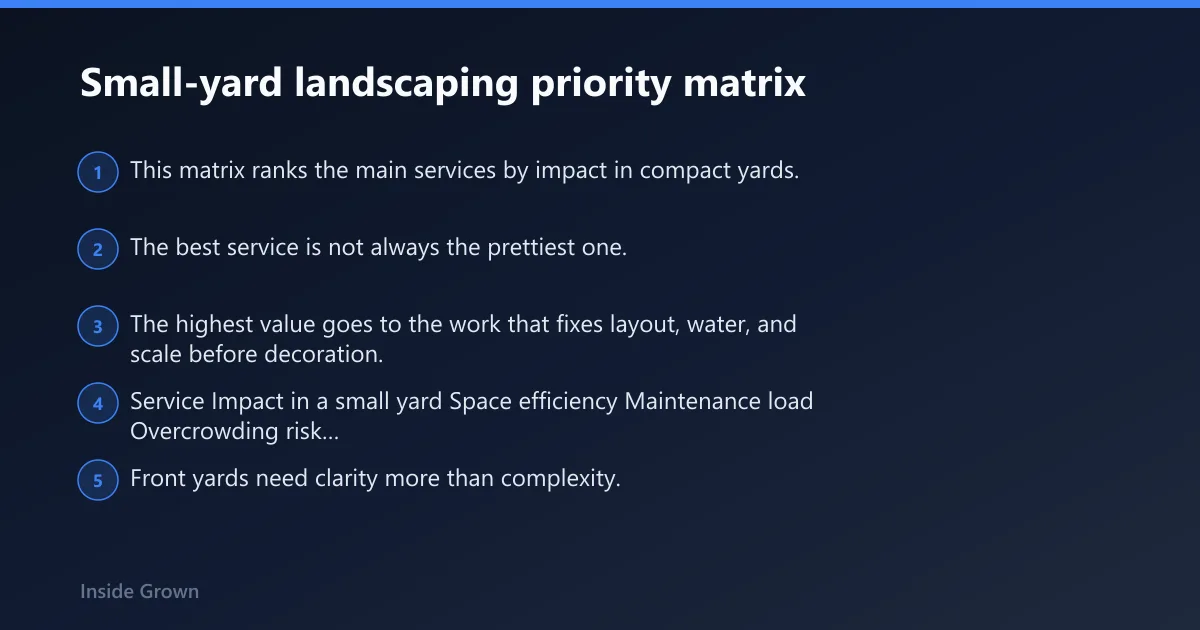
This matrix ranks the main services by impact in compact yards. The best service is not always the prettiest one. The highest value goes to the work that fixes layout, water, and scale before decoration.
| Service | Impact in a small yard | Space efficiency | Maintenance load | Overcrowding risk |
|---|---|---|---|---|
| Landscape design consultation | Very high | Very high | Low | Low |
| Drainage correction | Very high if water is a problem | High | Low | Low |
| Hardscaping | High | Medium to high when scaled well | Low | Medium |
| Planting design | High | High | Medium | High if sizes are misjudged |
| Tree and shrub pruning | High | High | Medium | Low |
| Drip irrigation | Medium to high | High | Low | Low |
| Mulching and bed cleanup | Medium | Medium | Medium | Low |
| Container planting | Medium | Very high | Medium to high | Low |
| Low-maintenance shrubs and perennials | Medium to high | High | Low to medium | High if mature size is ignored |
Recommended package for front yards
Use design consultation, pruning, mulch refresh, and a restrained planting plan with compact shrubs and perennials. Front yards need clarity more than complexity. Keep paths direct, beds narrow, and plant masses small enough to preserve visibility from the street and driveway.
Recommended package for back yards
A practical package may include design consultation, a small patio or pathway, drip irrigation, and containers or compact shrubs near the sitting area. Back yards need usable space first. Keep the center open and push softer elements to the edges so the area feels larger and easier to use.
Recommended package for drainage problem yards
Use drainage correction first, then grading, downspout management, and only then planting and mulch. If water control comes after the decorative work, the project usually fails. In small yards, the fix is often modest in size but high in effect because the entire site depends on one slope or one outlet point.
Frequently asked questions
What landscaping services are best for a small yard?
The best services are design consultation, drainage correction, planting design, hardscaping, and pruning. Those are the highest-value choices because they control how the yard functions and how large it feels. Mulch, cleanup, and maintenance matter too, but they work best after the layout is right.
How much do landscaping services cost for a small yard?
Costs vary by region, access, material choice, and project scope. A small yard can be inexpensive to maintain but still costly to redesign if drainage, grading, or hardscaping is involved. Ask for itemized quotes so design, install, and maintenance are priced separately.
Which landscaping services make a small yard look bigger?
Services that improve scale make the biggest difference: space-saving design, narrow pathways, small patios, vertical planting, container layers, and pruning that opens views. These changes reduce visual clutter and keep the yard from feeling boxed in. Oversized beds and bulky plants usually do the opposite.
Do I need design, installation, or maintenance for a small yard?
If the yard feels awkward or cramped, start with design. If the layout is already clear, install the one element that fixes the main problem. If the yard works but looks tired or overgrown, maintenance is enough. Most small yards benefit from design first, then targeted installation.
What should I ask before hiring a landscaper for a small yard?
Ask how they measure the site, how they handle sun and shade, how they avoid overcrowding, and whether they separate design from installation and maintenance. Also ask for proof of licensing and insurance, and for a drainage plan if water is pooling or running where it should not.
How do I choose plants and hardscaping for a small yard?
Choose plants by mature size, root spread, sun exposure, drought tolerance, and pruning frequency. Choose hardscaping by scale and circulation needs. A small yard usually needs fewer plant types, smaller masses, and hard surfaces that support use without taking over the whole footprint.
What landscaping services are worth paying for in a small yard?
Pay for the services that prevent rework: design consultation, drainage correction, and planting plans that match the site. After that, hardscaping and pruning usually give better return than adding more ornamental plants. In compact spaces, precision beats volume every time.
How can I avoid overcrowding a small yard?
Use fewer plant types, respect mature spacing, keep paths narrow but usable, and avoid filling every open spot. Leave some blank space on purpose. Crowding usually starts when plants are bought for their sale size instead of their mature size, or when beds are made too deep.
What is the best low-maintenance landscaping for a small yard?
The best low-maintenance setup is a simple layout with compact shrubs, durable perennials, drip irrigation, mulch, and regular pruning. Containers can work too if watering is manageable. The key is choosing plants that stay within bounds so maintenance stays light instead of becoming a rescue job.