How to Tell If Landscaping Services Are Worth the Price
Landscaping services are often worth the price when the estimate clearly pays back in one of a few ways, such as higher resale value, lower upkeep costs, or better daily use. A common benchmark is a 3- to 5-year payback, but that window is market-dependent and project-dependent rather than a rule (see return studies summarized by Virginia Tech and USDA Forest Service research below). Skip that check, and you can pay for upgrades that look fine on paper but add little value, cut no labor, and solve no real problem. This guide shows how to judge quotes by outcome bucket, compare them to likely returns, and spot where a higher price is justified.
Should you pay for landscaping services?
Yes, if the quote clearly improves resale, reduces recurring work, or fixes a real site problem. The best value usually comes from projects that do more than decorate: they solve drainage, improve curb appeal, or make upkeep easier. If a bid cannot point to one of those outcomes, the price is harder to justify.
What should be in a landscaping quote?
A useful landscaping quote spells out the work, the materials, the labor split, the site prep, and what happens after the crew leaves. If any of those parts are vague, you cannot tell whether you are paying for the same job as the next homeowner’s bid. For drainage-heavy jobs, compare the scope with [drainage problems](/drainage-problems/); for lawn work, see [sod vs seed](/sod-vs-seed/).
Line-item scope: what work is covered and what is not
The scope should name each task: bed removal, grading, planting, mulch, sod, edging, irrigation changes, drainage fixes, pruning, or tree work. It should also state what is excluded, such as permits, hardscape, hauling heavy debris, or replacing failed plants after installation.
Materials vs. labor: why the split matters
Ask for the materials cost and the labor cost separately. That split helps you compare bids with equal scope, spot inflated markups, and see whether a higher price comes from better stock, more crew time, or a broader project. A single lump sum hides those differences.
Site prep, cleanup, disposal, and follow-up terms
Site prep often decides whether the finished work lasts. Look for grading, soil amendment, weed removal, root handling, and drainage preparation. Cleanup and disposal should also be explicit, including haul-away of old sod, brush, pots, or demolition waste. Follow-up terms matter too, especially for plant replacement, watering guidance, and any maintenance visits.
Say your bid includes new shrubs and mulch, but the line items never mention soil prep or disposal of old beds. That quote may be cheaper for a reason. If the contractor has not priced the unglamorous work, you may pay later in weak plant establishment or surprise add-ons.
How much should a typical yard cost?
For a typical 1/4-acre property, many landscape projects start around a few thousand dollars, but the exact baseline varies by region, access, plant size, and whether the job is simple or design-heavy. Rather than treat one number as universal, compare the quote against the scope, the site conditions, and the outcomes it delivers.
What minimum spend usually includes
At the low end, the budget usually covers basic planting beds, starter plants, and the labor to install them. It may not cover major grading, irrigation, mature trees, drainage correction, or full-yard redesign. Those items can move the total quickly because they change both labor time and material cost.
Why planting, sod, and seeding change the price
Planting costs rise with size, quantity, and handling. Sod usually costs more than seeding because it brings immediate coverage and more labor. Seeding is slower and cheaper, but it asks more of the homeowner after installation. The quote should say whether the estimate covers seedbed prep, topsoil, watering instructions, and any erosion control.
Picture a 1/4-acre front yard that gets new foundation shrubs, mulch, and grass seeding. That job may fit a basic starting budget if the layout is simple. Add mature trees, drainage corrections, and a redesigned front walk, and the same yard becomes a much larger project. For lawn planning, [tree planting](/tree-planting/) and [curb appeal](/curb-appeal/) pages can help you compare the design value before you sign.
What value are you actually buying?
Landscaping value belongs in three buckets: resale, maintenance savings, and daily use. A quote is worth more when it improves more than one bucket, and less when it only adds decoration that does not reduce work, solve a practical issue, or support a higher sale price. If you are comparing broader remodeling returns, [home-improvement ROI](/home-improvement-roi/) can give useful context.
Resale value: when landscaping supports a higher sale price
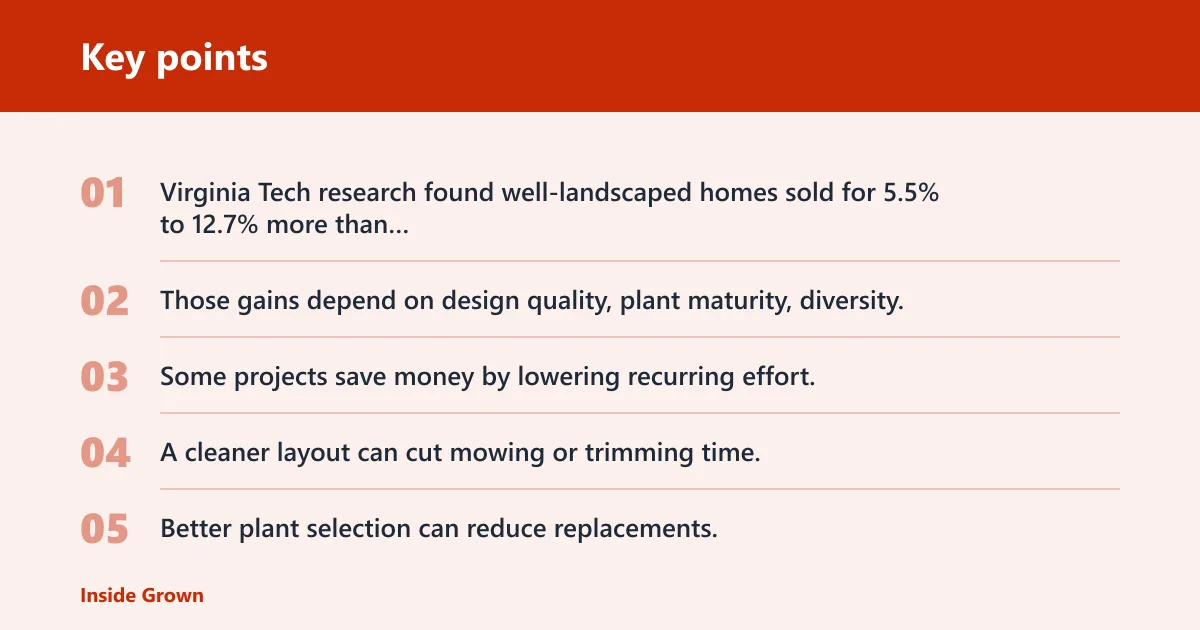
Virginia Tech research found well-landscaped homes sold for 5.5% to 12.7% more than comparable homes with no landscaping, with an average perceived-value lift of 8.6% when moving from the least valued landscape to the most valued landscape (Virginia Tech landscape valuation study). Those gains depend on design quality, plant maturity, diversity, and whether the yard looks maintained rather than sparse.
Maintenance savings: lower upkeep, fewer replacements, less waste
Some projects save money by lowering recurring effort. A cleaner layout can cut mowing or trimming time. Better plant selection can reduce replacements. Good drainage can prevent erosion and patchwork repairs. These savings may not show up on the sale price, but they can still justify a quote if they reduce annual labor and waste.
Daily use: shade, privacy, drainage, and easier yard care
Daily use matters when the yard becomes easier to live with. Shade can make a patio usable in summer. Privacy planting can soften a street-facing lot. Drainage work can keep muddy areas from taking over a side yard. In that case, the return is comfort and function, not resale alone.
Suppose two bids cost the same, but one includes regrading a low spot that floods after rain while the other adds extra ornamental plants. The drainage fix may be the better buy because it solves a recurring problem and reduces future repair work. The prettier bed is only worth more if it also improves resale or use.
| Criterion | 0 points | 1 point | 2 points |
|---|---|---|---|
| Scope clarity | Vague or incomplete | Most major tasks named | Clear line-item scope with exclusions |
| Materials detail | No material list | General materials named | Specific materials, sizes, and quantities |
| Labor detail | Single lump sum | Basic labor breakdown | Clear crew time or task-based labor split |
| Site prep | Not addressed | Some prep included | Prep steps are explicit and appropriate |
| Cleanup and disposal | No mention | Cleanup mentioned | Removal, hauling, and disposal spelled out |
| Long-term maintenance | No follow-up terms | Basic care notes | Warranty, replacement, or maintenance terms included |
| Resale potential | Little visible value | Some curb appeal gain | Likely sale-price support or buyer appeal |
| Utility / efficiency value | No functional gain | Minor comfort gain | Clear shade, privacy, drainage, or labor savings |
Score interpretation: 0-5 points is poor, 6-9 points is fair, 10-13 points is strong, and 14-16 points is overpriced if the quote is still high relative to the outcomes it delivers. A high total does not mean a cheap job; it means the quote explains its price through clear value.
Value per dollar formula: total score ÷ quoted price = value per dollar. For example, a 6-point quote at $3,000 scores 0.0020 points per dollar; a 10-point quote at $4,000 scores 0.0025; and a 14-point quote at $7,000 scores 0.0020. The higher ratio usually wins if scope and materials are otherwise similar.
| Quote comparison item | Quote A | Quote B | What to check |
|---|---|---|---|
| Quoted price | $ | $ | Same scope or not? |
| Scope detail | Basic / detailed | Basic / detailed | Are tasks itemized? |
| Materials quality | Standard / upgraded | Standard / upgraded | Plant sizes, soil, mulch, sod |
| Site prep | Included / excluded | Included / excluded | Grading, amendment, drainage |
| Cleanup / disposal | Included / excluded | Included / excluded | Haul-away and debris removal |
| Follow-up terms | Warranty / none | Warranty / none | Replacement or care support |
| Score | 0-16 | 0-16 | Use the scorecard above |
| Value per dollar | Score ÷ price | Score ÷ price | Higher is better for similar scope |
Do upgrades increase home value?
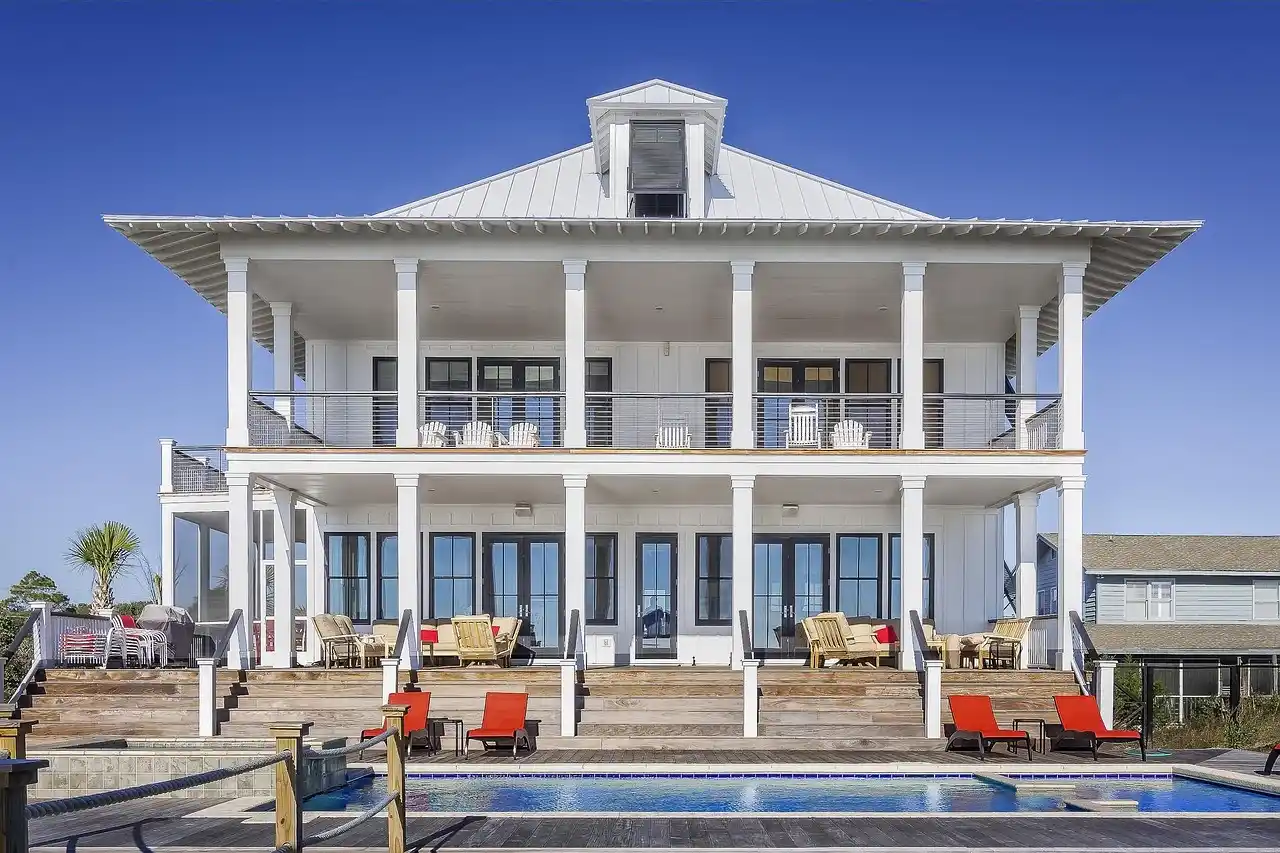
Some upgrades do, but the biggest gains come from design quality, plant maturity, diversity, and placement rather than raw plant count. A yard can contain many plants and still feel weak if the layout is broken, the stock is small, or the planting looks random.
Design sophistication and cohesive layout
Design sophistication accounted for 42% of the added value in the Virginia Tech study. That means a cohesive layout can matter more than piling in extra plants. Buyers notice structure, balance, and how the front yard fits the house. A professional plan usually reads as intentional, which raises perceived value faster than sheer quantity.
Plant maturity, canopy coverage, and perceived value
Plant size or maturity accounted for 36% of the added value in the Virginia Tech study. Newly planted material can look thin at first. Establishing stock often fills space better over time. Mature plants, especially trees with canopy coverage, can signal a more finished yard and add visual weight that smaller stock cannot match.
Plant diversity and why variety can matter more than volume
Plant diversity accounted for 22% of the added value in the Virginia Tech study. One species repeated across a bed can look flat. Multiple species, used with restraint, create more visual variety and can make a property feel more finished. The goal is not clutter. It is a layout that looks planned.
Trees and neighborhood spillover effects
USDA Forest Service research found a single street tree added an average of $8,870 to a Portland home’s sale price, and the same research found the tree reduced time on market by nearly two days (USDA Forest Service street-tree study). A street tree along the public right-of-way added an average of $12,828 to the combined value of homes within 100 feet, which shows the benefit can spill beyond one lot.
Well-placed trees on the west and southwest sides can also reduce annual cooling energy use by 10% to 50% in applicable settings, depending on tree placement, building exposure, and climate (U.S. DOE / USDA Forest Service urban-forestry research). That is a direct utility benefit, not just a visual one. Trees can also help soften harsh street exposure and make the property read as part of a cared-for block.
When is a bid too high?
A bid is too high when the price is not matched by scope, materials, labor detail, or follow-up value. The biggest warning signs are vague estimates, one-size-fits-all labor, hidden cleanup charges, and a price that stays high even though the design and materials are basic. If you are troubleshooting yard issues, [curb appeal](/curb-appeal/) and [tree planting](/tree-planting/) can help you separate style from substance.
Vague scope and one-size-fits-all labor
If the quote says only “front yard landscaping” or “full service” without line items, you are paying blind. A flat labor number with no task detail also makes comparison hard. Two jobs can both say “landscaping” while one includes grading, planting, and cleanup, and the other covers only light bed dressing.
Hidden cleanup or disposal charges
Cleanup should never be an afterthought. Disposal of brush, old sod, stone, soil, or demolition waste can be expensive, but it should still be visible in the quote. If it appears only after work starts, the original bid was not complete.
Price that is high for the level of design, materials, or maintenance included
A premium price can be justified by mature stock, complex grading, a drainage fix, or a detailed design. It is harder to justify when the plan is generic, the materials are basic, and maintenance is minimal. Neglected landscaping can reduce perceived value in some markets, so a plan that is expensive but still looks sparse or poorly maintained may fail to protect what you are paying for.
- Compare both bids against the same scope, not different wish lists.
- Check whether materials, labor, site prep, and cleanup are itemized.
- Mark any missing maintenance, warranty, or follow-up terms.
- Score each quote with the table above.
- Choose the bid that explains more value per dollar, not the one with the lowest sticker price.
A common first-timer mistake is judging a bid only by the total. A $4,200 quote with mature shrubs, grading, and disposal may be better value than a $3,600 quote that leaves you with weak soil prep and no cleanup line. The cheaper number is not the lower cost if it creates more replacement work later.
Should you do it yourself or hire a pro?
DIY can make sense for simple, low-risk work, but professional help is usually the better buy for grading, drainage, mature trees, and projects where a mistake can become expensive. The smartest choice is often partial DIY: handle the cosmetic work yourself and pay for the technical parts that affect long-term value.
Good DIY candidates
Basic bed cleanup, mulch, annuals, small shrubs, and simple edging are often manageable for a homeowner with time and tools. These jobs are mostly labor, so the savings can be meaningful if the site is level and the plant list is simple. The risk is low when the work does not change drainage or structural layout.
Projects better left to pros
Drainage corrections, regrading, tree installation, irrigation changes, and large-scale planting are harder to correct after the fact. If the job depends on accurate slope, root handling, or plant spacing, a pro can reduce the chance of rework. That is especially true when the quote includes a clear design and warranty terms.
Partial-scope strategy: what to keep and what to outsource
A blended approach can stretch the budget. For example, you may handle cleanup and planting while paying a pro for grading, drainage, or tree placement. That keeps the high-risk work in expert hands while preserving value on simpler tasks. In many cases, that is the best return on spending.
Frequently asked questions
How do I know if landscaping services are worth the price?
Start by asking what the quote buys in resale, maintenance savings, or daily use. If the work does not improve at least one of those buckets, it is probably too expensive. A strong quote also explains scope clearly and gives you a realistic reason for the cost beyond appearance alone.
What should be included in a landscaping quote?
A solid quote should list the scope, materials, labor, site prep, cleanup, disposal, and any follow-up or maintenance terms. If those items are not in writing, the estimate is hard to compare and easier to inflate later. The more specific the breakdown, the easier it is to judge value.
How much does landscaping cost for a typical yard?
For a 1/4-acre property, there is no single national minimum that fits every market, but a basic project usually reaches into the low-thousands once materials, planting, and grass work are included. Costs rise when the project adds mature plants, sod, drainage work, or more detailed design, so scope matters as much as lot size.
When is a landscaping bid too high?
A bid is too high when the scope is vague, the labor is bundled without detail, or cleanup and disposal are missing until the end. It is also too high when the quote has little design value and no maintenance upside. A premium price needs a clear reason you can verify in the estimate.
What projects give the best return on landscaping spending?
Projects that combine visual order with function usually return the most. That often means front-yard redesigns, healthy trees, foundation plantings, drainage correction, and clean curb-facing layouts. In the Virginia Tech study, design sophistication carried the largest share of added value, which is a clue that planning matters more than volume.
Should I hire a landscaper or do it myself?
Do it yourself if the job is simple, seasonal, and mostly cosmetic, such as mulching, light planting, or basic bed cleanup. Hire out work that involves grading, drainage, mature trees, or any project where a mistake could cost more than the labor savings. Partial scope can be the better buy.