Landscaping Services vs Lawn Care Services: What to Hire
Use lawn care services for recurring maintenance like mowing, edging, fertilizing, and weed control; use landscaping services for one-time or occasional projects like grading, planting, hardscaping, drainage fixes, and bed redesign. Pick the wrong one, and you usually waste money, delay the real fix, or keep paying for work that never solves the problem. This guide gives homeowners a simple way to sort yard tasks and hire the right provider for each one.
This guide is part of our Landscaping services guide series.
Landscaping services vs lawn care services: the core trade-off

The split is simple: landscaping changes the yard, while lawn care keeps the yard maintained. If the job needs planning, layout, planting, grading, drainage work, or hardscaping, it belongs with landscaping services. If the job repeats on a schedule and keeps grass healthy and tidy, it belongs with lawn care services.
| Decision factor | Landscaping services | Lawn care services | Winner |
|---|---|---|---|
| Scope | Project-based work such as design, planting, grading, drainage, patios, walkways, and bed changes | Recurring maintenance such as mowing, edging, trimming, fertilization, weed control, and seasonal upkeep | Lawn care services |
| Frequency | One-time or occasional projects | Weekly, biweekly, or monthly visits | Lawn care services |
| Best use case | Fixing a drainage issue, adding beds, building a patio, or reworking a yard layout | Keeping turf cut, edged, fed, and free of common weeds | Depends on the problem |
| What the work changes | Site conditions, layout, surfaces, and planting structure | Day-to-day appearance and plant health maintenance | Landscaping services |
| What to expect in a quote | Planning, measurements, materials, labor, and sometimes a design fee | Ongoing service pricing tied to schedule and property size | Tie |
Scope is the clearest divider
Landscaping services are broader. Landscaping includes visible features of land, including plants, landforms, and water, and it also includes nonliving elements like patios and walkways. Lawn care services stay on the maintenance side: they keep turf areas and plant edges clean, healthy, and controlled.
Frequency tells you who to call
If the job repeats on a regular schedule, it is usually lawn care. If it is a one-time fix or a planned build, it is usually landscaping. A property can need both, but the service type should match the timing of the work.
Why the quote structure differs
Landscaping often needs a site assessment before any crew starts. Sun and shade patterns, slope and topography, soil qualities, wind exposure, and water runoff can all change the plan. Lawn care quotes are usually simpler because the work is routine and the deliverable is the same each visit.
According to gardendesign.com — Homeowners often spend about 10% of home value on landscaping.
What is the difference between landscaping services and lawn care services?
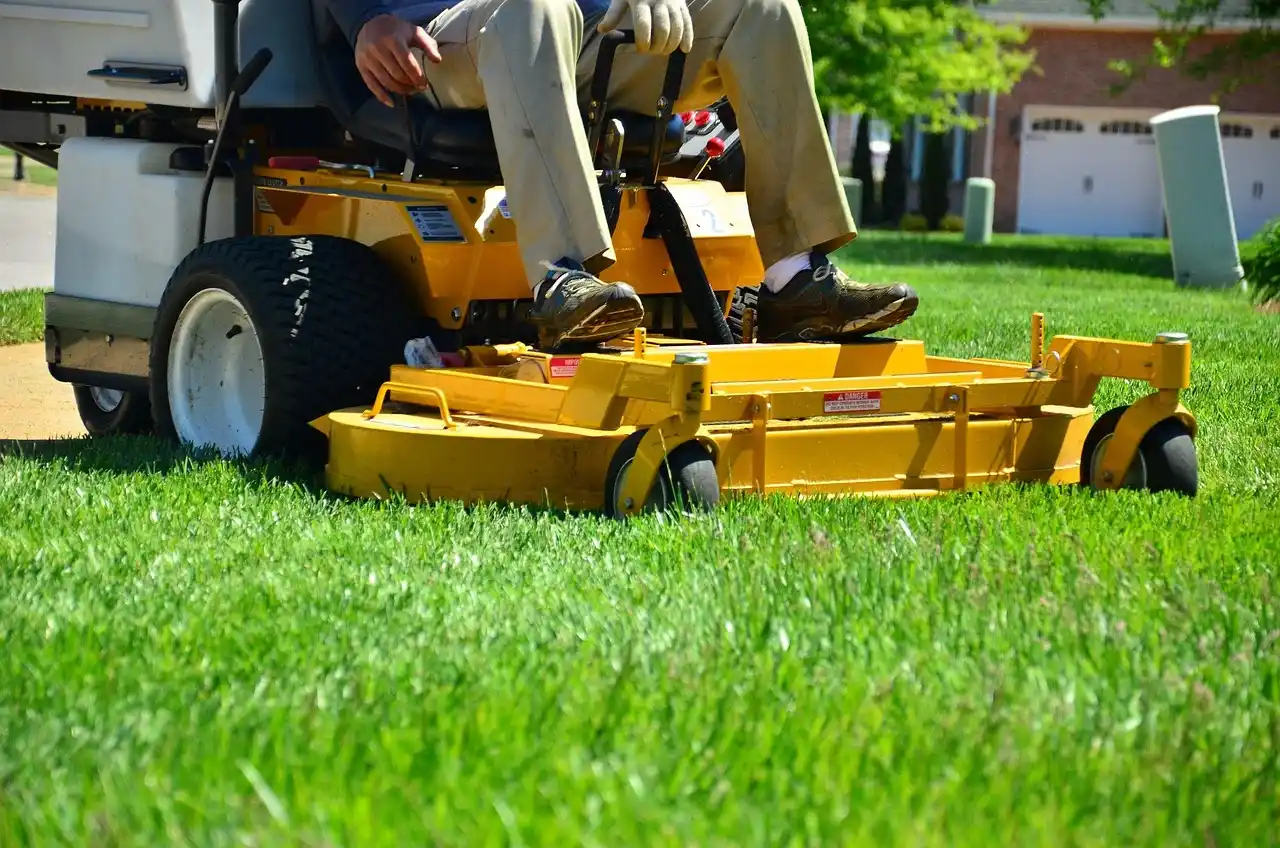
Landscaping services change the yard. Lawn care services maintain the yard. Landscaping covers planning, layout, installation, grading, drainage, planting beds, trees, shrubs, patios, and walkways, while lawn care covers mowing, edging, trimming, fertilization, weed control, and seasonal upkeep.
Landscaping scope
Landscaping is project work. It can include design-build scope, hardscaping, softscaping, and site correction. It also requires understanding horticulture and design, because the work is not only about looks; it has to fit the property and its conditions.
Site conditions matter here. Sun, terrain, soil, wind, and frost line can change plant choice, bed layout, drainage, and where hard surfaces should go. If the lot drains poorly, the answer may be reshaping the land so water moves where it should.
Lawn care scope
Lawn care is recurring maintenance. The usual cadence is weekly, biweekly, or monthly, depending on growth rate and the service plan. The work is aimed at keeping turf and edges clean, managed, and healthy over time.
That means the work is repetitive by design. It does not turn a yard into a new layout, build a patio, or correct a grade problem. It keeps existing lawn areas in shape.
How one company can offer both without blending the jobs
Some companies do both, but the services still should not be treated as the same thing. A crew may mow the lawn on a recurring schedule and also return later for a separate planting or drainage project. The right question is not “Do you do both?” It is “Which team is handling which part of the job?”

Which service do you need for this yard problem?

Use the problem, not the provider’s title, to choose the service. Brown spots, standing water, overgrown beds, and dead turf each point to different work, and some jobs need both services in sequence. The matrix below gives a quick homeowner decision path.
| Problem | Likely service needed | Typical frequency | Urgency | Red flags |
|---|---|---|---|---|
| Brown spots in an otherwise healthy lawn | Lawn care services first; landscaping if soil or grade problems are found | Recurring diagnosis and treatment | Medium | Rushing to reseed before checking irrigation, compaction, or shade |
| Standing water after rain | Landscaping services | Project-based | High | Ignoring drainage and only adding seed |
| Overgrown beds and weeds in planting areas | Landscaping services for bed rehab; lawn care for ongoing edge upkeep if offered | One-time cleanup, then seasonal care | Medium | Paying monthly mowing rates for a bed project |
| Dead turf across most of the front yard | Landscaping services for replacement plan; lawn care for maintenance after install | Project plus recurring care | High | Skipping soil, irrigation, and sun review |
| New-home lot with bare dirt and no layout | Landscaping services | Project-based | High | Hiring only for mowing before any turf or beds exist |
| Weekly mowing and edging | Lawn care services | Weekly or biweekly | Low | Paying for design-build work you do not need |
| Need mulch around shrubs | Landscaping services if installing or refreshing beds; lawn care only if it is part of a broader maintenance plan | Seasonal or occasional | Low | Assuming every mulch job belongs to mowing service |
| Patio or walkway addition | Landscaping services | One-time project | Medium | Hiring a mowing crew to handle hard surfaces |
| Retaining wall for slope control | Landscaping services | One-time project | High | Any quote that skips drainage or grade notes |
| Weeds in turf | Lawn care services | Recurring | Medium | Expecting a one-time cleanup to fix a recurring weed problem |
| Patchy shade under trees | Landscaping services if tree work or plant replacement is needed; lawn care for treatment only | Mixed | Medium | Ignoring shade pattern before reseeding |
| Rental property that just needs to look tidy | Lawn care services | Recurring | Low | Overbuilding a yard that only needs upkeep |
| Seasonal leaf cleanup | Lawn care services or landscaping services depending on debris volume and scope | Seasonal | Low | Signing a long project contract for a cleanup-only job |
| Full-yard refresh with new beds and turf changes | Landscaping services | Project-based | High | Hiring maintenance first when the layout itself is wrong |
| Low-maintenance yard with minimal turf | Lawn care services only if there is still grass to maintain; otherwise landscaping for conversion planning | Light recurring or none | Low | Paying for a full mowing plan on a yard that barely has grass |
Read the matrix like a filter
Start with the problem itself. If the issue is recurring and cosmetic, lawn care usually fits. If the issue changes the site, the layout, or the water movement, landscaping is the correct call.
Mixed-scope jobs are common
Some jobs need both. A crew may have to correct drainage, rebuild beds, and then hand the property off to a lawn care schedule. In those cases, the project should start with the problem that blocks everything else.
When should you hire a landscaper instead of a lawn care company?
Hire a landscaper when the job changes the property itself. That includes planting beds, mulch installs, shrubs, trees, patios, walkways, retaining walls, drainage work, grading, and any project that needs a sketch or measurements before work begins.
Planting beds, mulch, shrubs, and trees
These belong to landscaping when they are part of a new layout or a larger change. A bed redesign needs spacing, plant choice, and site conditions checked first. Tree and shrub placement also depends on sun, root space, and long-term growth, not just on filling open ground.
Patios, walkways, and other hardscaping
Hardscaping includes patios, walkways, retaining walls, and water features. These are nonliving elements and they do not fit lawn care scope. If a project includes stone, pavers, concrete, or a wall that holds back soil, it is landscaping work.
Drainage and grading problems
When water pools, washes soil away, or runs toward the house, the issue is not mowing. Poor land may need reshaping so water drains correctly. That reshaping process is called grading, and it often includes cut and fill work to move soil and redirect runoff.
When the job needs a plan before installation
Good landscaping work starts with a property sketch. The next step is to measure the sketch and note dimensions. Then the map should be transferred to graph paper to draw to scale, with budget planning and outdoor use in mind before labor starts.
When is lawn care the right call?
Lawn care is the right call when the property already has a layout and needs routine upkeep. That often means mowing, edging, trimming, fertilization, weed control, and seasonal cleanup on a regular schedule such as weekly, every other week, or monthly.
Recurring turf maintenance
If the job repeats on a timetable, lawn care is the match. The value is consistency: a set crew, a set route, and a set upkeep plan. That works well for grass areas that are already established and only need attention to stay orderly.
Low-maintenance properties and rentals
Some properties do not need design work at all. Rentals, small yards, and low-maintenance lots often need only basic cutting and cleanup. In those cases, a landscaping project would be unnecessary unless the site has drainage, planting, or layout problems.
Seasonal upkeep
Lawn care can also cover seasonal tasks tied to the existing yard, not a redesign. Leaf cleanup, final cuts, edging refreshes, and weed control fit here when the goal is to maintain what is already there rather than rebuild it.
Choose landscaping services if… / choose lawn care services if…
Choose landscaping services if the problem is structural, project-based, or tied to layout and water movement. Choose lawn care services if the property already works and only needs recurring upkeep. When both apply, start with landscaping first, then shift to regular lawn care once the site is ready to maintain.
Choose landscaping services if…
- You need grading, drainage work, or slope correction.
- You are adding or rebuilding beds, shrubs, trees, mulch, patios, or walkways.
- You need measurements, a sketch, or a scale plan before work starts.
- The yard has a dead lawn, standing water, or a new-home lot that needs layout decisions.
Choose lawn care services if…
- You need mowing, edging, trimming, fertilization, or weed control.
- You want weekly, biweekly, or monthly visits.
- The yard is already built and only needs regular upkeep.
- You manage a rental or low-maintenance property with little to no project work.
What should lead mixed-scope jobs?
Landscaping should lead any job that changes the site first. Fix the slope, drainage, or layout before you schedule recurring lawn care. A maintenance crew can keep the result looking good, but it cannot solve the root problem if the site itself is wrong.
What to ask before requesting a quote
- Is this a maintenance quote or a project quote?
- What problem are you solving first?
- Will you inspect sun, soil, slope, wind, and runoff?
- Does the price include design, materials, or just labor?
- If both services are needed, which one starts the job?
Frequently asked questions
What is the difference between landscaping services and lawn care services?
Landscaping services change the yard through design, planting, grading, drainage, hardscaping, and bed work. Lawn care services maintain what is already there through mowing, edging, trimming, fertilization, weed control, and seasonal upkeep. One is project-based. The other is recurring maintenance.
Does landscaping include mowing and weekly maintenance?
Usually, no. Mowing and weekly maintenance belong to lawn care services, not the project side of landscaping. A company may offer both, but that does not make them the same job. Ask whether you are paying for a recurring maintenance plan or a one-time installation project.
Which service do I need for planting, mulch, or drainage work?
Planting, mulch, and drainage work usually fall under landscaping services, especially when they involve new beds, site changes, or water control. If mulch is part of an ongoing tidy-up plan, it may be bundled with maintenance. If drainage is the issue, the job is almost always project-based.
How often does lawn care happen compared with landscaping?
Lawn care usually happens weekly, biweekly, or monthly, depending on the season and the service plan. Landscaping happens as a one-time or occasional project. That difference matters because the service is tied to timing as much as task type.
Can one company handle both lawn care and landscaping?
Yes, many companies do both. The key is to separate the scope. A crew may handle the yard project first, then return on a recurring schedule for lawn care. Make sure the quote spells out which work is one-time and which work repeats.
What should I ask before getting a landscaping or lawn care quote?
Ask whether the quote is for maintenance or for a project, what problem it addresses, and what is excluded. For landscaping, ask about site conditions, materials, design fees, and drainage. For lawn care, ask about visit frequency, trimming detail, and what seasonal services are included.