How To Landscape A Steep Slope Without Retaining Walls
Landscaping a steep slope without retaining walls involves using plants, groundcovers, and clever design to stabilize soil and manage water. Focus on native plants with strong root systems, layered plantings, and water-wise techniques to prevent erosion and create an attractive, low-maintenance landscape. This approach saves money and enhances natural beauty.
For a related plant or gardening question, What Qualifications Do You Need For Landscape Gardening? gives readers a focused next step.
For a related follow-up, Do You Need To Remove Grass Before Laying Landscape Fabric? gives readers a useful next step.
For a related follow-up, How Does Runoff Contribute To Shaping The Earth'S Landscape? gives readers a useful next step.
Understanding Your Steep Slope
A steep slope is a patch of land that drops sharply. Think of it like a small hill. It can be tricky for gardening.
The biggest issue is water. When it rains hard, water rushes down the hill. This can wash away valuable topsoil.
This is called erosion. Over time, this makes the slope less stable. It can also look messy.
Plants might struggle to stay put. Roots need time to grow deep. Fast-moving water makes this hard.
Why does this happen? Gravity is the main force. Water follows the path of least resistance.
On a flat yard, water spreads out. On a slope, it gathers speed. It carries soil particles with it.
This is a natural process. But in a yard, we want to control it. We want our soil to stay where we put it.
We want our plants to thrive.
Knowing your slope’s angle is helpful. A gentle slope is easy. A very steep one is harder.
But most slopes fall somewhere in between. We can work with them. We just need the right tools and ideas.
The goal is to work with nature, not against it.

My Own Steep Slope Scare
I remember looking at my backyard after a really bad storm. It was a mess. We’d just bought the house, and one side sloped down quite a bit.
I’d planted some small shrubs there, thinking they’d be fine. Well, the rain had other plans. I saw gullies carved into the soil.
Some of my new plants were half-exposed, their roots sticking out like little white fingers. My heart sank. I felt so frustrated and a little bit scared that the whole bank would slide down.
I imagined spending a fortune on concrete walls. It felt overwhelming. All I wanted was a nice yard, not a major construction project.
Slope Angle Quick Guide
Gentle Slope: Less than 10% grade (drops about 1 foot for every 10 feet horizontal).
Moderate Slope: 10% to 25% grade (drops 2.5 feet for every 10 feet horizontal).
Steep Slope: Over 25% grade (drops more than 2.5 feet for every 10 feet horizontal).
Working With Nature: The Power of Plants
The secret to landscaping a steep slope without walls is using plants. Plants are nature’s builders. Their roots hold soil together.
They act like tiny anchors. Different plants do this job better than others. We need plants with strong, fibrous root systems.
These roots spread wide and deep. They create a natural net. This net traps soil and stops it from washing away.
It’s a much more natural solution than a wall.
Think about native plants. These are plants that grow naturally in your area. They are already used to your climate and soil.
They usually have strong root systems. They also need less watering and care once they’re established. They fit right into the local landscape.
This makes your yard look natural and beautiful. It also helps local wildlife. Bees and birds love native plants.
We also need to think about how we plant them. Planting in layers is smart. You can have groundcovers that spread low and wide.
These form a dense mat. Then you add smaller shrubs that can grow a bit taller. They can fill in spaces.
Taller plants can go towards the top or bottom. This creates a sturdy system from top to bottom. Each plant plays a part in holding the slope.
Water management is key too. We don’t want water to just gush down. We can create small dips or swales.
These are shallow, wide channels. They help slow water down. They let it soak into the soil.
This is much better than letting it run off. It also waters your plants.
Choosing the Right Plants for Stability
So, what kinds of plants work best? We need plants that are tough and adaptable. Groundcovers are your first line of defense.
They cover the soil completely. They spread easily. They have shallow but dense roots.
Think about things like creeping thyme, sedums, or ajuga. These low growers hug the ground. They stop rain from hitting the bare soil directly.
This reduces its power.
Next, add some medium-sized shrubs. These should also have good root systems. Some popular choices include potentilla, spirea, or certain types of heaths and heathers.
These plants add texture and color. They also help block water flow. They give the groundcovers a bit of a boost.
They grow into a more substantial plant mass. This adds even more soil stability.
For areas where you want more height or interest, consider small trees or larger shrubs. But be careful. You don’t want anything too top-heavy.
Dwarf conifers, serviceberry, or even some ornamental grasses can work. Ornamental grasses are fantastic. Their fine roots create a strong, interwoven network.
They also sway nicely in the wind. This adds movement to your landscape.
When you buy plants, look for ones labeled as drought-tolerant or hardy. This often means they have strong root systems. Check with your local nursery.
They can tell you which native plants are best for slopes in your area. They know what grows well and what stays put.
Groundcover Spotlight
- Creeping Juniper: Hardy evergreen.
- Vinca (Periwinkle): Evergreen with pretty blue flowers.
- English Ivy: Very tough, but can be invasive. Use with caution.
- Sedum (Stonecrop): Succulent-like, loves sun.
- Pachysandra: Shade-loving, forms a dense carpet.
Beyond Plants: Smart Landscape Design
While plants are the stars, design plays a huge role. We can use other elements to help manage water and soil. One smart technique is terracing.
This doesn’t mean building tall walls. It means creating shallow steps. You can do this using logs, rocks, or even raised beds.
These steps break up the slope. They create flatter areas. Water slows down on these flatter spots.
It has time to soak in. This reduces runoff significantly.
Think about how you arrange your plants. Planting in curves or contours can help. Instead of planting in straight lines down the slope, plant in wavy lines.
These lines follow the shape of the land. They create natural barriers. They catch water and soil.
This looks more natural too. It’s a gentle way to guide water.
Mulching is also vital. Once your plants are in, cover the bare soil. Use wood chips, shredded bark, or compost.
Mulch does several things. It keeps moisture in the soil. It stops weeds from growing.
Most importantly, it acts as a blanket. It protects the soil from direct rain impact. This stops loose soil particles from being washed away.
A good layer of mulch is your friend on a slope.
Another idea is to create rain gardens. These are shallow depressions. They are designed to collect rainwater.
They usually have special plants that love wet feet. You can build a rain garden at the bottom of your slope. It catches water and soil that might run off.
It then filters the water. This is great for the environment.
Terracing Ideas (No Walls!)
- Log Terraces: Use fallen logs laid horizontally.
- Rock Terraces: Arrange large, flat rocks.
- Built-up Beds: Create shallow raised beds with soil.
- Erosion Control Mats: Biodegradable mats that hold soil while plants establish.
Dealing With Water Flow
Water is the biggest challenge on a slope. We need to manage where it goes. And how fast it gets there.
Simple techniques can make a big difference. Instead of letting water rush straight down, we can redirect it slightly. This might involve a small swale, which is like a gentle dip in the land.
It runs across the slope, not down it. This swale captures water. It guides it slowly to a stable area.
Like a rain garden or a drainage ditch.
You can also use French drains. These are simple underground pipes. They collect excess water.
They then carry it away from the slope. This is useful if your slope gets very saturated. It prevents water buildup.
This buildup can weaken the soil. It can lead to slides.
Consider using erosion control blankets. These are often made of straw or coir. You lay them on the soil after planting.
They are held down with stakes. They have a net-like structure. This net traps soil.
It allows water to pass through. Plants grow up through the blanket. Once the plants are established, the blanket breaks down.
It adds organic matter to the soil. This is a great way to protect a new planting on a steep slope.
Think about the drainage at the top of your slope too. Is water from a gutter or patio directed towards the slope? If so, redirect it.
Use downspouts to send water away from the slope. Or into a rain barrel or a well-drained area. Preventing water from starting its run on the slope is half the battle.
Water Management Tips
Swale: A shallow ditch that slows water.
French Drain: Underground pipe for excess water.
Erosion Mats: Biodegradable blankets that hold soil.
Redirect Downspouts: Keep roof water off the slope.
Rain Gardens: Depressions for water collection.
Material Choices: Rocks and Wood
Sometimes, you need a little extra help. Rocks and wood can be your friends. Not as big retaining walls, but as smaller, natural-looking features.
Large, flat stones can be placed strategically. They can act as mini-terraces. They can also help break up the flow of water.
Nestling them into the slope makes them look natural. They also provide a home for moss and small plants.
Rustic logs can do a similar job. Laying a log horizontally across the slope creates a small barrier. It catches soil.
It slows water. It adds a natural, woodland feel. You can use several logs.
This creates a stepped effect. It’s like very simple terracing. Make sure the logs are well-anchored.
You don’t want them to roll away.
Avoid using loose gravel as a primary solution. While it can look nice, small gravel can be washed away easily. If you use rocks, use larger ones.
Or embed them so they are stable. The key is stability. Anything you add should help hold the soil, not become part of the erosion.
Boulders can also be used. Placed thoughtfully, they can look like they’ve always been there. They can anchor planting areas.
They can break up long, monotonous slopes. Mix them with plants. Let vines and groundcovers grow around them.
This softens their appearance.
Material Use Cases
Large Rocks: Create mini-terraces, slow water.
Rustic Logs: Act as small horizontal barriers, break up slope.
Boulders: Anchor planting areas, natural accents.
Avoid: Loose small gravel (easily washed away).
Real-World Scenarios: Steep Slopes in Action
Let’s look at a few common situations. Imagine a sloped backyard that meets a street. Water running down could end up on the sidewalk.
Or in the storm drain. Here, using a dense groundcover like creeping juniper is a good idea. You could also add a few low, mounding shrubs.
Planting in a gentle curve along the street edge can look nice. And help guide water. Avoid planting anything tall that could fall onto the sidewalk.
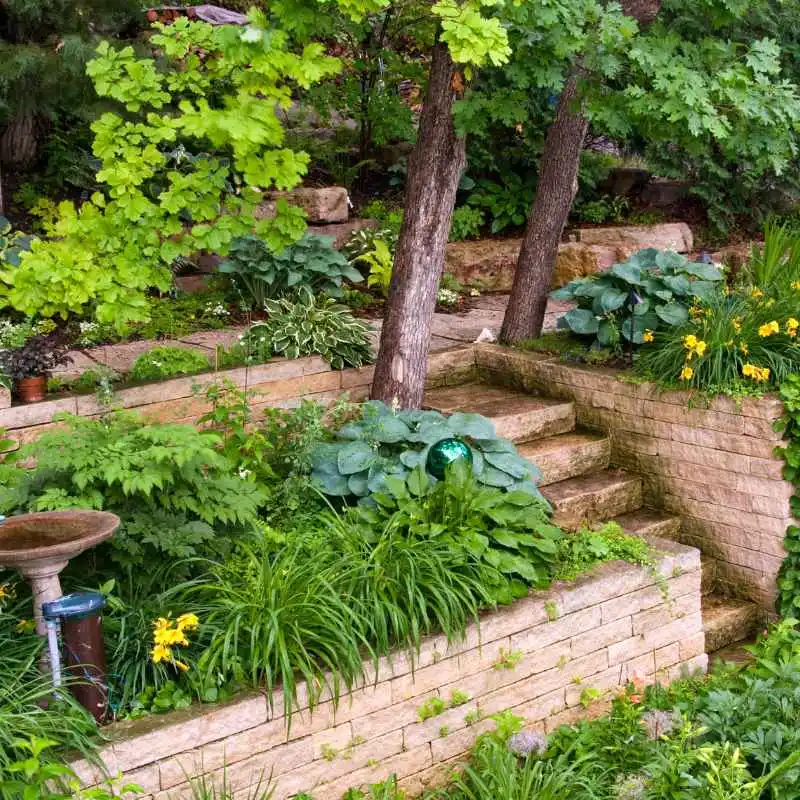
Another case: a wooded area with a steep bank. Here, native plants are essential. Think ferns, hostas (if shady), and woodland groundcovers.
Adding some natural logs can enhance the rustic feel. Let fallen leaves stay on the ground. They are natural mulch.
They help retain moisture and protect the soil. This creates a natural, low-maintenance look.
Consider a sunny, dry slope. This is where sedums and drought-tolerant grasses shine. They love full sun.
They don’t need much water. Their roots are tough. You might intersperse some larger rocks.
This breaks up the sun’s intensity. It creates microclimates for smaller plants. The key is choosing plants that thrive in tough conditions.
In all these cases, the principle is the same: cover the soil. Slow the water. Build stability with roots.
It’s about creating a living system that holds itself together. It’s about making the slope look good while doing its job. The plants and design work together.
They make the slope a feature, not a problem.
What This Means for You: When to Relax and When to Worry
So, when should you feel good about your sloped landscape? You should feel confident when you see your plants growing well. When you notice that after a rain, the soil isn’t washing away in big chunks.
If you’ve planted groundcovers that are spreading and covering most of the bare soil, that’s a great sign. If you’ve mulched well and water seems to be soaking in rather than rushing off, you’re on the right track.
When should you start to worry? Watch for significant soil loss. If you see deep gullies forming after every rain, your current strategy isn’t enough.
If plants are constantly getting uprooted or exposed, the soil isn’t stable. Listen for unusual sounds after heavy rain, like groaning or cracking, though this is rare. If the slope itself seems to be shifting, that’s a serious concern.
A simple check: take a trowel. Dig a few inches into the soil on the slope after a rain. Is it muddy and saturated?
Or does it feel damp but firm? If it’s holding together when you pick it up, that’s good. If it crumbles into watery mud, you need more root power or better water diversion.
If you have a very old, established slope that suddenly starts showing signs of trouble, it’s worth investigating. Old landscaping can fail. Or changing weather patterns can bring new challenges.
It’s always good to keep an eye on it, especially after extreme weather. But for most new projects, steady growth and good groundcover are your best indicators of success.
Quick Tips for Slope Success
Let’s sum up some easy things you can do. First, choose the right plants. Native, hardy ones with strong roots.
Second, plant in layers. Groundcovers, shrubs, and maybe a few taller plants. Third, mulch generously.
This protects the soil surface. Fourth, water wisely. Water deeply but less often.
Let the soil dry out a bit between waterings. This encourages roots to grow deeper.
Fifth, consider contour planting. Plant in curves rather than straight lines. This breaks up water flow.
Sixth, divert water from above. Make sure gutters aren’t dumping water onto the slope. Seventh, be patient.
It takes time for plants to establish and their roots to do their best work. Don’t get discouraged if it’s not perfect immediately.
Finally, observe your slope. Watch how water moves after rain. See where plants are thriving.
Adjust your plan as needed. It’s a living system. You’ll learn from it as you go.
These simple steps can transform a problem slope into a beautiful, stable part of your yard.
Your Slope Success Checklist
- Plant Selection: Native, hardy groundcovers and shrubs.
- Planting Strategy: Layered, contour planting.
- Soil Protection: Deep layer of organic mulch.
- Watering: Deep, infrequent watering to encourage root growth.
- Water Diversion: Redirect runoff from the top.
- Patience: Allow plants time to establish and stabilize.
Frequently Asked Questions About Landscaping Steep Slopes
Can I just plant grass on a steep slope?
While some grasses are good for slopes, just planting regular lawn grass is usually not enough. Most lawn grasses have shallow root systems. They can’t hold a steep slope well.
You need plants with deeper, stronger roots. Consider tough native grasses or groundcovers instead.
How much mulch do I really need?
A good layer is about 2-4 inches deep. This is enough to protect the soil. It also helps retain moisture.
Make sure the mulch doesn’t pile up against the stems of your plants. This can cause rot.
When is the best time to plant on a slope?
The best time is usually in the fall or early spring. This is when the weather is cooler. It’s also a time when there’s more natural moisture.
This helps plants establish their roots without too much stress from heat or drought.
What if my slope is very rocky?
Rocky slopes can be challenging. You might need to amend the soil with compost. For planting, create pockets of good soil.
Larger rocks can be good anchors. Choose plants that tolerate rocky soil. Succulents and certain alpine plants might do well.
How do I stop mulch from sliding down the slope?
Use larger mulches like wood chunks or shredded bark. Avoid fine mulches that can wash away easily. You can also use erosion control mats under the mulch.
Planting densely also helps hold mulch in place.
Are there any specific plants I should avoid on steep slopes?
Yes, avoid plants with very shallow root systems. Also avoid plants that spread too aggressively and could become invasive. Very tall, top-heavy plants can be a risk if they fall.
Always research plants for your specific climate and conditions.
Bringing It All Together: A Beautiful, Stable Slope
Tackling a steep slope doesn’t have to mean expensive walls. By working with nature, you can create a landscape that is both beautiful and stable. Focus on smart plant choices.
Use groundcovers and shrubs with strong roots. Design your landscape to manage water. And always remember the power of mulch.
Patience is key. Your slope will transform over time.
It’s about creating a living system. One that holds itself together. One that adds charm to your home.
You can enjoy your yard more. You can feel good about your landscape choices. You’ve learned how to make that tricky slope a gorgeous, functional part of your outdoor space.
And you did it without breaking the bank!