Landscaping Services for Erosion Control
Erosion-control landscaping works best when it matches the failure mode: fix concentrated runoff with swales, drains, or retaining structures; fix sheet erosion with grading, groundcovers, or erosion mats. Miss the cause, and planting can wash out, leave gullies, and need repeated repair. This guide compares the main erosion-control options, typical costs, durability, and maintenance so you can choose the right fix before requesting quotes.
What erosion control landscaping actually does



Erosion-control landscaping protects soil before rain can strip it away, then guides moving water so damage does not spread. It can stabilize a slope, slow runoff, cut splash impact, and support new plantings while roots establish. On a failing site, the first step is matching the fix to the way the slope is failing.
How soil loss starts on slopes
Soil usually starts moving in one of three ways: rain splash loosens the surface, sheet flow carries fine particles downhill, or water concentrates into a channel and cuts a gully. Cut slopes are more vulnerable to surface erosion than fill slopes, while fill slopes can have subsurface problems from incomplete compaction.
What plants, blankets, walls, and drainage each do
Plants help protect soil. Foliage reduces direct rain impact on soil particles, and plant roots bind soil together underground. Groundcover plants may be used for surface erosion control, while creeping shrubs can help with both surface and subsurface erosion. Erosion control blankets give temporary surface protection. Retaining walls and drainage work on the slope itself and the water moving across it.
When erosion becomes a structural problem
Once a slope shows slumping, a settling band, or a washout that keeps reopening after rain, the issue is no longer just surface soil loss. That is when grading, compaction checks, drainage work, or a retaining structure may be needed. A site construction assessment helps decide whether the site needs a new install or an upgrade to what is already there.
Choose the fix by failure mode
The best erosion-control choice depends on where the failure starts. Surface erosion calls for coverage and root binding. Concentrated runoff calls for water management. Movement, settling, or washout calls for structural review. Poor grading or compacted soil needs site correction first, because plants added over the wrong grade often fail again.
Surface erosion from rain splash and sheet flow
Use groundcover plants, erosion control blankets, or a planting-and-mulch plan when the slope is losing thin layers of soil but staying in place. Groundcovers help reduce rain splash and create low-growing coverage over exposed soil. Straw blankets, also called erosion control blankets, protect the surface while new planting fills in. For recurring surface stripping, homeowners often also benefit from a plan built around surface erosion control so the soil stays protected between storms.
Runoff concentrated in one path
If water is cutting one line through the yard, a planting-only fix usually fails. Drainage solutions redirect runoff before it gains speed, and they are often paired with slope work. Swales, drains, or other water-management features reduce concentration, then plants or blankets can protect the corrected surface.
Slope movement, settling, or washout
When the slope itself is unstable, retaining walls or grading changes may be needed before planting can help. Gravity retaining walls are structural systems that require engineering and proper base preparation, and they are often used on slopes that need structural support.
Poor grading or compacted soil
Bad grading sends water the wrong way. Poor compaction, especially on fill slopes, can create hidden failure below the surface. In those cases, adding plants alone does not solve the cause. The fix may include regrading, reworking compacted soil, and then matching the planting strategy to the corrected slope.
Say your side yard drops about 8 feet over 30 feet and that hard rain leaves a shallow groove near the fence. That is a runoff path problem first, not a plant-choice problem. A drainage correction and surface protection make more sense than simply adding more shrubs at the bottom.
When are plants enough for erosion control?
Plants are often enough when the slope is stable, water is spread across the surface, and the goal is long-term soil protection rather than structural repair. Fine-rooted plants are recommended for slope stabilization, and low-growing groundcovers help hold the top layer in place. Creeping shrubs add wider coverage and can help on both surface and subsurface erosion.
Groundcover plants for fine-root binding
Groundcovers work best on slopes that need surface erosion control and steady soil cover. Their fine root systems help knit the upper soil layer together, and their foliage helps soften rain impact before droplets hit bare soil. Choose them where the grade is stable and the main problem is exposed soil, not movement.
Creeping shrubs for wider slope coverage
Creeping shrubs are a good step up when a slope needs more mass and spread than a simple groundcover can provide. Their roots can help bind soil, and their canopy covers more ground than a sparse planting. They are often chosen for hillside sections that show both surface wear and slow-moving subsurface stress.
Watering and establishment after planting
Planting is not the end of the job. An irrigation solution may be needed after planting, because new roots cannot stabilize soil until they establish. Watering needs depend on plant choice, sun exposure, soil type, and slope angle. A planting strategy that ignores establishment time often leaves the site bare during the first storm season.
Picture a clay slope behind a townhouse where the surface is bare after construction and water still spreads evenly across it. In that case, fine-rooted groundcovers plus temporary blanket protection can work well. The same planting on a slope with a trench cut by runoff would leave the core problem untouched.
When do you need drainage or grading?
You need drainage or grading when water is moving across the wrong path, pooling at one point, or building enough force to cut into the slope. Plants can help only after the site shape and water flow are corrected. On wet or compacted slopes, planting alone often fails because the soil stays saturated and unstable.
Redirecting runoff before it cuts the slope
Drainage solutions reduce runoff concentration and keep water from scouring one strip of soil. They are often used where roof runoff, driveway runoff, or hillside drainage all funnel into the same low point. Once the flow is managed, the surface can be planted or covered without the same washout risk.
Fixing compaction and drainage paths
Compacted soil can block infiltration and send water sideways. That creates erosion even when the slope does not look steep. Grading and compaction work may be needed to open drainage paths or reshape the slope so water does not collect in one place. This is especially important on fill slopes with hidden subsurface issues.
Why planting alone fails on wet slopes
Wet slopes fail because roots cannot hold soil that keeps moving. Without drainage, the root zone stays overloaded with water and the slope may slump, slip, or rut after each storm. In those cases, plants should be part of the plan, not the whole plan.
Erosion control blanket guide
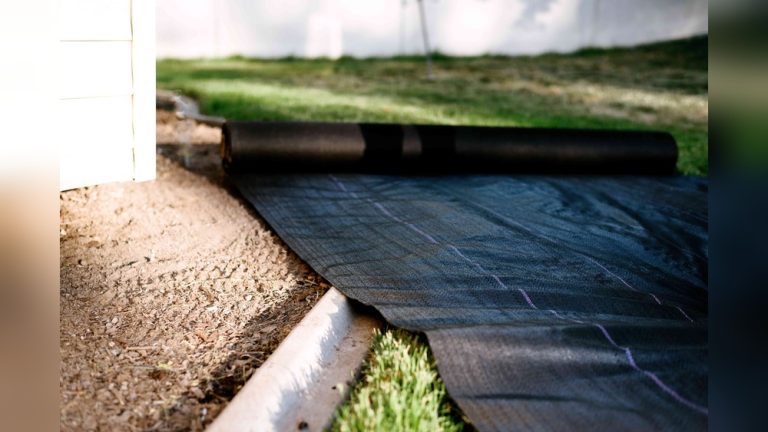
Erosion control blankets are temporary surface protection used while the soil is being established. Straw blankets, also called erosion control blankets, are commonly used on exposed soil after grading or seeding. Natural, synthetic, and blended versions are available, and the right type depends on how exposed the slope is, how long the soil needs cover, and whether the site is facing repeated rainfall before roots can establish. Blankets are a short-term stabilization tool, not a substitute for correcting runoff or grade.
Natural, synthetic, and blended blanket types
Natural blankets usually break down faster and suit short-term protection on lower-risk slopes. Synthetic blankets last longer and resist breakdown better in exposed conditions. Blended materials sit between the two. The key question is not which material sounds strongest, but how long the soil needs help before roots can take over. In practice, material choice should match the expected establishment window and storm exposure.
Best uses for straw blankets and mats
Straw blankets work best on bare soil after grading, seeding, or planting, especially where rainfall can splash soil loose before roots establish. They are useful on slopes that are stable but still exposed, and in areas where the main issue is surface erosion. They do not replace drainage or structural repair on unstable ground.
How long temporary surface protection lasts
Temporary blankets are generally meant for the establishment phase, not as a permanent fix. Their service life varies by material and weather exposure, but their job ends when vegetation is established or another permanent measure takes over. If the blanket is still doing all the work months later, the underlying fix may be incomplete. That is why installers usually treat them as a bridge, not the final solution.
Erosion control decision table
This table maps the failure mode to the most useful site fix. It also shows how long each solution tends to last, how much upkeep it usually needs, and when a contractor should step in. Use it before comparing bids so you can ask for the right scope of work.
| Situation | Likely cause | Best solution | Expected durability | Maintenance level | When to call a contractor | Best for / Avoid when | Typical installed cost range |
|---|---|---|---|---|---|---|---|
| Thin soil loss across a slope | Rain splash and sheet flow | Groundcover plants plus erosion control blanket | Long-term for plants; temporary for blankets | Moderate during establishment | When bare spots return after rain | Best for stable slopes with exposed soil; avoid when runoff is cutting a channel or the slope is moving | Often low to moderate; blankets and planting commonly fall in the few-hundred to low-thousands range depending on area and prep |
| One groove or channel cuts downhill | Runoff concentrated in one path | Drainage work, then planting or matting | Long-term if drainage is corrected | Low to moderate | When water has a fixed path or pools | Best for roof, driveway, or hillside runoff paths; avoid when a retaining solution is needed for slope failure | Usually moderate; simple drainage corrections can be in the low-thousands, while more involved routing or excavation rises with site complexity |
| Sloping yard feels unstable or slumps | Slope movement or poor support | Retaining wall, grading, and hillside vegetation | Long-term if properly designed | Low after install | When the slope is settling, bulging, or washing out | Best for unstable slopes needing structural support; avoid when the issue is only minor surface wear and a lighter fix would work | Typically highest-cost; retaining walls often move into the several-thousand to many-thousands range depending on height, access, and drainage needs |
| New fill area keeps washing out | Incomplete compaction | Regrade, compact, then plant | Long-term after correction | Moderate during repair | When the soil feels loose or sinks underfoot | Best for recently disturbed or built-up areas; avoid planting first when the fill is still unstable | Usually moderate to high; grading and compaction costs vary widely with excavation, access, and how much material must be moved |
| Steep exposed cut bank | Surface erosion on a cut slope | Blanket protection plus fine-rooted planting | Temporary protection with long-term planting support | Moderate | When the bank is steep or hard to access safely | Best for newly exposed banks after grading; avoid when the bank is actively failing or water is concentrated at the top or bottom | Often moderate; blanket-only protection is usually lower cost, while planting and prep raise the total with slope size and access |
What does erosion control cost and how long does it last?
Cost depends on whether you need planting, blankets, drainage, grading, or a retaining structure. Temporary fixes usually cost less up front but need replacement. Structural work costs more, yet it can last much longer when the slope is unstable. The right quote should break out design, excavation, materials, planting, and watering support separately. Industry pricing varies by region and access, but homeowners commonly see blankets and basic planting at the lower end, drainage and grading in the middle, and retaining walls at the higher end.
Typical budget ranges by solution type
Planting with groundcovers usually sits at the lower end of erosion-control landscaping, especially if the slope is already stable. Blankets add a modest material and labor cost. Drainage and grading usually cost more because they involve excavation and water routing. Retaining walls are often the highest-cost option because they are structural and material-heavy. In real-world quoting, the biggest cost drivers are slope length, access, excavation depth, and whether drainage must be built in at the same time.
Maintenance and replacement cycle by method
Groundcovers and creeping shrubs need watering during establishment, then periodic pruning or replanting in thin areas. Blankets are temporary and may need replacement if they break down before vegetation closes in. Retaining walls and drainage systems need less day-to-day care, but they should be inspected after heavy rain for movement, clogging, or erosion at the edges.
What a contractor assesses on-site
Before recommending a fix, a contractor should look at slope angle, runoff source, soil type, compaction signs, access limits, and whether the site needs drainage, regrading, planting, or structural support. That site review helps separate simple surface erosion from a deeper failure mode. It also prevents homeowners from paying for plants where drainage or support is the real need.
When a contractor quote makes sense
A quote is worth getting when the slope is causing runoff concentration, the soil is unstable, the site has a fixed water path, or the site has both drainage and planting issues. A contractor should evaluate slope angle, soil condition, compaction, runoff direction, wall needs, and whether the fix is an install or an addition to an existing site. Ask for a quote that lists the slope area, drainage work, grading work, planting, blanket type, watering support, and cleanup separately.
Frequently asked questions
How can we control soil erosion?
Control starts by matching the fix to the failure mode. Use plants for surface protection, drainage for concentrated runoff, and grading or retaining structures for unstable slopes. Temporary blankets help exposed soil during establishment. The wrong fix often fails because it treats the symptom, not the water path or slope condition.
How do I stop erosion on a sloped yard?
Start by finding where the soil is moving and why. If the slope is stable, groundcovers and erosion control blankets may be enough. If water is cutting a channel or the slope is slumping, you may need drainage, grading, or a retaining wall before planting can hold the surface in place.
What landscaping works best for erosion on hillsides?
Hillsides often need layered solutions. Fine-rooted groundcovers help with surface erosion, creeping shrubs add broader slope coverage, and retaining walls can support unstable sections. Drainage is key when water concentrates on the hill. The best choice depends on whether the problem is surface wear, runoff, or slope movement.
Do I need plants, retaining walls, or drainage for erosion control?
Choose plants when the slope is stable and the problem is exposed soil. Choose drainage when runoff is concentrated or water keeps cutting one path. Choose a retaining wall when the slope is unstable or needs structural support. Many yards need more than one of these, especially on wet sites.
When should erosion control be installed?
Install it as soon as exposed soil appears, or before grading and planting are left open to rain. Temporary blankets work during establishment, while drainage and grading should happen before the next heavy storm if runoff is already moving across the site. Delaying the fix usually means more soil loss and a bigger repair bill.
Why is it important to control erosion?
Controlling erosion protects more than the soil surface. Left alone, erosion can expose foundations, shift fences, damage drainage paths, and force repeated landscape replacement. It also makes slopes harder to stabilize over time, so early control usually costs less than repeated cleanup and repair after every storm.
Why is natural erosion a beneficial service?
Natural erosion control methods help soil stay in place while the site establishes, especially on slopes that do not need structural repair. Plants, roots, and surface cover reduce rain impact and slow runoff. That said, natural methods are helpful only when the slope is stable enough for them to do their job.