Landscaping Services for Lawn Renovation
For lawn renovation, choose a contractor that can soil-test, core-aerate, overseed, topdress, and regrade; if roughly 40% or more of the turf is dead, plan for full replacement instead of patch repairs. Skip diagnosis, and you can waste a season reseeding the wrong problem, then pay again when compaction, drainage, or shade kills the new turf. This guide maps common lawn failures to the specific services that fix them and helps you compare local proposals.
What lawn renovation actually includes
Lawn renovation is a repair project for thin, patchy, compacted, or failing turf. It is not routine mowing or cleanup. The work usually starts with diagnosis, then moves through clearing, grading or drainage correction, soil rebuilding, turf installation, and a watering plan that supports establishment.
That sequence matters because the visible symptom is often not the cause. Thin grass may come from compacted soil. Moss can point to poor infiltration or shade. Bare spots may be a drainage problem, a grading problem, or a soil base that cannot support new seed.
The basic renovation sequence
- Inspect the site and identify the failure mode.
- Clear dead turf, debris, and heavy thatch where needed.
- Correct grade, runoff, or drainage problems before planting.
- Rebuild the soil with delivery, topsoil, or installation work.
- Install seed or sod based on urgency and site conditions.
- Set irrigation, watering, and aftercare so new turf can establish.
Which problems usually need more than mowing or cleanup?
If the yard keeps thinning out after regular maintenance, the work has moved past lawn care alone. Compaction, runoff, shade stress, poor soil depth, and irrigation failures can all block recovery. A cleanup crew can remove debris. It cannot correct a lawn base that stays wet, hard, or shallow.
Washington Landscaping offers a service called Lawn & Garden Renovation, and it recommends a free on-site evaluation for lawn restoration. It also ties restoration to thin grass, compacted soil, and moss-prone patches. Those are the kinds of failure modes a homeowner should ask a contractor to diagnose first.
When does a lawn need renovation?
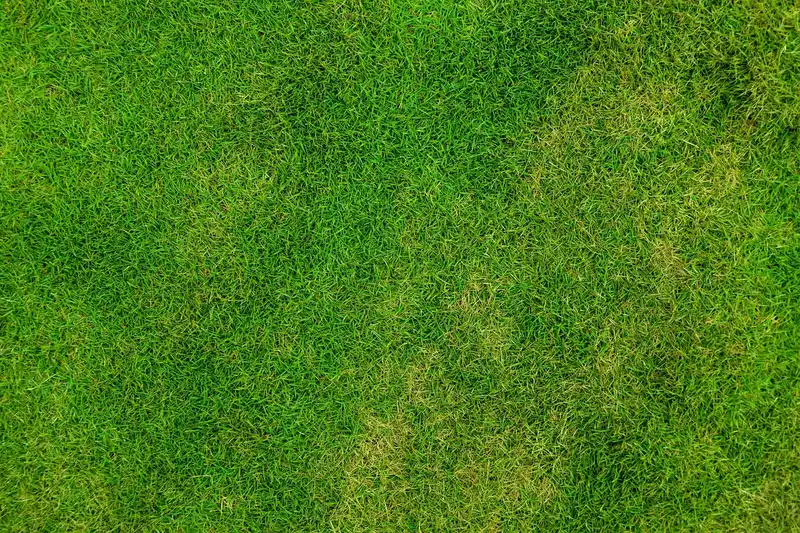
A lawn needs renovation when the turf is thin, patchy, bare, or repeatedly failing after basic care. The trigger is not a bad-looking lawn alone. The trigger is a condition that prevents grass from recovering on its own, such as compaction, poor drainage, or a damaged soil base.
Thin, patchy, or bare turf
Thin turf can still be repaired if the root zone is workable and the dead area is limited. Patchy lawns often need a mix of cleanup, overseeding, and soil work. Large bare sections, especially after storm damage or long-term neglect, often justify sod or a fuller rebuild.
Compacted soil, moss, or poor infiltration
Lawn aeration fits when soil is sealed or compressed and water does not move into the root zone well. It is also useful where moss keeps returning in damp, weak turf. Aeration alone is rarely enough if grading or drainage is also wrong, but it is a strong part of a renovation plan.
Repeated failure after basic maintenance
A common first-timer mistake is to reseed the same failing strip every spring without changing the cause. If the area dies again, the job is no longer basic maintenance. That is a renovation issue, and the quote should start with diagnostics, not with a new bag of seed.
Suppose a side yard turns brown every July even after mowing, fertilizer, and spring cleanup. If water beads on the surface and the soil feels hard underfoot, the likely fix is not more cleanup. The likely fix is aeration, grading review, and possibly drainage correction before new turf goes in.
Lawn renovation decision table
This table maps common symptoms to likely causes and the service mix that usually fits. Use it to compare local proposals. The right plan depends on what is failing below the surface, not on which crew can finish the fastest.
| Symptom | Likely cause | Recommended services | Urgency | Seed, sod, aeration, or drainage correction? |
|---|---|---|---|---|
| Thin grass across the whole lawn | Compacted soil, worn-out turf, low organic matter | Core aeration, overseeding, topdressing, soil testing | Medium | Seed and aeration first |
| Moss in shaded, damp spots | Poor infiltration, excess moisture, limited sun | Aeration, drainage review, selective grading, shade-tolerant reseeding where appropriate | Medium to high | Aeration plus drainage correction if water lingers |
| Bare strip after runoff or pooling | Runoff path, low spot, slope problem | Site grading, French drain or runoff control, soil installation, sod or seed | High | Drainage correction first, then sod or seed |
| Patchy lawn with thick surface mat | Excess thatch blocking water and seed contact | Dethatching, cleanup, overseeding, light topdressing | Medium | Seed after dethatching |
| Dead sections near driveways or walkways | Heat stress, thin soil, compaction from traffic | Aeration, soil delivery and installation, grading review, sod in the worst spots | High | Often sod for dead zones, seed for smaller repairs |
| Lawn fails after every heavy rain | Drainage failure, poor grade, saturated base | Drainage work, grading, soil rebuild, irrigation diagnostics | High | Drainage correction before turf replacement |
Which services fix the underlying problem?
Look for services that match the failure mode. Aeration and dethatching address blockage near the surface and in the root zone. Grading, drainage, and soil delivery repair the base. Sod and irrigation work speed establishment when the yard needs immediate coverage or a controlled watering plan.
Aeration and dethatching for surface and soil blockage
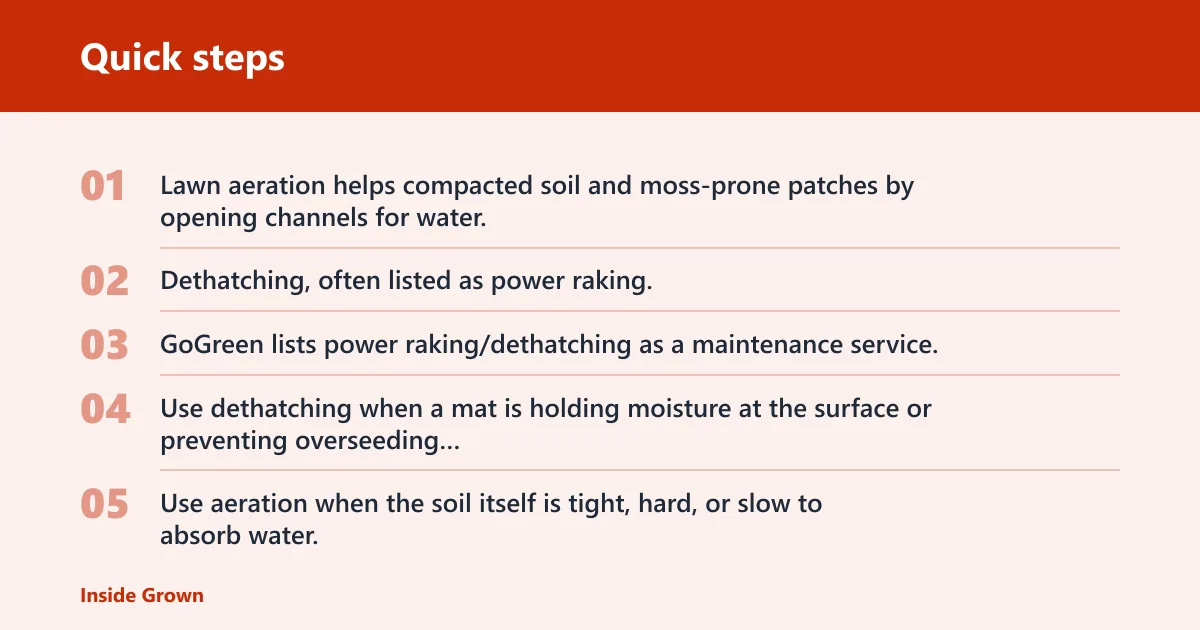
Lawn aeration helps compacted soil and moss-prone patches by opening channels for water, air, and root growth. Dethatching, often listed as power raking, removes excess thatch that blocks seed-to-soil contact and water movement. GoGreen lists power raking/dethatching as a maintenance service, along with spring cleanups and fall cleanups.
Use dethatching when a mat is holding moisture at the surface or preventing overseeding from taking hold. Use aeration when the soil itself is tight, hard, or slow to absorb water. Those services often pair well, but they do different jobs.
Grading, drainage, and soil delivery for base repair
Site grading reshapes yard contours so water moves away from problem areas instead of sitting on them. Drainage work, including French drains and runoff control, protects new turf from saturation on wet or sloped yards. Soil delivery and installation rebuild the base when the existing lawn area has poor depth or poor structure.
GoGreen offers soil delivery and installation. That is the kind of service to ask about when a lawn needs more than a thin layer of topsoil. If the soil profile is weak, new seed or sod will struggle even if the surface looks neat.
Sod installation and irrigation work for faster establishment
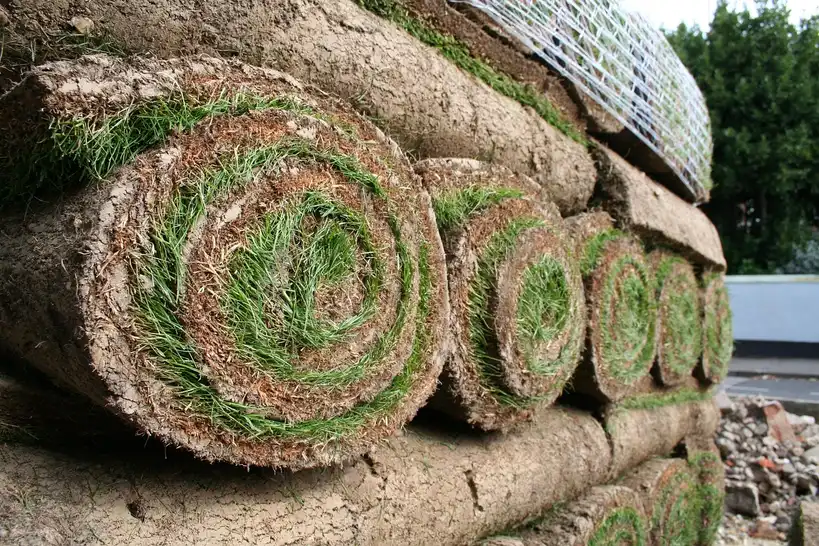
Sod installation is the fast turf replacement option when the yard needs immediate coverage or the failed areas are too large for seed to be practical. It needs grading and a watering plan, or the seams dry out and the new lawn stalls. GoGreen offers sod installation as part of construction services, and Doan Landscaping advertises new sod and new turf among its outdoor services.
Irrigation matters before and after installation. Fire Sparrow includes irrigation systems in its landscaping offering, along with design and installation and outdoor lighting. For renovation work, irrigation startup, adjustment, repair, diagnostics, and winterization affect whether new turf survives long enough to establish.
Do you need seed or sod?
Seed makes sense when the site can wait for establishment, the soil is prepared, and the damage is moderate. Sod is the better fit when the lawn needs immediate coverage, erosion control, or a faster visual result. Watering capacity and slope should affect the choice as much as cost.
When seeding makes sense
Choose seed when the damaged area is limited, the soil is suitable, and the owner can follow a watering schedule for germination. Seed works well after aeration or dethatching if the root zone is otherwise healthy. It is the cheaper path, but it is also slower and more exposed to washout.
When sod is the better fit
Choose sod when more than a patch repair is needed, when slope creates runoff risk, or when the area cannot sit bare for weeks. Sod is also the stronger choice for large dead zones near entries, driveways, or other visible spots. It delivers instant coverage, but it still depends on grading and watering.
How watering and site conditions change the choice
Soil that dries fast, sheds water, or stays saturated changes the renovation plan. Clay-heavy ground, shade, and steep areas often need more than seed and a quick cleanup. If the irrigation system is unreliable, ask about diagnostics and repair before you choose turf material.
What should be included in a renovation quote?
A usable renovation quote should name the failure diagnosis, the site work, the turf material, and the watering or aftercare plan. If a proposal only lists mowing, cleanup, or generic “lawn restoration,” it is too vague for a real renovation job. Ask for line items tied to the actual problem.
Site assessment and failure diagnosis
The quote should start with an on-site evaluation of compaction, drainage, grade, soil condition, shade, and irrigation coverage. Washington Landscaping recommends a free on-site evaluation for lawn restoration. That is the right starting point because the price depends on what must be corrected before new grass can survive.
Grading, drainage, and soil prep line items
Look for separate line items for grading, runoff control, French drains if needed, soil delivery and installation, dethatching, aeration, and debris removal. Those are not extras in a serious renovation job. They are the steps that make planting work.
Installation, watering plan, and aftercare scope
The quote should say whether the contractor is installing seed, sod, or both, and who is handling watering instructions, startup checks, and any follow-up adjustment. If irrigation is part of the fix, ask whether design, installation, diagnostics, repair, startup, adjustment, and winterization are included or billed separately.
Lawn renovation services decision table
Use this table when comparing services for lawn renovation. It separates urgent failures from slower ones and shows which service should come first. That order matters because treating the symptom first can waste money and delay recovery.
| Symptom | Likely cause | Recommended services | Urgency | Use seed, sod, aeration, or drainage correction? |
|---|---|---|---|---|
| Grass thins every year in the same area | Compaction, poor rooting, repeated stress | Soil test, core aeration, overseeding, topdressing | Medium | Seed plus aeration |
| New seed fails after rain | Runoff, slope, crusting soil | Site grading, drainage correction, soil installation | High | Drainage correction before seed |
| Large dead patch near a downspout | Water concentration, soil washout | Runoff control, drain installation, grading, sod | High | Sod after drainage correction |
| Weak turf with a spongy surface | Thick thatch layer | Power raking/dethatching, cleanup, overseeding | Medium | Seed after dethatching |
| Wet, squishy lawn after storms | Drainage failure, compacted clay | French drain, grading, aeration, soil rebuild | High | Drainage correction first |
| Bare yard that needs fast visual recovery | Total turf loss, slow establishment risk | Sod installation, irrigation setup, grading | High | Sod |
Frequently asked questions
How do I renovate a lawn?
Start with diagnosis, not seed. Identify whether the failure comes from compaction, thatch, drainage, grading, or irrigation. Then clear dead material, fix the base, rebuild the soil if needed, and choose seed or sod only after the site can support new turf.
How do I completely renovate a lawn?
A full renovation removes the failed turf, corrects the site, rebuilds the soil, and installs new grass with a watering plan. That is often the right path when roughly 40% or more of the turf is dead, when drainage is wrong, or when repeated repairs keep failing.
What is the difference between lawn maintenance vs landscaping?
Lawn maintenance covers recurring care such as mowing, cleanup, dethatching, and sometimes aeration. Site work is broader. It includes grading, drainage, soil installation, sod, irrigation systems, and design or construction work that changes how the yard functions.
What is the difference between landscaping vs lawn care?
Lawn care keeps turf healthy through routine services. Site work addresses the site itself. If the problem is thin grass from compaction, runoff, or bad grade, lawn care alone is usually not enough. That is a site work and renovation question.
Do I need lawn renovation services near me or general landscaping services?
If the lawn only needs trimming, cleanup, or seasonal care, general lawn care may be enough. If it keeps dying, pools water, or needs grading, drainage, soil work, sod, or irrigation repair, you need lawn renovation services with site work capability.
Should I hire a landscaper for sod, aeration, or drainage work?
Yes, when the task affects the lawn base or establishment. Aeration, sod installation, drainage work, grading, and irrigation repairs are all part of renovation, not basic mowing. Hire the provider that can diagnose the cause and complete the full sequence.