Landscaping Services for Storm Cleanup
Storm cleanup landscaping services handle debris removal, broken limbs, minor grading, and yard recovery, but you should call an arborist for hanging or split trees and a utility crew for downed lines. If you call the wrong crew, you can worsen tree damage, miss hidden hazards, and pay twice for repeat cleanup. This guide explains what landscapers should handle, what belongs to arborists or utilities, and how to compare bids by scope and price.
Storm cleanup scope
Storm debris cleanup usually starts with branches, leaves, scattered yard debris, and light piles from wind or runoff. Crews may bag, pile, load, haul away, and dispose of debris, then reset disturbed mulch or edging and clear access paths so the property can be worked safely.
Branches, leaves, and debris
Most landscaping cleanup crews can handle loose branches, downed twigs, leaf piles, and broken plant material that sits on the surface. They may also separate organic debris from damaged hardscape materials such as broken edging, pavers, fencing pieces, or planter parts before loading the truck.
That separation matters. Organic debris is often handled differently from construction waste, and mixed piles can raise disposal costs or slow the job if the hauler must sort everything on site. Ask for those categories in the quote.
Bagging, piling, hauling
Storm cleanup service can include gathering debris into piles, bagging light material, staging heavier branches, loading haul-away debris, and taking it to approved disposal. Some crews include hauling in the base price. Others treat it as an add-on tied to volume, distance, or dump fees.
Picture a backyard with scattered limb pieces, soaked leaves, and a few broken container pots after a windstorm. A landscaper can usually clear the surface material, but if one limb is resting on a fence or stretched across a roof edge, that part belongs to a tree specialist.
What should you do first after storm damage in your yard?
Start with safety triage, not cleanup. Check for live wires, gas leaks, unstable trees, roof hazards, saturated ground, and blocked access before anyone begins work. If there is any utility danger or structural threat, stay clear and call the proper emergency or utility response first.
Live wires and gas leaks
Any downed wire, sparking line, or humming utility hazard is not a landscaping issue. Keep people away, do not touch the line or nearby wet debris, and wait for the utility company or emergency responders to clear the area. A gas odor means the same caution: leave the area and get help.
Unstable trees and flood-soaked ground
Hanging limbs, split trunks, leaning trees, and roots lifted from the soil can fail without warning. Those are tree-service or arborist problems, not routine yard cleanup. Saturated or flooded ground is another stop sign. Heavy foot traffic and equipment can compact soil, sink turf, and worsen root damage.
- Check from a distance for wires, leaks, leaning trunks, and roof hazards.
- Keep people and pets away from the danger zone.
- Photograph the yard before anything is moved.
- Open safe access paths first: driveway, walkways, and utility zones.
- Book cleanup only after the site is safe for crews to enter.
Storm cleanup scope checklist
| Hazard type | Who should handle it | Typical cleanup action | Hauling included? | What to photograph for records |
|---|---|---|---|---|
| Loose branches and leaf debris | Landscaping crew | Rake, pile, bag, load, and dispose | Often yes, but confirm | Wide shots of piles and affected beds |
| Broken mulch, displaced edging, washed-out beds | Landscaper | Reset edging, replace mulch, re-form beds | Sometimes | Bed edges, depth loss, exposed fabric or soil |
| Hanging limb over a roof or driveway | Tree service or arborist | Sectional removal with controlled cutting | Usually yes, ask for stump/debris follow-up | Point of contact, lean angle, nearby structures |
| Large trunk or split main stem | Tree service or arborist | Cut into sections and remove safely | Usually yes | Trunk split, root lift, and any structural contact |
| Downed utility line or sparking wire | Utility company and emergency responders | Keep clear until cleared for entry | No | Distance shots only, from a safe location |
| Flood debris mixed with hardscape fragments | Landscaper, possibly separate disposal vendor | Sort organic debris from damaged pavers, fencing, or concrete pieces | Confirm by debris category | Mixed pile, broken materials, and waterline marks |
Should you hire a landscaper or an arborist?
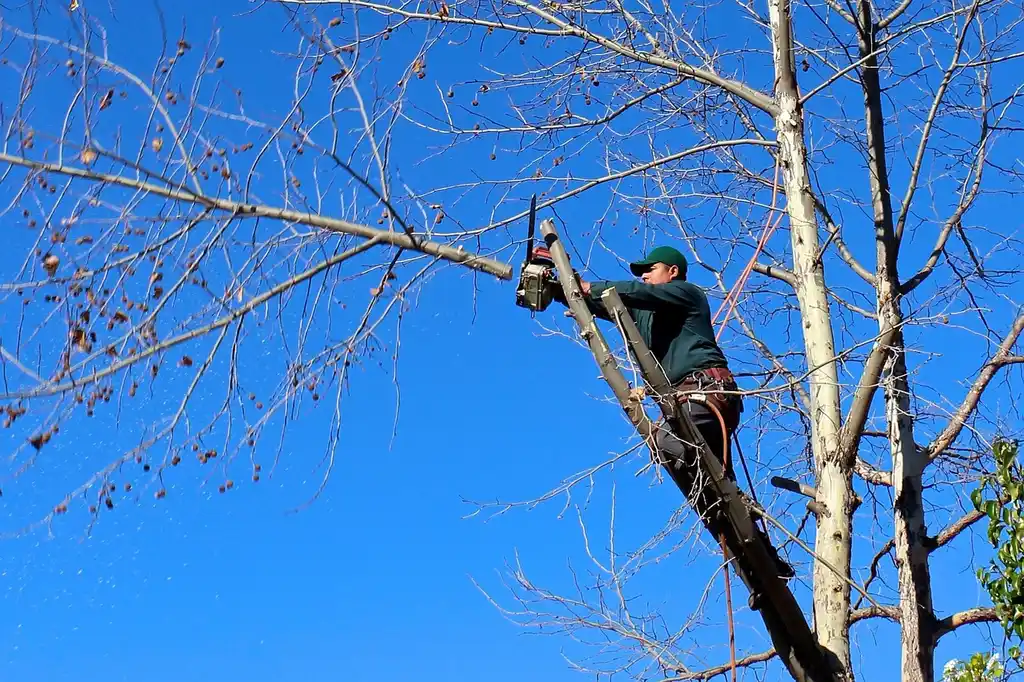
Hire a landscaper for surface debris, minor trimming, mulch reset, and light yard recovery. Hire an arborist or tree service when trunks, large limbs, or hanging branches are involved, especially if cutting requires sectional removal near structures, vehicles, or power lines.
Downed limbs and hanging branches
Branches that are on the ground and no longer under tension are often within a landscaper’s scope. Branches that hang overhead, bind against a trunk, or rest on a roof can shift as they are cut. That type of tension makes tree expertise the safer call.
Large limbs and sectional removal
Large limbs and main stems usually need controlled cutting into sections, then removal in sequence. If the job includes a trunk that snapped, a split stem, or a tree that may still move, the tree crew should lead. Landscaping crews can often take over after the hazard is removed.
A common first-timer mistake is assuming every fallen tree is the same job. A six-inch limb across a lawn may be straightforward. A trunk of about 20 inches leaning onto a garage is a different risk profile and should not be treated like ordinary yard cleanup.
Stump and debris follow-up
Even after the tree hazard is cleared, stump pieces, sawdust, and branch fragments often remain. Ask whether the estimate includes that follow-up work or only the main cut and haul. Some tree crews leave the area ready for a landscaper to finish grading, mulching, or replanting.
How much does storm cleanup cost?
Storm cleanup pricing often starts with a minimum service charge, then may move to hourly labor or a flat-rate estimate based on debris volume and site difficulty. Disposal fees, haul-away charges, and emergency surcharges can all change the total, especially after significant wind or flood damage.
Minimums and labor rates
Many crews have a minimum service charge for small jobs because travel, loading, and disposal take time even when the pile is modest. Larger jobs may be priced hourly, by crew size, or as a flat rate tied to the scope. Ask how many workers are included and how labor hours are counted.
Disposal and emergency add-ons
Do not assume disposal is built in. Haul-away charges may cover truck use, dump fees, and sorting, while emergency surcharges may apply for after-hours or urgent response. If the crew must return for a second load, that should be visible in the estimate before work begins.
For a small yard with a few branch piles, the cheapest quote may be the one with a modest minimum plus clearly listed haul-away. For a larger storm site, a flat rate can be easier to compare if it defines what debris is included and what counts as extra.
Can landscaping services fix drainage after cleanup?
Yes, but only after the site is safe and the soil can be worked without causing more damage. Landscaping crews can regrade low spots after washout, inspect runoff paths, and correct water flow away from the foundation. Saturated soil may need time before grading or planting begins.
Washout repair and slope checks
After heavy rain or flood runoff, low spots may hold water or direct it toward the house. A landscaper can inspect the slope, rebuild small swales, and regrade disturbed areas once the soil is stable enough to shape. If the ground is still soft, wait.
Swales and runoff paths
The goal is simple: move water away from the foundation and out of traffic areas. That may mean cleaning out a swale, reshaping a drainage path, or filling a shallow rut left by washout. If the problem reaches foundation settlement or major erosion, the job may need more than routine yard work.
Mulch and planting-bed restoration
Storm cleanup often exposes the edges of beds, scatters mulch, and knocks shrubs or annuals off line. A landscaper can replace displaced mulch, reset edging, and replant damaged annuals or small shrubs if the root zone is still sound. Severe root exposure usually needs a separate repair plan.
How do you compare storm cleanup quotes?
Compare quotes by scope, not just price. The estimate should say what debris is included, whether hauling and disposal are covered, how cleanup is sequenced, and whether the crew returns for follow-up repairs. Timeline, revisit policy, and documentation matter just as much as the total.
Scope of work
Look for a line-by-line scope: debris pickup, bagging, piling, hauling, disposal, trimming, mulch reset, bed repair, and any drainage work. If the quote says “cleanup” without details, ask what debris categories are included and what counts as extra labor.
Timeline, warranty, and revisit policy
Ask when the crew can start, how long the job should take, and whether the estimate includes a return visit if something is missed. If planting or drainage repair is part of the job, ask about warranty terms. One provider may include a plant-material warranty, while another may not.
Suppose a quote lists yard debris removal but leaves out broken fencing pieces and washed-out mulch. That quote may look cheaper up front and still cost more after add-ons. A complete bid should separate organic debris from damaged hardscape materials and say who handles each one.
Photo records and job updates
Photo records help with claims, follow-up work, and payment disputes. Before work starts, ask for before-and-after photos, an itemized scope, and proof that the final haul-away matches the agreed debris categories. Clear documentation is especially useful after a storm with mixed yard and structural damage.
What does landscaping storm cleanup include?

It usually includes debris pickup, bagging, piling, hauling, and disposal, plus light trimming, mulch reset, and minor bed repair. It does not automatically include tree removal, utility hazards, or major structural cleanup. Ask where the crew draws that line before booking.
How soon should I book landscaping services after a storm?
Book as soon as the site is safe enough for a crew to enter. Priority goes to live wires, gas leaks, unstable trees, and access paths. If the yard is still flooded or heavily saturated, the cleanup may need to wait until the soil can take foot traffic and equipment.
What can a landscaper clean up after wind damage?
A landscaper can usually handle loose branches, leaf piles, scattered yard debris, broken mulch, displaced edging, and light trimming. If the wind left a hanging limb, a split trunk, or a branch across a roof, that part needs a tree specialist first. Keep the work divided by hazard type.
Do landscaping companies help with debris removal and hauling?
Yes. Many include debris removal, loading, hauling, and disposal in storm cleanup or yard cleanup service. The key is confirming whether hauling is already included, whether there is a dump fee, and whether mixed debris such as broken hardscape pieces is priced differently from organic material.
How do I compare quotes for storm cleanup landscaping services?
Compare the scope line by line: debris categories, hauling, disposal, trimming, mulch repair, drainage work, timeline, and revisit policy. A lower quote can be incomplete if it excludes haul-away charges, emergency surcharges, or follow-up visits. Ask for itemized details before you choose.
Frequently asked questions
What should I check before hiring storm cleanup crews?
Check whether the crew is clear about hazards, scope, hauling, disposal, and photo documentation. The estimate should say who handles downed limbs, what counts as debris, whether haul-away is included, and how revisions are handled if the site needs a second pass.
How much do landscaping services for storm cleanup cost?
Costs vary with minimum service charges, crew size, labor hours, disposal fees, and emergency surcharges. A small debris pickup may be priced as a minimum visit, while larger jobs may be hourly or flat rate. Always ask whether hauling and dump fees are already included.
Can landscaping services fix drainage after storm cleanup?
Yes, if the soil is stable enough to work. Landscapers can regrade low spots, rebuild small swales, and correct runoff away from the foundation. If the ground is saturated, wait. Working wet soil can compact it and make drainage worse instead of better.
Should I hire a landscaper or an arborist for storm damage?
Hire a landscaper for surface cleanup, light trimming, mulch repair, and minor grading. Hire an arborist or tree service for hanging limbs, split trunks, large branches, or any cut that needs sectional removal. If a utility line is involved, call the utility company first.
What should I do first after storm damage in my yard?
Check for live wires, gas leaks, unstable trees, roof hazards, and flooded ground before anyone starts work. Then photograph the site, protect access paths, and call the right crew for each hazard. Cleanup comes after the safety check, not before it.