What Seeds Grow Best in Full Sun: Top Picks and Tips
For full-sun beds, I start with zinnias, cosmos, sunflowers, marigolds, basil, beans, and okra. Match the seed to the site: heat-tough plants for hot afternoon light, drought-tolerant types for dry soil, nectar plants for bees and butterflies, long-stemmed flowers for cutting, and fast edible crops for harvest. Pick badly and seedlings can stall, scorch, bolt, or skip bloom and crop. This guide gives a simple way to match seed type to your exact full-sun bed.
This guide is part of our Planting from seeds: a beginner’s guide series.
What counts as full sun?
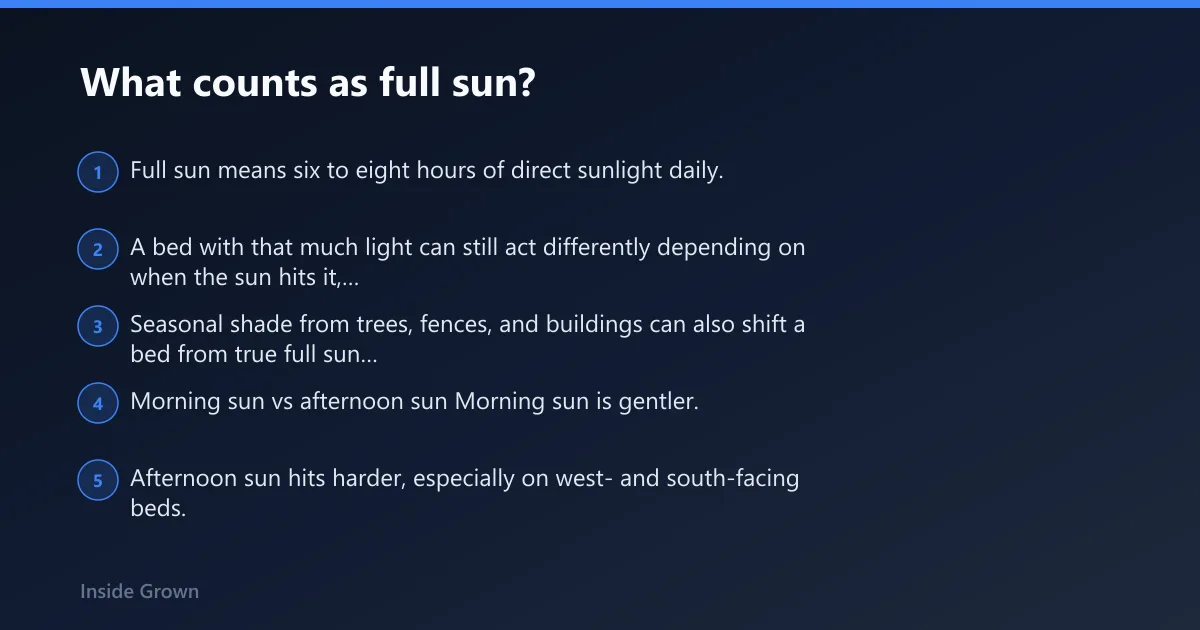


Full sun means six to eight hours of direct sunlight daily. A bed with that much light can still act differently depending on when the sun hits it, because afternoon light is harsher than morning light. Seasonal shade from trees, fences, and buildings can also shift a bed from true full sun to partial sun.
Morning sun vs afternoon sun
Morning sun is gentler. Afternoon sun hits harder, especially on west- and south-facing beds. That matters because many seedlings handle bright light, but fewer can take hot reflected heat from walls, pavement, or stone. If a bed gets strong light after lunch, I choose tougher annuals and better-draining soil first.
How seasonal shade changes the math
A bed can meet the full-sun rule in spring and fall short later in the season if nearby trees leaf out or a structure throws longer shadows. That is where many planting mistakes begin. A packet may say full sun, but if the bed drops to 4 to 5 hours, flowering often weakens and vegetables can fruit poorly.
What seeds grow best in full sun by use?
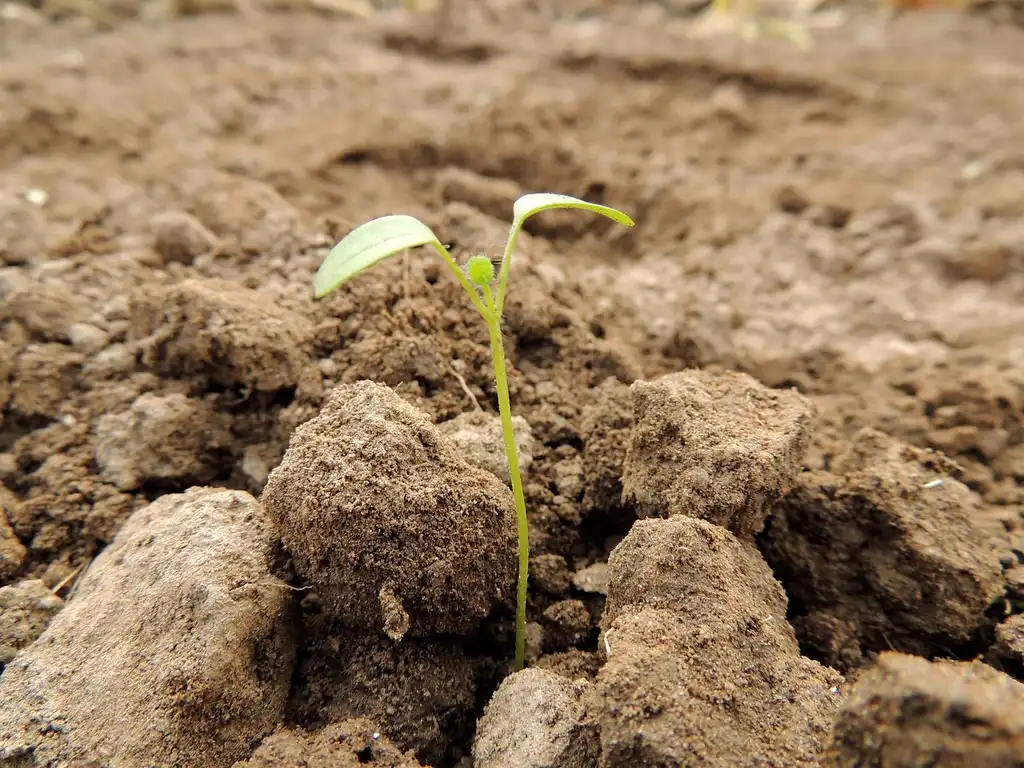
The best seed depends on the job, not just the amount of light. Some plants work for borders, some for cutting, some for bees and butterflies, and some for harvest. If the goal is edible crops, flowers alone are the wrong answer; if the goal is pollinators, leafy vegetables are not enough.
Best flowers for borders and easy color
Marigolds are one of the easiest full-sun annuals I use for borders, edging, and containers. They handle heat well and usually keep a tidy shape. Zinnias are another strong choice for quick color, and they stay useful through a long bloom period when deadheading is kept up or when a low-deadheading type is chosen.
Best seeds for cutting gardens
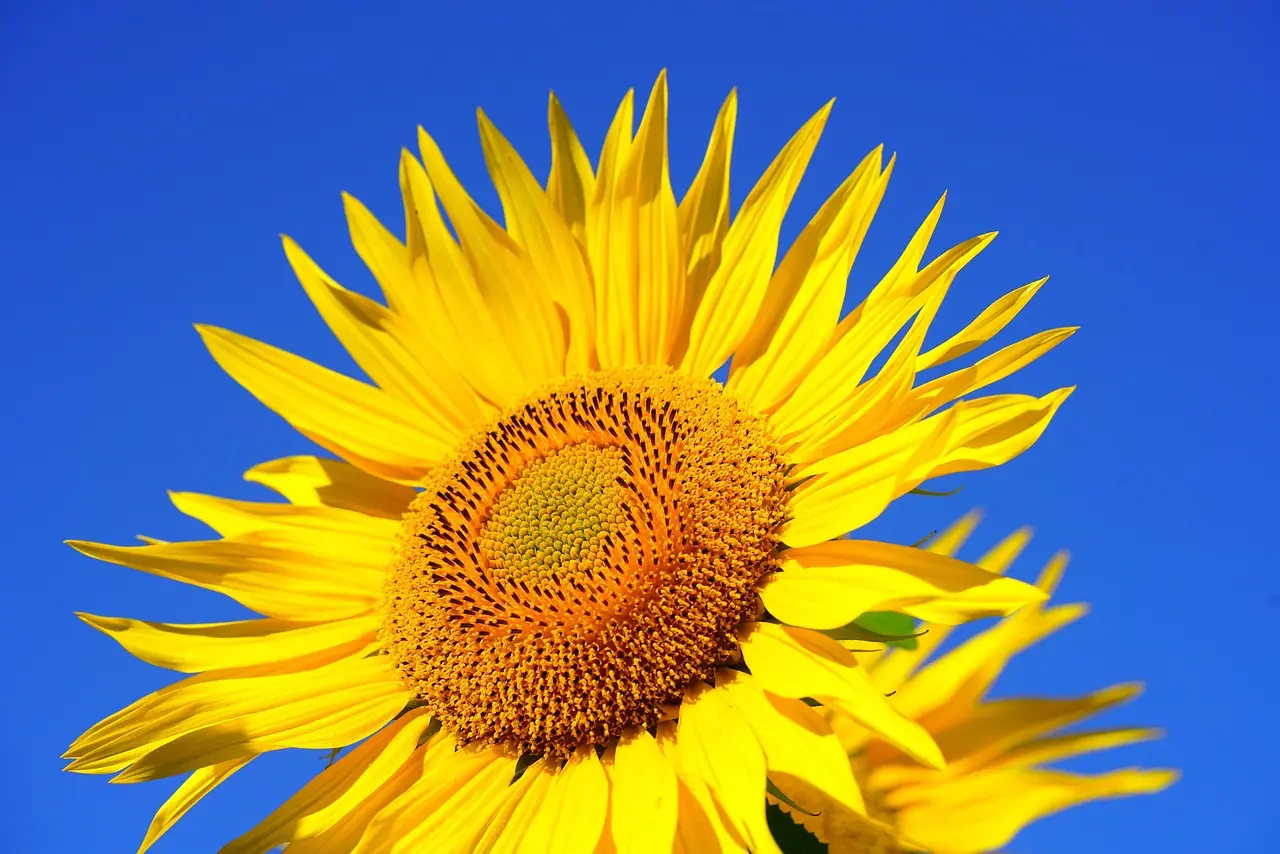
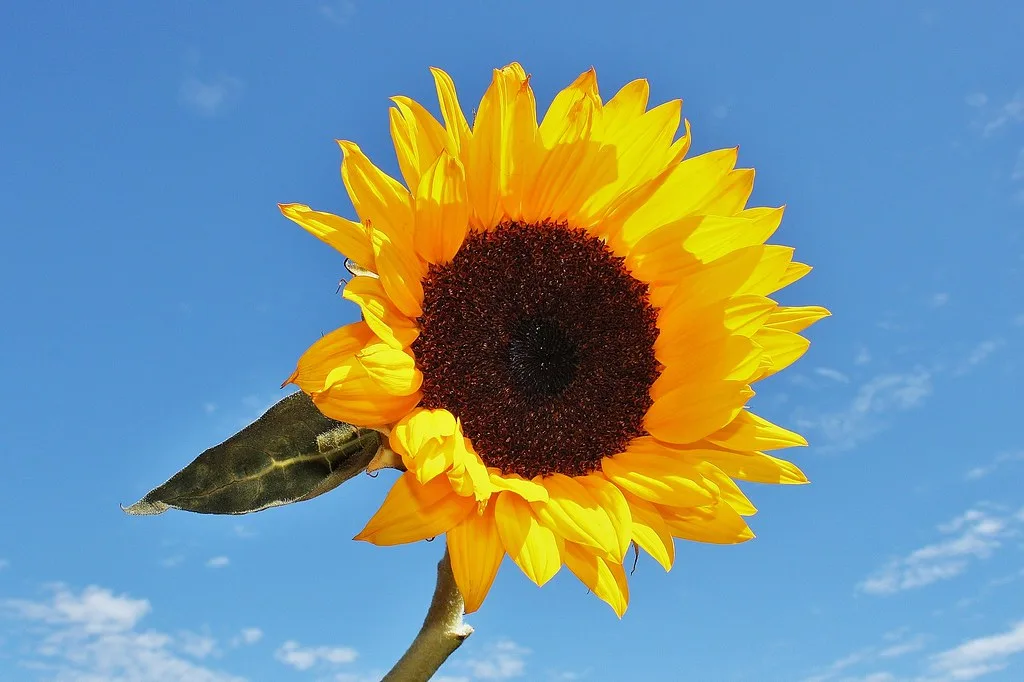
Zinnias are one of the clearest cut-flower choices from seed because they make sturdy stems and hold color in hot weather. Sunflowers also work well when a taller focal flower is wanted. Some types can reach 3 to 10 feet, and Sunflower ‘Giant Yellow’ can reach heights of up to 12 feet with blooms up to 12 inches across.
Best pollinator seeds for bees and butterflies
Cosmos are strong for drawing butterflies and also bring in bees. Their airy growth gives insects easy access to the bloom. Zinnias and sunflowers also feed pollinators well when planted in full sun, especially when several plants are grouped together instead of scattered as single specimens.
Best edible seeds for sunny beds
Beans and okra are dependable edible choices for full-sun beds that get heat and steady watering. Basil also does well in sun and can be harvested often for a steady supply of leaves. These crops fit gardeners who want food first, while still leaving room for flowers that help pollinators nearby.
How do heat, dry soil, and beginner skill change the best choice?
Heat, drainage, and experience level often matter more than the seed packet photo. A plant that likes bright light may still fail in baking afternoon exposure or in soil that stays wet. Beginners usually do best with annuals that sprout and flower quickly, take missed waterings, and do not need much shaping.
Hot afternoon exposure
For scorching afternoon sun, choose plants known to take heat rather than just plants labeled full sun. Marigolds and zinnias are dependable, and sunflowers can do well when they have room and soil that does not stay soggy. Cosmos usually cope better in heat than fussy bedding plants, especially in open beds with good airflow.
Dry, fast-draining soil
Some sun plants prefer lean, well-draining soil more than rich, wet soil. Lavender is a clear example: it grows best in full sun and well-drained, slightly alkaline soil. The common sunflower is listed as full sun and dry-to-medium water, which makes it a stronger match for beds that dry between waterings.
Low-effort choices for first-time growers
For a first sunny bed, the easiest picks are usually marigolds, zinnias, cosmos, and common sunflowers. They germinate reliably, grow fast, and make obvious progress. That helps beginners read the bed without waiting through a long, risky season. If the bed is very hot, pick the tougher annuals first and save delicate plants for cooler spots.
Decision table: the best full-sun seeds for real garden conditions
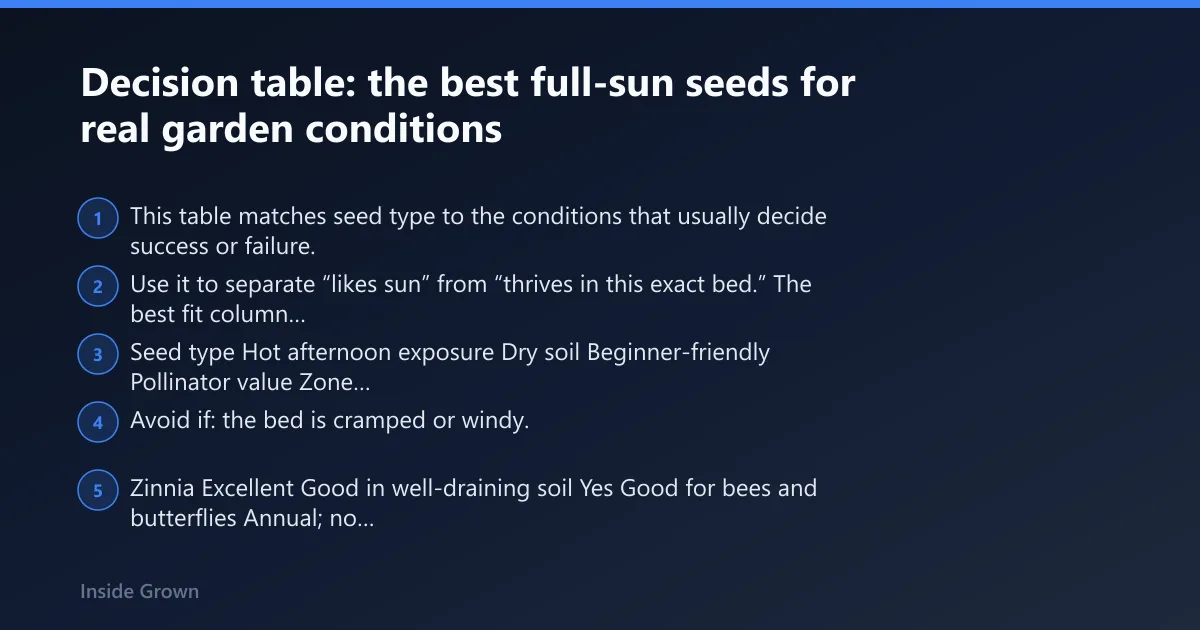
This table matches seed type to the conditions that usually decide success or failure. Use it to separate “likes sun” from “thrives in this exact bed.” The best fit column matters more than the plant name alone, because a seed can be excellent in one sunny bed and a poor choice in another.
| Seed type | Hot afternoon exposure | Dry soil | Beginner-friendly | Pollinator value | Zone sensitivity | Best fit / avoid if |
|---|---|---|---|---|---|---|
| Sunflower | Good if soil stays evenly moist while young | Moderate; can handle drier beds once established | Yes, very straightforward | Good for bees | Annual; zone matters mainly for timing | Best fit: tall, sunny beds with space. Avoid if: the bed is cramped or windy. |
| Zinnia | Excellent | Good in well-draining soil | Yes | Good for bees and butterflies | Annual; no winter survival issue | Best fit: hot color and cut flowers. Avoid if: the soil stays wet. |
| Cosmos | Good | Good to moderate | Yes | Excellent for butterflies | Annual; no winter survival issue | Best fit: airy pollinator beds. Avoid if: you want stiff, formal borders. |
| Marigold | Excellent | Moderate | Yes | Fair to good | Annual; no winter survival issue | Best fit: containers and borders. Avoid if: you need tall stems for bouquets. |
| Lavender | Excellent | Excellent in well-drained soil | Moderate | Good for bees | Zone-sensitive perennial | Best fit: dry, sunny, long-lived planting. Avoid if: soil is heavy or winter cold exceeds the plant’s range. |
| Basil | Good | Moderate | Yes | Good when allowed to flower | Usually treated as annual | Best fit: edible beds and pots. Avoid if: the site gets cold nights or shade. |
| Beans | Good | Moderate | Yes | Limited flower value | Annual; frost-sensitive | Best fit: sunny harvest beds. Avoid if: the soil is cold or waterlogged. |
| Okra | Excellent | Good in warm, draining soil | Moderate | Useful flowers for insects | Annual; needs warm conditions | Best fit: very hot beds. Avoid if: your season stays cool. |
Which full-sun seeds fit your USDA zone?
USDA hardiness zone matters most for perennials and shrubs, because it helps indicate whether they can survive winter in your area. Annuals are different: they are planted, flower or crop, and finish their life cycle in one season. That means a zone 5 gardener and a zone 9 gardener can grow many of the same annual full-sun seeds.
Annuals that ignore zone limits
Sunflowers, zinnias, marigolds, cosmos, basil, beans, and okra are annual choices, so the zone question is mostly about planting time, frost risk, and how long the season lasts. In colder zones, sow after frost danger. In warmer zones, expect a longer run and more heat pressure during summer.
Perennials and shrubs that depend on zone
Lavender is the main example here. It is a perennial, shrub-like herb, not a throwaway annual, so zone selection matters. It grows best in full sun and well-drained, slightly alkaline soil, but only if the winter climate matches the cultivar. That makes it a smarter long-term plant for some zones than others.
Zone 5, 7, and 9 examples
In zone 5, annuals like zinnias, marigolds, cosmos, sunflowers, beans, and basil are usually the simplest path because winter survival is not the issue. In zone 7, those same annuals still work well, and some lavender choices become more practical. In zone 9, heat can be intense, so drought-tolerant annuals and heat-wise perennials matter more.
What soil and watering setup helps full-sun seeds succeed?
Drainage matters more than rich soil in many sunny beds. Sun plants often prefer well-draining soil that avoids waterlogged roots, and deep, infrequent watering is usually better than frequent shallow watering. That combination encourages roots to grow down, where they cope better with heat and short dry spells.
Why drainage matters more than rich soil in many cases
Wet soil plus full sun can still fail. Roots sitting in water do not get the oxygen they need, and hot weather can make that damage faster. A leaner bed with good drainage often grows sturdier sun plants than a heavily amended bed that stays damp after every rain.
When to water deeply instead of often
Deep watering trains roots to search lower in the soil. That matters in hot beds because the surface dries fast. Shallow watering leaves roots near the top, where heat and wind are worst. For seedlings, keep moisture steadier at first, then shift to deeper, less frequent watering once plants are established.
Mulch for moisture control in hot beds
Mulch helps keep soil temperature more even and slows evaporation, especially in south- and west-facing beds. Keep it away from stems so the crown does not stay wet. In dry beds, mulch can make the difference between a plant that pauses and a plant that keeps flowering or setting pods.
Which full-sun seeds are best for pollinators and long bloom?
For pollinators, choose bloom-heavy annuals with open flowers and a long season of bloom. For long color, pick plants that keep forming new flowers instead of fading after one flush. Zinnias, cosmos, marigolds, and sunflowers all fit the sunny pollinator bed, but they do different jobs.
Bee and butterfly favorites
Cosmos are especially good for butterflies, and bees work them as well. Zinnias and sunflowers also draw insects strongly when they are planted in groups. Marigolds can help fill gaps and keep nectar moving through the bed, though they are usually better as support plants than as the main pollinator draw.
Long-bloom annuals
Zinnias are often a strong long-bloom annual choice in full sun, especially when deadheading is kept up. The Profusion Mix is a useful example because it includes orange, pink, yellow, and red shades, needs little deadheading, and takes hot temperatures well. That makes it a strong fit for busy gardeners.
Flowers that keep working after early flushes
Cosmos can keep flowering well when they are not overfed, and that makes them useful in lean, sunny beds. Sunflowers can also keep the garden productive by feeding bees while one planting finishes and another begins. A staggered sowing plan stretches bloom and pollen flow through more of the season.
Frequently asked questions
What seeds grow best in full sun?
Zinnias, cosmos, sunflowers, marigolds, basil, beans, and okra are some of the best full-sun seeds because they handle bright light and warm conditions well. The best one for a given bed depends on the goal: flowers, pollinators, cutting stems, or harvest.
Which flowers grow best in full sun from seed?
Zinnias, cosmos, marigolds, and sunflowers are the most dependable flower seeds for full sun. Zinnias are especially good for cut flowers, cosmos for airy pollinator plantings, marigolds for borders and containers, and sunflowers for height and bold bloom.
Can vegetables grow in full sun from seed?
Yes. Beans, okra, and basil are strong choices for sunny beds started from seed, and many garden vegetables need full sun to produce well. The key is warm soil, good drainage, and enough moisture early on so seedlings do not stall before they are established.
How many hours of sun counts as full sun?
Full sun means six to eight hours of direct sunlight daily. Beds that get that much light usually support the widest range of flowering and edible seeds, but the timing matters too. Hot afternoon light is tougher than morning light, especially in summer.
Which full-sun seeds handle heat and drought best?
Marigolds, zinnias, cosmos, and sunflowers are reliable heat choices, while lavender is a strong perennial option in the right zone and soil. For dry beds, the best results usually come from well-draining soil, mulch, and deep, less frequent watering.
What seeds are easiest for beginners in hot, sunny spots?
Marigolds, zinnias, cosmos, and common sunflowers are often a good starting point for beginners. They germinate readily, grow fast, and give quick feedback. That matters in hot beds, where a slow or sensitive plant can fail before a new gardener learns what the site is doing.