How to Stratify Seeds in the Fridge the Right Way
Put seeds in a labeled, barely moist medium in a sealed bag or container, refrigerate at 34–41°F for the crop’s full cold period, and check weekly for mold or germination. Bad fridge stratification can rot seed, dry it out, or trigger sprouts before planting. This guide covers the exact fridge setup, timing by seed type, and the handoff from fridge to potting mix.
This guide is part of our Seed planting guide for beginners series.
What cold stratification


Cold stratification is a moist pre-chill process used to prepare certain seeds for germination before sowing. It mimics winter conditions for dormant cold-hardy seeds, so the seed finishes the chill it would normally get outdoors before it starts to grow.
Use it for species that need a cold period to break dormancy, especially many perennials, trees, and shrubs native to temperate regions. Some packets list the need clearly. Others omit it, which is why the packet check comes first.
What you’ll need
- Seed packet or species notes
- Folded paper towel
- Food bag or lidded container
- Clean label or tape and marker
- Fridge space that stays near 40°F (4°C)
- Potting mix or seed-starting mix for later sowing
Seeds planner
Use this planner to match the seed to the chill method, timing, and failure signs. When a packet gives a different duration, use that instead. Duration depends on species and origin, so the same plant group can vary by source.
| Seed type | Required chill method | Fridge temperature target | Medium | Minimum days | Maximum days | Sowing trigger | Common failure sign |
|---|---|---|---|---|---|---|---|
| Clematis | Cold stratification | About 40°F (4°C) | Moist paper towel | 30 | 90 | Radicle shows or packet window ends | Mold on seed coat |
| Milkweed | Cold stratification | About 40°F (4°C) | Moist paper towel | 30 | 60 | Seed swells and cracks | Dry paper towel |
| Maple trees | Cold stratification | About 40°F (4°C) | Moist paper towel or damp sand | 60 | 150 | End of species-specific chill window | Premature sprouting in bag |
| Cherry seeds | Cold stratification after cleaning the pit | About 40°F (4°C) | Barely moist paper towel | 90 | 120 | Pit has cracked or root tip appears | Rot at the seam |
| Hardy perennial seeds | Cold stratification | About 40°F (4°C) | Moist paper towel | 30 | 90 | Packet time is met | Condensation pooling |
| Hardy tree seeds | Cold stratification | About 40°F (4°C) | Moist paper towel or damp medium | 120 | 150 | Long chill window completes | Seeds dry out before chilling ends |
Check the packet first, then place the seeds in a moist paper towel inside a food bag or container and refrigerate them near 40°F. Keep the towel damp, not dripping wet. Check every few days for moisture, mold, or a white root tip.
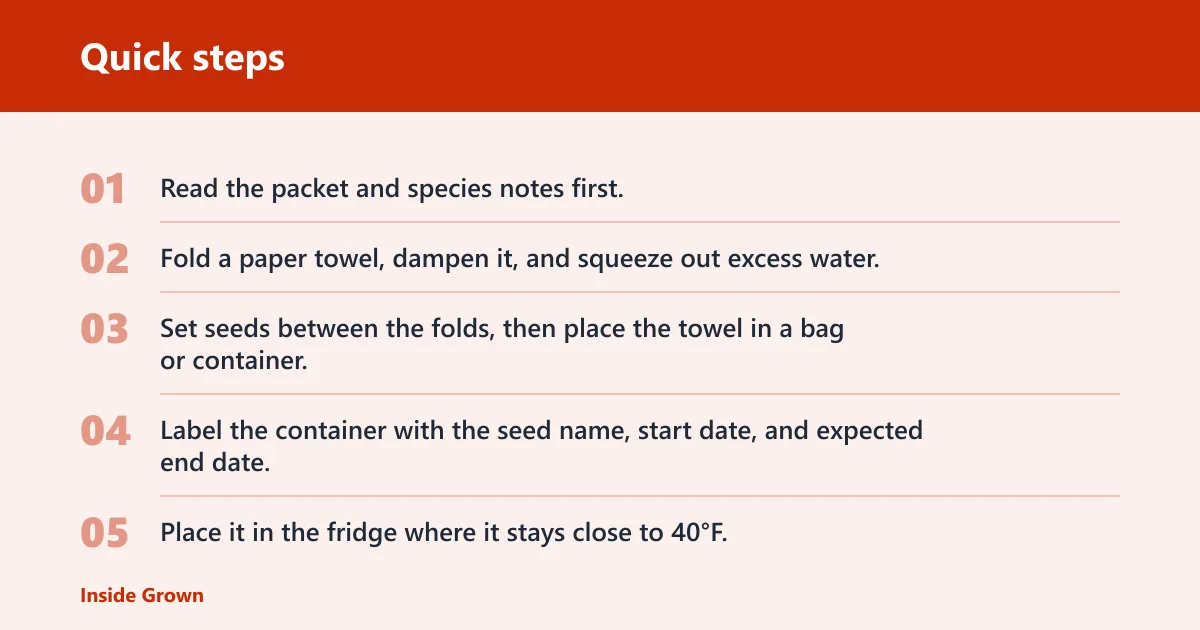
- Read the packet and species notes first.
- Fold a paper towel, dampen it, and squeeze out excess water.
- Set seeds between the folds, then place the towel in a bag or container.
- Label the container with the seed name, start date, and expected end date.
- Place it in the fridge where it stays close to 40°F.
- Check every few days and re-moisten with 1 teaspoon of water at a time if the towel starts to dry.
- Move seeds out as soon as the sowing trigger appears.
Most home refrigerators sit between 35 and 41°F (1 to 5°C). That range works for most stratified seed batches. A bag may be closed for higher humidity or left with a little airflow if your setup tends to stay too wet. The point is cool, moist, and stable.
Picture a packet of milkweed seed with no stratification note. A 40°F fridge, a folded damp towel, and a labeled bag give the seed a winter cue without soaking it. If the towel starts beading water, open the bag, blot the towel, and reset it dry enough to avoid rot.
When should seeds come out of the fridge?
Seeds should come out when the packet’s cold period ends or when you see a root tip, swelling, or cracking that signals readiness. Many seeds need 1 to 3 months, while some hardy tree seeds need 4 to 5 months. Do not keep actively sprouting seeds chilled longer than needed.
Some seeds need long windows because the dormancy signal is stronger. For those, the fridge is not a guess-and-check step. It is a timed hold based on the species and, when available, the seed’s source region.
Say your maple seeds are still firm after 8 weeks. That is not failure; it usually means the chill window is simply longer. Keep them in the fridge, check moisture, and wait for the planned duration unless the packet gives a shorter specific period.
How do you stratify cherry seeds?
Cherry seeds need a practical, careful cold period after the pit is cleaned and the seed is not left sitting in wet pulp. Use a barely moist towel in a bag, then refrigerate near 40°F for the packet’s full cold window, which is often measured in months rather than weeks.
Cherry pits are more prone to rot than many smaller seeds. Clean them well, keep the towel damp only, and check regularly. If a root tip appears, plant at once rather than waiting for the full chill period to end.
How do you plant cold stratified seeds after the fridge?
Move chilled seeds into the planting medium once the trigger appears or the cold period ends. For direct sowing, plant into prepared soil at the proper season. For trays, sow into moist seed-starting mix and keep the medium evenly moist and warm enough for germination.
| Next step | What to do | Condition to watch |
|---|---|---|
| Direct sowing | Plant into prepared outdoor soil at the recommended depth | Soil should be workable, not frozen or waterlogged |
| Trays | Sow into seed-starting mix, cover lightly if needed, and keep evenly moist | Place under the crop’s germination light and warmth range |
After chilling, the seed is ready for germination conditions, not more winter. That means moisture, light if the species needs it, and warmth if the packet calls for it. Keep the mix damp, and avoid burying tiny seeds too deep.
Suppose a clematis seed shows a tiny root after 45 days. Move it to a tray the same day, cover it with fine mix, and water gently from the bottom. The key change is the environment, not more cold.
Common mistakes
Most fridge failures come from too much water, too little labeling, or the wrong temperature range. Keep the medium moist, not dripping wet. Store at about 40°F, not in the freezer. Check periodically so a small problem does not become a ruined batch.
Mold from excess moisture
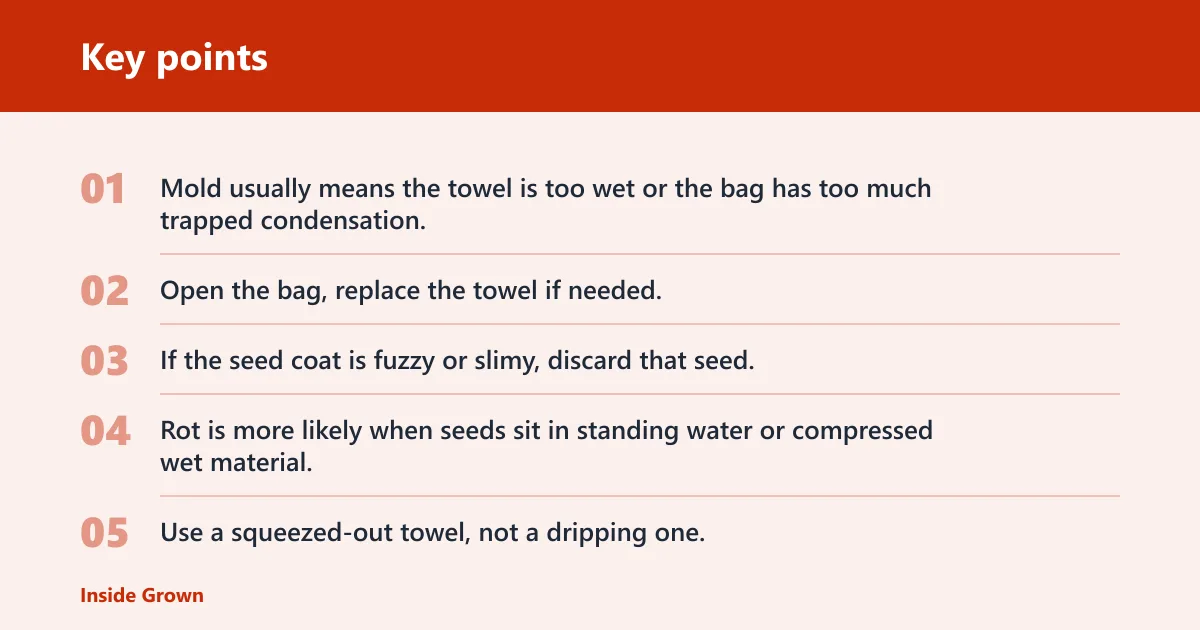
Mold usually means the towel is too wet or the bag has too much trapped condensation. Open the bag, replace the towel if needed, and reset with just enough water to keep it damp. If the seed coat is fuzzy or slimy, discard that seed.
Rot from soggy, sealed media
Rot is more likely when seeds sit in standing water or compressed wet material. Use a squeezed-out towel, not a dripping one. If your method uses a container, do not pack the seeds tightly. Air movement matters more than many growers expect.
Sprouting too early in the fridge
Early sprouting usually means the chill period was long enough and the seed is ready for soil. Do not keep it in the bag just to finish the calendar. Plant it immediately in mix or soil that matches the species’ next-stage needs.
Drying out before the chill is complete
If the towel dries, dormancy release can stall. Check moisture every few days and add 1 teaspoon of water at a time, then recheck. Add only enough to restore dampness. Extra water can tip the batch toward rot.
Using the wrong cold method
Cold stratification is not freezer storage, dry refrigerator storage, or warm stratification. Freezing can damage many seeds. Dry storage does not mimic winter moisture. Warm stratification uses heat first, and it is a separate process for different species.
Frequently asked questions
How do you stratify seeds in the fridge?
Place the seeds between a folded moist paper towel, slide them into a labeled food bag or container, and keep them in the fridge near 40°F. Check every few days for dryness, mold, or sprouting, then move them to soil once the cold period ends.
How long do seeds need to be cold stratified?
Many seeds need 1 to 3 months. Some hardy tree seeds need 4 to 5 months. The packet or species note should set the timing first, because origin and dormancy depth can change the length.
What is stratifying seeds?
It is the practice of giving dormant seeds a cold, moist period before sowing so they can exit dormancy. The process imitates winter conditions and is used mainly for cold-hardy species that would normally wait until spring.
How warm should cold stratification be in the fridge?
Around 40°F (4°C) is the target for most seeds, and a typical refrigerator range of 35 to 41°F (1 to 5°C) is acceptable. Keep the seeds cool but not freezing, and avoid the freezer compartment.
How do you warm stratify seeds?
Warm stratification uses a warm, moist period instead of a cold one. Follow the packet for the exact temperature and duration, since the method varies by species. Do not substitute warmth for cold if the seed specifically needs winter-like chilling.
Can you freeze seeds for stratification?
No. Freezing is not the same as cold stratification, and it can damage many seeds. Use a refrigerator, not a freezer, unless the seed packet specifically calls for freezing, which is uncommon for home gardeners.