How to Tell if a Bonsai Tree Is Overwatered
If the top layer of bonsai soil is dry and the pot feels light, it is usually underwatered; if the soil stays wet, the pot feels heavy, leaves are soft or yellow, or roots smell sour, it is usually overwatered. Wrong watering can kill fine roots fast and leave a bonsai in decline. This guide gives a two-minute check in the right order: soil depth, pot weight, leaf texture, then root odor, plus what to do next.
How do you tell if a bonsai is overwatered or underwatered?


Start with the two-minute decision flow
- Check the top layer, then probe a little deeper. A dry crust on top does not tell you the root zone is dry.
- Lift the pot and compare its weight with a known dry pot of the same size, or with how it feels soon after a full watering.
- Look at leaves. Soft, yellow, or dropping foliage points one way; crispy tips and wilt in dry soil point the other way.
- If the answer is still unclear, smell near the root zone and check drainage holes for persistent wetness or sour odor.
Check soil, pot weight, leaves, and root odor in order
Bonsai soil is shallow, so the surface dries much sooner than the lower root zone. A dusty top can hide damp soil below, especially in finer mixes. For most trees, the goal is moist soil, not a wet mix that stays cold and soggy. If the pot still feels heavy and the chopstick comes out damp below the surface, wait to water.
Pot weight helps because thirsty bonsai containers get noticeably lighter as the mix dries through the root zone. Leaf texture then separates simple thirst from rot-related decline. Smell matters too: a sour or swampy odor near drainage holes or exposed roots can point toward overwatering and possible root damage.
What to do when the result is unclear
When the signs conflict, treat the tree as uncertain rather than guessing. Use the chopstick test again, wait a few hours, and check drainage. A moisture meter can help, but it should not replace your fingers and eyes because readings vary with soil type, salt buildup, and probe depth. If the tree is indoors, low airflow can keep soil wet longer than expected.
What does an overwatered bonsai look like?
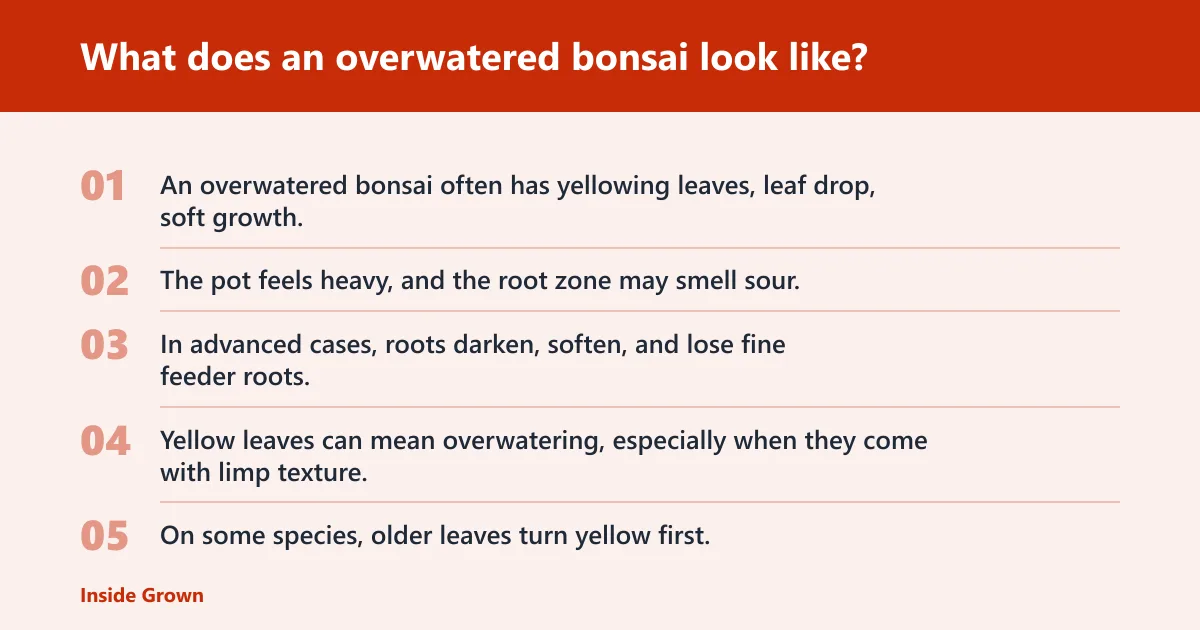
An overwatered bonsai often has yellowing leaves, leaf drop, soft growth, and soil that stays wet long after watering. The pot feels heavy, and the root zone may smell sour. In advanced cases, roots darken, soften, and lose fine feeder roots, which makes the tree decline even if the surface still looks green.
Leaf symptoms that point to too much water
Yellow leaves can mean overwatering, especially when they come with limp texture, dropped foliage, or slow growth. On some species, older leaves turn yellow first. That sign matters less on its own than a cluster of symptoms. Yellow leaves alone do not prove the issue, because stress, light changes, and normal aging can also shift color.
Soil and pot clues that point to saturation
Soil that stays wet for several days is a red flag, especially if the pot does not drain freely or the saucer holds standing water. Bonsai soil should drain freely. If the mix looks compacted or the pot sits tilted so one side stays wetter, the roots may be trapped in low-oxygen conditions. That is where trouble starts.
Root signs that mean the problem is advanced
Root rot may show up as mushy brown roots, a bad odor, and loss of fine feeder roots. Healthy roots are usually firm and lighter in color. Once rot begins, the tree cannot take up water normally, so the leaves may still droop even though the mix is wet. That is why leaf symptoms alone can mislead you.
What does an underwatered bonsai look like?
An underwatered bonsai often has crispy leaves or tips, wilting despite dry soil, and a pot that feels very light. The soil may shrink away from the container edge, creating gaps. Unlike rot-related decline, the tree and pot often look dry rather than soft, heavy, or sour.
Leaf symptoms that point to thirst
Dryness damage often shows as curled leaf edges, browned tips, and a papery feel. Wilt can happen before leaves crisp if the soil is dry enough and the roots are still alive. A common first-timer mistake is seeing wilting and assuming rot. Wilt means only that water movement is failing; the cause can be dryness or damaged roots.
Soil separation from the pot edge
When a bonsai dries too far, the mix can pull away from the pot walls. That gap is a useful clue. It often appears with a very light container and dry chopstick readings deeper in the pot. If the top crust is dry but the lower mix is still cool and damp, wait before watering again.
How wilt can differ from rot-related decline
True underwatering usually improves after a full soak once the soil is truly dry. Rot-related wilt does not recover as quickly because the roots cannot move water well. If the pot is heavy, smells sour, and the tree still wilts, the issue is more likely root damage than simple thirst.
The fastest way to check bonsai soil moisture
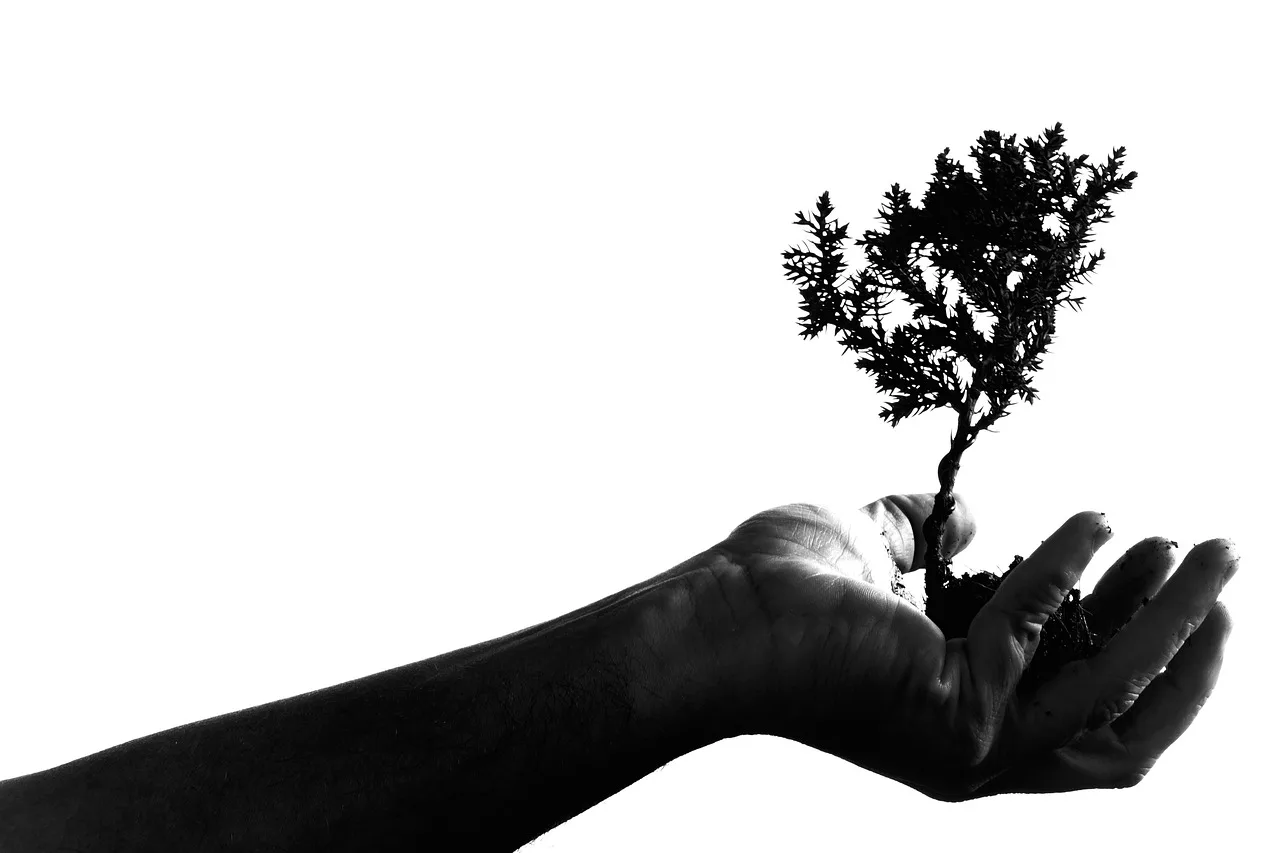
The quickest reliable check combines touch and depth. Use a finger for the top layer, a chopstick for deeper moisture, and a moisture meter only as a helper. For most bonsai, the aim is moist soil below the surface, not soggy soil that stays cold and wet for too long.
Finger test and chopstick test
Insert a clean finger about 1/4 to 1/2 inch into the topsoil. Dry on top with moisture below is normal in many bonsai mixes. For a deeper look, push a chopstick into the root zone, leave it for a minute, and pull it out. Damp color or coolness on the wood means the middle of the pot is still holding water.
How to read a moisture meter without trusting it blindly
Moisture meters can help, but they are not exact. Readings vary with fertilizer salts, particle size, and probe placement. Use the meter as one clue, not the decision-maker. If the meter says dry but the pot still feels heavy and the chopstick is damp, trust the heavier, wetter signs.
Why the top layer can dry before the root zone
Bonsai pots are shallow, and their open surface area exposes soil to air, light, and wind. That means the top dries first. Heat, low humidity, and strong air movement make this happen faster. The reverse also matters: a shaded indoor tree with limited airflow can stay wet much longer below the surface than the top suggests.
Use this symptom matrix to separate the two problems
This checklist helps when leaf symptoms alone are confusing. Compare the leaf signs, soil signs, and root signs together, then choose the next step. If the tree fits more than one column, use root odor and soil depth before you decide to water, pause, or inspect further.
| Problem | Leaf signs | Soil signs | Root signs | Immediate action |
|---|---|---|---|---|
| Overwatered | Yellowing, soft leaves, leaf drop | Stays wet, heavy pot, possible standing water | Sour smell, dark or soft roots, fewer fine roots | Pause watering, improve airflow, remove tray water, inspect roots if odor persists |
| Underwatered | Crispy tips, wilting, dry leaf edges | Dry top and deeper soil, light pot, gaps at pot edge | Dry, brittle roots; no sour odor | Water thoroughly if the mix is truly dry |
| Unclear | Mixed yellowing and wilt | Top dry, deeper soil unknown | No odor, roots not inspected | Use chopstick test, lift the pot, then reassess before watering |
When yellow leaves do and do not mean overwatering
Yellow leaves can mean overwatering, but they can also appear after sudden light changes, seasonal shifts, or natural leaf turnover on some species. If yellowing comes with a heavy pot, wet soil, and sour smell, overwatering is likely. If yellowing comes with a light pot and dry soil, the tree may simply be too dry.
Why bonsai dry out or stay wet too long
Bonsai dry out or stay wet based on drainage, soil mix, pot shape, and weather. Open drainage holes and free-draining bonsai soil matter more than a fixed schedule. Outdoor trees can dry quickly in heat and wind, while indoor trees often stay wet longer because light and airflow are lower.
Drainage holes, soil mix, and pot compaction
Drainage holes should stay open. If roots or soil block them, water can pool at the bottom. Free-draining bonsai soil usually contains coarse particles that leave air spaces, which roots need. Dense potting soil or compacted mix holds too much water and slows oxygen exchange. That is a common setup for root rot.
Heat, wind, humidity, and light exposure
Hot weather raises evapotranspiration, so a bonsai may need water more often during warm, bright, windy periods. Low humidity and strong sun dry the mix faster. Cool, cloudy, still weather does the opposite. That is why watering by calendar alone fails: the same tree can need water on one day and not on the next.
Tropical versus temperate species and indoor versus outdoor placement
Tropical species often want warmer, steadier moisture, while temperate species may dry more slowly and have seasonal slowdowns. Indoor bonsai usually dry differently than outdoor ones because room air is less windy and less intense. Species, placement, and season all shape the diagnosis. A ficus on a sunny windowsill behaves differently from a juniper outside.
What should you do first if you watered too much?
First, stop watering and let the mix dry toward moist, not soggy. Move the tree to bright shade if direct sun and heat are trapping water, and improve airflow around the pot. Do not repot immediately unless root rot signs are strong, because extra disturbance can add stress.
Pause watering and improve airflow
Remove any standing water from saucers or trays. Check that the drainage holes are open. If the mix is waterlogged, angle the pot slightly so excess water can leave, but do not seal or cover the drainage. Good airflow helps the top layer dry without baking the roots.
Move the tree to bright shade if needed
Bright shade reduces stress while the root zone recovers. This is especially useful after overwatering in hot weather, when strong sun can keep the plant transpiring even though the roots are compromised. Avoid putting a stressed tree in deep shade for long periods, because low light can slow recovery.
When root rot means repotting is urgent
If roots smell sour, turn mushy, or lose fine feeder roots, repotting may be necessary. Use it when the root system is clearly failing, not as a reflex for every wet pot. Repotting too early can expose a tree to more shock than the original watering mistake. If you do repot, remove dead roots and use fresh, free-draining bonsai soil.
How can I check bonsai soil moisture without guessing?
Check the top layer with a finger, then check deeper with a chopstick, and compare the pot’s weight before you water. A moisture meter can add another clue, but it should not override what the soil, pot, and roots are telling you. Together, those checks give a much better answer than a schedule.
Can yellow leaves mean overwatering on a bonsai?
Yes. Yellow leaves can point to overwatering, especially when the soil stays wet, the pot feels heavy, and there is a sour smell near the roots. But yellowing is not proof by itself. Dry soil, light pot weight, and crispy tips point more toward underwatering or another stress source.
Should I water again if the top of the soil is dry?
Not automatically. Bonsai soil often dries at the top before the root zone is dry. Check deeper with a finger or chopstick, then lift the pot and judge the weight. If the lower mix is still damp, wait. If it is dry through the root zone and the pot is light, water thoroughly.
How often should I water a bonsai in hot weather?
There is no fixed number that fits every tree in hot weather. Heat, wind, humidity, sun exposure, pot size, soil mix, and species all change the pace of drying. Some bonsai may need daily checks, and outdoor trees in small pots can dry very fast on hot, windy days.
Can a bonsai recover if it has been underwatered?
Yes, if the roots are still alive and the drying was not severe for too long. Water the soil thoroughly once it is truly dry, then let excess drain away. If leaves remain crispy or the tree does not perk up, check for root injury, because prolonged dryness can kill fine roots too.
Frequently asked questions
How do I know if root rot has started in my bonsai?
Root rot is likely when roots are mushy brown, smell sour, and lose fine feeder roots. Leaves may yellow, wilt, or drop even though the soil is wet. If you suspect rot, inspect the roots quickly. Waiting usually makes the oxygen loss and tissue decay worse.
What should I do first if I think I watered my bonsai too much?
Stop watering, remove standing water, and improve airflow around the pot. Move the tree to bright shade if it is in hot direct sun. Then check the soil again with a chopstick and smell near the drainage holes. Repot only if the roots are clearly rotting or the mix is badly waterlogged.