Bonsai Watering Schedule by Season and Climate Chart
Water bonsai only when the top layer of mix is dry, then soak the pot fully. In hot, windy weather that can mean daily watering; in cool, humid winters it may be every few days. Miss the timing and roots rot or dry out fast, and small pots leave little margin. This guide gives a season-by-season, climate-based watering framework for indoor and outdoor bonsai, with adjustments for species, pot size, and soil.
This guide is part of our Bonsai tree care guide series.
How bonsai watering changes through the year
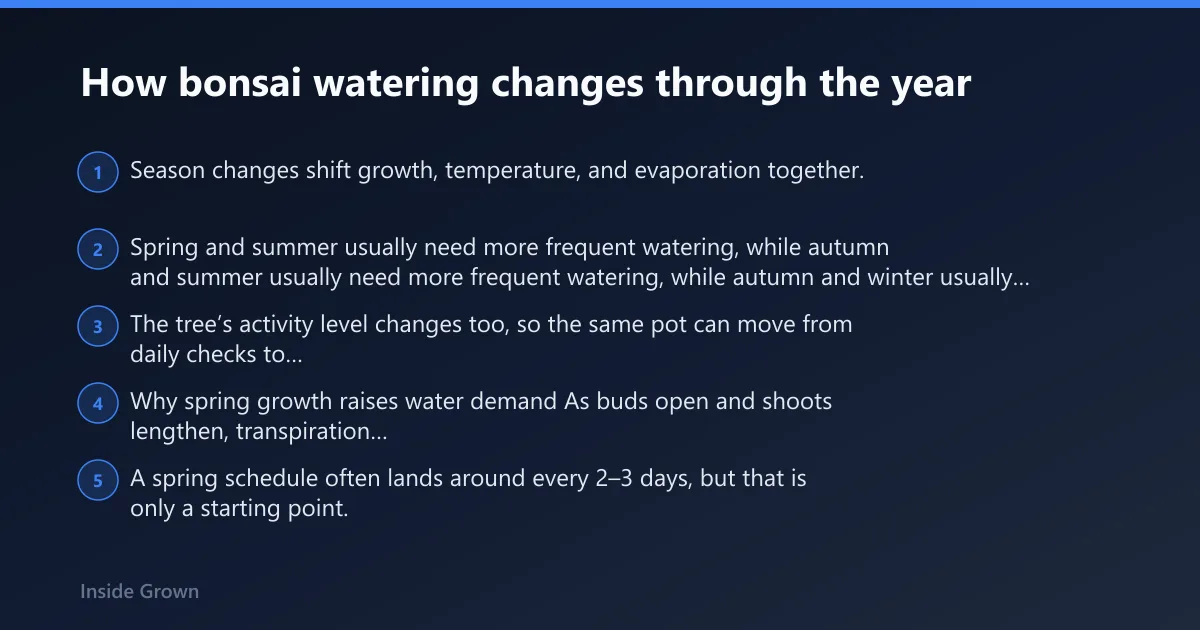


Season changes shift growth, temperature, and evaporation together. Spring and summer usually need more frequent watering, while autumn and winter usually need less. The tree’s activity level changes too, so the same pot can move from daily checks to every few days without any change in appearance.
Why spring growth raises water demand
As buds open and shoots lengthen, transpiration rises and the mix dries faster. A spring schedule often lands around every 2–3 days, but that is only a starting point. The real trigger is the soil surface and the feel just below it, not the calendar alone.
Why summer heat can require daily checks
Summer is where many bonsai owners get caught out. Watering needs rise when temperatures exceed 75°F (24°C), and on hot, windy, sunny days the pot can lose moisture very quickly. In those conditions, daily checks are normal, and tiny pots may need watering every day.
Why autumn and winter usually need less frequent watering
Cooler weather slows evaporation and, for deciduous bonsai, growth slows too. Winter watering may fall to every 5–7 days in a mild setup, but only if the soil is actually drying that slowly. Deciduous trees in dormancy need less water because they are using less, not because their roots stop functioning.
According to Outdoor Bonsai Watering Schedule: Seasonal Changes & Species Needs — Watering needs rise when temperatures exceed 75°F (24°C).
How climate changes the schedule
Climate can shift watering more than the season name on a calendar. Dry air, wind, direct sun, and heat all pull moisture from the mix faster. Humid, cool, or rainy conditions do the opposite, and indoor bonsai near heating or air-conditioning can dry surprisingly fast.
Dry climates and heatwaves
Dry climates shorten the time between waterings, and low rainfall below 1 inch per week can increase watering frequency by 20-30%. Heatwaves push that even further. A heat spike can turn a normal two-day interval into a daily check, especially for shallow pots and thirsty species.
Humid, cool, or rainy climates
High rainfall above 3 inches per week can reduce watering frequency by 20-30%, because the pot may stay moist longer. Humid air also slows drying. The mistake here is following a summer calendar when the mix still feels damp from rain or steady humidity.
Indoor bonsai with air-conditioning or heating
Indoor trees often dry faster than people expect, especially near air-conditioning, heat vents, or a sunny window with moving air. Indoor growing can behave more like a dry patio than a humid room. Check them often after a move indoors, because the drying pattern can change within a day.
Does bonsai species change the watering schedule?
Yes. Species groups use water differently, and that changes the interval even when the season stays the same. Ficus bonsai require frequent watering, juniper bonsai prefer drier soil, pine bonsai need consistent moisture levels, and deciduous trees slow down in winter dormancy.
Ficus and schefflera
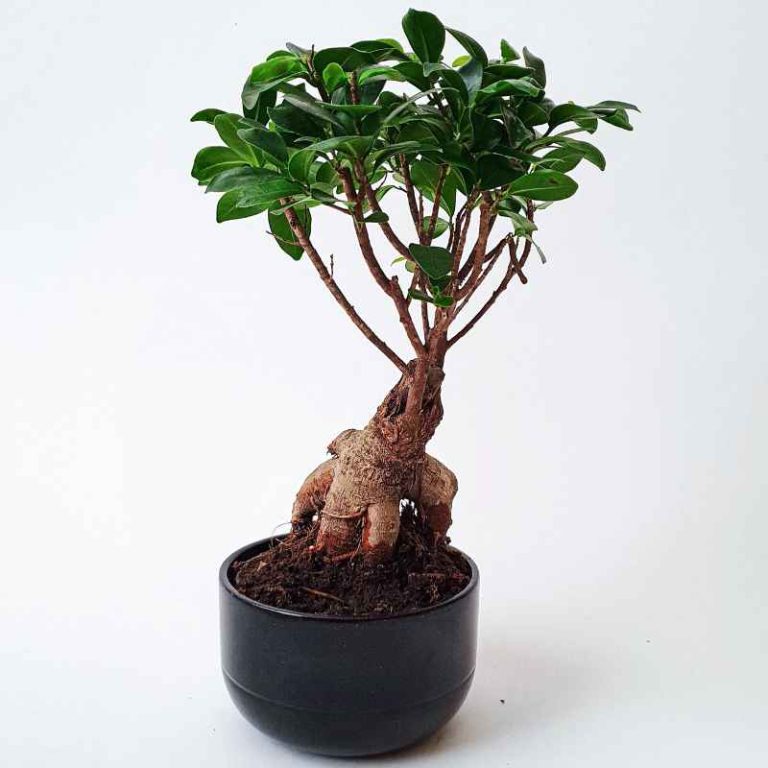
Ficus and schefflera usually want the mix kept on the slightly moist side, with short gaps between waterings in active growth. They are less forgiving of extended dryness than juniper, so the top-layer check matters every time. In summer, these can move into daily observation in warm rooms or bright outdoor setups.
Juniper and pine
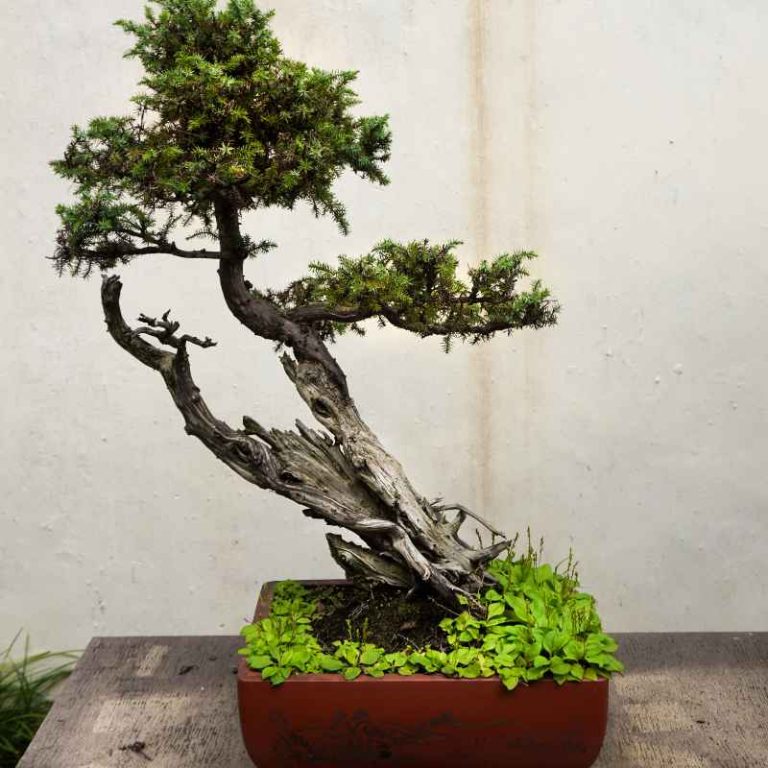
Juniper tolerates drier intervals better than many other bonsai, while pine wants steady moisture without staying soggy. That does not mean bone-dry soil. It means the surface should dry between waterings, then the pot should be watered thoroughly. These trees dislike wet feet as much as they dislike full drought.
Deciduous bonsai in winter dormancy
Deciduous bonsai slow down sharply in winter dormancy, so they usually need less frequent water. Leaves are gone or reduced, growth is limited, and evaporation drops. Even so, the mix cannot be allowed to dry out completely, especially in shallow pots or in a windy outdoor spot.
How pot size and pot material change drying speed
Container choice changes how much water the root zone can hold. Tiny pots dry faster than large pots, shallow bonsai pots have limited reserve, and terracotta or unglazed clay lose water quickly. Glazed ceramic and plastic retain moisture longer, so the same tree can need different intervals in different pots.
Tiny and shallow pots
A tiny 4-inch pot may need watering every day in summer, while a large 12-inch pot may only need water every 3–4 days. Shallow containers hold less mix, so there is less reserve between checks. This is where a fixed schedule fails fastest.
Terracotta and unglazed clay
Terracotta and unglazed clay breathe, which speeds drying at the pot wall. That is useful in humid climates, but it can become a problem in heat or wind. Trees in these pots often need closer monitoring after repotting, because the mix can dry from the edges first.
Glazed ceramic and plastic
Glazed ceramic and plastic slow water loss, so the mix stays moist longer. That can help in dry air, but it also raises the risk of overwatering if the soil is dense or the drainage is weak. In these pots, the finger test becomes even more important.
How to tell when to water bonsai
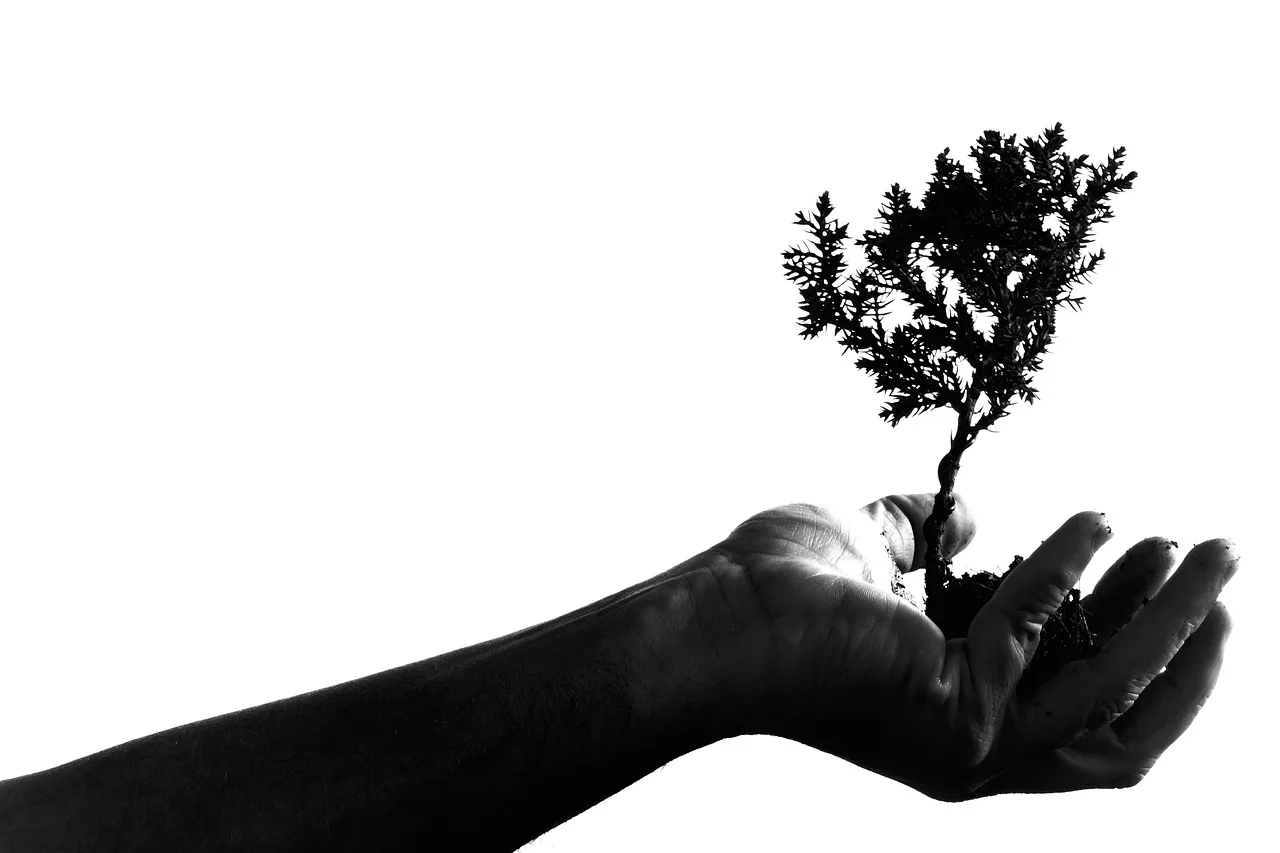
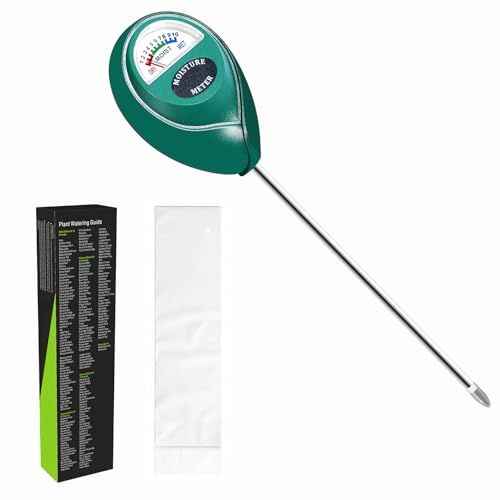
The best check is simple: feel the soil at about 1 cm, or half an inch, below the surface. Water when the top layer is dry or barely moist, not when the pot is still wet. Do not wait for the whole root ball to dry out.
The finger test at about 1 cm / half inch
Insert a finger just below the surface. If it feels dry at that depth, the tree is usually ready for water. If it feels cool and moist, wait. This is a practical check because the top crust can look dry while the lower mix is still holding enough water.
What surface dryness means in practice
Surface dryness means the top layer has lost its sheen and no longer feels damp to the touch. It does not mean the entire pot is dry. For bonsai, the correct target is a mix that is drying between waterings, not one that swings from soaked to dust-dry.
When not to water yet
Do not water if the mix still feels wet below the surface, if the pot is heavy with moisture, or if recent rain has already soaked the container. Watering on a wet root ball is the fastest route to soggy conditions and root rot risk, especially in dense soil.
A decision matrix for season, climate, species, and pot type
This matrix is a working guide, not a fixed calendar. Start with the row that matches the season, then move across climate, species, and pot material. If more than one factor points to faster drying, use the shorter interval and confirm with the soil test.
| Condition | Typical interval | Adjust faster when | Adjust slower when |
|---|---|---|---|
| Spring, temperate outdoor tree in glazed pot | Every 2–3 days | Wind, sun, shallow pot, ficus | Cool rain, high humidity, plastic pot |
| Summer, dry climate, terracotta pot | Daily check; often daily watering | Temperature above 75°F (24°C), heatwave, tiny pot | Rain above 3 inches per week, shaded site |
| Summer, humid climate, outdoor pine | Every 2–4 days | Full sun, wind, recent repot | Frequent rain, large pot, dense canopy |
| Winter, deciduous tree in dormancy | Every 5–7 days | Indoor heat, drying wind, shallow clay pot | Cold, damp weather, low light, plastic pot |
| Indoor tropical bonsai | Every 1–2 days in summer, every 2–4 days in winter | Air-conditioning, heating vent, small pot | High indoor humidity, low light, cool room |
How to read the matrix
If your tree is a ficus in a tiny terracotta pot during a warm, dry spell, the table points toward very frequent checks and often daily watering. If it is a juniper in a larger glazed pot during cool, rainy weather, the interval can stretch much longer. The matrix is meant to narrow the range, then the soil confirms it.
How to adjust after rain, frost, or a heat spike
Rain can cut watering frequency by 20-30% when it is sustained, while a heat spike can do the opposite. Frost or cold snaps slow drying and should reduce watering only if the pot is already staying wet. After any sharp weather change, stop trusting the old rhythm and recheck the soil each day.
How to use it for indoor and outdoor trees
Outdoor bonsai respond to sun, wind, and rainfall. Indoor bonsai respond to room temperature, airflow, and pot size. A tree moving from outdoors to indoors often needs a new interval within the first week, because the drying pattern changes more than the owner expects.
How to water bonsai without causing root problems
Water slowly and thoroughly until water runs from the drainage holes, then let the pot drain freely. Do not let the pot sit in water. Misting may raise humidity around leaves, but it does not replace root watering and should never be treated as the main irrigation method.
Water slowly until runoff appears
Slow watering lets the mix absorb moisture evenly instead of shedding it down the side. Continue until water runs from the holes, then stop. That runoff tells you the root zone has been wetted through, not just the top crust.
Why standing water is a problem
A bonsai pot that sits in water keeps the lower root zone saturated, and that limits oxygen around the roots. Root rot is the key overwatering failure. If drainage is poor, the schedule may look wrong when the real issue is the soil mix or the container.
Why misting is not a substitute for root watering
Misting wets leaves and surface dust, but it does not refill the root zone. A bonsai can still be dry at root level after misting. Use misting only as a humidity aid for foliage, never as the main watering method.
How do I water a bonsai after repotting?
After repotting, water the tree more closely and monitor the mix every day, because the roots are still settling and drainage matters most. The first watering should settle soil around the roots, then the following days should be guided by moisture checks, not by a standard interval.
What changes right after repotting
Repotted bonsai often dry in a less predictable pattern because the root ball has been disturbed. Freshly worked soil can drain quickly in some spots and stay damp in others. That makes drainage quality more important than usual, and it makes surface appearance less reliable.
How to handle the first week
Check moisture every day for the first week, and check more often on hot or windy days. Water only when the top layer is dry or barely moist at the finger depth. If the pot is drying too fast, increase observation first; do not fix it by watering on a rigid schedule.
How do I use a one-week observation log?
A one-week log helps confirm the right interval in real conditions. Record the day, morning soil feel, afternoon soil feel, weather, pot type, and whether you watered. After seven days, the pattern usually shows whether the tree is drying too fast, too slow, or about right.
What to record each day
- Date and time of each check.
- Soil feel at 1 cm / half inch.
- Weather: hot, cool, windy, rainy, humid, or dry.
- Indoor location or outdoor exposure.
- Whether water ran from the drainage holes.
- Any leaf changes, wilt, or yellowing.
How to confirm the right interval
If the mix is drying by the same time each day, the interval is probably stable. If it swings between wet and nearly dry, the pot, weather, or soil mix is changing the pace. Use the log to match watering to the tree’s actual behavior rather than to a guessed routine.
How to change the schedule after repotting
After repotting, keep the log going for another week and look for faster drying in airy mixes or slower drying in compact mixes. If the tree is moving from indoors to outdoors, or back again, start the log over. The new setting often changes everything.
How often should I water a bonsai in summer?
Summer often means daily checks, and in hot conditions it may mean daily watering. A temperate bonsai may land around every 2–4 days, while tropical bonsai are often every 1–2 days in summer. Use the finger test first, then water if the top layer is dry.
How much should I water a bonsai in winter?
Winter watering is usually less frequent, often every 5–7 days for many trees in cool conditions, and every 2–4 days for tropical bonsai kept indoors. Deciduous trees in dormancy need less because growth slows, but the soil still must not dry out completely.
Does bonsai species change the watering schedule?
Yes. Ficus and schefflera usually need more frequent watering, juniper prefers drier intervals, and pine needs steady moisture without staying soggy. Deciduous bonsai slow down in winter dormancy, so they often need less water then than in spring or summer.
How do I adjust bonsai watering for a dry climate?
In a dry climate, expect the mix to dry faster because low humidity, wind, and sun all increase demand. Check daily in hot weather, use the finger test, and shorten intervals on terracotta or shallow pots. If rainfall stays below 1 inch per week, frequency often needs to rise by 20-30%.
Should I water a bonsai every day?
Sometimes, yes. Daily watering can be correct in hot, windy weather, for tiny pots, or for tropical bonsai in summer. But daily watering is not a rule. If the soil is still wet at 1 cm, wait, because overwatering creates the same danger as drought.
What are the signs that a bonsai is overwatered or underwatered?
Yellowing leaves, a soggy pot, and lingering wet soil often point to too much water, with root rot as the main failure risk. Leaf edge curl and slight wilt more often point to too little water. The soil feel tells the difference faster than the leaves do.
How does pot size affect bonsai watering frequency?
Pot size changes how much water the root zone can store. Tiny pots dry faster, shallow pots dry faster, and a large pot can hold moisture for much longer. A 4-inch pot may need daily summer watering, while a 12-inch pot may only need water every 3–4 days.
Is morning or evening better for watering bonsai?
Morning is usually better because the tree starts the day with a full root zone, and excess surface moisture has time to settle before cooler evening conditions. Evening watering can still work, but the key is not the clock; it is watering thoroughly when the soil reaches the dry threshold.
How do I water a bonsai after repotting?
After repotting, water slowly until the pot drains well, then check moisture closely for the next several days. Roots are adjusting, so the tree may dry in a less predictable way. Good drainage matters most during this period, and standing water should be avoided completely.
How do I tell if the soil is dry enough to water?
Use the finger test at about 1 cm, or half an inch, below the surface. If that layer feels dry or only barely moist, water. If it still feels damp or cool, wait. That check is more reliable than judging from the top crust alone.
Frequently asked questions
How often should I water a bonsai in summer?
Summer often requires the closest attention of the year. Many bonsai need water every 1–3 days, and some tiny pots need daily watering in hot weather. Check the soil first, because shade, humidity, pot material, and species can shift that timing significantly.
How much should I water a bonsai in winter?
Winter usually means less frequent watering, but the pot still should not dry out completely. Cool outdoor trees may need water every 5–7 days, while indoor tropical bonsai may still need water every 2–4 days. The soil check decides, not the month alone.
Does bonsai species change the watering schedule?
Yes. Ficus and schefflera generally need more frequent watering, juniper prefers longer gaps, and pine wants consistent moisture without saturation. Deciduous bonsai slow down in winter dormancy, so their schedule often changes with the season even if the pot stays in the same place.
How do I adjust bonsai watering for a dry climate?
Start by checking more often. Dry air, wind, and strong sun pull water out of the mix faster, and low rainfall can increase watering frequency by 20-30%. Terracotta, shallow pots, and small containers dry especially quickly, so the soil should be checked daily in hot spells.
How do I tell if the soil is dry enough to water?
Press a finger into the soil about 1 cm, or half an inch, below the surface. Water when that layer feels dry or barely moist. If it still feels cool and damp, wait. That simple check is the best filter before every watering decision.
What are the signs that a bonsai is overwatered or underwatered?
Overwatered bonsai often show yellowing leaves, soggy soil, and poor drainage, with root rot as the main danger. Underwatered bonsai may curl at the leaf edges or look slightly wilted. Those signs can overlap, so the soil feel and pot weight should be checked before reacting.