Bonsai Wiring Basics for Beginners: First Wire Choices
For first-time bonsai styling, use anodized aluminum wire for most trees, choose a wire about one-third the branch thickness, and wire only branches that bend without cracking; keep copper for experienced hands and stiff conifers. Bad wiring can leave bark marked for months, snap a branch at the bend, and cost you a full season of growth. This guide covers wire choice by species, how to test readiness, and the three beginner mistakes that cause damage.
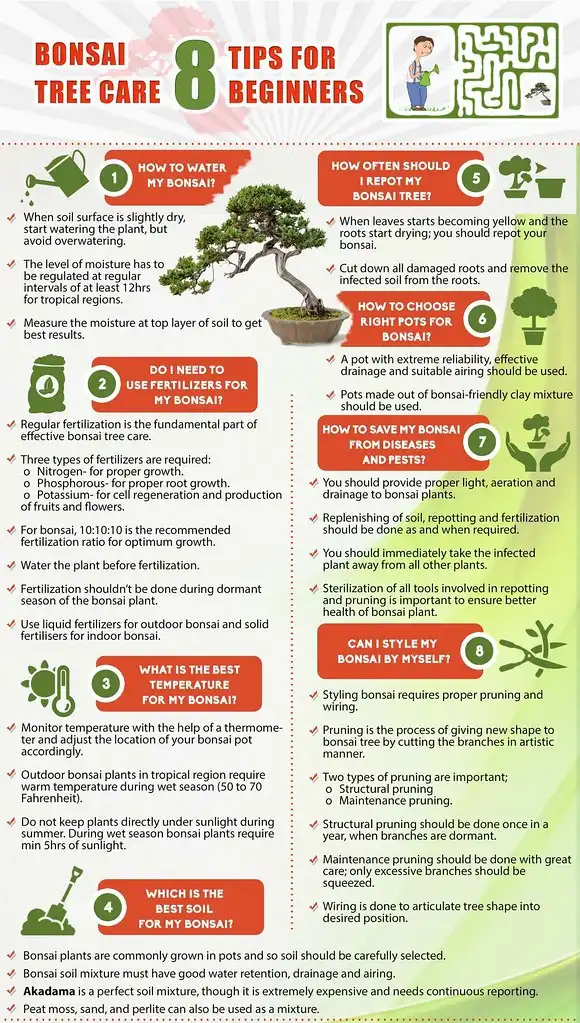
This guide is part of our Bonsai tree care guide series.
What you’ll need before you start



- Anodized aluminum wire in 1 mm, 1.5 mm, 2.5 mm, and 4 mm sizes
- Annealed copper wire for stronger conifers or thicker branches
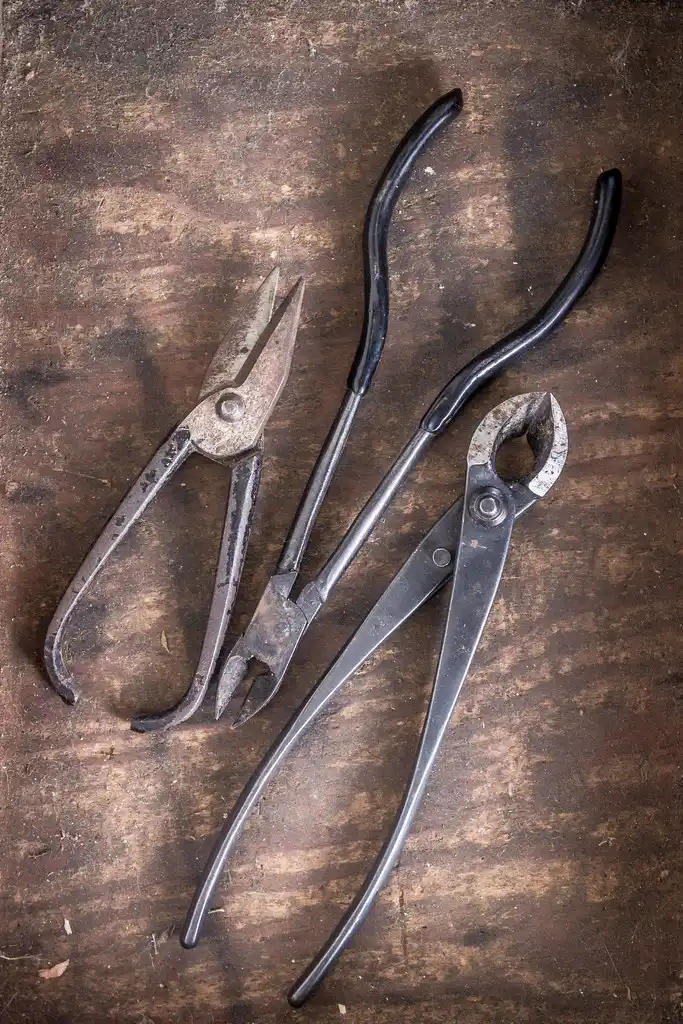
- Bonsai cutters or wire cutters
- A soft brush or cloth to clean bark and debris
- Raffia for thick branches that need extra bark protection
- Guy-wire material, usually 1 mm wire, for stiff branches
- Anchors such as roots, sturdy branches, or the pot
Set up the tree before you start
Put the tree where you can turn it freely and read the branch line from several angles. Cut wire lengths before you begin so you are not hunting for tools mid-wrap. If the tree was repotted recently, wait. If it is weak, heat-stressed, or pushing soft new growth, I hold styling until it steadies.
- Study the tree and choose only branches that already have some flexibility.
- Prune away shoots that block the wire path, but do not strip the tree bare.
- Pick wire about one-third the branch thickness.
- Anchor the wire, then wrap at a 45-degree angle with even spacing.
- Bend the branch only after the full run of wire is in place.
- Stop at the first sign of cracking, whitening bark, or strong spring-back.
- Check each wrapped branch before moving to the next one.
What bonsai wiring does for a first styling
Wiring bends and repositions bonsai branches in a way pruning cannot. It gives a branch memory of a new angle, which is why many shapes start with wire, not cuts. For a first styling, simple movement is enough. A small curve usually reads better than a forced pose that later splits or marks the bark.
When wiring should wait
Do not wire a tree that is weak, freshly repotted, or already stressed by heat. A branch under strain is more likely to crack, and a stressed tree may not heal cleanly around the wire. If the tree was repotted, let it recover first. If growth is soft and fast, wait for firmer tissue.
Start with simple branch positions
First-time stylists do better with one bend, one direction change, or one lowered branch. Avoid complex curls and crossed lines. Clean positioning teaches wire tension and branch response without stacking risk. I would rather get one branch right than force the whole tree at once.
When should you wire a bonsai?
Deciduous trees are easier to wire in late winter, when they have no leaves and the branch structure is visible. Many evergreens can be wired during steady growth periods, but avoid times when the tree is recovering, overheating, or pushing brittle soft growth. If the tree is weak, wait.
Best timing by tree condition
Late winter is the cleanest window for leafless deciduous material. Wiring during active growth can mark bark because branches thicken quickly and press into the wrap. If a tree was repotted recently, had heavy pruning, or is showing stress, delay wiring until it is stable again.
Which wire should you choose for your tree?
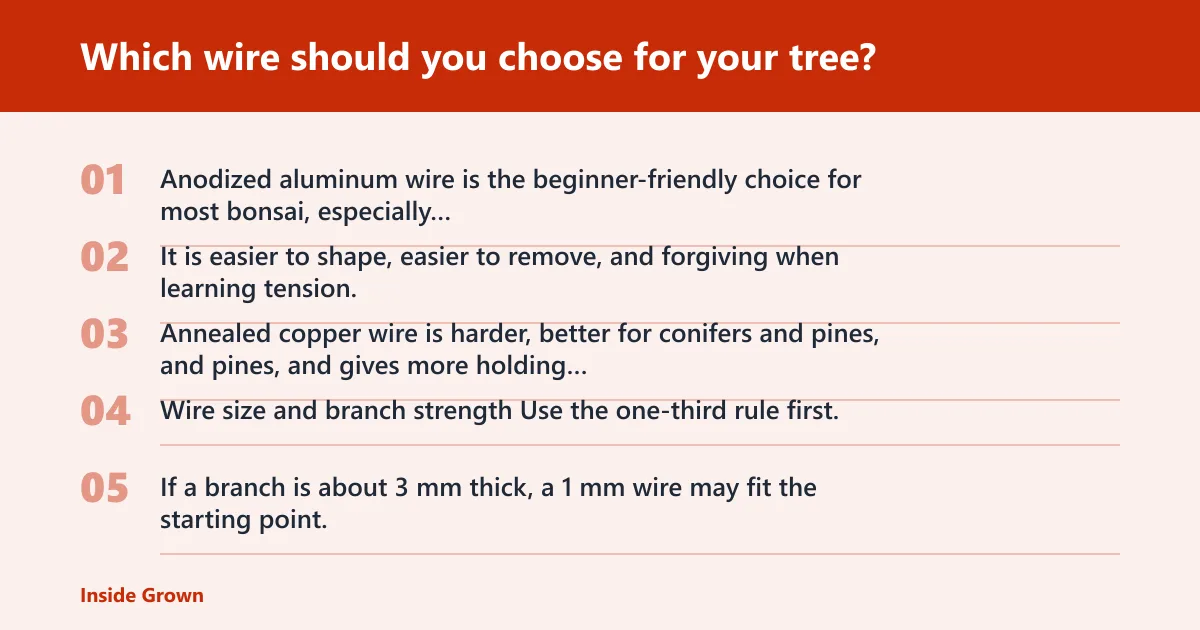
Anodized aluminum wire is the beginner-friendly choice for most bonsai, especially deciduous species. It is easier to shape, easier to remove, and forgiving when learning tension. Annealed copper wire is harder, better for conifers and pines, and gives more holding power on stronger branches, but it demands more control.
Wire size and branch strength
Use the one-third rule first. If a branch is about 3 mm thick, a 1 mm wire may fit the starting point. Common starter sizes are 1 mm, 1.5 mm, 2.5 mm, and 4 mm. General wire thickness runs from 1-8mm, but beginners usually work within the smaller end of that range.
For species, deciduous trees such as maple and elm usually accept aluminum well. Juniper and pine often need more holding power, so copper is common on stronger sections. Ficus can be wired with aluminum when growth is flexible, though thicker branches may need a stronger setup or a guy-wire instead of brute force.
Beginner wiring decision table
| Branch thickness | Tree type | Flexibility | Wire type | Wire diameter | Method |
|---|---|---|---|---|---|
| 1-2 mm | Elm, maple, ficus | Flexible | Anodized aluminum | 1 mm or 1.5 mm | Single wiring |
| 2-4 mm | Deciduous species | Moderately flexible | Anodized aluminum | 1.5 mm or 2.5 mm | Single wiring or double wiring |
| 3-5 mm | Juniper, pine | Firm | Annealed copper | 2.5 mm or 4 mm | Double wiring |
| 5 mm and up | Pine, old juniper | Stiff or brittle | Copper plus support | 4 mm or guy-wire at 1 mm | Guy-wire, often with raffia |
How do you wire a bonsai tree for the first time?
Begin by choosing a branch that already bends a little and can hold a new angle without cracking. Prune only what blocks the wire path, anchor the wire firmly, and wrap at a 45-degree angle. Bend only after the branch is fully wired, then stop before the bark whitens or splits.
Single wiring and double wiring
Single wiring runs from base to tip on one branch and is often the simplest method for the remaining branches. Double wiring uses one piece of wire for two similar-thickness branches, and the wire should wrap around the trunk at least once, preferably twice, so the pair stays anchored while you shape them.
How to bend without breaking
Move the branch in small stages, pausing between each shift rather than pulling it hard in one go. Support the branch with your fingers near the bend point, then make one clean move. If resistance climbs suddenly, stop. A branch that gives a little is a candidate for styling; a branch that creaks or whitens needs a different plan.
How do you choose between single wiring and double wiring?
Use single wiring for branches that stand alone or differ too much in thickness to share support. Use double wiring when two nearby branches are similar in thickness and direction. For thick, old, or brittle branches, switch to guy-wires instead of forcing a heavy bend through normal wrap tension.
When raffia and guy-wires belong in the plan
Raffia is useful on thick branches that need extra bark protection during bending. Soak it in water before wrapping so it lies flatter and grips better. Guy-wires anchor to roots, sturdy branches, or the pot, and they are often made with 1 mm wire. They are the safer choice when the branch is too stiff for normal wrapping.
Common mistakes
Beginner damage often comes from three common errors: overbending, using the wrong wire size, and leaving wire on too long. Overbending creates a single stress point. Wire that is too thin will not hold the shape. Wire that is too thick is hard to remove cleanly and can bite into bark fast.
How to spot trouble early
Wire bite shows as bark swelling around the coils. The branch may also thicken under the wrap during the growing season and trap the wire. Crossing wires adds pressure points and makes removal messy. If the bark starts to mark, remove the wire before the cut gets deeper.
If that didn’t work, try this next
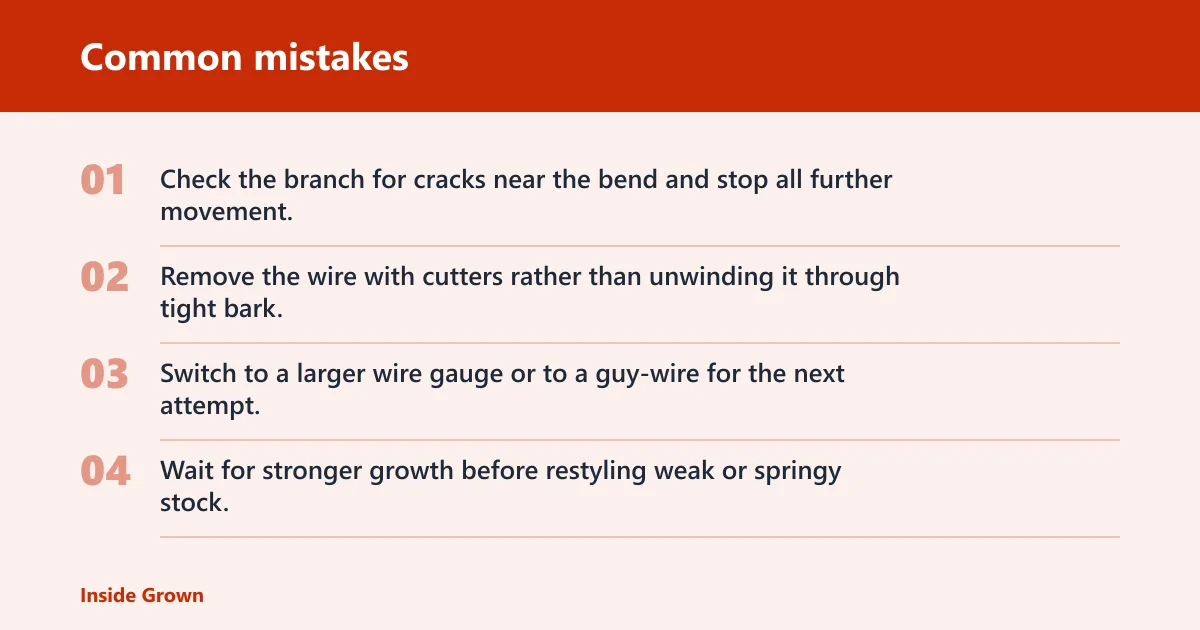
- Check the branch for cracks near the bend and stop all further movement.
- Remove the wire with cutters rather than unwinding it through tight bark.
- Switch to a larger wire gauge or to a guy-wire for the next attempt.
- Wait for stronger growth before restyling weak or springy stock.
Prevention
Inspect wired branches often during the growing season. Branches can grow around wire in 1-4 months, and many take a few months to set in their new position. Remove wire before it cuts in, especially on deciduous trees that thicken fast after late winter wiring.
How long should bonsai wire stay on branches?
Leave wire only until the branch holds its new position, then remove it before it scars. In active growth, that may be sooner than expected because branches can grow around the wire in 1-4 months. Check it regularly, especially on deciduous trees and on branches that were wired early in the season.
Aftercare after wiring
Watch for bark swelling, wire bite, and any change in the branch line. If the wrap starts to sink, clip it off in sections. Do not wait for a deep mark. A clean removal preserves the bark and keeps the branch usable for later styling.
Can I wire a bonsai if I’m a complete beginner?
Yes, if the branch is flexible, the tree is healthy, and the plan stays simple. Start with anodized aluminum, work on one branch at a time, and avoid thick brittle material until the basics feel controlled. Beginners do best when they wire less and observe more.
Shopping checklist for a first wiring session
Buy the essentials first: aluminum wire, cutters, and a way to clean the bark. Add copper only if the tree or branch strength calls for it. Keep raffia and guy-wire supplies as optional extras for thick, old, or brittle branches that need more support than normal wrapping can give.
Frequently asked questions
How do you wire a bonsai tree for the first time?
Pick one flexible branch, prune only what blocks the wire path, and use anodized aluminum around one-third the branch thickness. Anchor the wire, wrap at a 45-degree angle, then bend slowly after the branch is fully wired. Stop the moment bark turns pale or the branch starts to crack.
What wire size should I use for bonsai branches?
Start with 1 mm, 1.5 mm, 2.5 mm, and 4 mm wire, then match the wire to branch thickness using the one-third rule. Thin shoots often take 1 mm or 1.5 mm. Firmer branches usually need 2.5 mm or 4 mm to hold shape without slipping.
Should I use aluminum or copper wire for bonsai?
Use anodized aluminum for most first-time work because it is easier to handle and remove. Choose annealed copper for pines, conifers, and stronger branches that need more holding power. Copper demands more control, so it fits better once wire tension and bend pressure feel familiar.
When is the best time to wire a bonsai?
Wire deciduous trees in late winter when the branches are visible and leafless. Many evergreens can be wired when growth is steady, but avoid wiring after heavy pruning, recent repotting, or heat stress. A stable tree takes wire better than one that is already struggling.
How long should bonsai wire stay on branches?
Keep it on only until the branch holds its new position, then remove it before it cuts into the bark. Growth can trap wire in 1-4 months, and fast-thickening branches may need checking every couple of weeks during active growth. Remove early if the bark starts to swell around the coils.
How do I bend bonsai branches without breaking them?
Bend in small stages after the branch is fully wired. Support the branch near the bend point, then move it once and reassess. If the branch creaks, whitens, or snaps back hard, stop and choose raffia or a guy-wire for more support instead of forcing the bend.
Do I need to prune before wiring a bonsai?
Only prune what gets in the way of wiring or blocks the final branch line. Heavy pruning before styling can remove the very shoots that help build movement. A light trim makes the wire path clear, while leaving enough foliage to keep the tree strong during recovery.
Can I wire a bonsai if I’m a complete beginner?
Yes, as long as the tree is healthy and the first styling stays simple. Start with flexible deciduous material or a forgiving evergreen branch, use aluminum, and avoid thick brittle wood. If the branch resists hard, switch to a guy-wire rather than fighting it with stronger pressure.