How Long Does It Take to Grow Dawn Redwood Bonsai
The dawn redwood, or Metasequoia glyptostroboides, is a living fossil that captivates bonsai enthusiasts with its rapid growth, dramatic seasonal changes, and prehistoric lineage. Cultivating this majestic tree as a bonsai is both a challenge and a rewarding journey, demanding patience, skill, and a deep understanding of horticultural principles. The burning question for many aspiring bonsai artists is: How long does it take to grow a dawn redwood bonsai? The answer is nuanced, influenced by factors such as propagation method, climate, care routines, and personal expectations for bonsai maturity.
This article dives deep into the timeline and process of developing a dawn redwood bonsai, from seedling to show-worthy specimen. Drawing from scientific research, expert opinions, and real-world case studies, we’ll explore each stage of growth, the care required, and the milestones you can expect along the way.
Whether you’re a beginner or a seasoned bonsai grower, you’ll find actionable advice, data-driven comparisons, and authoritative resources to guide your dawn redwood bonsai journey.
Key Takeaways
- Dawn redwood bonsai can reach a basic form in 3–5 years, but full refinement may take 8–15 years.
- Growth speed depends on factors like propagation method, climate, soil, and care practices.
- Proper pruning, repotting, and training are essential for shaping and maintaining health.
- Real-world examples show accelerated timelines with advanced techniques and optimal conditions.
- Dawn redwood’s unique characteristics—rapid growth, deciduous foliage—impact bonsai development.
- Expect ongoing maintenance and adaptation as your tree matures.
Understanding Dawn Redwood: Botanical Profile And Bonsai Potential
The Origin And Characteristics Of Metasequoia Glyptostroboides
The dawn redwood is one of only three living species of redwoods, discovered in China in 1941 and later introduced worldwide. This deciduous conifer stands out with its feathery foliage, fast growth, and striking orange-brown bark. In nature, dawn redwoods can reach heights of 100 feet or more, but as bonsai, they are carefully miniaturized and shaped.
Key characteristics:
- Rapid growth rate: Up to 2–3 feet per year in youth.
- Deciduous foliage: Drops leaves in autumn, rare among conifers.
- Fine branching: Ideal for bonsai aesthetics.
- Tolerant of wet conditions: Prefers moist soil but adapts to typical bonsai environments.
The dawn redwood’s remarkable ability to adapt to different climates and soil conditions has made it a favorite in botanical gardens and arboretums worldwide. Its discovery as a “living fossil” — a term used to describe species unchanged for millions of years — has further elevated its allure among plant collectors and bonsai artists, who appreciate its tangible connection to Earth’s distant past.
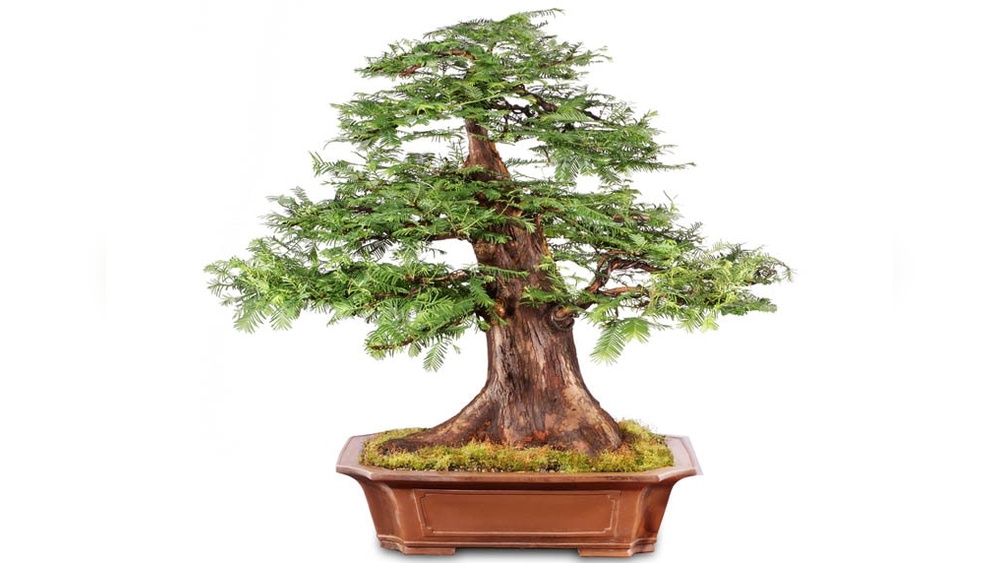
The tree’s foliage is soft and feathery, emerging a bright lime green in spring and deepening to a lush green in summer. In autumn, the needles turn a warm bronze or russet hue before falling, offering a striking seasonal display that contrasts with most evergreen conifers used in bonsai.
The bark, fibrous and reddish-brown, develops attractive fissures and texture with age, adding to the tree’s visual interest.
Why Dawn Redwood Is Popular For Bonsai
- Fast growth enables quicker shaping compared to slow-growing species.
- Beautiful seasonal changes—spring green, autumn bronze, winter bare.
- Historical significance: A “living fossil” with ancient lineage.
- Resilience: Handles pruning and repotting well.
Additionally, dawn redwood bonsai can be forgiving for beginners. Their robust constitution allows them to recover from pruning mistakes and adapt to a variety of training styles. The species’ adaptability means that it can thrive in full sun or partial shade and tolerate a range of temperatures, making it accessible for growers in many regions.
Another appealing aspect is the tree’s versatility in bonsai art. Whether you prefer single-trunk, group plantings, or dramatic forest compositions, the dawn redwood’s straight trunk, fine branching, and upright growth habit offer a strong foundation for creativity.
Common Bonsai Styles For Dawn Redwood
- Formal upright (Chokkan): Showcases strong central trunk.
- Forest (Yose-ue): Multiple trees create a woodland scene.
- Informal upright (Moyogi): Naturalistic curves and branching.
The formal upright style highlights the tree’s inherent symmetry and vigor, while the forest style utilizes multiple saplings or cuttings to mimic a natural grove—a scene reminiscent of the ancient forests where Metasequoia once dominated. The informal upright style allows for more organic movement in the trunk, echoing the shapes found in wild dawn redwoods shaped by wind or competition for light.
While less common, cascade and semi-cascade styles can also be attempted with careful training, though the species’ natural growth habit tends toward verticality.

Dawn Redwood Bonsai Growth Timeline: From Seed To Maturity
Seedling Stage (year 0–2): Germination And Early Growth
Starting from seed, dawn redwoods germinate quickly—usually within 1–3 weeks. Seedlings grow vigorously in their first two years, reaching 6–18 inches in height. This stage is crucial for establishing strong roots and a healthy trunk.
Key steps:
- Sow seeds in moist, well-draining soil.
- Provide bright, indirect light and consistent moisture.
- Transplant to larger pots as roots expand.
During this early phase, the focus should be on maximizing root health and trunk thickness rather than immediate shaping. Dawn redwood seedlings are susceptible to damping off, a fungal issue common in overly wet conditions, so careful watering and good air circulation are critical.
Fertilization should be light—overfeeding can lead to weak, leggy growth.
Allowing seedlings to grow freely for their first year or two helps build vigor. Once the trunk reaches pencil thickness, selective pruning and wiring can begin. At this stage, the taproot can be gently reduced to encourage lateral root growth, essential for future nebari (surface root flare) development.
Young Tree Stage (year 2–5): Training Begins
By year two, dawn redwood saplings can be pruned and wired to start forming a bonsai shape. Growth remains robust, with annual gains of 12–24 inches unless actively restricted.
Training activities include:
- Initial pruning: Establish trunk taper and basic branch structure.
- Wiring: Shape trunk and primary branches.
- Repotting: Every 1–2 years to encourage root development.
Wiring should be monitored closely; the species’ fast growth means wire can bite in and scar bark within weeks. During this stage, you can begin selecting the tree’s front view and removing unwanted branches to set the foundation for future branch pads.
Dawn redwood responds well to trunk chops and directional pruning, which can be used to induce taper and movement.
Repotting at this stage is not only about root control but also about shifting the tree into progressively smaller or shallower containers, which helps transition it from nursery stock appearance to the proportions expected in bonsai. Applying a slow-release organic fertilizer supports healthy but controlled growth.
Pre-bonsai Stage (year 5–8): Structural Refinement
At 5–8 years, your dawn redwood is transitioning into a pre-bonsai, with a visible form but lacking full refinement. Growth rate begins to slow as root pruning and container size restrict vigor.
Focus areas:
- Secondary branch development: Finer twigs and ramification.
- Nebari formation: Exposed root base for visual interest.
- Leaf reduction techniques: Promotes smaller foliage.
This is the time to focus on finer details. Regular pinching of new shoots encourages the development of secondary and tertiary branching, which creates the delicate silhouette prized in mature bonsai. Leaf size can be gradually reduced through defoliation and careful management of nutrients and water.
Nebari development becomes a priority in this phase. Exposing surface roots and spreading them evenly around the trunk base creates a sense of age and stability. This may involve root work during repotting, including radial positioning and selective removal of downward-growing roots.
Mature Bonsai Stage (year 8–15+): Show-quality Tree
Achieving a show-quality dawn redwood bonsai typically takes 8–15 years, depending on starting material and care. The tree exhibits refined branching, a balanced silhouette, and a well-developed nebari.
Ongoing care:
- Seasonal pruning: Maintains shape and encourages ramification.
- Repotting: Every 2–3 years to sustain health.
- Defoliation and leaf trimming: Enhances miniature appearance.
At this advanced stage, the focus shifts to maintaining and refining the tree’s form. Seasonal pruning, especially in late winter before bud break, keeps the silhouette crisp and encourages back-budding. Show preparation may include cleaning the bark, refining the soil surface with moss, and carefully arranging branches for the best visual impact.
Long-term health becomes paramount; as roots fill the pot, periodic repotting with fresh soil prevents compaction and root-bound conditions. Mature dawn redwood bonsai can be exhibited in local and national shows, where subtle details like branch placement, ramification, and trunk texture set apart top specimens.
| Stage | Timeline | Key Activities | Expected Height |
|---|---|---|---|
| Seedling | Year 0–2 | Sowing, watering, transplanting | 6–18 inches |
| Young Tree | Year 2–5 | Pruning, wiring, repotting | 18–36 inches |
| Pre-Bonsai | Year 5–8 | Branch refinement, nebari formation | 12–24 inches |
| Mature Bonsai | Year 8–15+ | Maintenance, show preparation | 12–18 inches |

Factors Influencing Dawn Redwood Bonsai Growth Rate
Propagation Method: Seed, Cutting, Or Nursery Stock
- Seed propagation: Slowest to mature; offers full control over trunk and roots.
- Cuttings: Faster initial growth; clone of parent tree.
- Nursery stock: Most rapid; starts with established trunk and roots.
Using nursery stock can shave years off the timeline, but seeds provide deeper bonsai artistry.
Cuttings, taken from vigorous parent trees in late spring or early summer, root readily in moist, well-aerated media. They often display faster early growth than seedlings and can inherit mature characteristics, such as bark texture and branching patterns. However, cuttings may lack a strong nebari unless root work is done early.
Nursery stock, available from garden centers or specialty bonsai suppliers, often features thick trunks and established roots. While this allows for rapid transformation into a bonsai shape, it can limit creative options for trunk movement and nebari unless drastic cuts and root pruning are performed.
Climate And Environmental Conditions
- Optimal temperature: 60–80°F for strong growth.
- Moisture: Prefers consistent watering; avoid drought.
- Light: Full sun for best foliage, but tolerates partial shade.
Dawn redwood is hardy in USDA zones 4–8, making it suitable for much of the United States. Cold winters induce dormancy, slowing annual progress but enhancing trunk and bark development.
Humidity plays a significant role in foliage health; high humidity encourages lush growth, while arid conditions can cause browning or leaf scorch. Protection from harsh, drying winds is advisable, especially in winter when the tree is dormant but still susceptible to desiccation.
Microclimates, such as sheltered patios or greenhouse benches, can extend the growing season and support faster development. However, beware of excessive heat and sun in summer, which can dry out shallow bonsai pots rapidly.
Soil Composition And Pot Selection
- Well-draining bonsai mix: Prevents root rot.
- Pot size: Smaller containers slow growth; larger pots accelerate early development.
A soil mix for dawn redwood should contain components like akadama, pumice, and lava rock, supplemented with organic matter such as pine bark or composted bark. This ensures moisture retention while preventing waterlogging—a critical balance for a species that enjoys moisture but resents soggy conditions.
Early in development, using a deeper training pot or colander can speed up trunk thickening and root mass formation. Transitioning to a shallow bonsai pot as the tree matures restricts growth, refines the silhouette, and supports leaf reduction.
Fertilization And Watering Practices
- Balanced fertilizer (NPK 10-10-10): Applied spring and summer.
- Watering: Keep soil moist but not saturated.
Over-fertilization can cause excessive growth and weaken bonsai form.
Dawn redwoods are heavy feeders during their active growth phase. Supplementing with trace minerals (such as iron, magnesium, and calcium) ensures vibrant foliage color and strong branch development. Liquid fertilizers can be alternated with slow-release pellets for steady nutrition.
During heatwaves or rapid growth spurts, the tree may require daily watering—sometimes twice daily in small pots. Consistent moisture is vital; even short periods of drought can cause leaf drop or dieback.
Pruning, Wiring, And Training Techniques
- Aggressive pruning: Reduces height, enhances branching.
- Wiring: Shapes trunk and branches; must be monitored to prevent scarring.
- Leaf trimming: Controls foliage size.
Advanced bonsai techniques such as “clip-and-grow” speed up refinement.
Dawn redwood responds well to trunk chops—cutting the main trunk to force new shoots lower down and create taper. Repeated cycles of growth and hard pruning, combined with selective wiring, allow for the development of movement and character in the trunk.
Leaf trimming, performed after the first flush of growth in late spring, reduces leaf size and encourages the development of finer twigs. However, complete defoliation should be approached cautiously, as it can stress the tree if performed too frequently or at the wrong time.
Pest And Disease Management
- Common threats: Aphids, spider mites, fungal infections.
- Preventive care: Inspect regularly, treat promptly with appropriate methods.
Healthy trees grow faster and are easier to train.
Integrated pest management (IPM) strategies, such as encouraging beneficial insects, using neem oil, or applying horticultural soaps, can keep pest populations in check. Good air circulation, avoidance of overhead watering, and prompt removal of fallen leaves help prevent fungal diseases.

Real-world Examples And Case Studies
Example 1: Seed-grown Dawn Redwood Bonsai
A bonsai grower in Oregon began with dawn redwood seeds in 2012. By 2017, the tree had reached 24 inches, with a defined trunk and basic branching. Through consistent pruning and repotting, the grower achieved a refined bonsai by year 10, suitable for display at local shows.
Key takeaways:
- Seed propagation requires patience but offers artistic control.
- Slow early growth can be accelerated with proper fertilization and sunlight.
This example underscores the importance of early root work and trunk development, as well as the satisfaction derived from shaping a tree from its earliest stages. The grower’s patience was rewarded with a uniquely styled bonsai, reflecting a personal vision not constrained by nursery stock limitations.
Example 2: Nursery Stock Acceleration
An enthusiast in New York purchased a 3-year-old dawn redwood sapling from a nursery. Within 5 years, the tree was transformed into a mature bonsai with advanced nebari and fine branching, thanks to intensive pruning and wiring.
- Nursery stock saves years compared to seeds.
- Aggressive training yields rapid results, especially with fast-growing species.
This approach is ideal for those who wish to see results sooner or are working toward a specific exhibition deadline. The trade-off is reduced flexibility in trunk shape and nebari, but with skillful pruning and root work, impressive bonsai can still be achieved.
Example 3: Professional Bonsai Artist’s Approach
A professional bonsai artist documented the transformation of a dawn redwood cutting over 8 years. By year 3, the cutting had established a thick trunk and robust root system. Advanced pruning and leaf reduction techniques produced a show-quality specimen by year 8.
- Expert techniques accelerate the timeline.
- Cuttings provide a balance between speed and artistic flexibility.
The artist emphasized the use of “clip-and-grow” methods for trunk movement and secondary branch development, along with meticulous attention to nebari and root spread from the earliest stages. This balanced approach yielded a visually compelling and structurally sound bonsai in less than a decade.
| Propagation Method | Time to Pre-Bonsai (yrs) | Time to Mature Bonsai (yrs) | Artistic Control |
|---|---|---|---|
| Seed | 4–6 | 10–15 | High |
| Cutting | 2–4 | 8–12 | Medium |
| Nursery Stock | 1–3 | 5–8 | Low |
Step-by-step Guide: Growing Dawn Redwood Bonsai Faster
Step 1: Choose The Right Starting Material
- Seeds: Best for deep artistry, longest timeline.
- Cuttings: Moderate speed, reasonable flexibility.
- Nursery stock: Fastest, suitable for beginners or those seeking quick results.
Consider your goals, available time, and desired level of control. Seeds allow you to influence every aspect of the tree’s development. Cuttings offer faster trunk thickening and often carry desirable traits from the parent. Nursery stock provides an instant “head start” but may come with limitations, such as inverse taper or coarse roots, that require remedial work.
Step 2: Optimize Soil And Pot Conditions
- Use a well-draining bonsai mix with organic matter.
- Start with a larger pot for early growth, then transition to smaller bonsai containers.
Early on, maximizing space for root growth helps thicken the trunk and build vigor. As you transition to a bonsai pot, root pruning and careful soil selection become crucial to maintain health and support fine ramification. Adding mycorrhizal fungi to the soil can enhance nutrient uptake and resilience.
Step 3: Apply Strategic Pruning And Wiring
- Prune aggressively in spring to establish main trunk and branches.
- Wire trunk and primary branches while young to avoid scarring.
- Remove unwanted branches to focus energy on desired shape.
“Clip-and-grow” is particularly effective with dawn redwood due to its rapid healing and response to pruning. Repeated cycles of cutting back new growth and allowing regrowth build taper and movement. Wiring should be removed promptly to prevent marks, as the bark is soft and scars easily.
Step 4: Manage Watering And Fertilization
- Water consistently, keeping soil moist but not soggy.
- Fertilize with balanced nutrients every 2–4 weeks during the growing season.
- Reduce feeding in winter to support natural dormancy.
Automated watering systems or capillary mats can help maintain consistent moisture during hot months. Foliar feeding can supplement root fertilization, especially in early spring when roots are still warming.
Step 5: Monitor For Pests And Disease
- Inspect foliage weekly for signs of insects or fungal issues.
- Treat early with organic or chemical solutions as appropriate.
Prompt action minimizes damage and prevents setbacks in development. Physical barriers, such as fine mesh over pots, can deter slugs and snails.
Step 6: Annual Repotting And Root Pruning
- Repot every 1–2 years for young trees, every 2–3 years for mature bonsai.
- Trim roots to encourage fine feeder roots and prevent pot-bound conditions.
Root pruning is best performed in early spring. Removing large, coarse roots and focusing on lateral spread promotes nebari and supports a compact, healthy root ball.
Step 7: Seasonal Leaf Reduction
- Apply leaf trimming techniques in late spring to reduce foliage size.
- Encourage fine twigs and ramification for miniature effect.
Partial defoliation—removing half the leaves from each branch—can be safer than full defoliation and still achieves the goal of leaf reduction and finer branching.
Comparing Dawn Redwood Bonsai Development To Other Species
Dawn redwood’s rapid growth distinguishes it from many popular bonsai species. Here’s a data-driven comparison:
| Species | Time to Mature Bonsai (yrs) | Growth Rate | Difficulty |
|---|---|---|---|
| Dawn Redwood | 8–15 | Fast | Medium |
| Japanese Maple | 10–20 | Moderate | Medium |
| Juniper | 12–25 | Slow | Low |
| Chinese Elm | 8–12 | Fast | Low |
| Pine (White/Black) | 15–30 | Slow | High |
Dawn redwood bonsai can be developed faster than most conifers, making it attractive for growers seeking quicker results.
The tree’s deciduous habit also sets it apart from most conifers in the bonsai world. While pines and junipers require years of “needle refinement” and slow branch development, dawn redwood’s annual cycle of shedding and regrowing foliage allows for rapid changes in shape and appearance.
This means mistakes can often be corrected within a single growing season, and new design directions can be pursued with flexibility.
Maintenance And Long-term Care Of Dawn Redwood Bonsai
Watering And Fertilization Routine
Dawn redwoods require consistent moisture—never let the soil dry out completely. Fertilize with a balanced NPK formula during the growing season, reducing frequency in winter.
- Spring/summer: Water daily, fertilize biweekly.
- Autumn: Reduce fertilization, monitor moisture.
- Winter: Minimal watering, no fertilizer.
In addition to basic fertilization, supplementing with chelated iron can prevent chlorosis (yellowing leaves), especially in alkaline water regions. Rainwater or distilled water is preferred if tap water is hard, as this can prevent salt buildup in shallow pots.
Pruning And Defoliation
Prune branches in early spring for structural refinement. Leaf reduction techniques in late spring encourage smaller foliage and denser branching.
- Clip-and-grow method: Encourages ramification.
- Leaf trimming: Can be repeated as needed.
Pinching new shoots throughout the growing season prevents overly long internodes and keeps the canopy compact. Removing strong vertical shoots, or “water sprouts,” redirects energy to horizontal branches, essential for the classic bonsai silhouette.
Repotting And Root Pruning
Repot every 2–3 years for mature bonsai. Trim roots to maintain size and health, using a well-draining mix.
- Best time: Early spring before leaf emergence.
When repotting, remove no more than one-third of the root mass at a time to prevent shock. Incorporate fresh soil and reestablish the nebari as needed. Moss or small ground covers can be added to the soil surface for aesthetics and moisture retention.
Pest And Disease Prevention
Dawn redwoods are generally hardy, but can be susceptible to:
- Aphids, spider mites: Treat with insecticidal soap.
- Fungal diseases: Use fungicides and improve air circulation.
Regularly cleaning dead leaves and debris from the soil surface helps reduce disease risk. If fungal issues arise, copper-based fungicides are effective, but always follow label directions to avoid phytotoxicity.
Winter Care And Dormancy
Dawn redwood bonsai require winter dormancy. Protect from freezing winds and extreme cold by placing in an unheated garage or cold frame.
- Mulch pots for insulation.
- Reduce watering; never let soil freeze solid.
If overwintering outdoors, place pots on the ground and mulch heavily to buffer soil temperatures. In regions with severe freezes, bring trees into a sheltered but unheated space, such as a shed or attached garage, until spring. Avoid keeping them indoors where temperatures stay above 45°F for long periods, as this can disrupt dormancy and cause weak growth.
Troubleshooting Common Challenges
Slow Growth Or Weak Development
- Possible causes: Insufficient light, poor soil, underwatering.
- Solutions: Move to sunnier location, repot with fresh soil, increase watering.
Check for compacted roots or salt buildup in soil, both of which can restrict growth. Flushing the soil with rainwater and loosening compacted soil at repotting can rejuvenate a sluggish tree.
Excessive Growth: Maintaining Bonsai Form
- Rapid growth may spoil shape.
- Control with pruning, smaller pots, and reduced fertilization.
If the tree becomes too vigorous, especially in early summer, skip one fertilization cycle and increase pruning frequency. Thinning dense areas of foliage improves light penetration and reduces leggy growth.
Leaf Drop Outside Of Autumn
- Stress response: May indicate overwatering, root rot, or pest infestation.
- Check roots and treat as needed.
Inspect for root rot by gently removing the tree from its pot and smelling the roots—healthy roots have a clean, earthy smell, while rotting roots are foul. Remove affected roots and repot in fresh, well-draining soil.
Branch Dieback
- Prune dead wood, improve air circulation.
- Inspect for fungal issues and treat promptly.
Dawn redwood can occasionally shed inner branches as it matures; this is normal, but sudden or widespread dieback signals a problem. After pruning, seal large cuts with bonsai paste to prevent infection.
Resources, Community, And Further Reading
For deeper guidance, connect with bonsai communities and authoritative sources:
- Wikipedia – Metasequoia glyptostroboides
- Bonsai Empire – Dawn Redwood
- Arbor Day Foundation – Dawn Redwood
- NCBI – Metasequoia Research
- Royal Horticultural Society – Metasequoia
- Bonsai Outlet – Growing Dawn Redwood Bonsai
Join bonsai clubs or forums for advice and inspiration. Attend shows and workshops to learn from experts and view mature dawn redwood bonsai.
Frequently Asked Questions
How Long Does It Take To Grow A Dawn Redwood Bonsai From Seed?
Growing from seed, a dawn redwood bonsai reaches a basic form in 3–5 years, but full refinement and maturity typically require 10–15 years. Early growth is vigorous, but shaping and branch refinement take time.
Can I Speed Up Dawn Redwood Bonsai Development?
Yes, you can accelerate growth by starting with cuttings or nursery stock, optimizing soil and watering, and applying advanced bonsai techniques such as aggressive pruning and wiring. However, true artistic refinement still requires patience.
What Is The Best Bonsai Style For Dawn Redwood?
Formal upright (Chokkan) and forest (Yose-ue) styles are most popular for dawn redwood due to its straight trunk and fine branching. Informal upright styles are also possible, reflecting the tree’s natural growth.
How Often Should I Repot Dawn Redwood Bonsai?
Young dawn redwood bonsai should be repotted every 1–2 years to encourage root development. Mature bonsai can be repotted every 2–3 years. Repot in early spring before leaf emergence.
Are Dawn Redwood Bonsai Difficult To Care For?
Dawn redwood bonsai are considered medium difficulty. They grow rapidly and handle pruning well, but require consistent moisture and protection from extreme cold. Their deciduous habit and fast growth present unique challenges.
Growing a dawn redwood bonsai is a journey that blends scientific understanding with artistic vision. With proper care, patience, and attention to detail, you can develop a stunning miniature version of this ancient tree in your own collection. Whether you start from seed, cutting, or nursery stock, the process offers a rewarding experience and a living connection to botanical history.