How to Force New Sprouts on Your Chinese Elm Bonsai
To force new sprouts on Chinese Elm Bonsai, you need to combine precise pruning with the right environmental triggers. This guide covers the exact steps and conditions that stimulate fresh growth, whether your tree is recovering from dormancy or needs filling out after a styling session.
For another bonsai-specific follow-up, Should You Immediately Repot Nursery Material Bonsai? Answered gives readers a related care or selection angle.
For another bonsai-specific follow-up, How To Grow Bonsai Trees From Seed Like A Pro Gardener gives readers a related care or selection angle.
For another bonsai-specific follow-up, Why Are Leaves Falling Off My Chinese Elm Bonsai? Solved gives readers a related care or selection angle.
Simply put, forcing new sprouts on Chinese Elm Bonsai requires pruning just above a leaf node or bud, providing 6-8 hours of bright indirect light, maintaining consistent moisture, and applying a balanced fertilizer during the active growing season. Success depends on timing and tree health.
Key Takeaways
- Force new sprouts on Chinese Elm Bonsai by pruning above leaf nodes during the active growing season for best results.
- Optimal light, temperature, and humidity are essential for triggering new sprouts on Chinese Elm Bonsai reliably.
- Avoid over-pruning and fertilizing at the wrong time to prevent tree stress and poor sprouting.
- Visible sprouts typically appear within 2-4 weeks under ideal conditions if the tree is healthy.

What is Chinese Elm Bonsai and Why Sprouting Matters
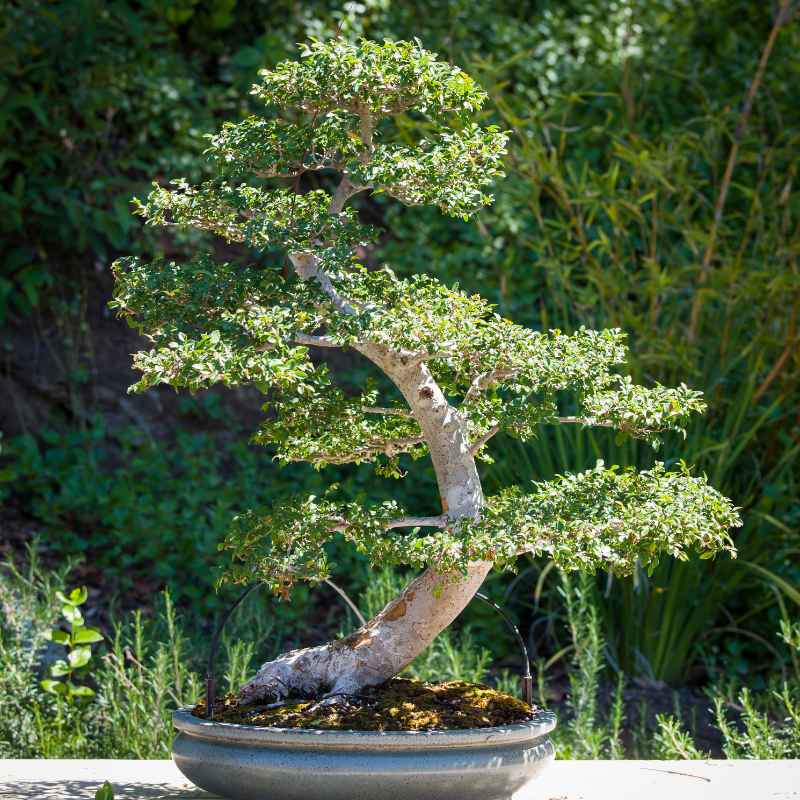
Chinese Elm (Ulmus parvifolia) is one of the most popular bonsai species worldwide. It is prized for its fine branching, small leaves, and remarkable ability to produce new growth even after heavy pruning. The tree responds vigorously when treated correctly, making it an excellent choice for beginners and experienced growers alike.
New sprouts are essential for maintaining the shape and density of your bonsai. Without fresh growth, the canopy becomes sparse, branches look bare, and the overall silhouette loses its appeal. Force new sprouts on Chinese Elm Bonsai to refill gaps, strengthen branch structure, and improve the tree’s long-term health.
When a Chinese Elm produces new sprouts, it signals that the root system is healthy and the tree is actively photosynthesizing. This process also allows you to correct previous styling mistakes by directing growth where it is most needed.
- Chinese Elm is a deciduous tree that can retain leaves year-round in warm climates
- New sprouts emerge from latent buds located along branches and the trunk
- Sprouting density directly affects the bonsai’s aesthetic balance and proportion
- Regular sprouting cycles indicate strong root health and proper care
- The species can be forced to sprout even in less-than-ideal conditions with the right techniques
- Younger trees sprout more readily than older, more established specimens
- Sprouting also helps heal pruning wounds faster by increasing sap flow
Important: Chinese Elm is a resilient species, but forcing sprouts on a weak or diseased tree can cause permanent damage. Always assess tree health before attempting to stimulate new growth.
How to Assess Your Bonsai Before Forcing Growth
Before you try to force new sprouts on Chinese Elm Bonsai, you need to check the tree’s condition. A stressed or unhealthy tree will not respond well to pruning or environmental changes. Start by examining the leaves, branches, and root system for any warning signs.
Look for yellowing leaves, black spots, or signs of pests like aphids and scale. Check the soil moisture level and make sure the roots are not waterlogged or dried out. If the tree has been recently repotted or suffered root loss, wait at least 4-6 weeks before attempting to force new sprouts.
Seasonal timing also plays a major role. The best time to force new sprouts on Chinese Elm Bonsai is during the active growing season, typically from early spring through late summer. Attempting to force growth during winter dormancy usually fails and can deplete the tree’s energy reserves.
- Inspect foliage for discoloration, spots, or pest activity
- Check soil moisture — it should be moist but not soggy
- Gently scratch the bark on a branch to see if the cambium layer is green
- Verify that the tree has been in its current pot for at least one full season
- Confirm that nighttime temperatures stay above 50°F (10°C) before starting
Warning: Do not force sprouts on a tree that has recently been repotted, defoliated, or treated with chemicals. Wait until the tree shows steady growth for at least one month before intervening.
| Indicator | Healthy Sign | Warning Sign |
|---|---|---|
| Leaf color | Deep green, uniform | Yellow, brown edges, spots |
| Bark condition | Smooth, no cracks | Peeling, brittle, discolored |
| Soil moisture | Moist, well-draining | Dry, compacted, waterlogged |
| Pest presence | None visible | Aphids, scale, spider mites |
This checklist helps you avoid wasting time and energy on a tree that is not ready. A healthy Chinese Elm will respond to the forcing process within 2-4 weeks.
Essential Conditions for Forcing New Sprouts on Chinese Elm Bonsai
Creating the right environment is just as important as the pruning itself. To force new sprouts on Chinese Elm Bonsai, you need to optimize light, temperature, humidity, and nutrition. Each factor plays a specific role in stimulating latent buds.
Light is the most critical factor. Chinese Elm needs bright, indirect sunlight for at least 6-8 hours per day. Direct afternoon sun can scorch leaves, but morning sun is beneficial.
If you are growing indoors, place the tree near a south or west-facing window or use a full-spectrum grow light positioned 6-12 inches above the canopy.
Temperature affects the tree’s metabolic rate. Chinese Elm responds best when daytime temperatures range between 65°F and 85°F (18°C to 29°C). Nighttime temperatures should not drop below 50°F (10°C).
Consistent warmth signals the tree that it is time to grow.
- Light: 6-8 hours of bright indirect light daily; supplement with grow lights if needed
- Temperature: 65-85°F (18-29°C) during the day, above 50°F (10°C) at night
- Humidity: 40-60% relative humidity; use a humidity tray or mister
- Watering: Keep soil evenly moist but never soggy; water when the top inch feels dry
- Fertilizer: Use a balanced liquid fertilizer (10-10-10) every two weeks during active growth
- Air circulation: Gentle airflow prevents fungal issues and strengthens new sprouts
Tip: Place a humidity tray filled with pebbles and water beneath your bonsai pot. Evaporation creates a microclimate that encourages sprouting without overwatering the roots.
According to the American Bonsai Society, Chinese Elm grown indoors with supplemental lighting produces new sprouts up to 40% faster than trees relying solely on window light. If you are serious about forcing growth, invest in a quality grow light.
Step-by-Step: How to Force New Sprouts on Chinese Elm Bonsai
Now it is time to apply the techniques. Follow this step-by-step process to force new sprouts on Chinese Elm Bonsai reliably. Each step builds on the previous one, so do not skip ahead.
Step 1: Prune Strategically Above Leaf Nodes
Use sharp, clean bonsai shears to cut branches just above a leaf node or outward-facing bud. Cut at a slight angle to prevent water from pooling on the cut surface. Remove no more than 30% of the foliage in a single session to avoid shocking the tree.
Step 2: Increase Light Exposure Gradually
Move the tree to a brighter location or add a grow light. Increase light intensity over 3-5 days to prevent leaf burn. Monitor the leaves for signs of stress like curling or bleaching.
Step 3: Adjust Watering and Fertilization
Water the tree thoroughly after pruning, then maintain consistent moisture. Apply a balanced fertilizer (10-10-10) diluted to half strength every two weeks. Do not fertilize immediately after pruning — wait 5-7 days.
Step 4: Boost Humidity Around the Tree
Mist the foliage lightly each morning or use a humidity tray. Grouping your bonsai with other plants can also raise ambient humidity. Avoid misting in the evening to reduce fungal risks.
Step 5: Monitor and Wait for Sprouts
Check the tree daily for small bumps or green tips near the cut sites. Sprouts usually appear within 14-28 days. Once you see new growth, continue the same care routine and do not prune again until the sprouts have at least 4-6 leaves.
- Prune above a leaf node on branches that need filling
- Place the tree in bright indirect light for 6-8 hours daily
- Water when the top inch of soil feels dry
- Fertilize every two weeks with a balanced, half-strength formula
- Maintain 40-60% humidity using a tray or mister
- Wait 2-4 weeks for visible sprouts to emerge
Tip: Take a photo of your tree before pruning and every 5 days afterward. This helps you spot subtle changes in bud development that you might miss with daily observation.
prune Chinese Elm to force new sprouts |title: Pruning points for forcing new sprouts on Chinese Elm–>
Pruning Techniques That Trigger New Sprouts
Not all pruning techniques produce the same result. To force new sprouts on Chinese Elm Bonsai in specific areas, you need to choose the right method for each branch and goal. Three techniques work especially well for this species.
The first technique is pinch pruning. Use your fingers or tweezers to remove the soft tip of a growing shoot. This stops elongation and forces the tree to push out side buds lower on the branch.
Pinch pruning is ideal for building ramification and density in the canopy.
The second technique is hard cutting. Use shears to cut a branch back to a point where you want new growth to emerge. Make the cut just above a leaf node that faces the direction you want the new branch to grow.
Hard cutting is more aggressive and works best on thicker branches that need shortening.
The third technique is partial defoliation. Remove some of the larger leaves on a branch to expose latent buds to light. This method triggers sprouting without removing the entire branch.
Partial defoliation is useful when you want to fill out an area that already has some foliage but looks sparse.
| Technique | Best For | Sprout Time | Risk Level |
|---|---|---|---|
| Pinch pruning | Canopy density | 10-14 days | Low |
| Hard cutting | Branch shortening | 14-28 days | Moderate |
| Partial defoliation | Filling sparse areas | 7-14 days | Low to moderate |
Choose the technique based on what you want to achieve. If you need quick density in the canopy, pinch pruning is safest. If you need to reshape a long branch, hard cutting gives you more control over where the new sprouts appear.
Common Mistakes When Forcing New Sprouts on Chinese Elm Bonsai
Even experienced bonsai growers make errors when trying to force new sprouts on Chinese Elm Bonsai. Avoiding these common mistakes will save you time and keep your tree healthy.
The most frequent mistake is over-pruning. Removing too many leaves or branches at once stresses the tree and reduces its ability to photosynthesize. Stick to removing no more than 30% of the foliage in a single session.
If you need to prune heavily, spread the work over two or three sessions spaced 2-3 weeks apart.
The second mistake is forcing sprouts during dormancy. Chinese Elm naturally slows down in winter, even indoors. Attempting to force growth during this period depletes energy reserves and can lead to weak, leggy sprouts that die back quickly.
Wait until early spring when the tree shows natural signs of activity.
The third mistake is inconsistent watering. Allowing the soil to dry out completely after pruning can kill the newly exposed buds before they have a chance to develop. On the other hand, overwatering leads to root rot, which also prevents sprouting.
Keep the soil evenly moist but not saturated.
- Over-pruning: remove no more than 30% of foliage per session
- Wrong season: force sprouts only during active growth (spring to late summer)
- Inconsistent watering: keep soil evenly moist — never bone dry or waterlogged
- Poor light: insufficient light is the top reason sprouts fail to appear
- Skipping fertilizer: new growth requires nutrients; feed every two weeks
- Ignoring pests: aphids and scale can kill tender new sprouts quickly
- Frequent moving: relocating the tree stresses it and delays sprouting
Warning: Do not use high-nitrogen fertilizer to force sprouts faster. Excess nitrogen produces soft, weak growth that attracts pests and diseases. Stick to a balanced 10-10-10 formula.
Bonsai Empire reports that improper watering is the leading cause of failed sprouting attempts among Chinese Elm growers. Check the soil moisture daily with your finger rather than relying on a schedule.
Aftercare for New Sprouts on Chinese Elm Bonsai
Once you successfully force new sprouts on Chinese Elm Bonsai, proper aftercare determines whether those sprouts develop into strong branches or wither away. The first few weeks are critical for establishing the new growth.
Do not prune the new sprouts until they have at least 4-6 leaves each. Premature pruning removes the energy-producing foliage that the tree needs to strengthen the new branch. Let the sprouts grow freely for 4-6 weeks before shaping them.
Continue the same care routine that triggered the sprouts: bright indirect light, consistent moisture, balanced fertilizer every two weeks, and 40-60% humidity. Gradually reduce humidity after the first month to encourage the sprouts to harden off and become more resilient.
Monitor the new sprouts for pest activity. Tender new growth attracts aphids and spider mites more than mature foliage. Inspect the undersides of leaves weekly and treat any infestations with insecticidal soap or neem oil at the first sign.
- Allow new sprouts to grow 4-6 leaves before any pruning
- Maintain the same light, water, and fertilizer routine
- Reduce humidity gradually after 4-6 weeks to harden sprouts
- Inspect for pests weekly, especially aphids and spider mites
- Repot only after the tree has shown steady growth for a full season
Tip: Rotate your bonsai every week to ensure all sides receive equal light. Sprouts on the shaded side tend to stretch and become leggy if not given adequate exposure.
Tools You Need to Force New Sprouts Successfully
Having the right tools makes it easier to force new sprouts on Chinese Elm Bonsai with precision and confidence. You do not need an expensive collection, but a few essential items will improve your results significantly.
A pair of sharp bonsai shears is the most important tool. Dull blades crush the branch tissue instead of cutting cleanly, which slows healing and sprouting. Concave cutters are ideal for larger branches because they create a wound that heals with a smooth surface.
Tweezers are useful for pinch pruning and removing dead leaves without damaging surrounding buds. A humidity tray or mister helps maintain the moisture levels that Chinese Elm prefers. A grow light is optional but highly recommended for indoor growers who cannot provide 6-8 hours of natural light.
| Tool | Purpose | Essential or Optional |
|---|---|---|
| Bonsai shears | Clean branch cuts | Essential |
| Concave cutters | Large branch removal | Optional |
| Tweezers | Pinch pruning, cleanup | Essential |
| Humidity tray | Local humidity boost | Essential |
| Grow light | Supplement natural light | Optional |
| Balanced fertilizer | Nutrient supply | Essential |
Invest in quality tools that stay sharp and comfortable in your hand. Cheap shears that dull quickly will make clean cuts harder to achieve and increase the risk of damaging the branch tissue. A well-maintained tool set lasts for years and pays for itself in better bonsai health.

Frequently Asked Questions
How long does it take to force new sprouts on Chinese Elm Bonsai?
Under ideal conditions, new sprouts typically appear within 14 to 28 days after pruning. Factors like light intensity, temperature, and tree health affect this timeline. If you see no signs of growth after 5-6 weeks, reassess your care conditions and tree health.
Can I force new sprouts on Chinese Elm Bonsai in winter?
It is not recommended. Chinese Elm enters a dormant or semi-dormant state in winter, even indoors. Forcing sprouts during this period drains the tree’s energy reserves and often produces weak growth.
Wait until early spring when the tree naturally wakes up.
How many leaves should I remove when pruning to force sprouts?
Remove no more than 30% of the total foliage in a single pruning session. Removing too many leaves reduces the tree’s ability to photosynthesize and delays sprouting. If you need to prune heavily, spread the work over multiple sessions 2-3 weeks apart.
Do I need fertilizer to force new sprouts on Chinese Elm Bonsai?
Yes, fertilizer is essential for providing the nutrients needed to produce new growth. Use a balanced liquid fertilizer (10-10-10) diluted to half strength every two weeks during the active growing season. Do not fertilize immediately after pruning — wait 5-7 days.
Why are my new sprouts turning yellow and falling off?
Yellowing and dropping sprouts usually indicate one of three issues: inconsistent watering, insufficient light, or pest infestation. Check the soil moisture daily, ensure the tree gets 6-8 hours of bright indirect light, and inspect for aphids or spider mites on the undersides of leaves.
Final Thoughts
Forcing new sprouts on Chinese Elm Bonsai is a rewarding process that improves your tree’s density, structure, and overall health. The key is to combine strategic pruning with optimal light, consistent moisture, and balanced nutrition during the active growing season. With patience and the right approach, you will see fresh growth within a few weeks and enjoy a fuller, more vibrant bonsai.