How Many Garlic Cloves Should You Plant in a Bed by Size?
Plant garlic 4 to 6 inches apart in every direction. In a 4×8-foot bed, that works out to roughly 100 cloves at 6-inch spacing, around 140 at 5 inches, or about 220 at 4 inches. Pack it too tight and bulbs stay small; space it too wide and you waste bed room and seed-garlic money. This guide lays out the spacing math for raised beds and small plots, plus how bulb size, total yield, and seed cost shift with each choice.
This guide is part of our Planting quantity guide series.
How many garlic cloves fit in a bed?
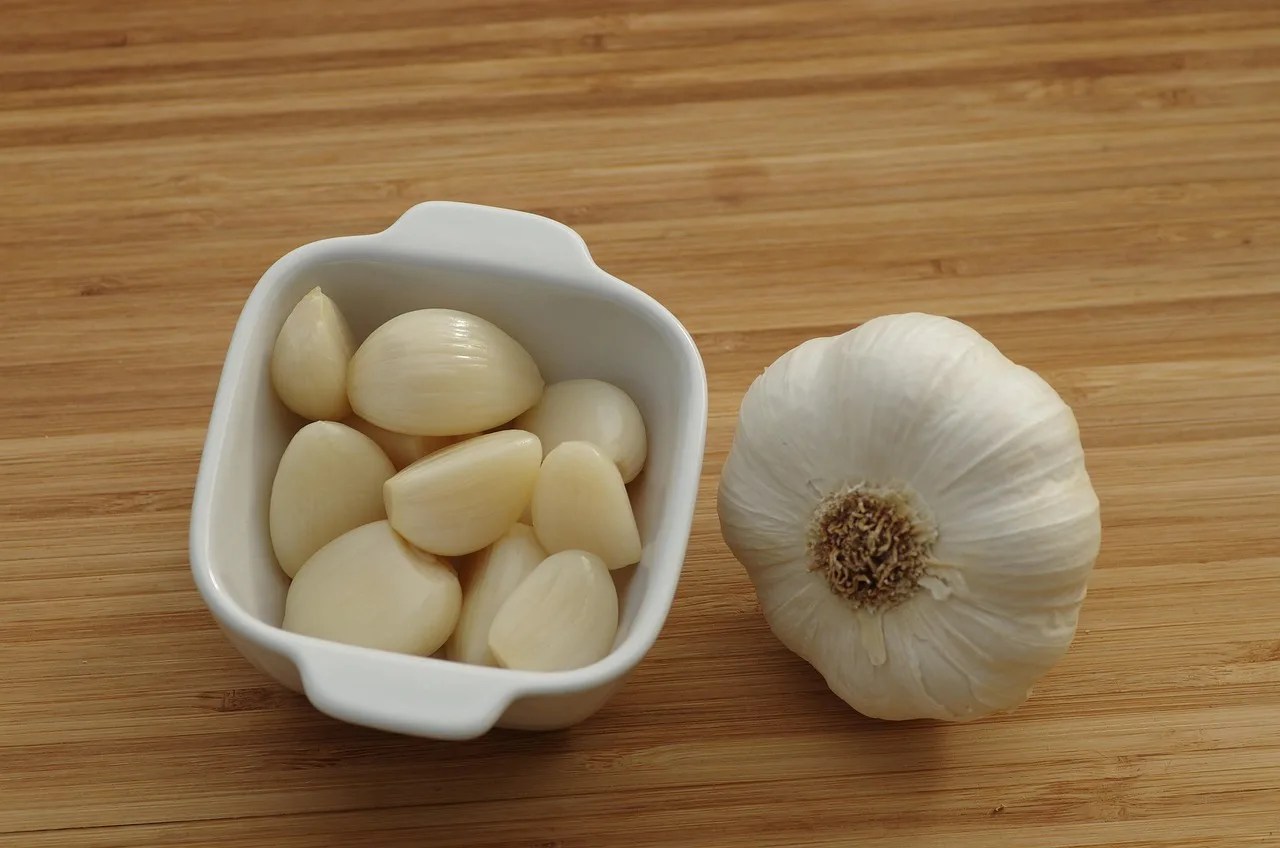
The short answer: bed size and spacing decide the count. A raised bed that is 2×4, 3×6, 4×4, or 4×8 feet can hold very different numbers of cloves, and the final number changes again when you leave border space at the ends and edges. In practice, one clove usually makes one bulb or plant.
Convert bed size into usable planting space
Start with the bed’s square footage, then subtract a little for edge room if you do not plant right against the sides. Garlic in a home garden is usually spaced 4 to 6 inches apart, which works out to about 4 to 9 plants per square foot. Tight 4-inch spacing equals 9 plants per square foot, standard 6-inch spacing equals 4 plants per square foot, and wide 8-inch spacing is about 3 plants per square foot.
Why end gaps and border space change the final count
In a real bed, I almost never plant to the exact edge. Soil settles, mulch needs room, and outer cloves compete with the bed wall for moisture and root space. If you leave a few inches at each end, the count drops a bit from the theoretical maximum. That tradeoff usually gives cleaner rows and larger bulbs on the outside edge.
Quick answer ranges for common bed sizes
For planning, use the square-foot math first, then trim the count if you want wider borders. A 2×4 bed gives you enough room for a modest garlic patch. A 3×6 bed fits a solid family supply. A 4×4 bed is compact but productive. A 4×8 bed is the workhorse size for most home gardeners.
According to Garlic Planting Calculator – Farmer Grows — Hardneck garlic is listed as a strong fit in zones 3 to 7.
What garlic spacing should you use?
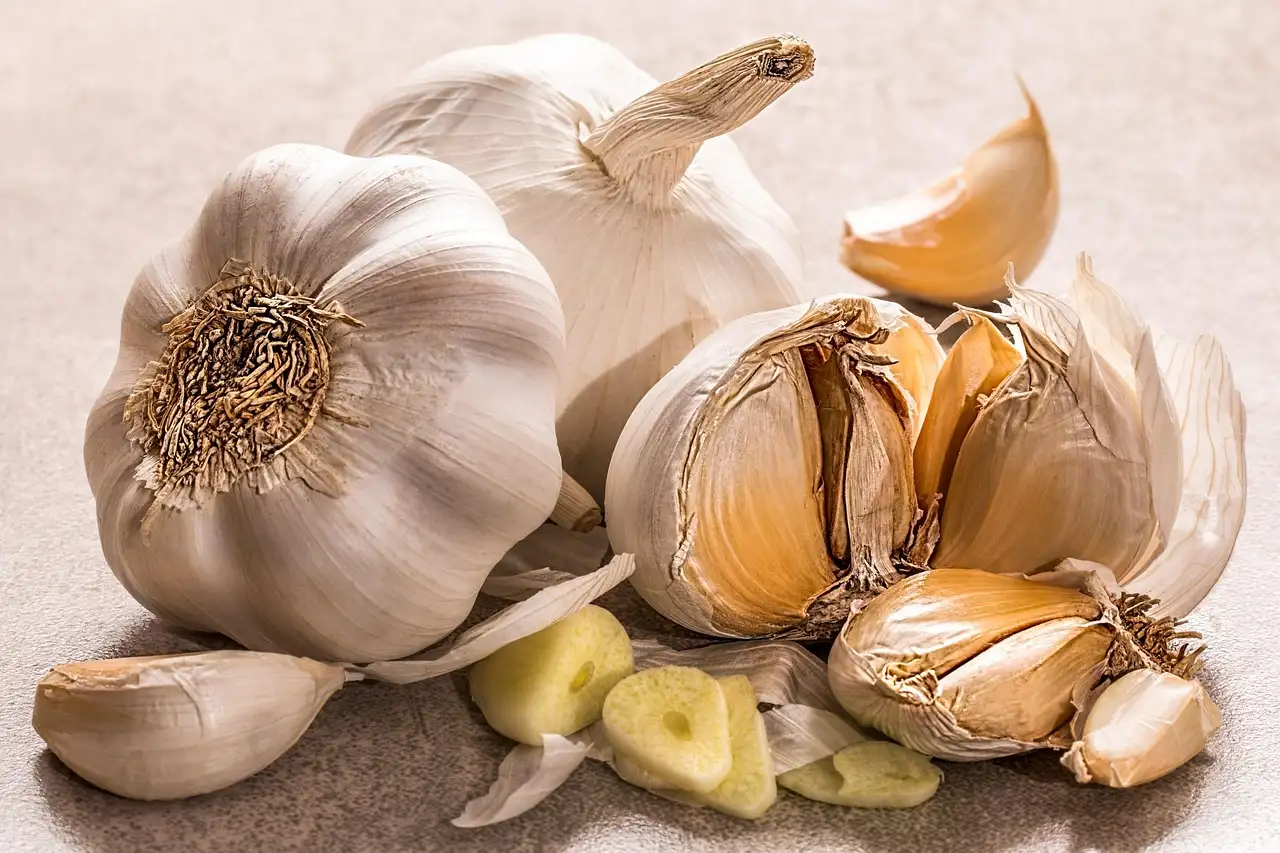
For most home gardens, garlic spacing falls in the 4 to 6 inch range, with 4 inches for tight planting and up to 8 inches for larger varieties or growers who want bigger bulbs. Standard rows are usually 10 to 12 inches apart for many hardnecks, while some softnecks and early types can run 9 to 10 inches. Elephant garlic needs much more room.
Standard home garden spacing at 4 to 6 inches
Four inches gives the highest plant count and usually the smallest average bulb size. Six inches is the middle ground most gardeners want because it keeps plants from crowding each other while still using the bed well. If you are short on seed garlic, 6 inches is usually the easier fit.
When 8-inch spacing makes sense
Use 8 inches when the variety makes large bulbs, when your soil stays wet, or when you want fewer but larger bulbs. Wide spacing also helps in beds that get uneven winter weather or heavy mulch. The tradeoff is plain: fewer plants, more room per plant, and higher seed-garlic cost per finished bulb.
How row spacing changes in raised beds
Raised beds work best with straight rows or a staggered grid that still keeps airflow open. Many hardnecks do well with 10 to 12 inches between rows. Softneck types and early types can be a touch tighter at 9 to 10 inches. Elephant garlic usually wants 18 to 24 inches between rows because the bulbs are so large.
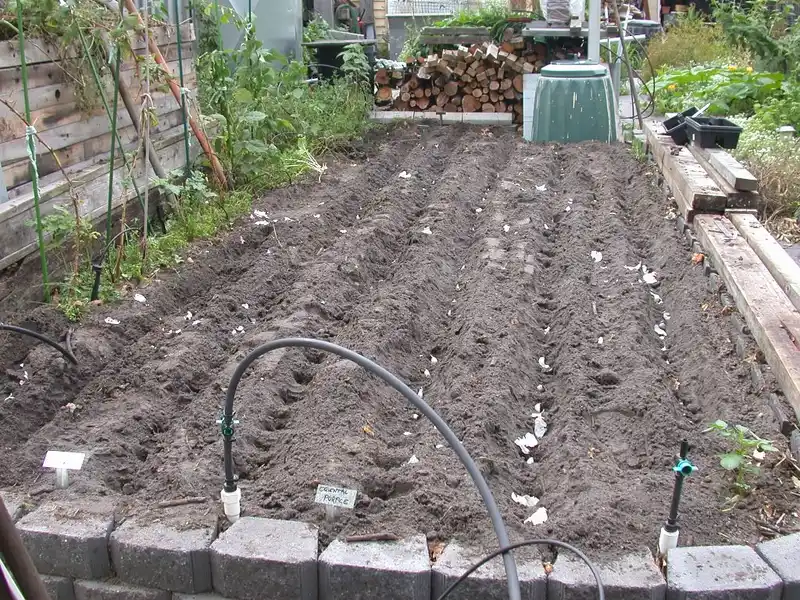
How many plants fit per square foot?
Use square-foot math as your fast estimate. At 4-inch spacing, you can fit 9 garlic plants per square foot. At 6-inch spacing, you get about 4 plants per square foot. That puts most home-garden plans in the 4 to 9 plants-per-square-foot range, depending on how tight you want the bed to run.
A simple way to estimate counts before you plant
Multiply bed square footage by your target density. A 12-square-foot bed at 4-inch spacing can take roughly 100 plants. The same bed at 6-inch spacing holds roughly 48 plants. If you do not want to count every square foot, this is the fastest planning tool before you buy seed garlic.
| Raised bed size | 4-inch spacing | 6-inch spacing | 8-inch spacing | Large-clove variety adjustment | When to reduce density |
|---|---|---|---|---|---|
| 2×4 ft | 72 cloves | 32 cloves | 18 cloves | Drop 10% to 20% for porcelain or other large bulbs | Wet soil, heavy mulch, or clove weights above 10 g |
| 3×6 ft | 162 cloves | 72 cloves | 36 cloves | Use the wider end of the spacing range for large-clove types | Short season, poor drainage, or winter heaving risk |
| 4×4 ft | 144 cloves | 64 cloves | 36 cloves | Reduce count if you are planting elephant garlic or very large bulbs | When rows are crowded enough to cut airflow |
| 4×8 ft | 288 cloves | 128 cloves | 72 cloves | Use fewer plants if cloves are large or soil stays damp | For wide bulbs, wet winters, or beds with shallow soil |
Does garlic variety change the count?
Yes. Garlic type changes spacing, row layout, and the final clove count. Hardneck garlic fits best in zones 3 to 7, while softneck garlic fits best in zones 8 to 10. That zone split matters because the match between variety and climate affects how confidently you can plant tight or wide.
Hardneck versus softneck spacing needs
Hardneck garlic often needs a bit more room in colder gardens because bulbs can get large and tops can grow hard. Softneck garlic can be planted somewhat tighter in milder zones when the bulbs are smaller and the season is longer. The bed math changes with that choice.
Where common varieties fit
Porcelain hardneck garlic typically uses 6 to 8 inch clove spacing. Rocambole hardneck garlic typically uses 6 inch spacing. Purple stripe hardneck garlic typically uses 5 to 6 inch spacing. Artichoke softneck garlic typically uses 4.5 to 6 inch spacing. Elephant garlic typically needs 10 to 12 inch spacing, which cuts the bed count fast.
Why elephant garlic needs more room
Elephant garlic is not planted like standard garlic. The cloves and resulting bulbs are much larger, so a crowded bed can leave you with undersized bulbs and poor airflow. Give it wider rows, wider in-row spacing, and more seed budget per square foot than you would use for ordinary hardneck or softneck garlic.
How many rows of garlic should go in a raised bed?
Most raised beds do well with two to four rows, depending on bed width and the garlic type. A 2-foot-wide bed often fits a single centered row or two narrow rows. A 3-foot bed commonly fits two rows. A 4-foot bed can handle three or four rows if the spacing stays open enough for airflow and weeding.
Use row width to protect bulb size
Do not squeeze extra rows into a bed just because the math allows it. If row spacing is too tight, you get smaller bulbs, more leaf crowding, and more disease pressure after wet spells. A slightly lower count with clean rows is usually the better plan.
Practical layout examples
- Mark the bed width first, then decide how many rows fit without crowding.
- Leave a small border at the ends if you want cleaner edging and easier mulch control.
- Space cloves within each row at 4 to 6 inches for standard garlic.
- Widen both row spacing and in-row spacing for large bulbs or elephant garlic.
- Back off density if the bed stays wet after rain or snow melt.
How much seed garlic do you need?
Seed garlic needs depend on both count and clove size. Small cloves weigh less, so you need fewer pounds to fill a bed. Large cloves weigh more, so the same bed can use a lot more seed by weight even if the clove count is similar. The quickest way to plan is to multiply your target clove count by average clove weight.
What clove weight means for seed-garlic cost
Examples help here. A 3 g clove lets you plant far more cloves per pound than an 18 g clove. At the light end, there are roughly 150 cloves per pound at about 3 g each. At the heavy end, there are roughly 25 cloves per pound at about 18 g each. That gap changes the budget fast.
Use clove weight to decide your bed plan
If you only have small cloves, a tighter plan may be the sensible choice because your seed supply stretches farther. If the cloves are large, wide spacing may fit the plant size better, but it also increases seed cost. A bed plan should balance bulb size, total yield, and seed-garlic cost, not chase the biggest plant count alone.
| Average clove weight | Approximate cloves per pound | Planning note |
|---|---|---|
| 3 g | about 151 | Best for stretching seed garlic in a bigger bed |
| 5 g | roughly 91 | Middle-ground seed size for standard beds |
| 7 g | roughly 65 | Good for many home-garden garlic types |
| 10 g | roughly 45 | Plan for fewer cloves per pound and larger bulbs |
| 18 g | about 25 | Fits large-clove planting, including elephant garlic |
How do spacing and timing affect bulb size?
Tighter spacing gives you more bulbs, while wider spacing gives each plant more room to size up. Plant in fall in cold-winter climates so roots develop before winter and tops are ready to resume growth in spring. That timing matters as much as spacing because garlic needs a long, cool start.
Fall planting windows by USDA zone
For zones 3 to 4, plant around September to October. For zones 5 to 7, plant roughly October to November. For zones 8 to 10, plant roughly November to January. Hardneck garlic is generally a better fit for cooler zones, while softneck garlic is usually better suited to milder zones.
When to reduce density in the real garden
Cut density if the bed holds water after rain, if winter heaving is common, or if you are planting large cloves that need more room. Wet soil and close spacing are a bad mix. You may get more bulbs on paper, but fewer marketable bulbs at harvest.
Spacing choice by goal
If your goal is maximum bulb size, lean wider. If your goal is maximum total yield, use standard spacing and keep rows tidy. If your goal is lower seed-garlic cost, plant the cloves you can spare at 6 inches and avoid overbuying large seed unless you need the bigger bulb size.
Frequently asked questions
How many garlic cloves should you plant in a 4×8 bed?
A 4×8 bed gives you enough room for a serious garlic crop, and the exact count depends on spacing. At 4 inches, the bed can fit about 288 plants by square-foot math. At 6 inches, it fits about 128. If you want larger bulbs, plan closer to 8 inches and expect a much lower count.
How many garlic plants fit per square foot?
Most home gardeners can fit about 4 to 9 garlic plants per square foot. Four-inch spacing gives 9 plants per square foot, while 6-inch spacing gives about 4. That range is useful when you are comparing varieties, seed supply, and the bulb size you want at harvest.
What spacing should you use for garlic cloves in a bed?
For standard beds, 4 to 6 inches apart is the usual target. Use 4 inches if you want a denser planting, 6 inches for a balanced plan, and up to 8 inches for larger bulbs or larger varieties. Row spacing should stay open enough for airflow and easy weeding.
Does garlic variety change how many cloves fit in a bed?
Yes. Porcelain hardneck, rocambole hardneck, purple stripe hardneck, artichoke softneck, and elephant garlic all ask for different spacing. A bed that fits many artichoke cloves may fit far fewer elephant garlic plants. The variety sets the spacing, and the spacing sets the final count.
How much seed garlic do I need for my bed size?
Count the cloves you plan to plant, then convert that count using average clove weight. A 3 g clove gives you far more cloves per pound than an 18 g clove. That difference decides whether a bed needs a small bag of seed or several pounds.
What garlic spacing gives bigger bulbs versus more bulbs?
Wider spacing usually gives bigger bulbs because each plant gets more light, moisture, and root room. Tighter spacing usually gives more bulbs but smaller ones. If you want a bed full of large heads, stay near the wide end of the range. If you want the most heads, stay near the tight end.