How Many Seed Potatoes Per Garden Bed? Plant Spacing Guide
Plan on roughly 1 seed potato per 1.5 to 2 square feet of bed space, which can work out to around 12 to 16 seed potatoes in a 4×8 bed when planted about 12 inches apart. Planting too close shrinks tubers, slows airflow between stems, and raises the odds of leaf and tuber disease. This guide gives a bed-size count table, then shows how to adjust spacing for potato type and seed-piece size.
This guide is part of our Planting quantity guide series.
Can potatoes grow in a raised bed?
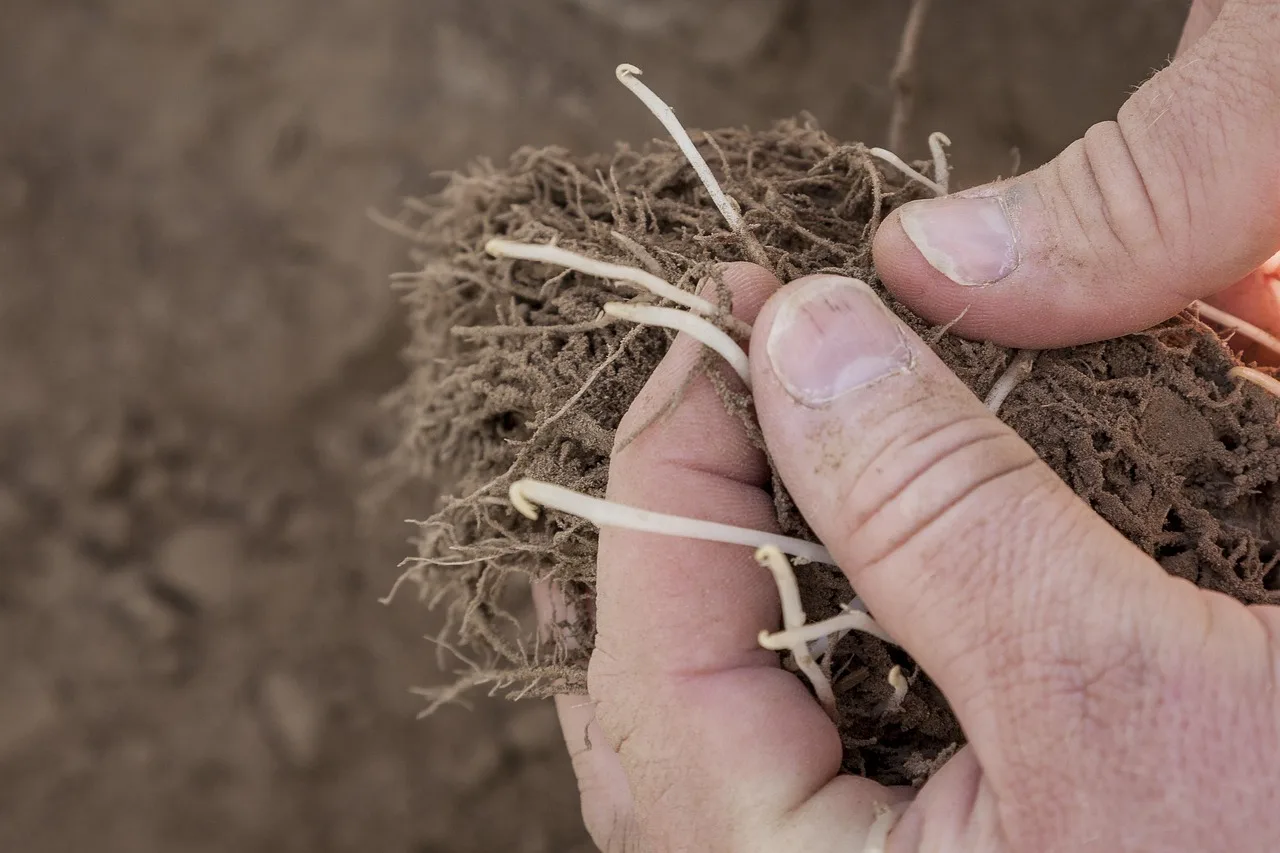


Yes, as long as the bed is deep enough, drains well, and gets full sun. A raised bed should be at least 12 inches deep, with soil that is loose enough for roots and tubers to move through it, yet able to hold moisture without staying wet. If the bed has a closed bottom, drainage holes matter.
Potatoes do best in a bed that holds soil but does not hold water. Compost or aged manure improves the bed, and hilling later keeps developing tubers covered from light so they do not turn green.
📊 Potatoes need full sun for at least 6 hours a day. Source: How to Grow Potatoes in Raised Beds (Step-by-Step Guide….
What you’ll need before planting
- Seed potatoes with at least one eye; certified disease-free stock is preferred.
- A raised bed at least 12 inches deep.
- Loose, well-draining soil mixed with compost or aged manure.
- A ruler or tape measure for spacing.
- A trowel, hand rake, and watering can or hose.
- Optional: extra soil or straw for hilling.

How many seed potatoes do you need?
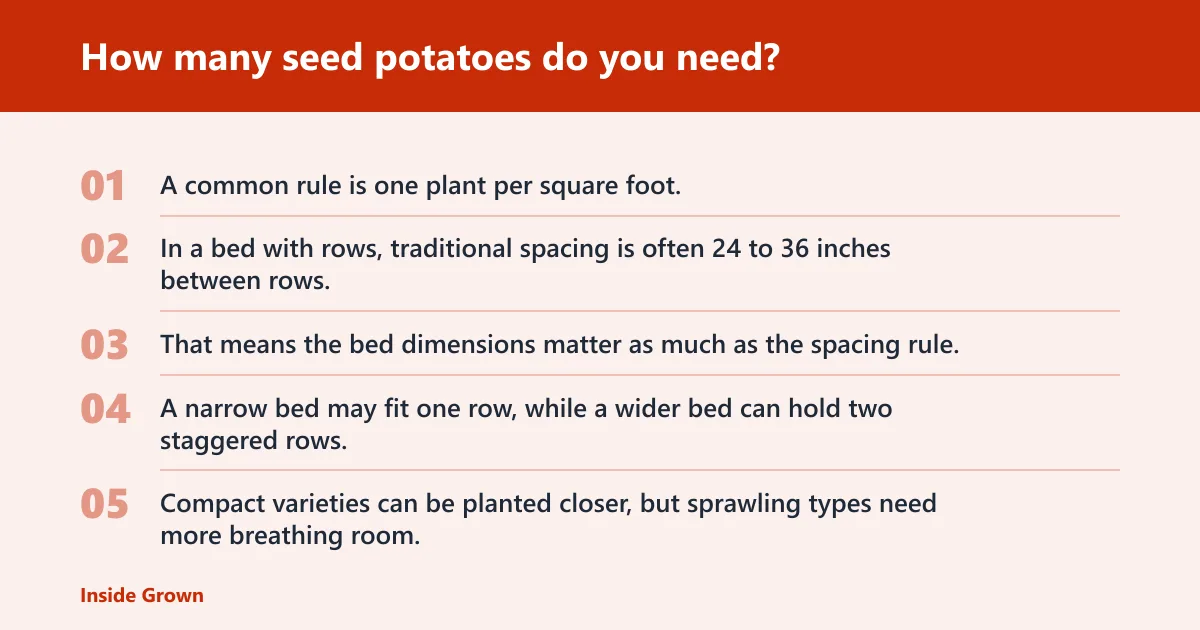
Use bed area to estimate the count. A common rule is one plant per square foot, and many potato guides recommend planting about 12 inches apart. In a bed with rows, traditional spacing is often 24 to 36 inches between rows, with one potato every 12 inches in the trench.
That means the bed dimensions matter as much as the spacing rule. A narrow bed may fit one row, while a wider bed can hold two staggered rows. Compact varieties can be planted closer, but sprawling types need more breathing room.
| Raised bed size | Seed potatoes at standard spacing | Closer spacing for compact varieties |
|---|---|---|
| 4 x 4 ft | 16 | Up to 32 |
| 4 x 6 ft | 24 | Up to 48 |
| 4 x 8 ft | 32 | Up to 64 |
| 3 x 6 ft | 18 | Up to 36 |
This chart uses the square-foot rule for standard spacing, then doubles the count for compact varieties that can sometimes be planted at two per square foot. For most beds, the practical count lands between those two numbers once row layout, edges, and variety size are considered.
How do you adjust the count for potato type?
Compact potatoes can usually sit closer together than large, sprawling plants. First early types often finish sooner and can be set a little tighter, while maincrop potatoes usually need more room because they stay in the bed longer and make larger tops. Fingerlings and russets often need the most space.
Suppose a 4×8 bed is planted with compact early potatoes. The count can move closer to the higher end of the chart, especially if the bed is deep and the soil is loose. Picture the same bed filled with russets, and the safer choice is fewer plants with wider spacing and better airflow.
Do not treat tighter spacing as a default. Packing more plants into one bed can choke airflow and raise the chance of blight, rot, and other disease problems.
How to plant potatoes in raised beds
Set seed potatoes about 4 to 6 inches deep in loose soil, then cover them and water them in. A standard raised-bed layout uses trenches spaced 1 foot apart, with one potato every 12 inches in the trench. Keep planting spots measured and even so the bed fills predictably.
- Mark the bed in 12-inch intervals.
- Dig shallow trenches or holes to 4 to 6 inches deep.
- Place one seed potato or seed piece in each spot.
- Cover with soil and water lightly.
- Hilling starts when stems are several inches tall.
Add soil as stems grow to keep tubers covered from light. That prevents green potatoes and gives the plant room to form more tubers above the first planting depth.
How many potatoes per seed potato?
One seed potato usually makes one plant. That plant can produce several potatoes, but the exact number varies with variety, weather, soil, and moisture. The seed potato itself is not a true seed; it is a tuber with an eye that sprouts into the new plant.
Small potatoes about the size of a hen’s egg can be planted whole. Larger seed potatoes are usually cut into pieces, and each piece should have at least one eye; many growers prefer at least two sprouts on a cut piece. Let cut pieces dry before planting so the cut surface can callus.
Whole versus cut seed potatoes
Whole small tubers are simpler and often safer in a small bed because they reduce the risk of rot. Cut seed pieces save planting stock, but they need careful handling and enough drying time before they go in the soil.
If a cut piece feels soft, shriveled, or damaged, discard it. Planting weak pieces often leads to poor stands and uneven growth.
What size should seed potatoes be?
Seed potatoes should be firm, healthy tubers with at least one eye. Small potatoes can be planted whole, especially if they are about the size of a hen’s egg. Larger ones can be cut into seed pieces as long as each piece has a viable eye or sprout.
Choose certified disease-free stock when possible. That matters more than size alone, because a clean tuber gives the plant a better start and reduces the chance of carrying disease into the bed.
How many seed potatoes per container?
Container planting needs tighter limits than open raised beds, because root room and drainage are both tighter. In a container, spacing often drops to one or two seed potatoes per large pot, depending on width and depth. A shallow container is usually a poor choice for potatoes.
Use a container only if it drains freely and can hold enough loose soil for hilling. A wider, deeper container supports better yields than a narrow pot, but crowding still hurts airflow and tuber size.
Common mistakes to avoid
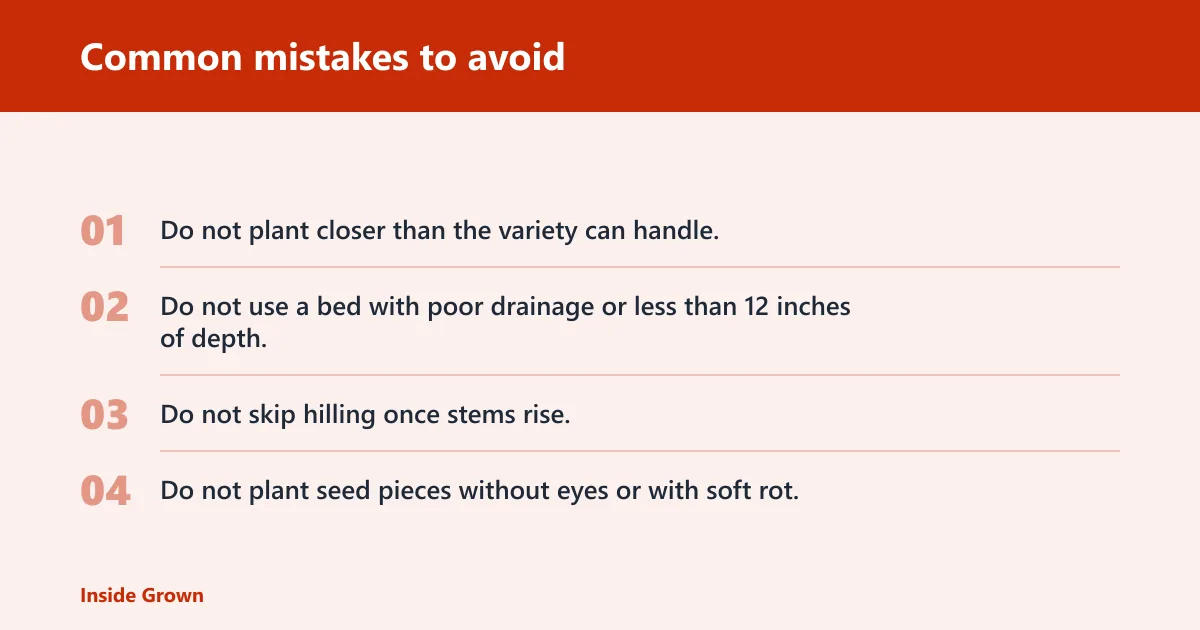
The biggest errors are crowding plants, using beds with less than 12 inches of depth, skipping hilling, and planting damaged tubers. Each one cuts yield or raises disease risk. A bed can look full early and still fail later if tubers are exposed or the soil stays wet.
- Do not plant closer than the variety can handle.
- Do not use a bed with poor drainage or less than 12 inches of depth.
- Do not skip hilling once stems rise.
- Do not plant seed pieces without eyes or with soft rot.
A common first-timer mistake is packing a 3×6 bed with as many plants as the surface will hold. The tops look fine at first, then the bed closes in, airflow drops, and the tubers stay too close together.
If that happens, the best correction is to thin the bed early rather than wait for the plants to compete all season. Prevention is simple: mark the bed before planting and stick to the spacing that matches the variety.
Frequently asked questions
How many seed potatoes do I need?
For a quick estimate, use one seed potato per square foot for standard spacing. That means a 4×8 bed holds about 32 plants at that spacing, while a tighter compact-variety layout can hold more. Bed width, variety size, and whether you use whole or cut pieces all change the final count.
How many potatoes per seed potato?
One seed potato usually produces one plant, and that plant produces multiple harvested potatoes. The count at harvest depends on growing conditions, soil, water, and variety. Early types often finish sooner, while maincrop types may produce larger tubers over a longer season.
How big should seed potatoes be?
Small tubers about the size of a hen’s egg can go in whole. Larger seed potatoes are usually cut into pieces, and each piece should have at least one eye. If a piece is soft, damaged, or eye-free, it is better left out.
How many seed potatoes per container?
For containers, think less about bed math and more about root room. A large, deep pot may hold one or two seed potatoes, but shallow containers usually need fewer plants and often perform poorly. Drainage holes and loose soil matter as much as container width.
Can potatoes grow in a raised bed?
Yes, raised beds are a strong fit for potatoes when they are at least 12 inches deep, drain well, and get full sun for at least 6 hours a day. Loose soil and regular hilling help tubers stay covered and reduce the chance of green potatoes.
How to plant potatoes in raised beds?
Mark 12-inch planting points, set seed potatoes 4 to 6 inches deep, cover them, and water lightly. As stems grow, add soil around them in stages. That keeps developing tubers underground and gives the plant room to keep forming potatoes.