How Many Radish Seeds Should You Plant at Once?
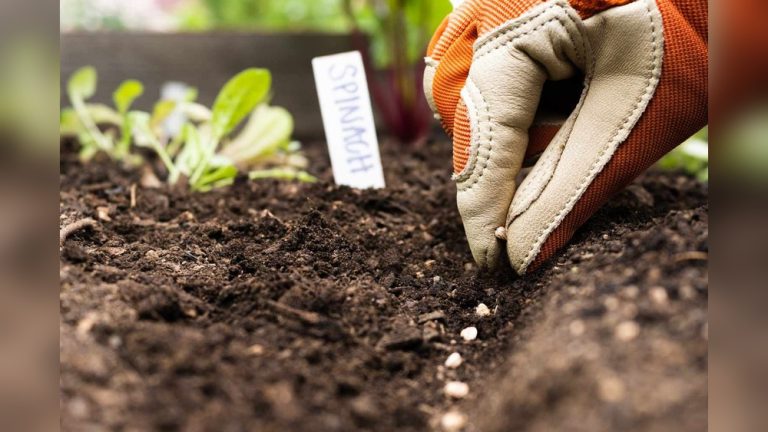
Plant about 2 to 3 radish seeds per hole or inch of row as the default, then thin to 1 plant. Use 1 seed only with very fresh, high-germination seed or pelleted seed, and about 4 seeds if the seed is older or near-zero stand loss is the goal. Planting too few leaves gaps; planting too many wastes seed and crowds roots. This guide gives exact counts for rows, holes, beds, and containers, plus a thinning rule by seed age and radish size.
How many radish seeds per hole?
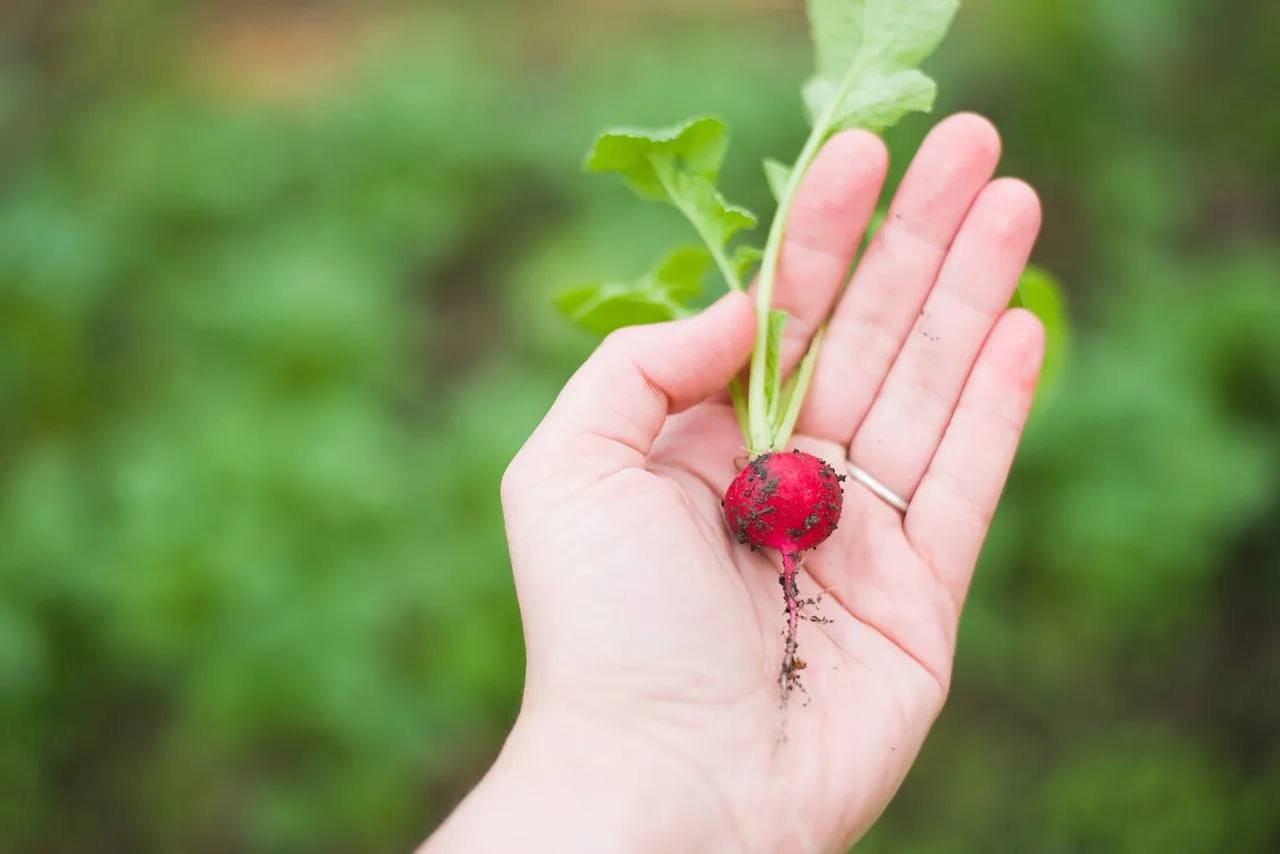


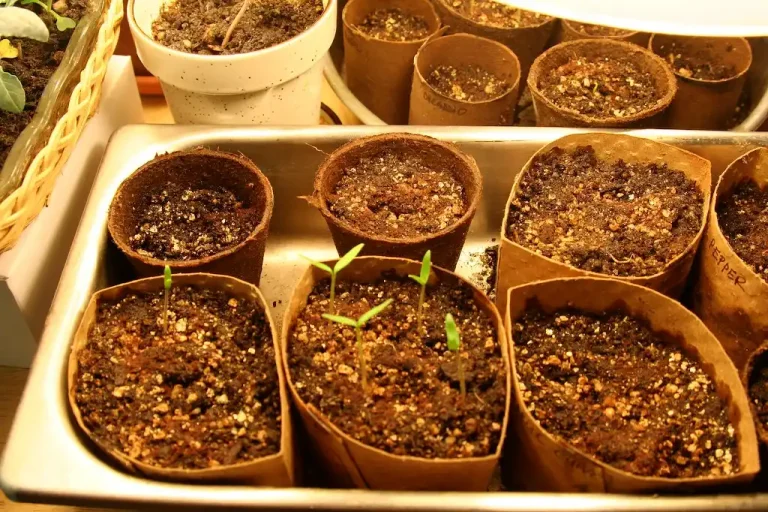
Use 2 to 3 seeds per hole as the default. If the seed is fresh and you want a clean stand with less thinning, 2 seeds is usually enough. If seed is older, soil is dry at planting, or you want near-zero stand loss, move up to 3 or 4 seeds.
Default count for fresh seed
Fresh seed gives the best chance of a full stand, so the simplest rule is 2 seeds per hole. That matches the common recommendation of 2-3 seeds per hole and keeps thinning manageable later. Radish seeds are small, direct-sown, and they do not all sprout at the same rate.
When 1 seed is enough
Use 1 seed only when the packet is very fresh, germination is known to be strong, or the seed is pelleted and sized for exact placement. That option saves seed, but it leaves less room for failure. If emergence is patchy, you will need to reseed gaps later.
When to sow 3 to 4 seeds
Choose 3 to 4 seeds when the seed is older, the bed is cool and slow to warm, or the soil surface tends to dry between waterings. Gardeners typically sow two to four radish seeds per hole, then thin to one healthy seedling per hole after emergence.
| Seed freshness | Radish type | Planting method | Recommended seeds per hole | Final plants kept | Thinning method |
|---|---|---|---|---|---|
| Fresh seed | Small round types such as Cherry Belle or French Breakfast | Row sowing or shallow holes | 2 | 1 | Snip extras at soil line after seedlings emerge |
| Fresh seed | Small round types | Containers at least 6 inches wide | 2 to 3 | 1 | Keep the strongest seedling, then cut the rest |
| Older seed | Standard radishes | Rows, beds, or wider spacing holes | 3 to 4 | 1 | Thin once true leaves open; do not pull extras |
| Uncertain germination | Larger roots | Direct-sown beds | 4 | 1 | Remove extras early, before roots widen |
How far apart should you plant radishes?
For small round radishes, space plants 1 to 2 inches apart after thinning. 1 to 2 inches between seeds at sowing. Larger varieties need wider spacing, and rows usually need more room than the plants within the row.
Spacing for small round radishes
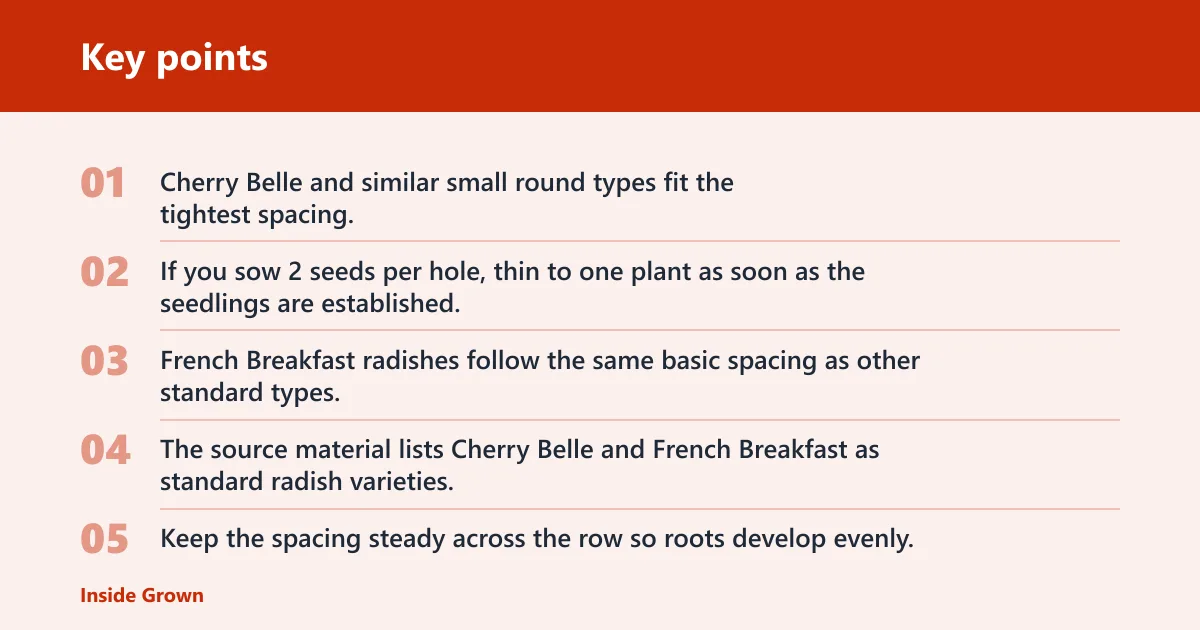
Cherry Belle and similar small round types fit the tightest spacing. Keep final plants 1 to 2 inches apart. If you sow 2 seeds per hole, thin to one plant as soon as the seedlings are established, so the root can size up without crowding.
Spacing for French Breakfast types
French Breakfast radishes follow the same basic spacing as other standard types. The source material lists Cherry Belle and French Breakfast as standard radish varieties, and the same 1 to 2 inch spacing works for both. Keep the spacing steady across the row so roots develop evenly.
Spacing for daikon and other large roots
Larger varieties need increased distances. Larger types need more space than standard round radishes, so do not crowd them at the same 1 to 2 inch spacing used for small roots. Give each plant a wider final slot and space rows farther apart, especially in loose soil where roots can lengthen.
Row spacing versus hole spacing
Hole spacing is the distance between planting spots within a row or bed. Row spacing is the distance from one row to the next. 12 to 18 inches between rows, while another says sow seeds about 1/4 inch deep. That gives you a workable layout for hand sowing and for dibbled holes.
Say your bed is 3 feet long and you are planting small round radishes. If you place holes 1 to 2 inches apart in the row and sow 2 seeds per hole, you can thin each spot to one plant later. That makes the final stand easier to count and harvest.
When should you thin radish seedlings?
Thin after the seedlings emerge and are clearly established, then keep one strong plant per spot. Do not wait until roots have crowded each other. Radishes do not transplant well because of the taproot, so thin by cutting extras at the soil line rather than pulling them out.
Best stage for thinning
Thin once the seedlings have emerged and you can see which one is strongest. The goal is one healthy seedling per hole. If you leave two or more plants in place too long, the roots compete early and both plants can stay small or misshapen.
How to snip extras at soil line
Use small scissors or clean snips and cut the weaker seedlings at the soil line. That avoids root disturbance and leaves the strongest plant in place. Pulling the extras can tug the taproot of the survivor, which can slow growth or distort the root.
How to keep the strongest seedling
Choose the most upright seedling with the thickest stem and healthiest leaves. If two seedlings are equal, keep the one with the straightest base and the least crowding from neighboring plants. This is faster than trying to separate roots, and it is gentler on the plant you keep.
Do containers change the seed count?
Yes. Containers limit both root room and how many plants can finish cleanly, so use the lower end of the seed count unless you are willing to thin. 4 to 5 seeds for pots at least 6 inches wide, but the final number of plants should still be one per growing spot.
How pot diameter affects crowding
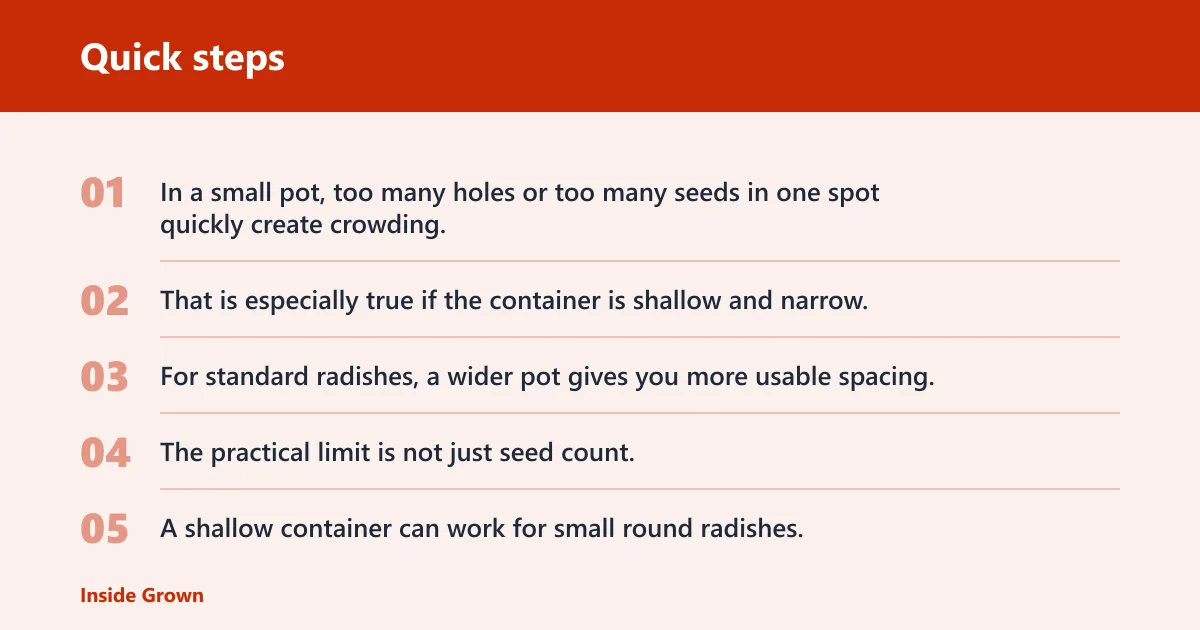
In a small pot, too many holes or too many seeds in one spot quickly create crowding. That is especially true if the container is shallow and narrow. For standard radishes, a wider pot gives you more usable spacing. The practical limit is not just seed count; it is how many roots can mature without bumping into one another.
Why depth matters for daikon
Depth matters more as root size increases. A shallow container can work for small round radishes, but it is a poor fit for daikon and other larger roots because the taproot needs more depth. If you want full-size daikon, choose a deep container and wider spacing, not a small pot with extra seeds.
How many plants to finish in a small pot
For a pot at least 6 inches wide, start with 4 to 5 seeds only if you plan to thin hard and keep one plant per spot. If the pot is narrow, use fewer holes and fewer total seeds. The aim is not to fill the pot with seedlings; it is to finish with cleanly spaced roots.
A common first-timer mistake is sowing 5 or 6 seeds into a narrow container and leaving them all in place. The leaves look fine for a few days, then the roots stay thin because every plant is competing for the same small pocket of soil.
What if germination is uneven?
Reseed gaps quickly if a hole stays empty, and thin any spot with more than one survivor before the roots start to enlarge. Use the same spacing rule when you fill a gap so the row stays even. If germination is poor, the fix is usually fresh seed, steady moisture, and a replant in the blank spaces.
Reseed gaps without disturbing nearby seedlings
Mark empty spots early, then add one or two seeds to each gap without digging into neighboring roots. Keep the reseeded spot slightly separate from the established seedlings so you do not disturb them. Radishes are direct-sown crops, so this kind of spot repair is easier than trying to move plants.
What to do if two seedlings stay in one hole
If two seedlings survive in one hole, snip the weaker one at the soil line. Keep the stronger seedling and leave the roots alone. If both are small and you need a perfectly even row, you can remove the weaker one as soon as true leaves appear, before the root starts to thicken.
Quick rescue checklist for poor stands
- Check whether the soil stayed evenly moist after planting.
- Reseed empty spots with fresh seed.
- Use 3 to 4 seeds per hole if the first round was sparse.
- Keep holes shallow and close to 1/4 inch deep.
- Thin extra seedlings by cutting, not pulling.
- Widen spacing for larger roots and for crowded containers.
Soil and moisture basics for better stands
Radish seeds germinate best in cool-season conditions with consistent moisture and well-drained soil. Dry surface soil can slow emergence and create patchy stands, which is why many gardeners sow backup seeds. Keep the seedbed evenly moist, but do not pack the soil so tightly that roots cannot expand. (Cornell)
Direct sowing works best
Radishes are usually planted directly, not transplanted, because the taproot is easily disturbed. That is why the seed count matters so much at planting time. You do not get a second chance to move the seedlings later without risking poor root shape.
How seed viability changes the count
Fresh, high-quality seed can reduce the need for insurance sowing. Older seed or seed stored in hot, damp conditions can germinate less reliably, so increase the count by one seed per hole. That small change often saves a second planting pass and keeps the stand more even.
Frequently asked questions
How many radish seeds do you plant in one hole?
Use 2 to 3 seeds in one hole for most plantings. If the seed is fresh and you want to thin lightly, 2 is usually enough. If the seed is older or the bed is dry or cool, 3 or 4 seeds gives you insurance against gaps.
How far apart should you plant radish seeds?
For small radish varieties, aim for 1 to 2 inches between plants after thinning. Seeds can be spaced about 1 to 2 inches apart at sowing, while rows can be 12 to 18 inches apart. Larger varieties need wider spacing.
How many seeds does a radish plant produce?
If you let a radish bolt and flower, it can produce many seeds, but that is not the main goal for edible roots. For root crops, most gardeners harvest before flowering. Seed production matters only if you want to save seed from selected plants.
Should I plant one seed or multiple seeds in each spot?
Multiple seeds are the safer default because germination is not always perfect. Plant 2 to 3 seeds per spot, then thin to one strong plant. Use one seed only when you have fresh, reliable seed and are comfortable with a failed spot if that single seed does not sprout.
How many radish seeds should I plant in a container?
For a container at least 6 inches wide, one guide recommends 4 to 5 seeds, but the final result should still be one plant per growing spot. Use fewer seeds in a narrow or shallow pot, and avoid treating a small container like a full bed.