Is Corrugated Metal Safe for Raised Beds?
Corrugated galvanized steel is generally considered safe for edible raised beds if the coating stays intact, the bed has covered edges, and the soil stays near pH 6.0 to 7.0. Zn-Al-Mg coated steel is a newer option that may resist corrosion better, though damaged coating, acidic mixes, and exposed edges can raise the risk.
Coating, soil pH, and edge finishing determine safety

- Tests pH, nitrogen, phosphorus, and potash
- Includes components for 20 tests
- Has plant pH preference list
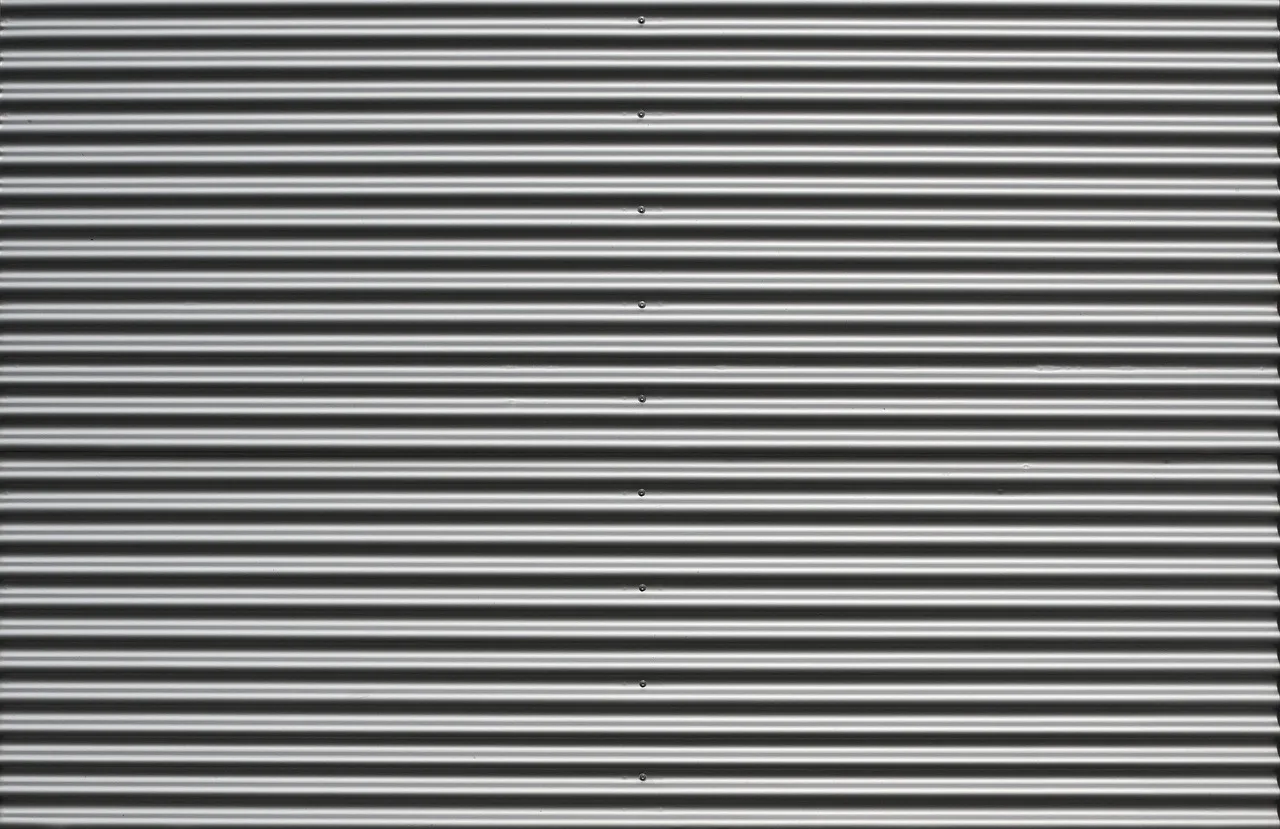
Corrugated metal is generally safe for raised beds when the panel coating is intact and the bed has finished edges. The real question is coating, soil chemistry, and build quality, not the corrugated shape itself.
What makes a setup safe or risky
Corrugated galvanized steel sheet has a zinc-coated surface, which is why gardeners choose it for vegetable beds. Zinc coating helps the steel resist rust. Safety stays strongest when the soil is near neutral, the top edge is capped or folded, and there are no scratches, flaking spots, or bare cut edges left exposed.
Pressure-treated lumber is the main comparison material many gardeners weigh against metal. Metal often lasts longer against rot and usually needs less upkeep, but wood can still be the better choice if the site is highly acidic, highly corrosive, or hard to finish safely.
Raised metal bed safety checklist
| Coating type | Soil pH range | Edge condition | Liner need | Crop sensitivity | Red-flag conditions | Verdict |
|---|---|---|---|---|---|---|
| Galvanized steel with intact zinc layer | About 6.0 to 7.0 | Rolled, capped, or rubber-edged | Usually no liner needed if soil and drainage are sound | Best for mixed vegetables, including leafy greens and fruiting crops | Safe yes unless the coating is scratched through, the soil stays below 6.0, or the bed sits in a corrosive coastal site | Safe yes |
| Zn-Al-Mg steel coating | About 6.0 to 7.0 | Rolled, capped, or rubber-edged | Usually no liner needed for normal garden fill | Good for most edible crops when the build is clean and intact | Conditional yes if you cannot verify the coating condition or if acidic compost mixes are used without pH checks | Conditional yes |
| Galvanized steel with scratched, flaking, or cut-through coating | Any range, higher concern below 6.0 | Sharp or bare metal at the top or seams | Not a fix for broken structure | Use extra caution with root crops and long-season leafy crops | No if the damage is extensive, the edges cannot be covered, or corrosion is already active | No |
| Plain steel without protective coating | Any range | Any exposed edge | Not a practical food-bed choice | Not recommended for edible beds | No because rust risk is high and the surface is not made for soil contact | No |
| Pressure-treated lumber vs metal | Any range | Any exposed edge | Wood may need different handling, while metal depends more on coating and edge finish | Use the frame that best fits the site and crop plan | No if the wrong choice means faster corrosion, poor finish, or a hard-to-seal build | Conditional yes |
How coating type changes risk
Galvanized steel and Zn-Al-Mg steel are not the same thing. Galvanized steel uses a zinc layer on the surface. Zn-Al-Mg steel uses a zinc-aluminum-magnesium coating, and newer beds with that finish are often sold as more corrosion resistant. The coating matters because it is the part that contacts the soil.
Galvanized steel and zinc coatings
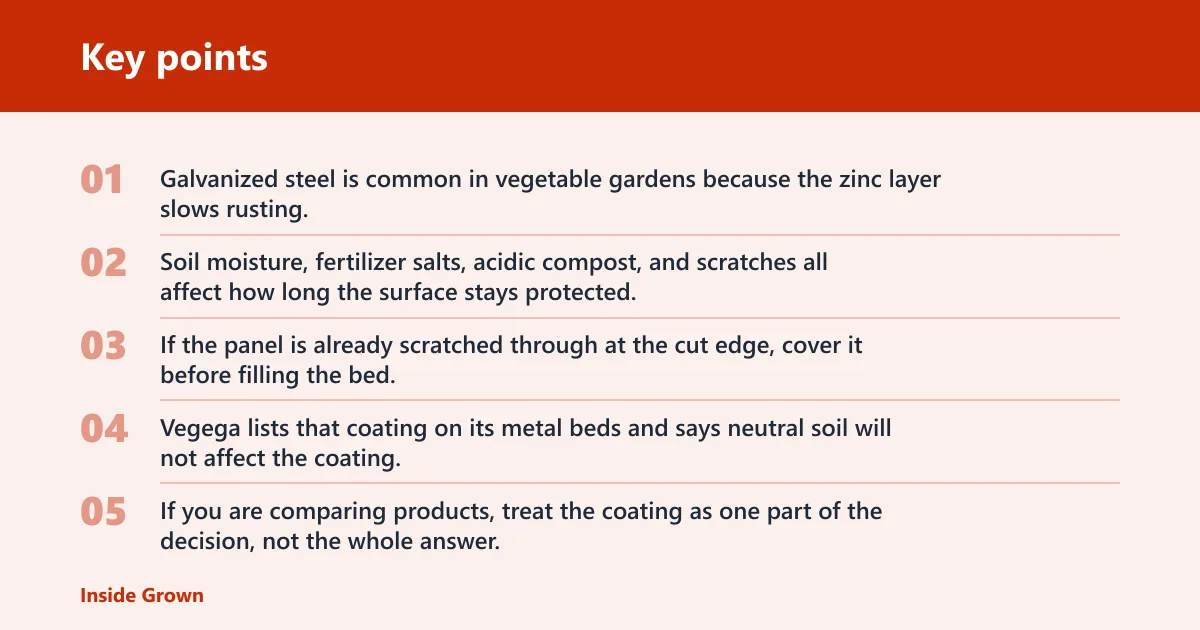
Galvanized steel is common in vegetable gardens because the zinc layer slows rusting. That does not make the metal invulnerable. Soil moisture, fertilizer salts, acidic compost, and scratches all affect how long the surface stays protected.
The practical rule is simple: intact coating plus near-neutral soil is a safer yes; damaged coating plus acidic conditions pushes the bed toward no. If the panel is already scratched through at the cut edge, cover it before filling the bed.
Zn-Al-Mg steel in newer beds
Some newer metal beds use Zn-Al-Mg coating, and manufacturers often present that as a higher-corrosion-resistance option. Vegega lists that coating on its metal beds and says neutral soil will not affect the coating. That is a manufacturer claim, not a blanket safety guarantee for every site.
If you are comparing products, treat the coating as one part of the decision, not the whole answer. A strong coating still needs safe edges, decent drainage, and soil that does not drift acidic over time.
When damaged coating changes the answer
A bed with badly scratched, flaking, or cut-through coating should move out of the safe category fast. Surface damage exposes raw metal, speeds corrosion, and leaves sharp spots that are harder to cover cleanly. If the damage is small and local, sealing or capping the edge may solve the safety issue. If the damage is repeated or extensive, choose another bed.
Suppose a 17-inch knee-high bed has a deep gouge along the top lip from a tool strike. If the edge cannot be capped cleanly, the bed is no longer a good edible-bed choice even if the rest of the panel still looks sound.
What soil pH means for zinc leaching
Soil pH matters because zinc release rises as soil becomes more acidic. A practical target for edible raised beds is about pH 6.0 to 7.0. That range keeps you in the safer zone without pretending the metal coating never interacts with soil at all.
Safer pH range for edible beds
Use pH 6.0 to 7.0 as the decision range for most metal beds. Clear concern may start below about pH 5.5. That is the point where acidic conditions can speed coating wear and increase the chance of more metal release into the soil.
That rule is useful because it is actionable. If the bed fill measures 6.4, the setup is generally in the safer zone. If the soil drifts to 5.4 after repeated additions of acidic compost or amendments, the bed needs a correction plan or a different frame material.
When acidic compost or mix raises concern
Compost-heavy mixes can drift acidic, especially if the mix is revised year after year without a pH check. That matters more in metal beds than in many wood frames because the soil and the coating are in constant contact. A fresh fill that starts near neutral can still move into a riskier zone over time.
A common first-timer mistake is topping a bed with acidic potting mix every season and never checking pH again. The bed may still grow crops, but the metal and the soil chemistry are no longer in the safer zone you want for food production.
Why pH checks matter over time
Check pH after filling, then check again after major soil changes. That includes a heavy compost top-off, a new fertilizer program, or a switch from mostly loam to mostly peat-heavy mix. pH is not a one-time number in a garden bed; it changes with the fill.
If the soil is drifting downward, correct the mix or change the bed plan before the surface coating starts showing wear. That is a better decision than trying to solve a soil issue after the frame has already been damaged.
How should you build the bed?
Build the bed so the metal never becomes the hazard. Use a coated panel, cover every cut edge, and choose fasteners and braces that match the load. For an edible bed, the structure should feel solid before it ever gets soil.
Cover the top edge. Use rolled, capped, or folded top trim where possible. If the lip is exposed or likely to be bumped, add rubber edging for comfort and to reduce contact with a hot or sharp edge.
Use proper fasteners. Galvanized screws are standard assembly hardware for these beds, and corner braces help the frame stay square under soil weight. Choose hardware that matches the exposure level and do not mix in weak fasteners where the wall flexes most.
Keep drainage open. Set the bed where water can leave freely, and do not seal the bottom in a way that traps standing moisture. Good drainage helps the soil stay healthier and reduces constant wet contact against the metal.
Fill with clean soil. Use quality soil, not contaminated fill. If you are lining the inside, use a liner only as a soil barrier or separation aid, not as a substitute for a damaged coating or a safety fix for sharp edges.
The same source lists 11-inch, 17-inch, and 32-inch bed heights. Those heights are useful as a practical guide: low profile for easier access and shallow-root crops, mid-height for mixed planting, and tall beds for easier reach or deeper fill.
What height should you choose?
Bed height changes comfort, reach, and how much soil you need to manage. The right choice depends on root depth, how much bending you want to do, and whether the bed needs to work for accessibility. Height does not make the metal safer on its own, but it does affect how the bed is used.
11-inch low profile beds
An 11-inch bed is a good low-profile option for shallow-root crops and for gardeners who want a lower visual profile. It can also be easier to fill and easier to reach across, though it gives less root depth than taller designs.
17-inch knee-high beds
A 17-inch bed is a practical middle ground for mixed planting. It reduces bending compared with a low bed and gives more room for root growth. For many home gardens, this is the height that balances comfort and soil volume best.
32-inch waist-high beds
A 32-inch bed is the better option when accessibility matters or when you want a taller structure that reduces reaching and crouching. It is also useful when you want more fill depth for crops that benefit from a deeper root zone. Taller beds need a solid frame because the wall load is greater.
When metal beds are the wrong choice
Metal is not the right answer in every garden. The setup moves from safe to questionable when the coating is damaged, the soil is too acidic, or the site exposes the bed to unusually harsh conditions. That is where a different frame material may be the better call.
Sharp or exposed edges
If you cannot cover the cut edge, do not leave it exposed. Sharp corrugated edges are a real safety problem because they can cut hands during planting and weeding. Rubber edging helps with comfort, but it is only a good solution when the underlying edge is stable and not shredded or bent outward.
- Red flag: cut metal that can snag gloves or skin.
- Red flag: bent seams that cannot hold a cap or trim.
- Red flag: edges that stay exposed after assembly.
Highly acidic soil mixes
Highly acidic mixes are a bad fit for metal beds. That includes setups that stay below about pH 5.5 or that repeatedly receive acidic amendments without testing. In that case, the bed moves from a conditional yes to a no until the soil chemistry is corrected.
- Avoid this: adding acidic material season after season without testing.
- Avoid this: assuming a liner fixes the soil chemistry.
- Avoid this: using metal where pH cannot be checked.
High-exposure sites and damaged coating
Coastal humidity, constant wetting, and damaged coating all raise the chance of faster wear. If the bed sits where salt air is strong or the finish is already compromised, the safer path is usually to avoid metal or choose a different coating and a better-finished frame. The same caution applies to any bed with repeated scratches from tools, mowers, or moving containers.
Picture a waist-high bed near the ocean with flaking metal at the lower seam and soil that tests acidic after a season of heavy compost use. That is not a “probably fine” setup. It is a no until the soil, coating, and edge finish are all addressed.
Frequently asked questions
Is corrugated metal good for raised beds?
Yes, if the panels are coated, the edges are finished, and the soil stays near pH 6.0 to 7.0. Corrugated galvanized steel is popular because the zinc layer helps protect against rust. It is a good choice for many edible beds, but not for damaged or highly acidic setups.
Is corrugated metal safe for raised garden beds?
Generally yes. The safe version is a bed with intact galvanized or Zn-Al-Mg coating, smooth or capped edges, and well-drained soil that does not drift acidic. If the coating is scratched through or the soil moves below about pH 5.5, the answer changes.
Is galvanized metal safe for raised garden beds?
Galvanized metal is generally safe for edible raised beds when the zinc coating is intact and the soil is near neutral. The zinc surface is there to resist rust, which is why it is commonly used in vegetable gardens. Keep the soil balanced and the top edge covered.
Will galvanized steel leach into vegetable soil?
Some zinc release can happen even in near-neutral soil, but the risk is lower when the bed is intact and the pH stays around 6.0 to 7.0. The concern rises as soil becomes more acidic, especially below about pH 6.0 and more so below about pH 5.5.
Do metal raised beds overheat in summer?
Metal can warm up faster in full sun than wood, so heat is a real comfort factor. The same source says its beds did not overheat in a summer test on a 93°F day and that soil stayed below 90°F, but that is a manufacturer claim. Shade, mulch, and soil depth still matter.
How long do metal raised beds last compared with wood?
Metal usually resists rot better than wood and often needs less long-term maintenance. Vegega claims a 20-year service life for its metal raised beds, but that is a brand claim, not a universal rule. Actual life depends on coating quality, soil chemistry, climate, and edge finish.