What Is Plant Vascular Tissue?
Plant vascular tissue is the transport system in vascular plants. Xylem carries water and minerals from roots toward shoots, phloem carries sugars from leaves to the rest of the plant, and true vascular tissue appears in roots, stems, and leaves. Without those pathways, plants cannot move water and sugars far or build tall stems. This guide shows xylem, phloem, vascular bundles, and how to spot them in diagrams and microscope images.
What is plant vascular tissue?
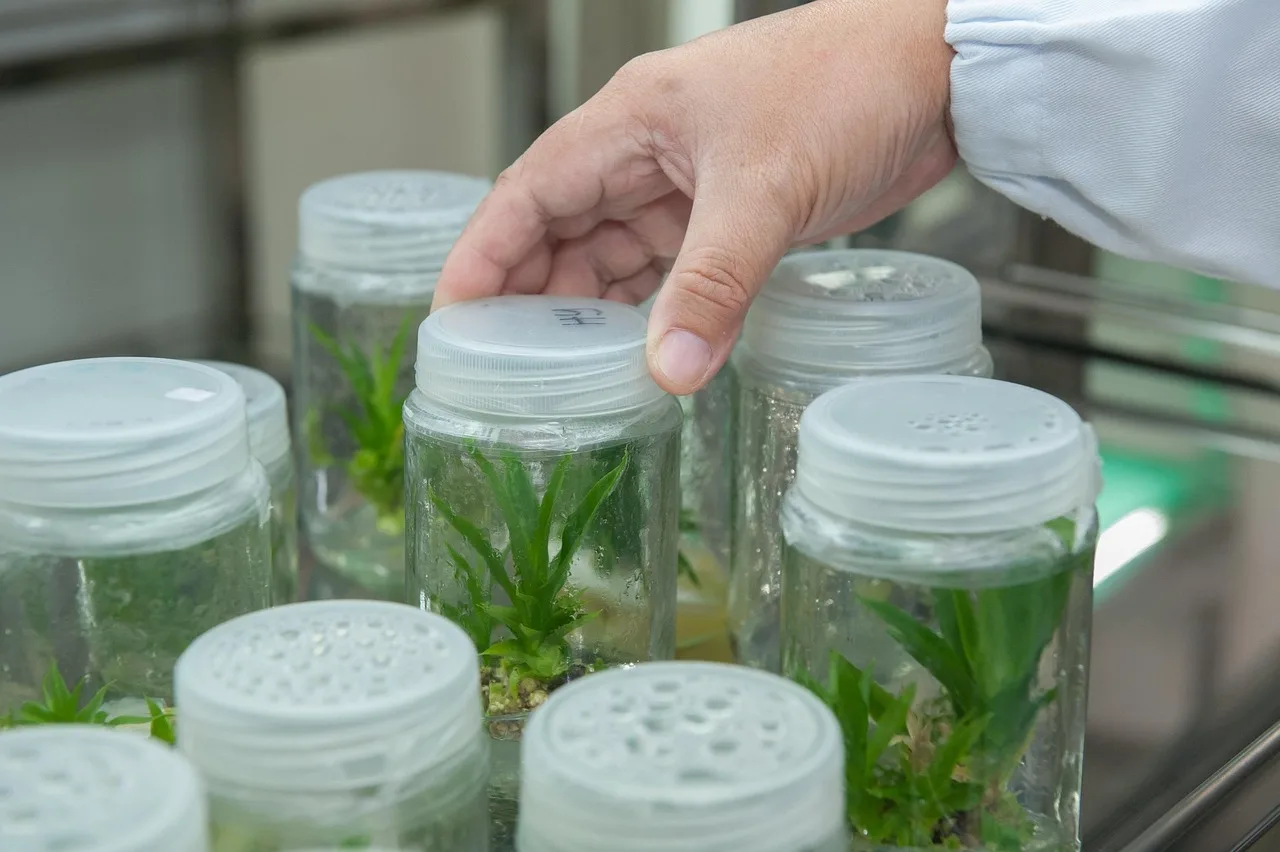
Plant vascular tissue is a long-distance transport network inside the plant body. It moves water, dissolved minerals, and sugars between roots, stems, and leaves, and it also helps support the plant as it grows. Vascular tissue is one of the three plant tissue systems.
That transport matters because a leaf is often far from the roots. Water has to move up, sugars have to move away from photosynthesizing leaves, and the plant has to keep those pathways open as it expands. Vascular plants can transport water and nutrients to great heights, which is one reason they can grow larger than nonvascular plants.
Xylem and phloem: the two tissue types
Vascular tissue has two subtypes: xylem and phloem. Xylem carries water and minerals from the ground to the leaves, usually upward through the plant. Phloem carries sugars and other nutrients made during photosynthesis through the plant.
A simple way to think about it is this: xylem is the water route, while phloem is the sugar route. Both are transport tissues, but they do different jobs and use different cell types.
Living and dead conducting cells at a glance
Xylem in mature function is generally made of dead, lignified cells. Phloem is made of living sieve tube or sieve cells at maturity. That difference matters in diagrams and microscope views, because xylem often looks thick-walled and rigid, while phloem usually looks softer and more cellular. (UFL)
Xylem includes tracheids and vessel elements. Phloem includes sieve tubes or sieve cells, plus companion cells or companion-like support cells.
Which plants have vascular tissue?
Vascular tissue occurs in vascular plants, including ferns, clubmosses, horsetails, conifers, and flowering plants. Nonvascular plants such as mosses, hornworts, and liverworts lack vascular tissue, and some algae also do not have it. Seed plants are only one part of the larger vascular-plant group. (Wikipedia) (Wikipedia)
That distinction prevents a common mix-up. All seed plants are vascular plants, but not all vascular plants make seeds. Ferns, horsetails, and clubmosses have vascular tissue and do not make seeds.
Vascular plants versus seed plants
Vascular plants are defined by transport tissue, not by seeds. Seed plants are defined by seed production. Conifers and flowering plants are both seed plants and vascular plants, while ferns, horsetails, and clubmosses are vascular plants without seeds.
If you are sorting plants for a class diagram, ask two separate questions: does it have vascular tissue, and does it make seeds? Those are related, but they are not the same category.
Nonvascular plants
Nonvascular plants lack vascular tissue, so they do not have the same internal transport network. Mosses, hornworts, and liverworts are the main examples. They are typically limited in size because they cannot move water and sugars efficiently over long distances.
How vascular tissue works in the plant
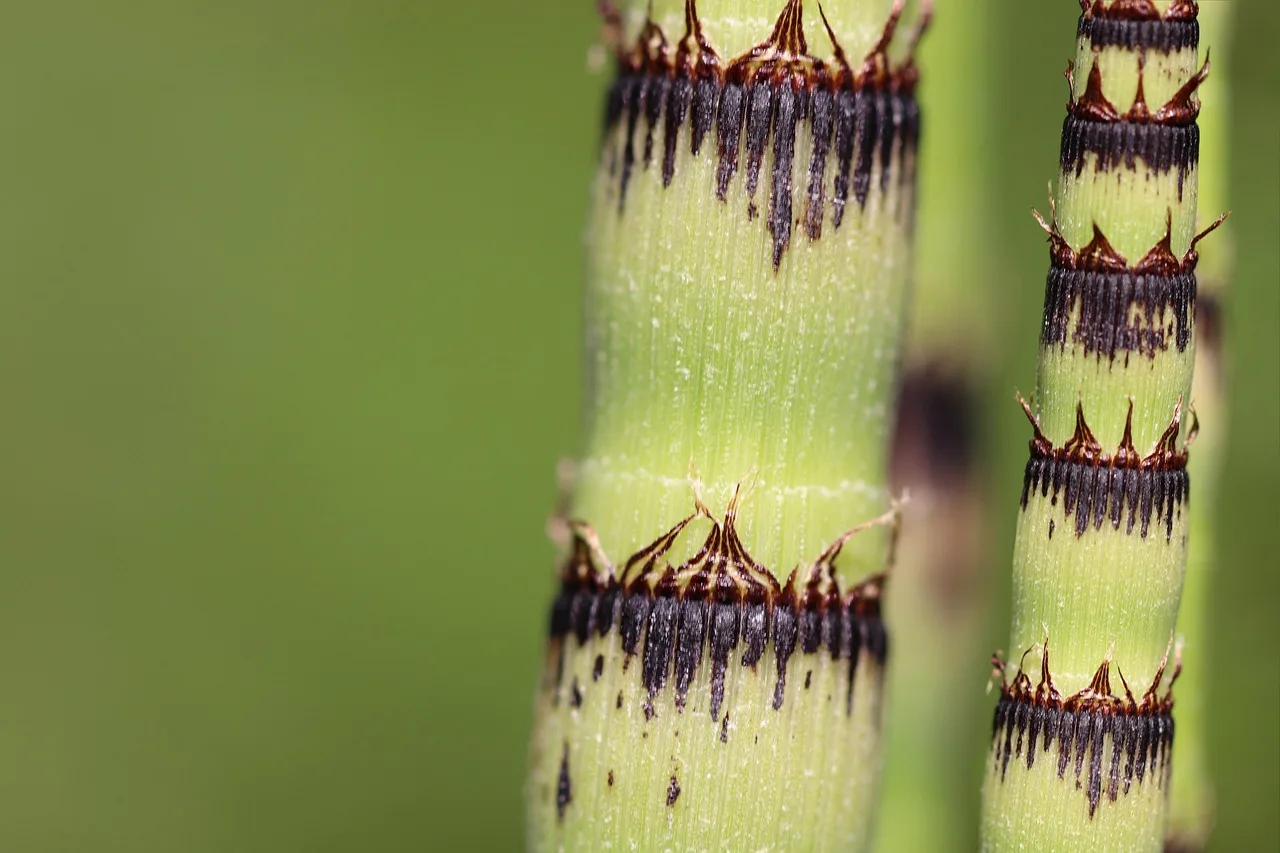
Roots, stems, and leaves are linked by vascular tissue into a single transport network. Xylem brings water and minerals up from the roots, and phloem moves sugars from source tissues to sink tissues throughout the plant. That flow connects growth, photosynthesis, and storage.
Source-to-sink movement means phloem does not simply move “food everywhere.” A source is a place that loads sugars, often a mature leaf. A sink is a place that uses or stores them, such as roots, young leaves, flowers, fruits, or growing stems.
Roots, stems, and leaves as transport organs
In roots, vascular tissue brings water and minerals in from the soil. In stems, it runs through bundles that connect the root system to the leaves. In leaves, it branches into veins that distribute water and collect sugars.
Picture a young bean seedling with one stem and two leaves. If the xylem in the stem is blocked, the leaf tips dry first because water cannot keep pace with transpiration. If phloem is blocked, sugars can build up above the blockage and starving tissues below may slow down.
Why vascular plants can grow larger
Transport over long distances lets vascular plants build taller shoots, wider leaves, and deeper root systems than nonvascular plants usually can. The internal network also supports upright growth, which helps leaves reach light and roots explore more soil.
A common mistake is to assume the thicker stem alone tells you how water and nutrients move through a plant. Size helps, but anatomy matters more. Some small plants are still vascular, and size alone does not separate vascular from nonvascular groups.
Vascular tissue identification checklist
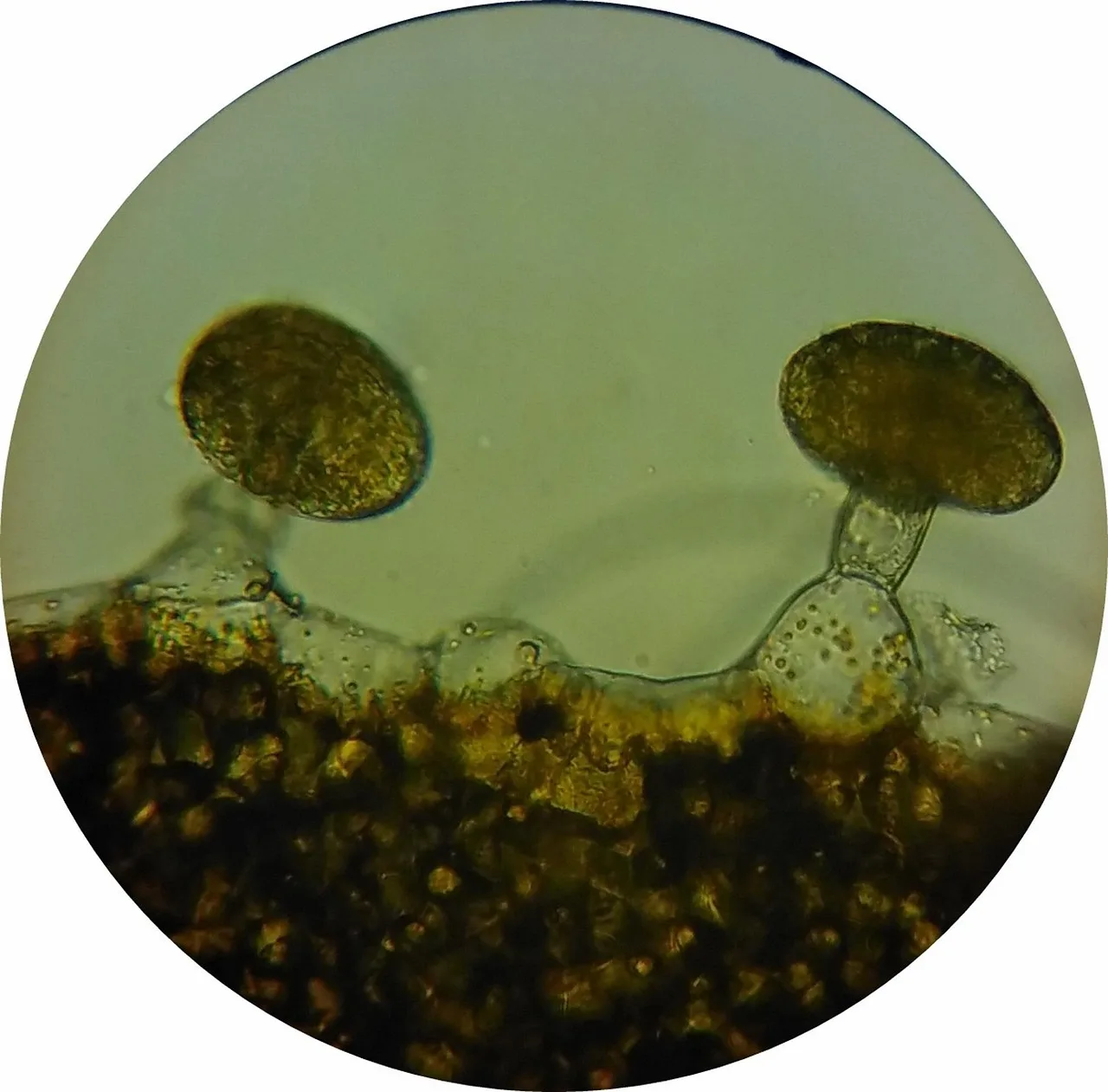
This checklist helps you spot vascular tissue in roots, stems, and leaves under a diagram or a simple microscope image. Look for bundle shape, tissue position, and the kind of cells you can see.
| Plant part | What the bundles usually look like | The likely tissue clues to check for under a diagram or microscope |
|---|---|---|
| Root | Vascular tissue is usually central, often forming a solid core or a clear central pattern rather than scattered bundles | Look for xylem near the center, with phloem between xylem regions in many roots; thick, lignified walls point to xylem |
| Stem | Bundles are usually arranged in a ring in many dicot stems or scattered in many monocot stems | Check for xylem on the inner side of each bundle and phloem on the outer side; bundle lines running lengthwise are a strong clue |
| Leaf | Bundles appear as veins and veinlets spread through the blade | Look for xylem toward the upper side of the vein and phloem toward the lower side in many leaves; veins branch through the leaf tissue |
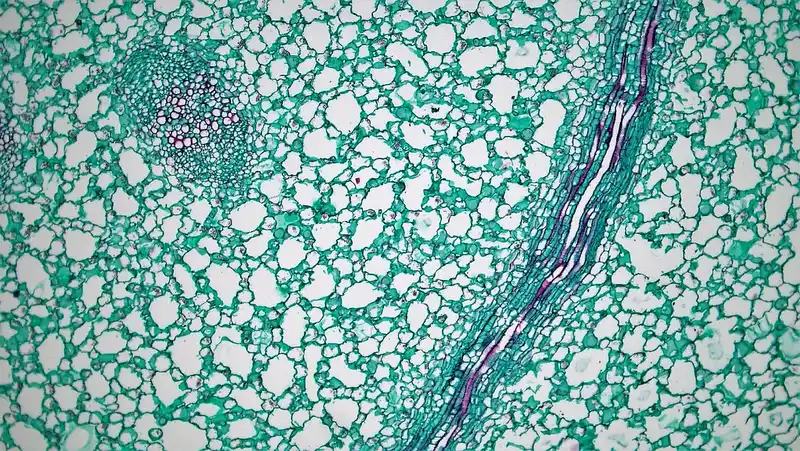
If a diagram labels a “vascular bundle,” that bundle usually contains both xylem and phloem together. In a cross-section, xylem often stains or appears more rigid and thick-walled, while phloem is usually the living conducting portion beside it.
- Find the organ first: root, stem, or leaf.
- Look for long, connected strands rather than isolated cells.
- Check whether one side looks thick-walled and rigid; that is often xylem.
- Check whether the other side contains smaller living cells; that is often phloem.
- In a leaf vein, trace the bundle through the blade to see how it branches.
- In a root, look for a central transport pattern instead of scattered bundles.
How do xylem and phloem cells differ?
Xylem and phloem differ in cell type, wall structure, and function. Xylem uses tracheids in all vascular plants, and vessel elements in certain species such as angiosperms. Phloem uses sieve cells or sieve tube elements, which are living at maturity, with companion cells supporting transport.
Tracheids and vessel elements in xylem
Tracheids are xylem conducting cells present in all vascular plants. They help with water movement and also support the plant. Vessel elements are found only in certain species, such as angiosperms, and they improve hydraulic efficiency by forming wider water-conducting tubes.
That difference is useful in identification. If a diagram shows only tracheids, it may be a general vascular plant or a simplified drawing. If it shows vessel elements, the plant may be an angiosperm.
Sieve cells, sieve tube elements, and companion cells in phloem
Phloem moves sugars through sieve plates using sieve cells or sieve tube elements. These cells are living at maturity, which is one reason phloem diagrams often show associated support cells. Companion cells are metabolically active and help with phloem transport.
In a microscope image, phloem can be harder to spot than xylem because its walls are usually thinner and its cells are smaller. A nearby companion cell can help you identify it.
What the cell types tell you about function
Dead, lignified xylem cells are well suited to water transport and support. Living phloem cells are suited to moving sugars and other organic nutrients between sources and sinks. The cell structure matches the job.
What happens when vascular tissue is damaged?
When vascular tissue is damaged, blocked, or stressed by drought, transport slows or stops. Water shortage shows up fast in leaves, because leaves lose water through transpiration and depend on xylem to replace it. Sugar transport problems can also limit growth below the blockage.
Wounding, a crushed stem, or a blocked vein can create the same basic problem: the transport path no longer works well. That can lead to wilting, stunted growth, leaf yellowing, or tissue death near the damaged area.
Drought stress and blocked transport
During drought, xylem tension rises as the plant tries to pull water upward. If the water column breaks, transport can fail in part of the plant. That is why leaf edges may crisp first, and why a stem cut can interrupt water supply quickly.
Suppose a potted tomato has dry soil and drooping leaves by midday. The leaves are often the first place to show the problem, because they lose water faster than the roots can replace it. If the stress continues, growth slows and new leaves can stay small.
Why transport failure shows up quickly in leaves
Leaves have a high demand for water and sugar exchange. They depend on xylem for water delivery and on phloem to move sugars away after photosynthesis. When either pathway is blocked, leaves are usually the first organ to show visible symptoms.
Frequently asked questions
What is plant vascular tissue: plant vascular tissue?
Plant vascular tissue is the transport network that moves water, minerals, and sugars through a plant. It includes xylem and phloem, and it links roots, stems, and leaves. This tissue also helps support plant growth, which is why vascular plants can become much larger than nonvascular plants.
What is plant vascular tissue and what does it do?
Plant vascular tissue moves water and dissolved minerals from roots upward, and it moves sugars and other organic nutrients from source tissues to sink tissues. It also helps the plant stand upright and grow over longer distances. Without it, transport stays limited to short ranges.
Which plant vascular tissue conducts food?
Phloem conducts the plant’s sugars and other nutrients made during photosynthesis. It moves those materials from source tissues, such as mature leaves, to sinks such as roots, flowers, fruits, and growing shoots. Xylem does not carry food; it carries water and minerals.
What plant has vascular tissue
Vascular tissue is found in vascular plants, including ferns, clubmosses, horsetails, conifers, and flowering plants. These groups have xylem and phloem. Seed plants are part of this set, but they are not the whole set, because some vascular plants do not make seeds.
What plant lacks vascular tissue
Nonvascular plants lack vascular tissue. Mosses, hornworts, and liverworts are the main examples, and some algae also lack it. Because they do not have the same internal transport system, they are usually limited in size and rely more on direct moisture from their surroundings.
Do all plants have vascular tissue?
No. Vascular tissue appears in vascular plants, not in all plants. Nonvascular plants such as mosses, hornworts, and liverworts do not have xylem or phloem. That is why they differ so much in size, structure, and how they move water and sugars.
Which plants have vascular tissue without seeds?
Ferns, clubmosses, and horsetails have vascular tissue but do not make seeds. They are vascular plants, yet they are not seed plants. This is the cleanest way to separate the two categories: vascular tissue describes transport anatomy, while seeds describe a reproductive feature.
What plants have vascular tissue
Ferns, clubmosses, horsetails, conifers, and flowering plants have vascular tissue. The common feature is xylem and phloem, which move water, minerals, and sugars through the plant. If you are sorting specimens, look first for transport bundles, then decide whether the plant makes seeds.