Is Copper Wire Safe in Vegetable Gardens?
Copper wire is generally safe above ground in vegetable gardens, but it should not be left in soil, mulch, or damp buried areas for long. If it will touch soil for a season or longer, another material is usually a better choice. If it is used poorly, copper can corrode, release small amounts into the soil, and may stress sensitive plants or compost over time. This guide explains where copper wire fits, where it does not, and which materials work better in edible beds.
Above-Ground safety and soil-Contact risks
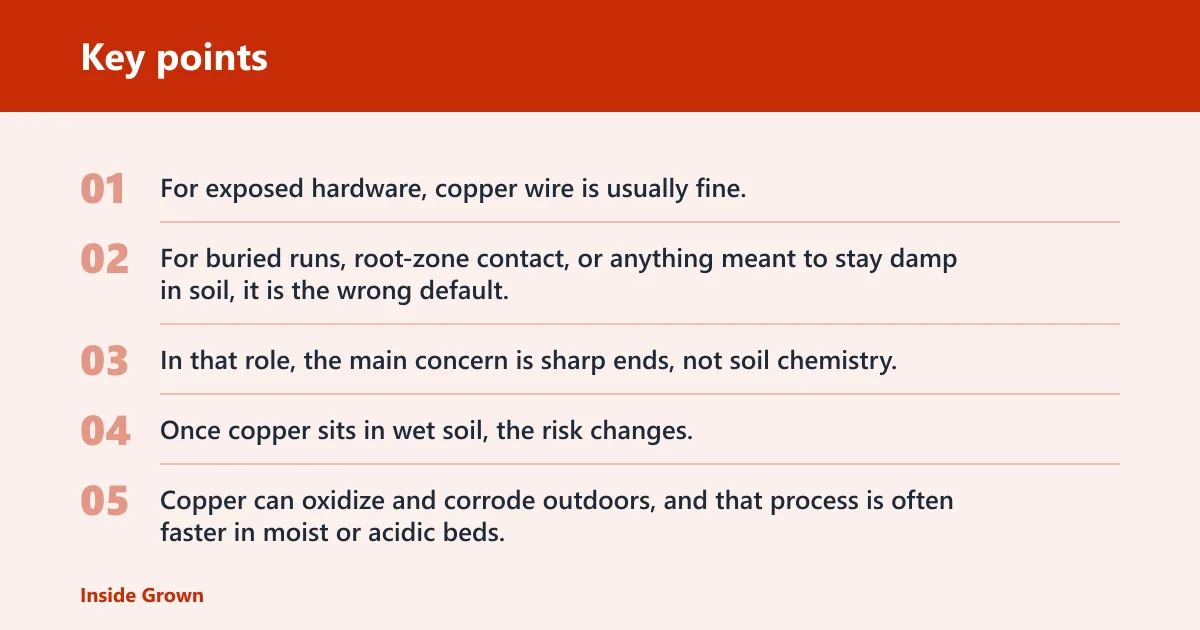


For exposed hardware, copper wire is usually fine. For buried runs, root-zone contact, or anything meant to stay damp in soil, it is the wrong default. In vegetable beds, the safest rule is direct: keep copper out of prolonged soil contact and use galvanized steel, PVC-coated wire, or aluminum for most support and barrier jobs.
Safe above-ground use
Copper wire works well when it stays dry and visible, such as for light trellis ties, hanging plant labels, or fixed support points that do not touch soil. It also fits fenced or deterrent setups where the wire is exposed and easy to inspect. In that role, the main concern is sharp ends, not soil chemistry.
Risky soil-contact use
Once copper sits in wet soil, the risk changes. Copper can oxidize and corrode outdoors, and that process is often faster in moist or acidic beds. If the wire is buried, pressed into a root zone, or left where irrigation keeps it damp, it can slowly shed copper compounds into the surrounding soil.
Simple rule for choosing wire
Use copper only when the wire stays above ground and away from constant moisture. For beds, trellises, fencing, and netting that touch soil or live outdoors for years, choose galvanized steel, PVC-coated wire, or aluminum instead. That rule fits most edible-bed jobs and avoids the slow failure that comes with buried copper.
When does copper wire become a problem?
Copper wire becomes a problem when weather, moisture, and soil contact work together. The metal can oxidize on the surface, corrode more deeply over time, and release compounds into the soil. That is most likely in wet beds, acidic soil, compost contact, or any setup where the wire is meant to stay underground.
Oxidation and corrosion outdoors
Copper does not rust like iron, but it still changes outdoors. Oxidation forms a surface layer, and corrosion can progress in damp conditions. That matters less for a dry tie or clip than for a buried wire or a fastener hidden under mulch. Exposure time is the difference.
Wet soil and acidic beds
Moist soil speeds metal interaction. Acidic beds can make copper compounds more available, which is why the same wire may be harmless above ground but a poor choice in a damp root zone. If a bed stays wet after watering or rain, copper hardware should not be the material resting in it.
Root-zone contact and burial
Direct root-zone contact raises the stakes because roots sit in the zone where dissolved metals matter most. Burial adds moisture, oxygen changes, and abrasion from shifting soil. A boundary wire, a buried tie, or a wire loop under a crop row should be treated as a soil-contact application, not a structural one.
Suppose a gardener runs a copper tie around a tomato cage and leaves the loose end pressed into mulch all season. The cage itself may be fine, but the buried tail becomes the issue because it stays wet and hidden. Cutting the tail short and keeping it off soil changes the risk immediately.
Soil copper versus copper hardware
Soil copper and copper hardware are not the same question. Plants need trace copper, but that does not mean any copper object is harmless in a bed. Soil tests report copper in ppm, while hardware introduces copper as a solid object that can corrode, especially when moisture, pH, and time work against it.
Trace nutrient levels
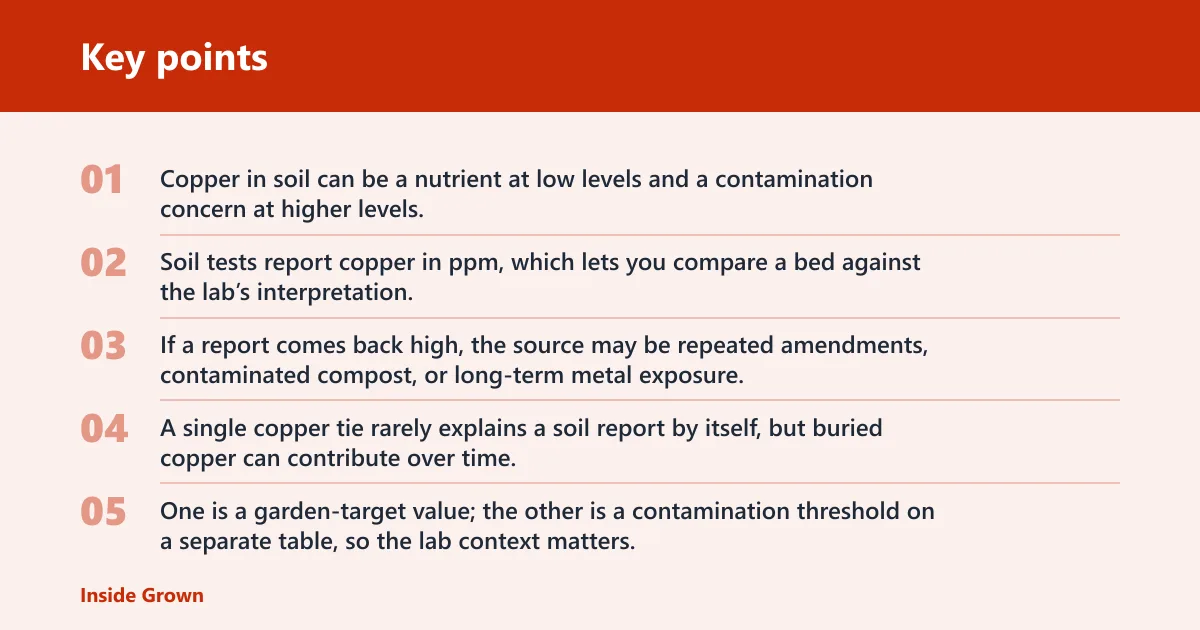
Copper in soil can be a nutrient at low levels and a contamination concern at higher levels. The two ideas are separate. A trace amount supports normal plant function, but a copper wire, fitting, or buried conductor is not a nutrient source in any controlled sense, and it should not be treated like fertilizer.
Ppm testing and lab results
Soil tests report copper in ppm, which lets you compare a bed against the lab’s interpretation. If a report comes back high, the source may be repeated amendments, contaminated compost, or long-term metal exposure. A single copper tie rarely explains a soil report by itself, but buried copper can contribute over time.
The sourced guidance includes a figure of 0.8-1.2 ppm for copper in annual garden soil, and the same page lists copper as 1500 mg/kg in a pollutant table. Those numbers do not describe the same condition. One is a garden-target value; the other is a contamination threshold on a separate table, so the lab context matters.
How pH changes copper behavior
Soil pH changes how copper behaves. More acidic soil can increase copper mobility, which means a metal object has a greater chance of contributing dissolved copper over time. That is one reason a wire that looks stable in dry storage can become a different problem once it is buried in a live bed.
Copper wire decisions table
| Scenario | Safety verdict | Likely risk | Best alternative material | One-line reason |
|---|---|---|---|---|
| Above-ground trellis tie | Usually safe | Sharp ends or stem abrasion | PVC-coated wire | Dry, visible copper is acceptable, but coated wire is gentler on stems. |
| Edge barrier | Mixed; use caution | Weathering at soil line | Galvanized steel wire | The edge sees splash, mulch contact, and movement, so rust resistance matters. |
| Buried boundary wire | Not recommended | Corrosion and soil exposure | Direct-burial rated boundary wire in suitable jacket | Burial keeps the wire damp and hidden, which increases long-term failure risk. |
| Direct root-zone contact | Unsafe choice | Localized copper buildup | PVC-coated steel | Roots sit in the highest-risk zone for dissolved metal exposure. |
Which wire works best in beds?
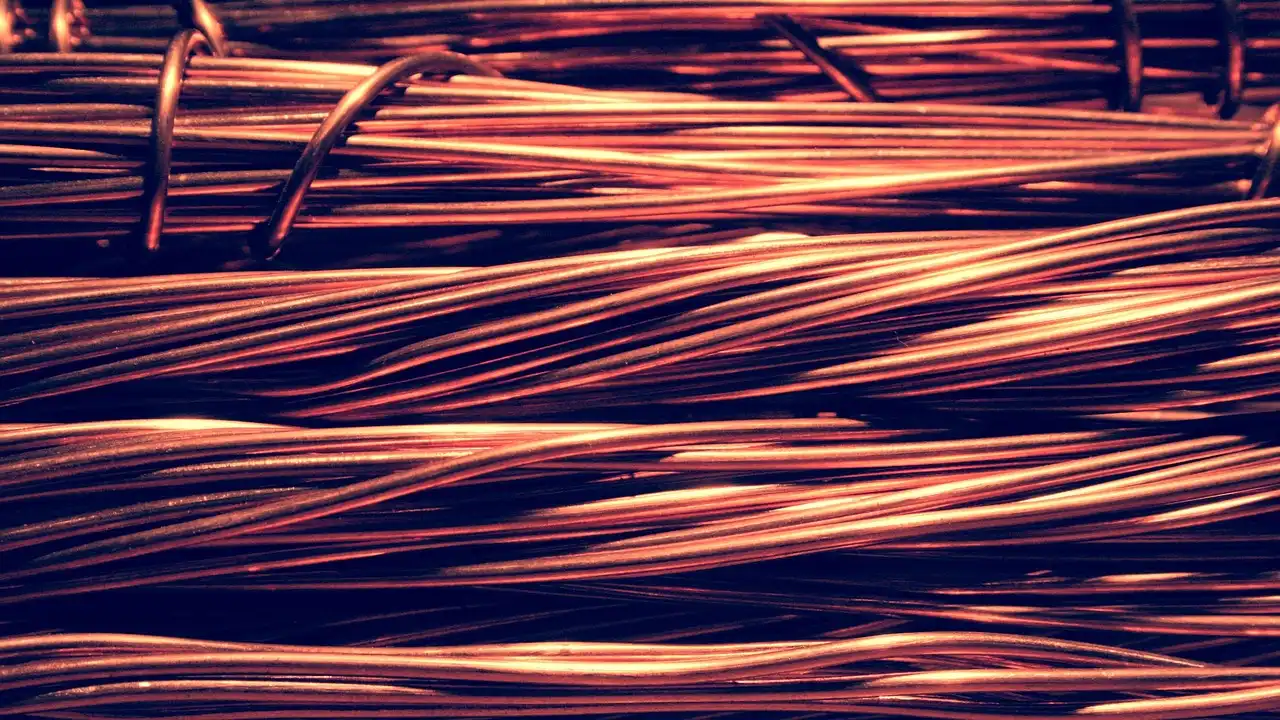
For most vegetable beds, galvanized steel wire is the default choice, PVC-coated wire is the gentlest contact surface, aluminum is useful where weight matters, and copper is best reserved for dry, exposed uses. The right answer depends on where the wire sits, how often it gets wet, and whether stems touch it.
Galvanized steel wire
Galvanized steel is the common outdoor standard because the zinc coating improves rust resistance. It appears in fencing, plant support, and barrier products, including galvanized poultry netting for garden protection and light fencing. Examples include 12-3/4 gauge barbed wire and lighter netting in about 20 to 22 ga, depending on the job.
PVC-coated wire
PVC-coated wire adds a soft outer layer that reduces abrasion. That matters on tomato stakes, trellises, and training lines where stems rub against the support. It is often a better contact surface than bare copper because the coating lowers the chance of cutting into green tissue during wind or growth.
Aluminum wire
Lightweight aluminum is useful when you want easier handling and good outdoor resistance without the stiffness of heavier wire. Professional garden wire guidance commonly points to galvanized steel, PVC-coated steel, or lightweight aluminum as the main choices. Aluminum can be a practical middle ground for clips, light trellises, and small supports.
Copper wire
Copper wire has a place in garden hardware, but it is not the broad default for vegetable beds. It can be fine for exposed support, fencing details, or deterrent setups where it stays dry. It is a poor fit for burial, root-zone contact, or any task that keeps it damp in soil.
Common garden wire products include welded wire fence panels, poultry netting, hexagonal mesh, deer and rabbit fence, and yard-and-garden fence. A few formats are built for structure rather than plant contact, such as a welded wire fence example sized 36 inches by 100 feet and a 1-inch hexagonal mesh product for gardens.
Match the material to contact. Use PVC-coated wire where stems touch the support, galvanized steel where the wire faces weather, and copper only where the wire stays above ground and dry. This keeps the contact surface appropriate for the job.
Choose the right gauge. Thicker wire holds shape better for fencing and panels, while lighter wire works for ties and clips. A 12-3/4 gauge product fits heavier barrier work, while 20 ga and 22 ga mesh fits lighter garden protection.
Protect stems from abrasion. Use clips, soft ties, or coated wire where branches move in wind. Bare metal against a tomato stem can cut into tissue over time, especially at a bend or support point that rubs each day.
Finish every cut end. Bend, cap, or trim sharp ends so they cannot catch hands, hoses, or stems. A loose wire tail at bed height is a common failure point and an avoidable one.
Keep buried runs separate. If a system must go underground, use a product meant for direct burial instead of general garden wire. Burial changes the load, the moisture, and the corrosion risk.
A common first-timer mistake is tying cucumbers to a trellis with bare wire and leaving the twist against the main stem. The support may hold, but the stem can scar where it rubs. A PVC-coated tie or a soft clip solves the contact problem without changing the structure.
Can copper wire help plants or control pests?
Copper wire is not a general plant-growth booster, and it is not a standard pest-control material for vegetable beds. Any claim that copper wire makes plants grow better should be treated cautiously. Its real value is structural, not magical: ties, support points, light fencing details, and other hardware tasks.
Plant growth claims
Plants need copper as a trace nutrient, but that does not mean copper wire helps them grow. The nutrient question belongs to soil tests and amendments, not to wire wrapped around a stem or buried in a bed. A copper object is not a fertilizer program.
Pest-control claims
Gardeners sometimes hear that copper deters pests, but copper wire is not a proven all-purpose barrier in vegetable gardens. It may be used in deterrent setups, yet those claims need a reality check before you build a bed around them. For pest exclusion, mesh, spacing, and solid fastening matter more.
Support and training use
Where copper does make sense, it is as support hardware. Use it for dry trellis ties, light fencing details, or reusable support pieces that do not sit in the root zone. For tomatoes, vines, and climbing plants, the safer habit is to choose a support material that will not abrade stems or corrode in soil.
Frequently asked questions
Is copper wire safe in vegetable gardens?
Yes, if it stays above ground and away from long-term soil contact. Copper wire is a reasonable choice for dry support or light hardware, but it is not the best choice for burial, root-zone contact, or damp bed edges. For those jobs, galvanized steel or PVC-coated wire is safer.
Does copper wire help plants grow?
No general growth benefit is established for copper wire itself. Plants need trace copper in soil, but that is a nutrient issue, not a wire issue. If a garden needs copper, soil testing and a suitable amendment are the right tools, not copper hardware wrapped around stems.
Can I use copper wire in a vegetable garden for pest control?
Only with caution, and not as a proven default. Copper wire is not a standard pest-control material for edible beds, and its effect is often overstated. For exclusion, use proper mesh, tight fastening, and a fence or barrier designed for the pest you are trying to stop.
Will copper wire hurt vegetables or soil?
It can if it is buried, kept wet, or left in direct root-zone contact for long periods. Above ground, the risk is much lower. The problem is not copper as a trace nutrient; the problem is a corroding object releasing copper into soil over time.
What is the best wire to use around garden beds?
For most vegetable beds, galvanized steel is the safest default, with PVC-coated wire as the gentlest contact surface. Aluminum can work for lighter support jobs. Choose the gauge and mesh for the task, and keep any wire from cutting into stems or sitting in wet soil.
Can copper wire be buried in the garden?
It should not be the default choice for burial. Direct-burial applications keep wire moist and hidden, which increases corrosion and soil exposure risks. If a buried wire is required, use a product intended for that use rather than bare copper wire from a general garden or hardware project.