Best Mulch for Vegetable Gardens and When to Use It
For many vegetable gardens, shredded leaves or straw work well as mulch after seedlings are a few inches tall; use finished compost around transplants, and use black plastic only to warm soil before planting heat-loving crops. Put mulch down at the wrong time, and stems can rot, seedbeds can stay cold, or soil can hold too much water. This guide matches mulch to crop stage, bed type, and season so you know when to apply it.
This guide is part of our Vegetable gardening guide series.
What mulch does in a vegetable garden
Mulch suppresses weeds, holds moisture, and buffers soil temperature. Those jobs sound simple, but timing changes everything. A mulch that helps tomatoes in July can slow carrots in April, and material that suits established peppers can bury newly sown lettuce.
The right choice changes with crop stage because seedlings need light and warm soil to emerge, while transplants can take mulch sooner. Seeded rows and transplanted rows need different handling.
Why crop stage changes the choice
Direct-seeded beds need open soil until germination and early emergence are done. Transplanted beds can usually be mulched once the plants are settled and watering is steady. That is why one blanket mulch rule fails so often.
Why bed type changes the choice
Raised beds often dry and warm faster than in-ground beds, so they may need mulch a little later in spring. In-ground beds hold moisture longer and often need less depth. Paths between rows are different again; they can take coarser material that would be wrong in the planting row.
Which mulch is best for your bed type?

The best mulch depends on whether the bed is seeded, transplanted, raised, or used as a path. Annual vegetable rows usually need light, easy-to-move material. Raised beds often need thinner layers and tighter timing. Paths can handle bulkier, slower-decaying mulch that would be a poor fit in the crop row.
Annual in-ground beds
For annual beds, shredded leaves and straw are the most practical organic choices. They spread fast, cover bare soil, and are easy to pull back for seeding or thinning. Compost works as a topdressing after planting, but it is not a weed barrier by itself.
Raised beds
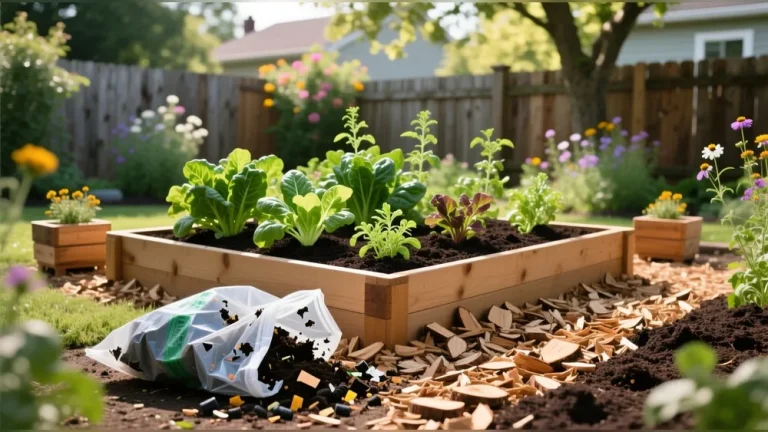
Raised beds call for more caution. A deep layer can cool the root zone too much in spring or trap moisture around stems. Thin straw, shredded leaves, or compost around transplants usually works better than bulky wood chips.
Paths between rows
Wood chips work well in paths. They cut mud, break down slowly, and stay in place. That coarse texture helps there. In planting rows, the same slow breakdown can tie up nitrogen near hungry crops.
Warm-season beds versus cool-season beds
Warm-season crops such as tomatoes, peppers, squash, and cucumbers usually want mulch after the soil has warmed. Cool-season crops such as lettuce, spinach, and peas often do better with lighter mulch or later mulching, especially in cool spring weather.

Best mulch materials for vegetable gardens
No single mulch fits every crop. The useful question is which material fits the crop stage, season, and bed type. The list below separates the materials that work in rows from the ones that belong in paths or only under specific conditions.
Straw mulch
Straw is light, airy, and quick to spread. It is one of the best choices for annual vegetable beds once seedlings are established. A common application depth is a few inches, enough to shade soil and slow evaporation without packing down too tightly.
Use clean, seed-free straw when possible. Straw with weed seed can create a season-long problem. It works well around tomatoes, peppers, potatoes, beans, and vine crops once they are growing strongly.
Shredded leaves
Shredded leaves are often free or low-cost, and they are usually the best organic mulch for beds when they are partly shredded. Whole leaves can mat, especially oak-free mixes or wet piles, but a shredded layer stays more open and lets water through.
They tend to break down faster than straw, so they may need refreshing during the season. That quick breakdown can pull a little nitrogen from the surface as microbes work on the carbon, which matters most in very young or hungry plantings. They fit well in fall and spring, especially in in-ground beds and around established transplants.
Grass clippings
Grass clippings can work, but only in a thin layer and only if they are herbicide-free. They mat easily, smell when put down too thick, and can form a wet blanket that limits airflow. Let them dry first, then apply around established plants, not over tiny seedlings.
Use a relatively thin layer at a time, and add more only after the first layer dries. That keeps the surface from sealing over.
Compost
Compost adds nutrients and has a fine texture that makes it useful as a topdressing. It works best after planting or midseason, especially around transplants that can use a surface feeding. A thin layer is usually enough.
Compost is not the same as a weed barrier mulch. It improves the topsoil and feeds the bed, but it does not block light as well as straw, leaves, or plastic.
Wood chips
Wood chips are best for paths, orchards, and long-term bed edges, not usually for vegetable rows. Fresh chips break down slowly and can tie up nitrogen near the surface as they decompose. Coarser chips also make direct seeding and cultivation harder.
If they are used near vegetables, keep them well away from the active row and use them mainly as a path material. A few inches can work in paths, but not in the planting zone.
Plastic mulch
Black plastic and clear plastic do different jobs. Black plastic blocks light and can help warm soil. Clear plastic can warm soil more strongly, but it can also encourage weeds underneath if the bed is not prepared correctly. Plastic mulch works best for warm-season crops and can be paired with drip irrigation.
Install drip lines before the plastic goes down. After the season, removal and disposal take time, so plastic makes the most sense when early warming matters more than easy cleanup.
Living mulch and cover crops
Living mulch and cover crops are useful between rows or in off-season beds, but they can compete with vegetables for water and nutrients. Keep them out of the immediate seedling zone. They fit better for reducing bare soil than for making a clean mulch blanket around small crops.
When should I put mulch on my vegetable garden?
Mulch timing depends on the crop and the weather. Transplants can usually be mulched soon after they are set out and watered in. Direct-seeded beds should usually stay open until seedlings are up and growing. In hot weather, mulch helps earlier. In spring, it often needs to wait.
Right after transplanting
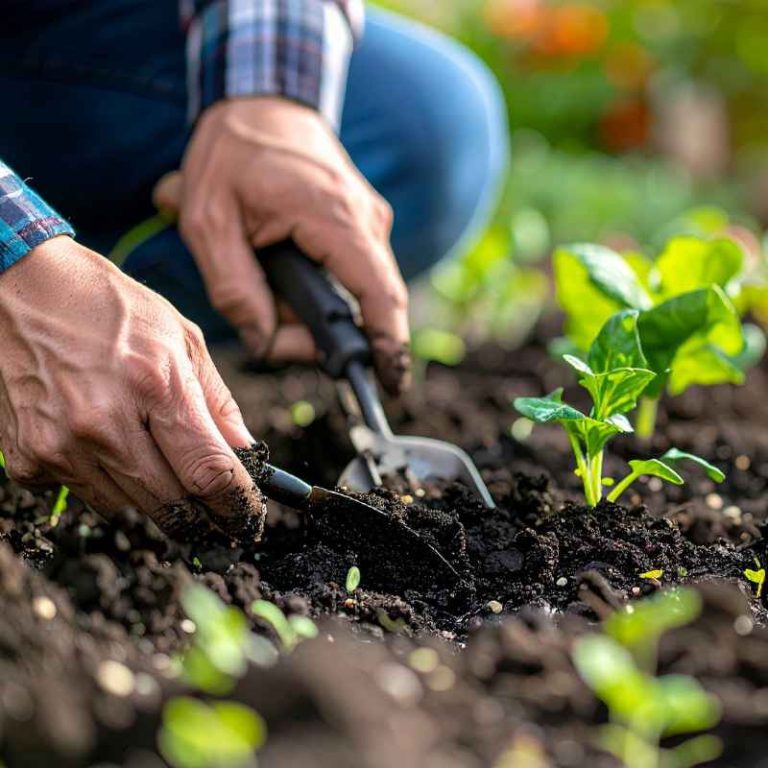
Mulch can go down after transplanting if the plant is stable and the stem is not buried. Water first, then mulch around the plant, leaving a clear ring at the base. Finished compost, straw, or shredded leaves are the usual choices here.
After direct seeding and emergence
Do not mulch over seeds you want to germinate. Wait until the seedlings are up and large enough to stand above the material. For many vegetables, that means waiting until plants are several inches tall and the row is easy to see.
Midseason in hot weather
Midseason is the easiest time to add mulch if bare soil is drying out fast. A top-up of straw, leaves, or compost can slow evaporation and keep roots cooler. This works especially well in raised beds and in hot, windy climates.
In fall after harvest
Fall is a good time to cover empty beds with shredded leaves or compost. That protects soil from erosion and cuts winter weed growth. Heavy materials such as wood chips belong more on paths than on fresh vegetable ground.
How thick should mulch be around vegetables?
Depth depends on the material. Light materials need enough depth to block light, but not so much that water cannot move through them. Keep all mulch a few inches away from stems. If seedlings struggle to emerge, the mulch is too heavy or went down too soon.
Depth by material
- Straw: about 2 to 4 inches
- Shredded leaves: about 2 to 3 inches, then refresh as they settle
- Grass clippings: thin layers only, usually no more than 1 inch at a time
- Compost: about 1 to 2 inches
- Wood chips in paths: about 2 to 4 inches
- Plastic mulch: one sheet, laid flat and secured
Keeping mulch off stems
Avoid piling mulch against stems or crowns. That pocket of moisture can invite rot and pests. Leave a bare circle around each plant, especially for tomatoes, peppers, squash, and cucumbers.
When to thin, fluff, or reapply
Reapply when the material has settled, blown away, or broken down enough that light reaches the soil. Fluff matted straw or leaves so water can enter. Remove excess grass clippings if they form a slick mat.
Use now, wait, or avoid: a mulch decision table
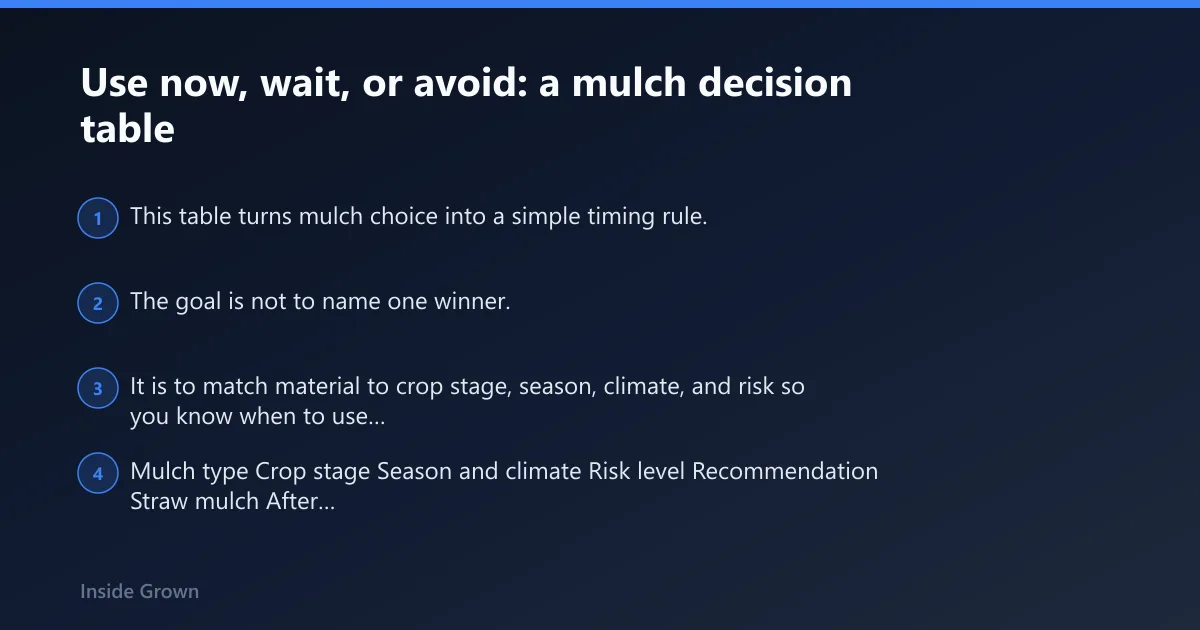
This table turns mulch choice into a simple timing rule. The goal is not to name one winner. It is to match material to crop stage, season, climate, and risk so you know when to use it now, when to wait, and when to avoid it altogether.
| Mulch type | Crop stage | Season and climate | Risk level | Recommendation |
|---|---|---|---|---|
| Straw mulch | After transplants are established; not over seed rows | Summer, or spring after soil warms; good in most climates | Low to medium if seed-free; higher if weed seed is present | Use now |
| Shredded leaves | Established transplants and mature rows | Fall or spring; best where mats can be avoided | Low to medium; can mat if not shredded | Use now if partially shredded |
| Grass clippings | Established plants only | Warm, dry weather after mowing; herbicide-free lawns only | Medium to high if wet, thick, or treated with herbicide | Use now in thin layers only |
| Compost | Transplants and midseason feeding | Spring after planting or midseason | Low, but weak as a weed barrier | Use now as topdressing |
| Wood chips | Paths, bed edges, long-term borders | Any season for non-row areas | Medium in rows; nitrogen tie-up and slow breakdown | Use now in paths only |
| Black plastic | Before warm-season transplants | Cool spring when soil warming matters | Medium; needs irrigation and removal later | Use now before planting heat lovers |
| Clear plastic | Pre-plant soil warming only | Before planting, in sunny areas | High if left too long or if weeds are already present | Use with caution, then remove |
| Living mulch / cover crop | Inter-row, not around seedlings | Off-season or between widely spaced crops | Medium to high from crop competition | Wait unless spacing is wide |
Should I use straw or wood chips in a vegetable garden?
Use straw in vegetable rows and wood chips in paths. Straw is lighter, quicker to spread, and easier to move around crop stems. Wood chips break down slowly and can pull nitrogen near the surface, which makes them a poor fit for most active beds.
Where straw fits best
Straw fits annual beds, around tomatoes and peppers, under squash vines, and around established greens after they are growing. It is especially useful where watering is frequent and the goal is quick coverage.
Where wood chips fit best
Wood chips fit paths, borders, and long-term access lanes. A 2 to 4 inch layer keeps feet out of mud and cuts weeds where crops are not growing. They are a bad choice for seeded rows and usually a weak choice for raised bed vegetable rows.
What to do in raised beds and paths
In raised beds, use straw, shredded leaves, or compost. In paths, use wood chips. That split keeps the planting zone easier to manage and avoids the nitrogen and seeding problems that come with coarse chips in the crop row.
Frequently asked questions
What is the best mulch for vegetable gardens?
For most vegetable gardens, shredded leaves and straw are the most practical choices after plants are established. Compost works well as a thin topdressing around transplants, while black plastic is best used before planting warm-season crops. The best material changes with crop stage and soil temperature needs.
When should I put mulch on my vegetable garden?
Mulch after transplants are settled and after direct-seeded crops have emerged and grown enough to stand above the mulch. In hot weather, it can go down earlier to limit moisture loss. In spring, wait if the soil still needs warming, especially for cool-climate gardens.
Should I use straw or wood chips in a vegetable garden?
Use straw in the planting rows and wood chips in the paths. Straw is light, airy, and easy to spread around vegetables. Wood chips are slow to break down and can cause nitrogen issues near crops, so they belong away from the root zone.
How thick should mulch be around vegetables?
Most vegetable mulches work best at 2 to 4 inches for straw, 2 to 3 inches for shredded leaves, and 1 to 2 inches for compost. Grass clippings need to stay thin. Keep every material a few inches away from stems so moisture does not collect against the plant.
Can I mulch right after planting vegetables?
Yes, if the vegetables are transplants and they are watered in first. No, if the bed was direct-seeded and the seeds still need light and warmth to germinate. For seed rows, wait until seedlings are up and strong enough to stay above the mulch.
Is grass clippings mulch safe for vegetable gardens?
Grass clippings can be safe if they are herbicide-free, dry, and applied in thin layers. Thick wet clippings mat down, smell, and block airflow. They work best around established plants, not on fresh seed rows or tiny seedlings that can be buried easily.