Best Companion Plants for Vegetable Gardens by Goal
Best companion plants for vegetable gardens do one job well: cut pest pressure, support pollinators, cover soil, or fit the bed better. Pick random pairings and you waste space, invite the wrong insects, or shade crops that need sun. This guide sorts companion plants by goal, then shows which vegetables suit beds, rows, raised beds, and containers.
What companion planting does in a vegetable garden


Simple definition
Companion planting means placing certain crops or flowers near each other for a garden job. In vegetable beds, that job is usually pest reduction, pollination support, disease suppression, or better use of the ground. I use it most often in the vegetable patch.
What it can help with
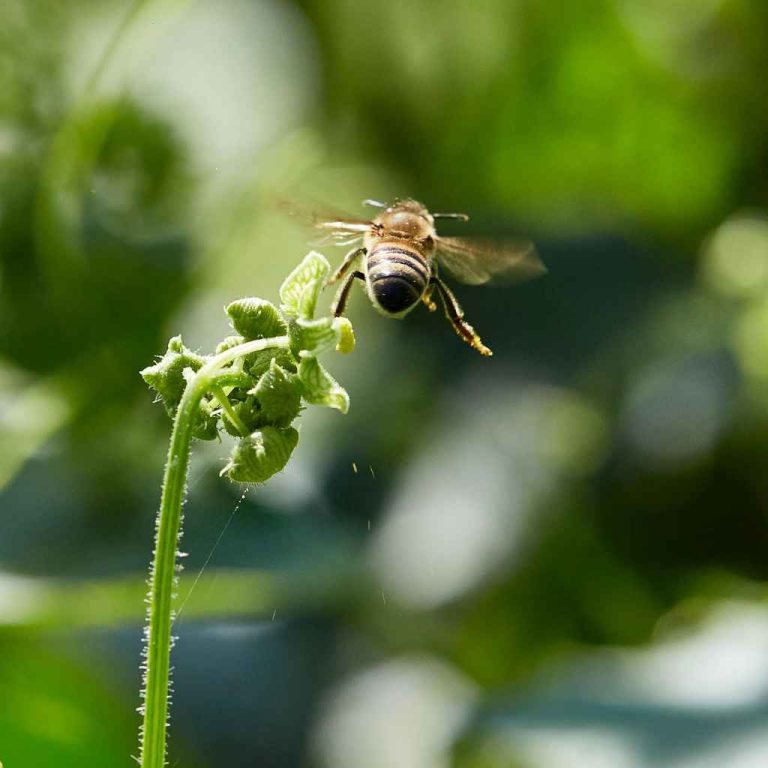
It can aid pollination, prevent disease, and keep pest numbers down. Strong scents can throw pests off the trail. Some flowers draw hoverflies, bees, and other helpful insects. Others work as trap crops, pulling insects away from vegetables you want to protect.
What it cannot promise
Some companion planting claims are backed better than others. Results vary with weather, spacing, soil moisture, and pest pressure. A pairing that helps in one garden can fail in another if it adds shade, humidity, or root competition.
How do you choose companion plants for your goal?
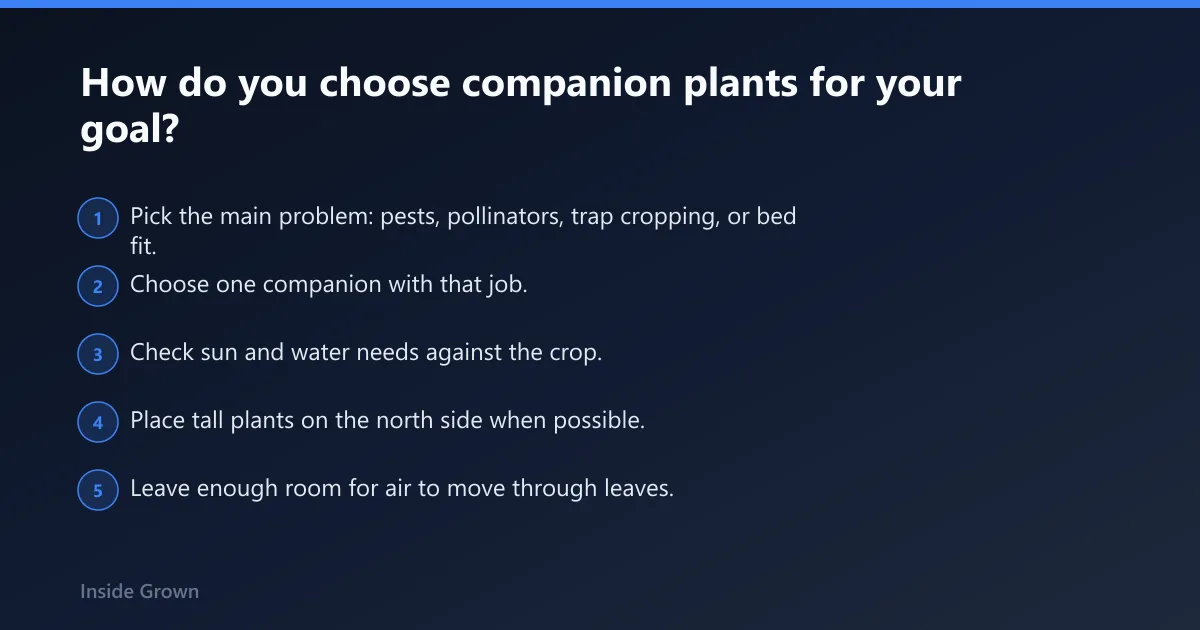
Start with the job, not the folklore. If the bed needs pest pressure control, choose plants with strong scent or trap-crop behavior. If pollination is the issue, choose flowers that feed bees and hoverflies. Then check sun, water, timing, and height before planting.
Pick the job first
Goal-based layout works better than copying a classic pairing without context. Ask whether the crop needs pest cover, insect support, or a little space management. That answer narrows the choices fast.
Match sun, water, and timing
Companion plants should want the same light and moisture. Do not mix thirsty plants with drought-tolerant herbs in the same watering zone. Early crops can finish before taller companions fill in, which keeps the bed useful across the season.
Use height and spacing to avoid crowding
Tall plants can shade lettuce, carrots, and other low crops. Dense plantings trap humidity and can raise disease pressure. In small beds, choose low companions at the edge and keep vigorous plants out of the center unless the crop can handle the cover.
- Pick the main problem: pests, pollinators, trap cropping, or bed fit.
- Choose one companion with that job.
- Check sun and water needs against the crop.
- Place tall plants on the north side when possible.
- Leave enough room for air to move through leaves.
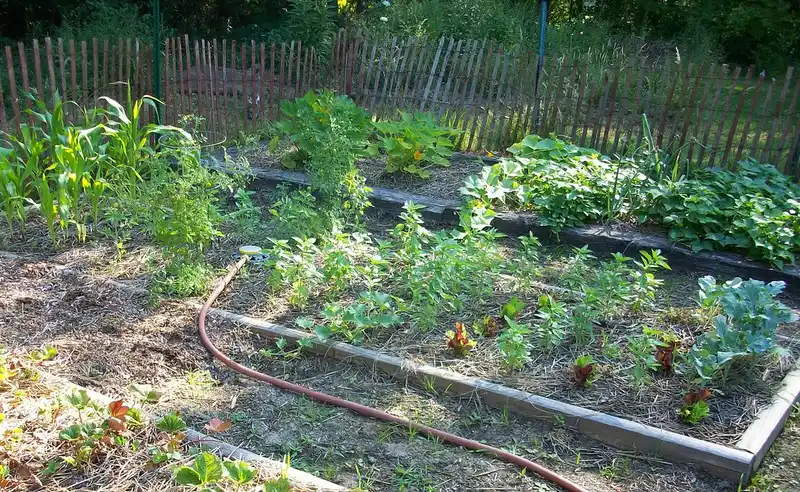
Best companion plants by garden goal
For pest pressure
French marigolds are planted alongside tomatoes to deter whitefly. Thyme may help confuse some brassica pests, such as flea beetles. Alliums, including onions, garlic, leeks, and chives, suit carrots and brassicas because their strong scent can hide host plants. Nasturtium can also ease pressure on nearby crops by drawing pests away.
For pollinators and beneficial insects
Borage brings in pollinators and is often planted near strawberries. Alyssum attracts hoverflies, which matters near lettuce and brassicas because hoverfly larvae feed on aphids. Lavender attracts bees, butterflies, and hoverflies, so it earns a place where flowers can support fruit set.
For trap cropping
Nasturtium can work as a trap crop alongside beans and brassicas. The plant can draw pests away from the main crop, but it needs monitoring. If the trap crop gets overwhelmed, it can become a pest reservoir instead of a buffer.
For scent-based pairing in tight beds
Alliums and lavender both bring strong scent into a compact layout. That can help when the goal is to muddle pest signals without taking much root space. Keep airflow in mind, especially around leafy crops and crowded rows.
Which companion plants work best with tomatoes, carrots, and beans?
For tomatoes, French marigolds, alliums, and borage are the clearest goal-based choices. Carrots often pair well with alliums and lavender. Beans do well with nasturtiums and other low companions that do not shade the row or crowd the base of the plants.
Tomatoes
French marigolds are the classic match for tomatoes, mainly for whitefly pressure. Alliums can sit nearby if spacing allows, and borage supports pollinators around the bed. Basil is often listed with tomatoes for growth and pest resistance, but that claim is less certain than the marigold-whitefly link.
Carrots
Onions are recommended with carrots to help deter carrot fly, and carrots and leeks are described as a strong companion pairing. Lavender may fit near carrots if the soil drains well and the bed is not already crowded. Keep the row open, because carrots do poorly when shaded.
Beans
Nasturtiums can draw pests away from beans, and wormwood is described as helping deter aphids from broad beans and other bean crops. Calendula can lure aphids away from beans as well. These companions work best when they are low enough not to shade the bean row or steal too much moisture.
What flowers and herbs are best with brassicas and lettuce?
Brassicas can do well with alyssum, thyme, nasturtium, and alliums. Lettuce pairs well with alyssum because it attracts hoverflies whose larvae feed on aphids. These crops benefit most from low companions that do not block light or reduce airflow.
Brassicas
Thyme can throw brassica pests such as flea beetles off course. Alliums add scent disruption. Nasturtium can pull pest pressure away from the main crop. Alyssum helps by bringing in beneficial insects, which matters when aphids or small pests begin to build up.
Lettuce
Lettuce is short, so it needs companions that stay low. Alyssum is a good fit near lettuce because it attracts hoverflies. Avoid tall flowers that cast shade across the row. Lettuce also needs moving air, or leaf disease can become harder to manage.
Goal-based companion planting matrix
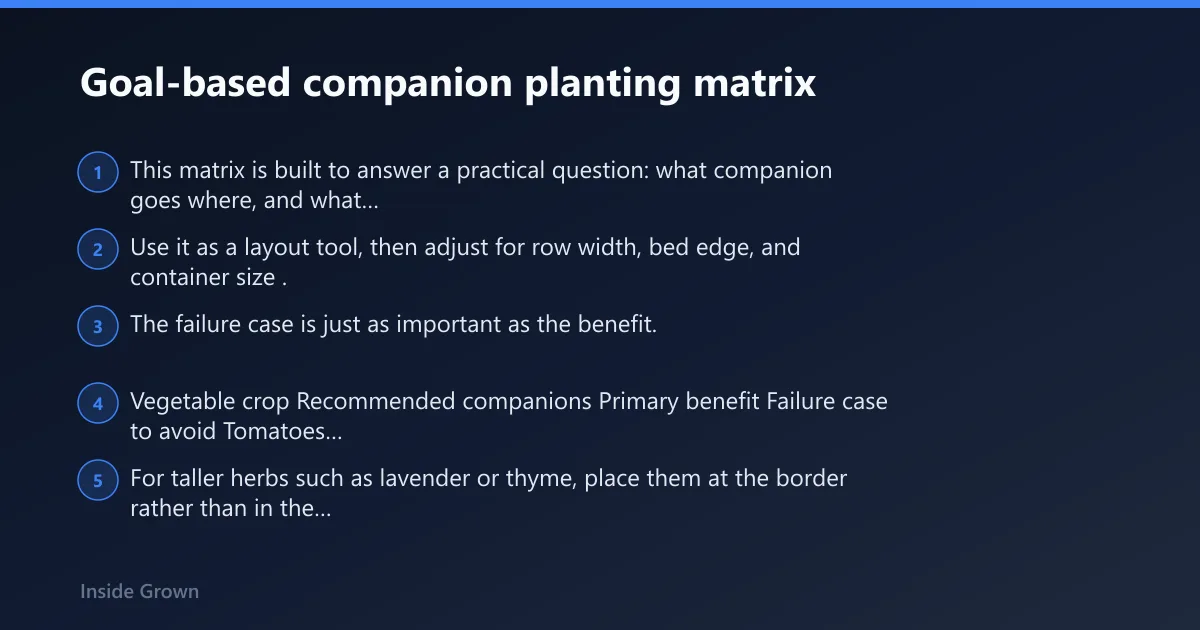
This matrix is built to answer a practical question: what companion goes where, and what problem is it meant to solve? Use it as a layout tool, then adjust for row width, bed edge, and container size. The failure case is just as important as the benefit.
| Vegetable crop | Recommended companions | Primary benefit | Failure case to avoid |
|---|---|---|---|
| Tomatoes | French marigold, allium, borage | Whitefly pressure, pollinator support | Too many marigolds can crowd stems and slow airflow |
| Carrots | Onion, leek, lavender | Carrot fly disruption and scent masking | Tall lavender can shade thin carrot rows in small beds |
| Beans | Nasturtium, calendula, wormwood | Trap cropping and aphid pressure reduction | Trap crops left unchecked can become pest magnets |
| Brassicas | Alyssum, thyme, allium | Hoverfly support and pest confusion | Dense planting can raise humidity around leaves |
| Lettuce | Alyssum, low calendula | Beneficial insect support | Any tall companion that shades the bed weakens growth |
| Strawberries | Borage, low alyssum, thyme | Pollinator support and ground-level insect activity | Overcrowding can keep berries damp and slow ripening |
| Leeks | Carrot, rosemary, lavender | Scent masking and better bed use | Drying herbs in a thirsty leek bed can split watering needs |
How much to plant
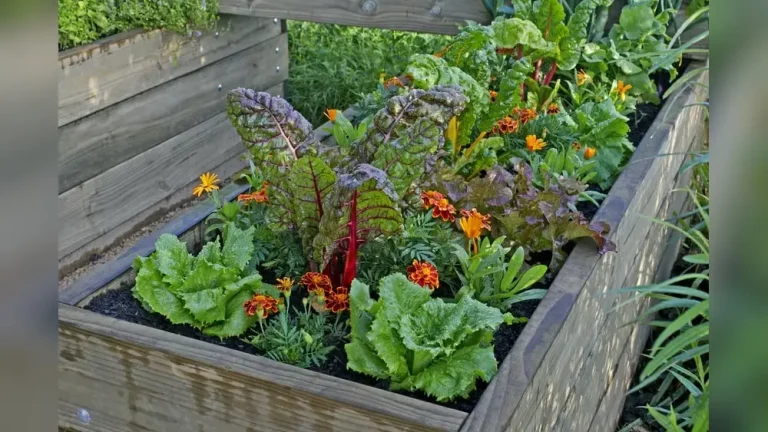
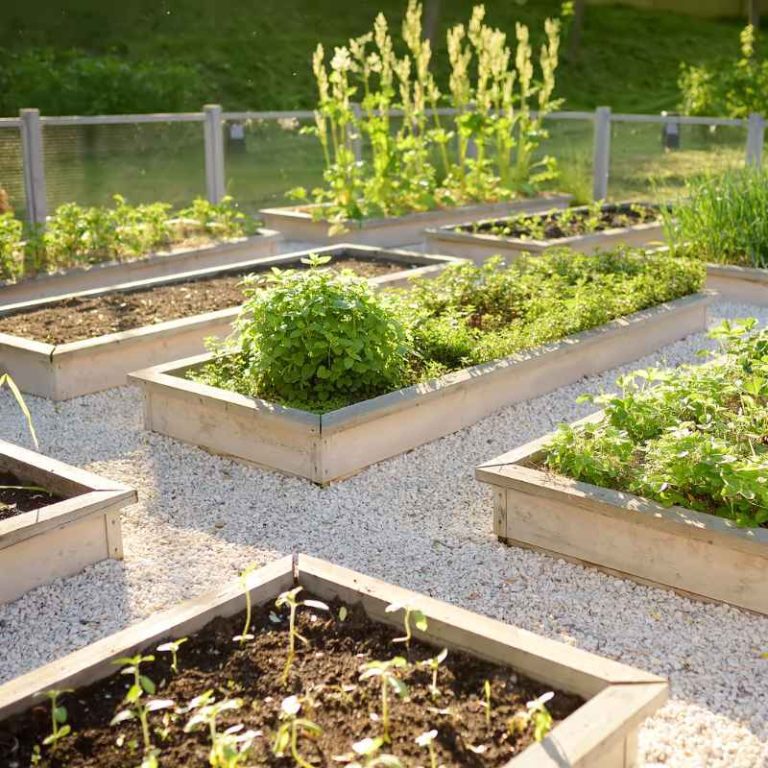
In small beds, a light edge planting of low flowers like alyssum or calendula is often enough. For taller herbs such as lavender or thyme, place them at the border rather than in the middle of the bed. In rows, tuck companions every few feet, not at every plant.
Raised beds and containers
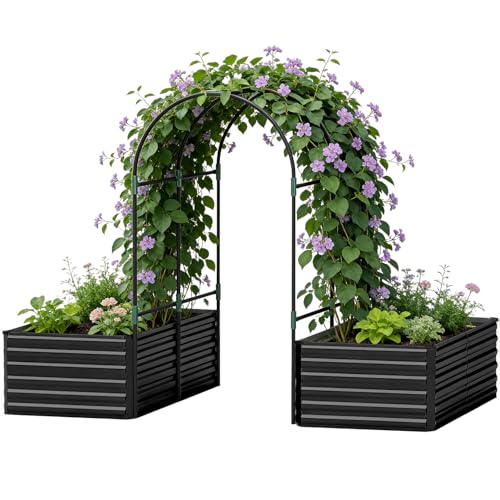
Raised beds heat and dry faster, so mix companions only when the water needs match. Containers are stricter. Mint, for example, is best grown in a pot so it does not smother crops. In containers, choose compact companions and keep one main function per pot.
What should you not plant together in a vegetable garden?
Avoid pairing plants that want very different water, sun, or space. Thirsty and drought-tolerant crops in the same watering zone often fail together. Also avoid tall companions that shade sun-loving vegetables, and crowded pairings that trap humidity and raise disease pressure.
Common failure patterns
Too much shade can weaken tomatoes, carrots, lettuce, and beans. Dense foliage can hold moisture around brassicas and leafy crops. A trap crop placed too close to the main crop can also move pest pressure into the bed instead of away from it.
Watch for root and canopy competition
Some herbs and flowers spread faster than expected. Mint is the clearest example, which is why it belongs in a pot. Large companions may also compete for root room in shallow raised beds, leaving the vegetable crop short on moisture or nutrients.
Do companion plants actually improve vegetable yields?
Sometimes, but not always. Companion planting can aid pollination, prevent disease, and keep pest numbers down, which may support better harvests. The gain depends on whether the pairing solves a real problem in that garden. Random planting rarely gives a clear return.
How to read the evidence
Some claims are stronger, such as French marigolds with tomatoes for whitefly, onions with carrots for carrot fly, and alyssum near lettuce for hoverflies. Other claims are more traditional than proven. Treat companion planting as a useful layout method, not a guarantee of yield gain.
Which companion plants help deter pests in vegetable gardens?
French marigolds, alliums, thyme, nasturtiums, wormwood, calendula, and sage are all used for pest pressure in different ways. Some confuse pests with scent. Others act as trap crops. A few bring in beneficial insects that keep soft-bodied pests in check.
Strong scent and pest confusion
Alliums can hide host plants, and thyme can throw brassica pests such as flea beetles off course. Sage is also used around brassicas for the same general reason. These choices work best when the companion is placed close enough to matter, but not so close that it crowds the crop.
Trap crops and draw-away plants
Nasturtium is the clearest example here. It is useful with beans and brassicas because it can pull pests away from the main crop. Calendula can lure aphids away from beans. Watch these plants closely, because trap crops need management.
What are the best flowers to plant with vegetables?
The best flowers are the ones that match a garden job. Marigold suits tomatoes for whitefly pressure. Nasturtium works as a trap crop. Alyssum brings hoverflies to lettuce and brassicas. Borage supports pollinators near strawberries. Lavender also helps where scent and flower cover are both useful.
Keep flower size in check
Small flowers fit best in vegetable beds because they support insects without taking over. Big, leafy flowers can shade crops or slow drying after rain. In tight beds, the best flower is often the one that stays low and flowers steadily.
Which herbs work as companion plants in a vegetable garden?
Alliums, thyme, lavender, basil, sage, and mint are all used as companion plants in vegetable gardens, but each needs the right setting. Alliums fit carrots and brassicas. Thyme suits brassicas. Lavender fits carrots and leeks. Basil is often listed with tomatoes and summer squash. Mint needs a pot.
Use herbs with purpose
Herbs should earn their space. If the goal is pest disruption, choose scent-heavy herbs close to the crop. If the goal is pollinator support, choose flowering herbs that do not block light. If the bed is small, keep spreading herbs out of the main planting zone.
What plants should not be planted together in a vegetable garden?
Do not plant crops together when their water needs, height, or root spread clash. Avoid drought-tolerant herbs beside thirsty vegetables if they share irrigation. Avoid tall companions over short crops. Avoid trap crops in tiny beds if there is no space to monitor them.
Simple layout rule
If a companion makes the bed darker, wetter, or harder to water evenly, it is probably the wrong pairing. That rule catches many bad combinations before they go in the ground.
Frequently asked questions
what plants go together in a vegetable garden
The best matches share a clear job and similar growing needs. Tomatoes and French marigolds, carrots and onions, beans and nasturtiums, and brassicas with alyssum or thyme are all common examples. The pairing should fit the bed’s sun, water, and spacing limits.
what are good companion plants for vegetable gardens
Good companions are plants that help with pests, pollinators, trap cropping, or bed use without creating crowding. French marigold, nasturtium, alliums, borage, alyssum, thyme, and lavender are all useful when they match the crop and the site.
Which companion plants help deter pests in vegetable gardens?
French marigolds, alliums, thyme, sage, wormwood, calendula, and nasturtiums can all reduce pest pressure in the right setting. Some confuse pests by scent. Others pull pests away from the crop. None works well if the bed is too crowded or poorly matched.
What are the best flowers to plant with vegetables?
Marigolds, nasturtiums, alyssum, borage, and calendula are the most useful flowers for many vegetable beds. Each has a different job. Marigolds target whitefly near tomatoes, alyssum feeds hoverflies, and nasturtiums can act as trap crops near beans and brassicas.
Which herbs work as companion plants in a vegetable garden?
Thyme, lavender, basil, sage, and the alliums all have companion roles. Thyme suits brassicas, lavender helps carrots and leeks, basil is often paired with tomatoes, and alliums are strong partners for carrots and brassicas. Mint belongs in its own pot.
How do I choose companion plants for my garden layout?
Choose by goal first, then check plant size, sun, water, and timing. Put tall plants where they will not shade short ones. Keep thirsty and drought-tolerant crops separate. In raised beds and containers, favor compact companions and low flowers that do not choke airflow.