What to Plant in a Vegetable Garden in Spring
Plant peas, lettuce, radishes, spinach, carrots, beets, and onion sets first in spring; sow cool-season crops after soil reaches about 40°F to 50°F, and wait until frost has passed for beans, cucumbers, squash, tomatoes, peppers, and basil, which are often started as transplants in colder springs. Planting too early can rot seed, stunt seedlings, or kill frost-tender crops overnight. This guide gives a spring decision tree by frost status, soil temperature, and direct-sow versus transplant.
What counts as spring planting?


Spring planting starts with cool-season crops that tolerate cold soil and light frost, then shifts to warm-season crops after the last frost date. The split matters because early planting can help some crops, while the same timing can ruin others. Your local frost date and soil warmth decide the right window, not the calendar alone.
Cool-season versus warm-season crops
Cool-season vegetables include roots, leafy greens, peas, and a few herbs. Spring crops can include roots such as radishes, turnips, carrots, and beets, plus snap peas, snow peas, shelling peas, spinach, lettuce, swiss chard, parsley, cilantro, and chives. These are the crops most gardeners can work with first.
Warm-season crops need warmer soil and safer nights. Beans, cucumbers, squash, tomatoes, peppers, and basil belong later in the season, after freezing weather is unlikely. If you plant them too early, growth stalls and seedlings can fail fast in cold soil.
Why spring timing changes by region
Spring timing is not the same in every yard. The average last frost date marks the point after which below-freezing temperatures are unlikely, but that date changes by USDA hardiness zone and by zip code. Warm climates may begin spring planting in January, while zone 6 gardens often start direct-sown seeds and transplants around late March or early April.
Short-season gardens, wet-clay sites, raised beds, and containers also move on different schedules. Raised beds warm faster than in-ground clay. Containers dry faster than ground soil, but they also cool quickly on cold nights.
The three planting questions to answer first
- Has your average last frost date passed, or is it still weeks away?
- Is the soil actually warm enough, based on a soil thermometer?
- Should this crop be direct sown or transplanted?
Answer those three questions before you buy seed or set out seedlings. That keeps early spring planting tied to the crop, not just the weather forecast.
How do you time spring planting?
Use your last frost date as the first benchmark, then check soil temperature before you sow. A soil thermometer gives a real reading, which is more useful than guessing from air temperature alone. Seed packets often list a soil temperature range, and that number should guide the final call.
Using your last frost date
For most spring vegetables, count backward from the average last frost date. Frost-hardy spring vegetable plants can be transplanted about four weeks before the average last spring frost date. Direct-sown spring seeds may be planted six weeks before to two weeks before the last frost date.
That window is the simplest way to sort crops. Early cool-season vegetables go in first. Frost-tender crops wait until the risk of hard freezes drops away.
Finding your USDA hardiness zone by zip code
Your USDA hardiness zone helps estimate planting timing, but the zip code-based last frost date matters more for spring vegetables. Zone maps are helpful for climate context. The frost date tells you when to plant.
If two nearby gardens sit in different microclimates, the zone may look the same while planting time changes. A sheltered south-facing bed can warm sooner than a shaded spot along a fence line.
Why a soil thermometer beats the calendar
Cold soil slows germination and invites rot. A soil thermometer measures actual soil temperature, so you can match the crop to the bed instead of hoping the calendar is right. That matters most for direct-sown crops, which sit in place while the ground warms.
If seed packets call for soil in the 40s or 50s, wait until the bed reaches that range. If the soil is still cold and wet, even a hardy crop can struggle to sprout evenly.
Spring planting matrix
This matrix sorts 12 common vegetables by sowing method, timing relative to the average last frost date, and the main failure risk if you go too early. Use the fallback column if the soil is still cold or wet.
| Vegetable | Start method | Window relative to last frost | Main failure risk if too early | If your soil is still cold/wet |
|---|---|---|---|---|
| Peas | Direct sow | About six weeks before last frost | Seed rot or slow sprouting in soaked soil | Wait for workable soil, or sow in a raised bed that drains fast |
| Spinach | Direct sow | About six weeks before last frost | Bolting once heat arrives after a weak start | Delay a few days and sow shallowly in cooler soil |
| Lettuce | Direct sow or transplant | Six weeks before to two weeks before last frost | Bolting or poor germination in hot, crusted soil | Use transplants or wait for a cooler, moist window |
| Radishes | Direct sow | Six weeks before to two weeks before last frost | Woody roots in stressed, uneven soil | Sow in loose, evenly moist soil only |
| Carrots | Direct sow | Six weeks before to two weeks before last frost | Forked roots in compacted or cold-soaked soil | Wait for a fine seedbed and steady moisture |
| Beets | Direct sow | Six weeks before to two weeks before last frost | Poor germination in cold, crusting soil | Hold off until the top layer crumbles easily |
| Turnips | Direct sow | Six weeks before to two weeks before last frost | Small roots and bitter tops if growth stalls | Wait for workable soil and keep sowings shallow |
| Chard | Direct sow or transplant | As soon as the ground thaws in early spring | Slow emergence in cold, wet beds | Use transplants or sow in a warmer raised bed |
| Parsley | Direct sow or transplant | About four weeks before last frost | Slow germination in cold soil | Start indoors or wait for steadier warmth |
| Cilantro | Direct sow | About four weeks before last frost | Bolting if warmth arrives too soon | Sow in cooler soil and partial afternoon shade |
| Chives | Direct sow or transplant | About four weeks before last frost | Slow start in cold soil | Use transplants if the bed stays soggy |
| Tomatoes | Transplant | After frost has passed | Cold shock or frost damage | Keep indoors and harden off later |
What can you direct sow first?
Direct sow peas, spinach, radishes, carrots, beets, turnips, cilantro, and many lettuce plantings first. These crops tolerate cool soil better than warm-season vegetables, and they are easier to start from seed than from transplants. Spring crops can include leafy greens and roots that germinate as soon as the bed is workable.
Best early direct-sow crops
Peas should go in early because they like cool weather. Spinach also belongs early, and it should be planted about six weeks before the last predicted frost date. Chard seeds can be sown as soon as the ground thaws in early spring.
Radishes, turnips, carrots, and beets also fit direct sowing. Parsley and cilantro can be direct sown, too, but they are more likely to fail if the seedbed stays cold and waterlogged.
Crops that fail in cold, soaked soil
A common first-timer mistake is sowing lettuce seed in cold, waterlogged soil instead of waiting for the spring bed to warm up. Cold-soaked soil can rot seed before it germinates, and a crusted surface can stop fragile seedlings from reaching light. That risk is high for carrots, beets, and lettuce seed in heavy clay.
Use a soil thermometer and a squeeze test. If the bed forms a sticky ribbon and stays wet for hours after rain, wait for drier conditions or switch to a raised bed.
When to repeat sowings for a longer harvest
Succession planting keeps harvests coming. Spinach and chard often respond well to repeat sowings about every 2 weeks. Lettuce can also benefit from staggered plantings if you want leaves rather than one large harvest.
Plant smaller batches instead of one long row. That spreads risk and reduces the chance that all of one crop bolts or matures at once.
Which spring vegetables should you transplant?
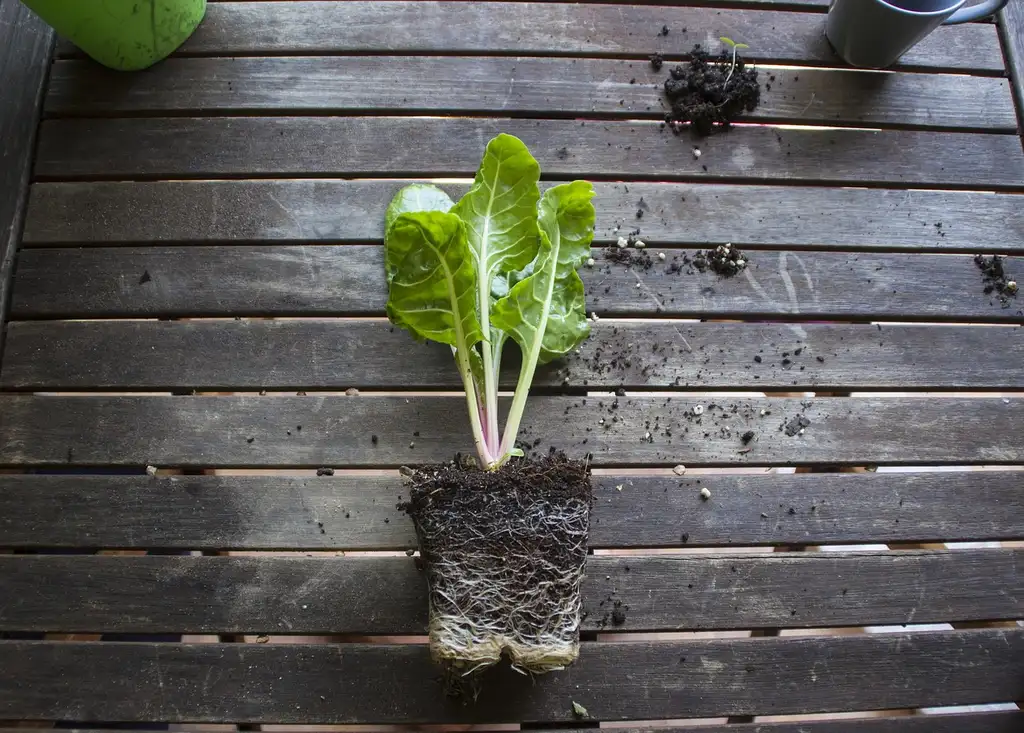
Transplant crops that need a head start indoors, or crops that are easier to move as seedlings than to germinate in the garden. Frost-hardy spring vegetable plants can be transplanted about four weeks before the average last spring frost date, as long as they are hardened off first. Warm-season transplants wait until frost danger is over.
Crops that need a head start indoors
Lettuce, chard, parsley, chives, and some early brassicas often do well as transplants if the garden is still cold. Tomatoes, peppers, cucumbers, squash, and basil need a longer indoor start and should stay inside until nights are reliably mild. In colder springs, they are usually transplanted rather than direct sown.
Transplants are useful when the seedbed is too cold for reliable germination, or when the crop needs a longer season than your spring weather can provide.
How to harden off seedlings
Hardening off takes about five to seven days. Move seedlings outdoors gradually, starting with shade and short exposure to wind, then add more sun and time each day. This reduces shock when plants leave the protected indoor space.
- Place seedlings outside in bright shade for a short first day.
- Increase outdoor time each day.
- Add morning sun, then more direct sun.
- Bring them in if nights are cold or windy.
- Set them out for planting only after they are acclimated.
What to do if nights are still cold
If frost is still possible, plant only the hardiest crops and keep tender seedlings waiting. Use a row cover or other frost protection if a late cold snap is in the forecast. For warm-season transplants, delay planting rather than trying to force them through cold weather.
Suppose tomato seedlings are ready but nighttime temperatures still dip near freezing. Leave them under cover indoors and wait. One cold night can do more damage than a week of steady growth can repair.
How do you protect seedlings from late frost?
Use sheets, blankets, or row cover when a late cold snap threatens newly planted crops. These covers can buffer light freezes and reduce wind exposure. They are most useful for early greens, peas, and other cool-season vegetables that were planted before the final frost window has closed.
When to use sheets, blankets, or row cover
Use frost protection when the forecast calls for a hard dip after early planting. Lightweight row cover is useful for everyday protection, while sheets or blankets are best for a sudden cold night. Secure the edges so wind does not lift the cover off the plants.
Remove heavy covers in the morning once temperatures rise. Leaving them on during the day can trap heat and moisture, which can stress young plants.
Which crops can handle a light cold snap?
Peas, spinach, lettuce, chard, radishes, turnips, carrots, and beets can usually handle lighter spring chill better than warm-season crops. Even so, repeated freezes can still slow them down or damage tender new growth. Protection helps keep early sowings on track.
When to remove protection during the day
Take covers off as soon as the air warms and sunlight returns. Damp, still air under a cover can encourage disease, and seedlings need light and airflow. Put the cover back on before sunset if another cold night is expected.
What should different gardens plant first?
Start with the crop group that matches your site, not just the calendar. Short-season gardens should lean on fast cool-weather crops. Wet-clay gardens need drainage first. Raised beds and containers often warm faster, so they can accept seed sooner if moisture is managed well.
Short-season gardens
Choose the fastest cool-season crops first: radishes, lettuce, spinach, and baby turnips. Peas fit well if they can be started early enough. Skip long-season warm crops until the bed and forecast both look safe.
In short-season areas, succession planting matters more because the window is tight. A few small sowings often work better than one large planting.
Wet-clay gardens
Heavy clay holds cold and stays wet. That makes cold-soaked soil a bigger problem for direct sowing. Wait until the soil crumbles rather than smears, then plant shallow seeds in rows that drain well.
Raised rows or amended beds can help, but do not force carrots or beets into mud. Poor structure early in spring can mean crooked roots and patchy stands later.
Raised beds and containers
Raised beds warm faster in spring, so they often support earlier sowing than in-ground beds. Containers can do the same, but they dry out faster and cool down at night. Check moisture more often and protect pots from cold snaps.
Because roots are more exposed in containers, the soil thermometer matters even more. A pot that feels mild on top may still be cold a few inches down.
What should you buy before planting?
Keep the prep list simple: seeds for cool-season crops, healthy transplants for crops that need a head start, a soil thermometer, row cover, and a backup frost cover such as sheets or blankets. Add labels, a hand trowel, and a watering can or hose with a gentle setting.
- Seed packets for peas, spinach, lettuce, radishes, carrots, beets, turnips, chard, parsley, cilantro, and chives
- Transplants for crops that need a longer indoor start
- Soil thermometer for checking real bed temperature
- Row cover or frost cloth
- Sheets or blankets for emergency frost protection
- Plant labels and a marker
- Fine mulch or compost for bed prep if the soil is workable
If your garden is in zone 6, that prep often lines up with late March or early April. In warmer regions, you may need those supplies much earlier.
Frequently asked questions
What vegetables to plant in early spring
Plant peas, spinach, lettuce, radishes, carrots, beets, turnips, chard, parsley, cilantro, and chives in early spring if the soil is workable. These cool-season crops tolerate chill better than warm-season vegetables. Use the last frost date and a soil thermometer to decide which ones can go in now.
What can I direct sow outdoors in early spring?
Direct sow peas, radishes, carrots, beets, turnips, spinach, cilantro, and many lettuce plantings outdoors in early spring. Chard can also go in as soon as the ground thaws. If the soil is cold and wet, wait a few days rather than forcing seed into mud.
Which spring vegetables should I transplant instead of seed?
Transplant lettuce, chard, parsley, chives, tomatoes, peppers, basil, cucumbers, and squash when your spring window is too short or the soil is too cold for seed. Harden seedlings off for about five to seven days first. Frost-hardy transplants can go out about four weeks before the average last spring frost date.
When should I plant spring vegetables in my area?
Start from your average last frost date, then adjust by zip code, USDA hardiness zone, and actual soil temperature. In warm climates, spring planting may begin in January. In zone 6, many gardeners start direct-sown seeds and transplants around late March or early April.
How do I protect spring vegetables from a late frost?
Cover young plants with sheets, blankets, or row cover before a cold night. Secure the edges so wind cannot lift the cover. Remove it in the morning once temperatures rise, then replace it before sunset if another freeze is expected.
How do I plant a spring vegetable garden?
Sort crops by frost status, then decide whether each one should be direct sown or transplanted. Check your last frost date, verify soil temperature with a thermometer, and prepare frost protection before planting. Begin with cool-season crops, then move to warm-season crops after frost danger has passed.