How far apart to space common vegetable plants
Space common vegetables by mature width first. Give each plant at least half its final spread from the next plant, then widen or tighten for rows, raised beds, heat, and trellises. Too-tight spacing cuts airflow, raises disease pressure, and shrinks yields. This guide shows a simple spacing method plus practical distances for common crops in beds, rows, and vertical setups.
This guide is part of our Vegetable gardening guide series.
How vegetable spacing works
Plant spacing is one of those things gardeners either ignore or overthink. The useful middle ground is simple: start with mature canopy size, then adjust for how the crop is grown, how much air moves through it, and how quickly roots will run into each other.
Spacing affects light, water, nutrients, and disease pressure. Crowded plants compete for those same resources, and the result is often lower production and more disease. Airflow matters most where leaves stay wet after rain, dew, or overhead watering.
Between-plant spacing vs between-row spacing
Between-plant spacing is the distance from one plant to the next in the same row or grid. Between-row spacing is the distance between rows, or between planting lanes in an in-ground system. Seed packet spacing is usually written for traditional row gardening, so it often mixes those two ideas.
That is why packet spacing is a starting point, not the final rule. Direct-sown crops usually need thinning to reach final plant spacing, and transplants still need room for their mature canopy, not just their nursery pot.
Why mature canopy size matters most
Think in terms of mature width, not seedling size. A pepper transplant may look tiny in spring, but its leaves, stems, and roots still need the space they will use later. If the canopy closes too early, light drops, humidity rises, and the planting spends more time competing than producing.
Rich soil can support closer spacing than poor soil, but root competition still has limits. Thin, dry, or low-organic-matter soil gives each plant less room to search for water and nutrients. In that case, wider spacing usually pays off faster than forcing a dense layout.
How far apart should I plant common vegetable plants?
For most home gardens, tomatoes and peppers need moderate spacing, beans can be fairly close, and squash needs the most room unless it is trained vertically. Start with the crop’s mature width, then adjust by growing system: rows need more access room, raised beds often need tighter grids, and trellises reduce ground footprint for vining crops.
Here is a practical decision matrix for common crops. Use it as a final-spacing guide after you check the packet, the cultivar tag, and your growing system.
| Crop group | In-ground rows | Raised bed grid | Trellis or support |
|---|---|---|---|
| Tomatoes | 24–36 in between plants; 36–48 in between rows | 24–30 in on center | 18–24 in for pruned or single-stem plants |
| Peppers | 18–24 in between plants; 24–30 in between rows | 18–24 in on center | Usually no trellis needed |
| Bush beans | 3–6 in between plants; 18–24 in between rows | 4–6 in on center in blocks | Not usually trellised |
| Pole beans | 4–6 in between plants; 24–36 in between rows | 4–6 in on center at the base of supports | 6–8 in at the base of trellis |
| Summer squash | 24–36 in between plants; 36–60 in between rows | 24–36 in on center | 18–24 in for trained vining types |
| Cucumbers | 12–24 in between plants; 36–60 in between rows | 12–18 in on center | 8–12 in along a trellis |
When to split the difference between packet guidance and mature size
Use the packet if it matches your system and climate. Split the difference when the packet assumes a traditional row, but you are planting in a raised bed or training vines upward. Also split the difference if the cultivar is compact, the season is short, or the plants will be harvested young rather than grown to full size.
A common first-timer mistake is to follow packet spacing for every crop in every setup, even when the packet was written for rows and the garden is planted in blocks. That often leads to wasted space or plants that are too crowded to dry off after rain.
How to read the decision matrix before planting
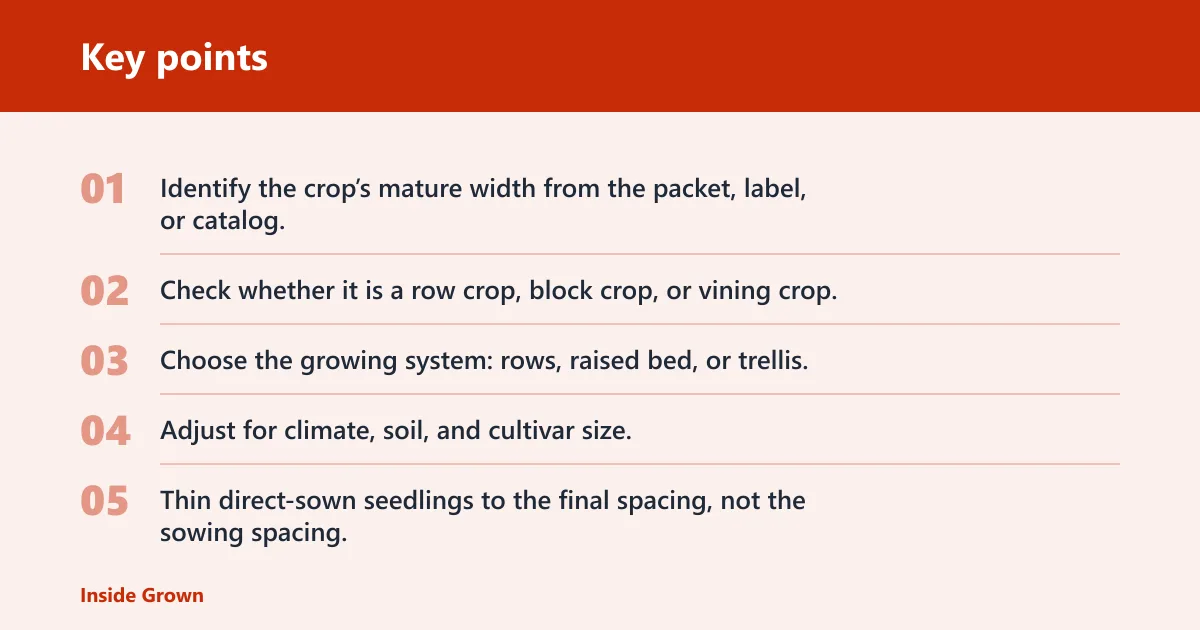
- Identify the crop’s mature width from the packet, label, or catalog.
- Check whether it is a row crop, block crop, or vining crop.
- Choose the growing system: rows, raised bed, or trellis.
- Adjust for climate, soil, and cultivar size.
- Thin direct-sown seedlings to the final spacing, not the sowing spacing.
Use the spacing decision matrix
The best way to use spacing is to treat the packet as the baseline and then adjust for the actual growing system. Traditional row gardening is the context behind many spacing labels, but raised beds can often hold 25–50% more plants in the same space. Trellised cucumbers and beans use far less ground space, so they can be planted closer at the support line.
Crop groups and final spacing ranges
For compact varieties, use the lower end of the range only if the plant still matches the size description for that cultivar. Not all species need the same spacing, and not all compact types behave the same way once they start fruiting.
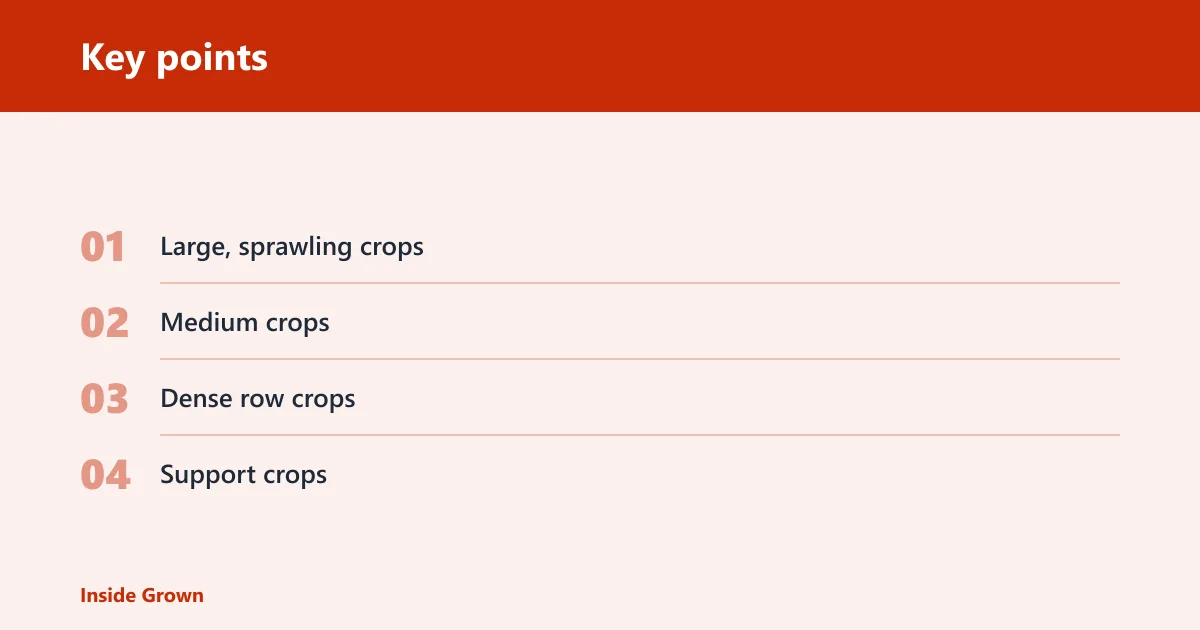
Here is a quick way to translate the matrix into planting decisions:
- Large, sprawling crops: tomatoes, squash, cucumbers, and some melons need the most room unless trained upward.
- Medium crops: peppers and many determinate tomatoes usually fit tighter than large vining types.
- Dense row crops: beans, carrots, lettuce, and similar crops depend more on thinning and final stand count.
- Support crops: pole beans and cucumbers change spacing the most when trellised.
How to adjust for compact varieties and young transplants
Compact varieties can be planted closer than standard types, but cultivar size still matters. A compact tomato is not the same as a dwarf pepper, and a bush type is not the same as a vining one. For young transplants, plan around the mature spread, not the size of the plug tray cell.
If a crop will be harvested before full size, such as baby greens or small turnips, you can sometimes fit more plants in the same area. That works best when the harvest window is short and the remaining plants still have room to finish.
Do you space vegetables differently in raised beds?
Yes. Raised beds usually use a tighter grid than in-ground rows because row spacing is reduced or removed, and the bed edge makes access easier. That can mean more plants per square foot, but it does not remove the need for airflow, especially for disease-prone crops.
Grid planting in beds
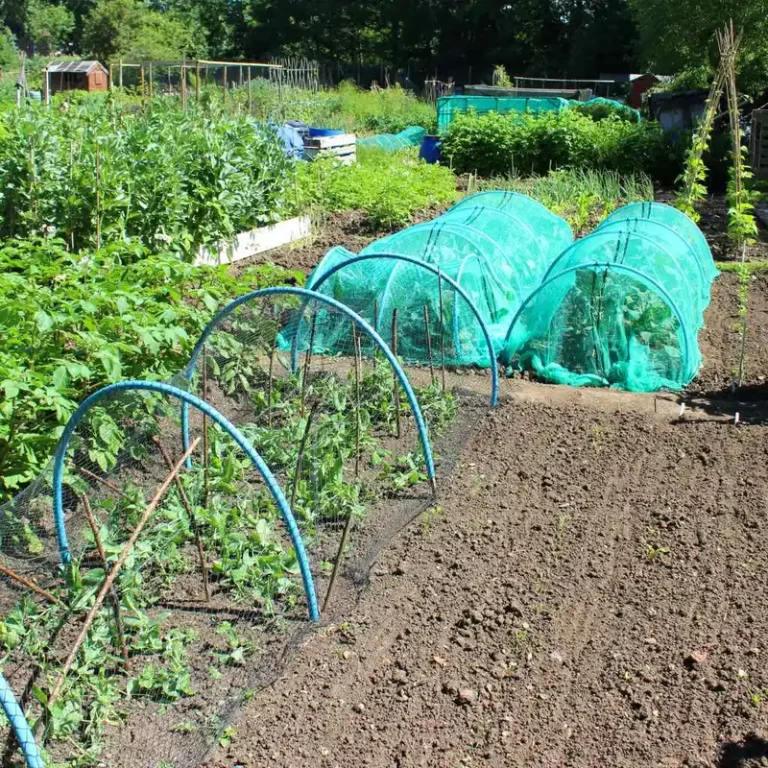
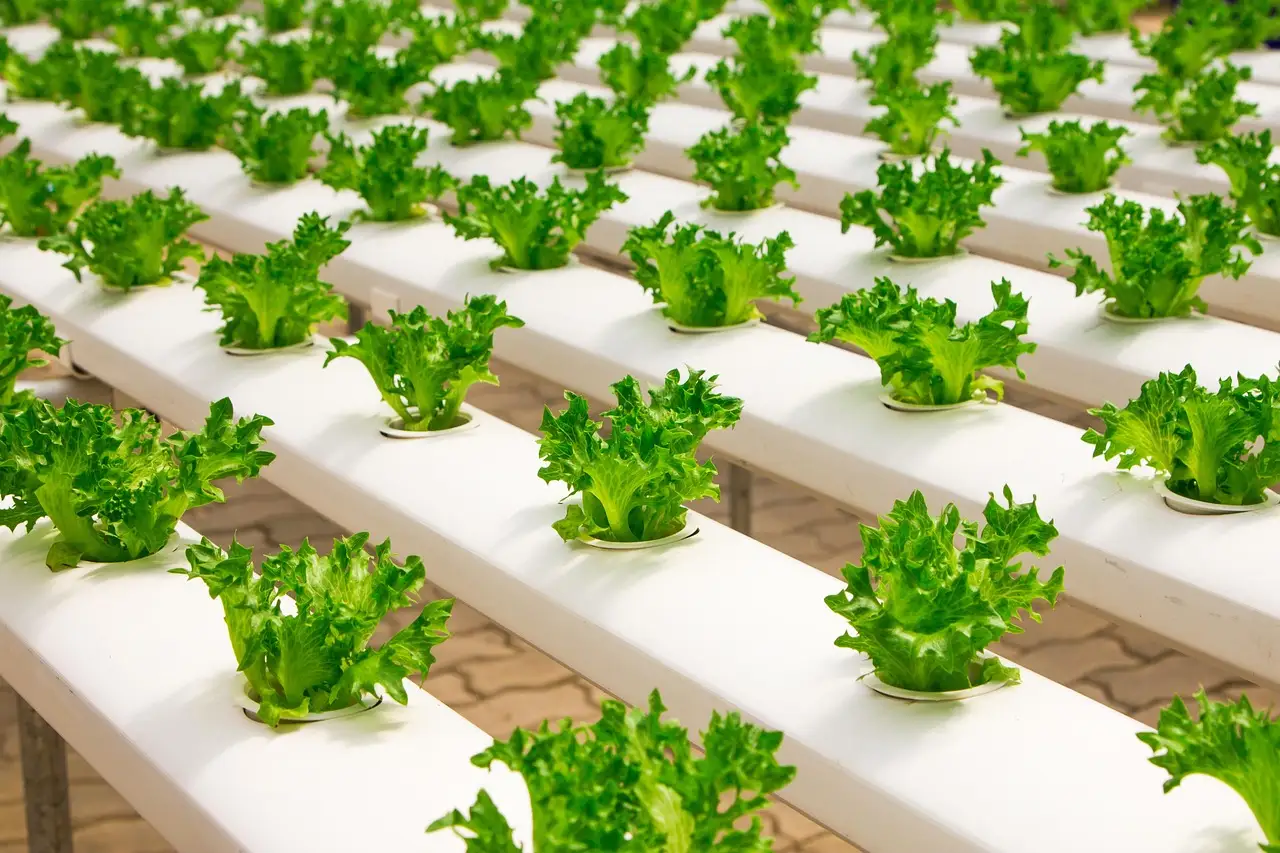
In a raised bed, you are often planting in blocks instead of long rows. That changes the spacing calculation because the bed itself becomes the access lane. Plants can sit closer together than they would in a field row, as long as their mature leaves still have room to dry and spread.
When tighter spacing works
Tighter spacing works best in fertile beds with regular watering and good air movement. It is also useful for crops that finish fast or stay small, such as many salad greens, bush beans, and some peppers. Raised beds can allow 25–50% more plants in the same space, but only when the crop and climate can handle it.
When bed spacing still needs airflow gaps
Leave extra room in the bed for larger leaves, tall fruiting plants, and any crop that stays wet after irrigation or rain. Tomatoes in a bed still need room for stems, pruning access, and disease control. If the bed is packed wall to wall, the center can stay humid even when the edges look fine.
How do climate and soil change spacing?
Climate and soil change spacing because they change how fast plants dry, feed, and compete. Poor soil or humid climates often require wider spacing, while fertile soil can support closer planting. The limit is always the plant’s root and canopy size, not how many starts fit on a bench.
Wider spacing in humid or rainy weather
Humid or rainy climates should use increased spacing for airflow. That helps lower fungal risk and gives leaves a better chance to dry. If mildew, blight, or leaf spot are common in your area, do not use the tightest end of the range unless the crop is small and well supported.
Closer spacing in fertile soil, with limits
Rich soil can support closer spacing because nutrients and moisture are easier for roots to reach. Even then, crowding can still backfire if the crop closes over too fast or creates a damp canopy. More fertility does not erase the need for light and airflow.
Why poor soil usually needs more room per plant
Poor soil gives roots less to work with, so plants compete sooner and harder. In that setting, wider spacing is often the safer choice. It does not fix weak soil, but it reduces the pressure on each plant while you improve structure, organic matter, and watering consistency.
Say your tomatoes are planted in a humid area with frequent summer storms. A 24-inch spacing might work in a dry region, but in that climate a wider gap is often the better call because leaves stay wet longer and diseases spread more easily.
How does trellising affect spacing?
Trellising changes spacing because it reduces the plant’s ground footprint. Vining crops such as cucumbers and beans can use much less ground space when supported, so the spacing shifts from width to height and access. Trellised cucumbers and beans use far less ground space.
Vining crops that benefit most from support
Cucumbers and pole beans are the clearest examples. They are easier to space tightly at the base of a trellis than in a flat row because the vines climb rather than sprawl. Some tomatoes also benefit from staking or caging, though they still need enough room for stems and fruit clusters.
How vertical growth changes footprint
Vertical growth does not make the plant smaller. It changes where the space is used. The canopy rises instead of spreading across the soil, which can improve airflow and make harvest easier, but the root zone still needs enough room for water and nutrients.
Spacing errors to avoid with supported plants
Do not plant trellised crops so tightly that the base becomes a tangle of stems, leaves, and irrigation lines. Keep enough room to tie, prune, and harvest. Trellising is a spacing tool, not permission to ignore mature size or disease pressure.
What spacing mistakes cut yields?
The biggest mistakes are skipping thinning, packing plants after heavy mulching, and using one spacing plan for mixed-size varieties. These errors are common because small seedlings look harmless at planting time, but the crop’s mature canopy and root demand arrive later.
Skipping thinning on direct-sown crops
Direct-sown crops need thinning so final spacing matches the crop’s real needs. If you leave every sprout in place, they compete from the start and the weakest plants stay stunted. Thin on time, and do not treat extra seedlings as a free bonus harvest unless the crop is meant for that.
Packing plants after heavy mulching
Mulch can make a bed look empty, which tempts gardeners to tuck plants too close together. That is a mistake. The mulch does not reduce mature canopy size, and a thick layer can hold moisture near the soil line if the planting is already crowded.
Using one spacing plan for mixed-size varieties
Mixed-size plantings need a split plan. A compact pepper and a standard pepper should not automatically get the same distance, and a dwarf tomato should not be spaced like an indeterminate vine. Treat each cultivar as its own spacing decision.
Suppose a bed holds bush beans in one half and trellised cucumbers in the other. If both are given the same square-foot layout, the beans may be fine but the cucumbers can overtake the bed edge fast. The fix is not more fertilizer; it is crop-specific spacing and support.
Frequently asked questions
How much space do tomatoes, peppers, beans, and squash need?
Tomatoes and squash usually need the most room, peppers sit in the middle, and beans can often be planted more tightly. In a raised bed, many gardeners space tomatoes at 24–30 inches, peppers at 18–24 inches, bush beans at 4–6 inches, and squash at 24–36 inches, then adjust for climate and cultivar size.
Can I plant vegetables closer together in rich soil?
Sometimes, but only within reason. Fertile soil can support closer spacing because roots find nutrients and moisture more easily, yet crowding still limits light and airflow. If the crop has a wide mature canopy, rich soil will not make that canopy smaller. Use the lower end of the range, not a whole new rule.
How do I adjust spacing in humid climates?
Use wider spacing for airflow, especially with tomatoes, squash, cucumbers, and other disease-prone crops. Humid or rainy weather keeps leaves wet longer, which increases fungal risk. If the packet says a tight spacing that works in dry weather, move to the wider end of the range when disease pressure is high.
How do compact varieties change spacing?
Compact varieties can usually be spaced closer than standard types, but only if their mature size is genuinely smaller. The label still matters. A compact tomato or dwarf bean is not a free pass to overcrowd the bed, and cultivar-dependent differences can be larger than the plant family suggests.