How to Grow Peppers in a Vegetable Garden
Grow peppers in warm soil. Start seeds indoors 8 to 10 weeks before your last frost date, then move transplants out only after nighttime temperatures stay above 50°F and soil reaches at least 60°F. Plant too early and you get stalled growth, blossom drop, and weak harvests. This guide shows a climate-first sequence for seed starting, transplant timing, spacing, watering, and feeding peppers in beds, raised beds, or containers.
Know pepper basics: heat, sun, and soil temperature
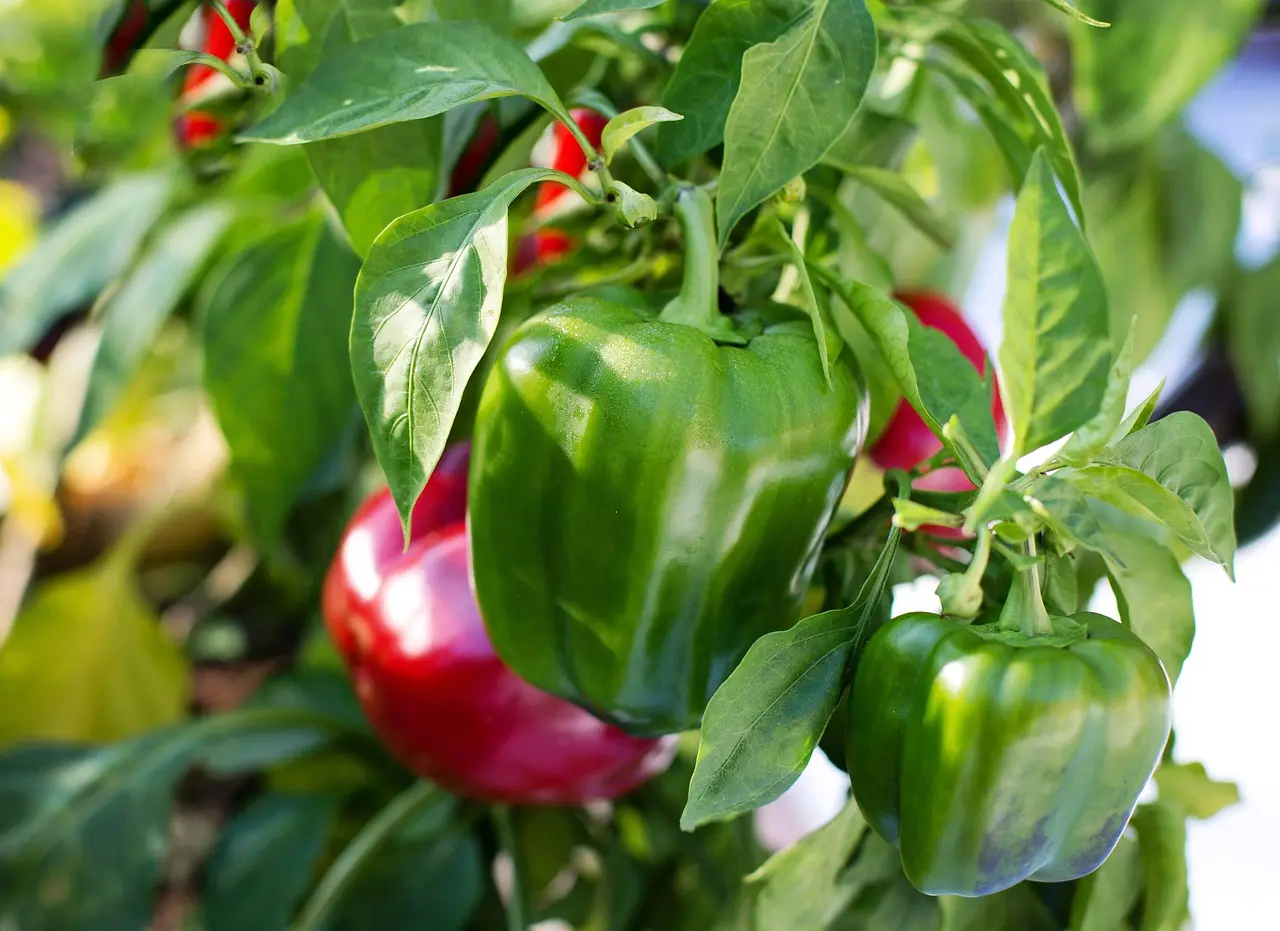


Peppers are warm-season annuals in the nightshade family, and they pay off most when heat arrives before you set them out. Sweet types and hot types both belong to Capsicum spp., but they differ in heat, ripening pace, and how much warmth they need to finish well. Bell peppers sit at zero on the Scoville scale, while a jalapeno falls between 2500 and 8000 Scoville units.
Cold soil is the usual failure point. Roots in chilled ground stall, and the plant spends energy surviving instead of setting fruit. Warm nights, at least six to eight hours of full sun, and steady moisture matter more than heavy feeding.
What you’ll need
- Seed starting mix for indoor germination, or nursery transplants with a strong root system
- A site with at least six to eight hours of full sun
- Well-drained soil with high organic matter
- Mulch to hold moisture in the root zone and slow weeds
- Watering can, hose, or drip line
- Optional stakes or cages for tall, fruit-heavy plants
- Containers at least 12 inches deep for small-space growing
📊 Pepper seeds germinate when soil temperatures are 70 to 80 degrees Fahrenheit. Source: OSU.
When should you plant peppers?
Plant peppers in spring after the last frost risk has passed, and wait until nights stay above 55°F if possible. Soil should also be warm enough to keep roots active; pepper seeds germinate best when soil temperatures are 70 to 80°F. If the soil still feels cold, the crop will lag even in bright sun.
Day temperatures between 70 and 80 degrees Fahrenheit support steady growth. Cooler air slows seedlings, and sharp swings can trigger blossom drop later.
Check soil before you set plants out
- Press a soil thermometer into the planting area in the morning.
- Wait for a reading near 60°F or warmer for transplants, and 70 to 80°F for direct seed success.
- Hold seedlings indoors if nights still fall below 55°F.
Seed or transplant?
Choose transplants for shorter seasons, because they shorten the time to harvest and reduce risk from cool spring soil. Start seeds indoors 8 to 10 weeks before planting if you want more variety, especially for hot peppers and unusual sweet types. Use a fine-textured seed starting mix so the surface stays warm and evenly moist.
Direct seeding can work only where soil warms early and stays warm. In cool climates, it often fails before germination gets going.
How to plant peppers in garden beds
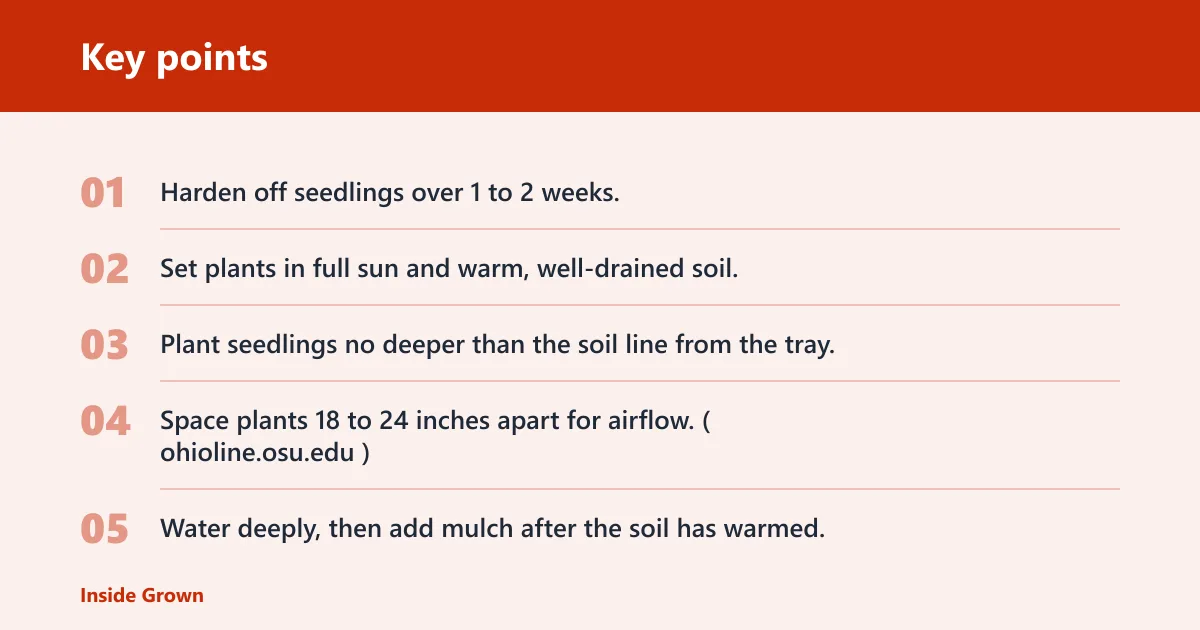
- Harden off seedlings over 1 to 2 weeks.
- Set plants in full sun and warm, well-drained soil.
- Plant seedlings no deeper than the soil line from the tray.
- Space plants 18 to 24 inches apart for airflow. (OSU)
- Water deeply, then add mulch after the soil has warmed.
Hardened-off seedlings handle wind, brighter light, and cooler evenings better than plants moved straight from a shelf or greenhouse. Choose transplants with six to nine leaves and an unstressed root system. Skip plants already carrying flowers or fruit if the goal is a faster, steadier start.
How to plant pepper plants in garden containers
Containers dry faster than beds, so watering becomes more frequent and less forgiving. A single pepper usually needs a pot at least 12 to 14 inches wide; larger fruiting types do better in bigger containers because the root zone dries and warms quickly. Use a light, well-drained potting mix and keep mulch away from the stem.
Container peppers often need daily checks in hot weather. If the top inch dries fast, move up to a larger pot before you increase fertilizer.
Pepper planting decision table
| Climate | Soil temperature | Last-frost timing | Seed-start or transplant choice | Spacing | Watering risk | Likely failure mode |
|---|---|---|---|---|---|---|
| Cool | Below 60°F in spring; direct seed waits for 70 to 80°F | Late and unpredictable | Use transplants; start seed indoors 8 to 10 weeks ahead | 18 to 24 inches | Low in-ground risk, but containers dry fast once summer heat arrives | Cold-soil stall, blossom drop, weak set |
| Moderate | Near 60°F at planting; warmer by midseason | Clear frost-free window | Transplants work best; direct seed only in the warmest microclimates | 18 to 24 inches | Medium; beds hold moisture longer than pots | Transplant shock if hardened off poorly |
| Hot | Often warm enough early; watch for heat above fruit-set range | Early, with a long season | Either method works; transplants still give earlier harvests | 18 to 24 inches | High; mulch and deeper containers help hold moisture | Heat stress, curled leaves, poor fruit set |
Plant peppers the right way
Set seedlings at the same depth they grew in the tray. Water them in, then leave them alone long enough to root into the bed. If the site gets strong afternoon heat, mulch after the soil has warmed so the root zone stays more even through the season.
A common first-timer mistake is planting a small transplant in cold, wet soil, then feeding it heavily to “help” it recover. That usually slows it more. Warmth first. Fertility second.
- Harden off seedlings over 1 to 2 weeks.
- Plant only after frost risk passes and nights stay above 55°F.
- Set transplants no deeper than the soil line.
- Keep plants 18 to 24 inches apart.
- Water deeply at planting.
- Add mulch after the soil is warm.
Common mistakes and fixes
Cold soil and stalled growth are usually solved by waiting, not feeding. Too much nitrogen pushes leaves at the expense of flowers and fruit. Transplant shock often comes from skipping hardening off or moving plants into strong sun too fast.
Cold soil and stalled growth
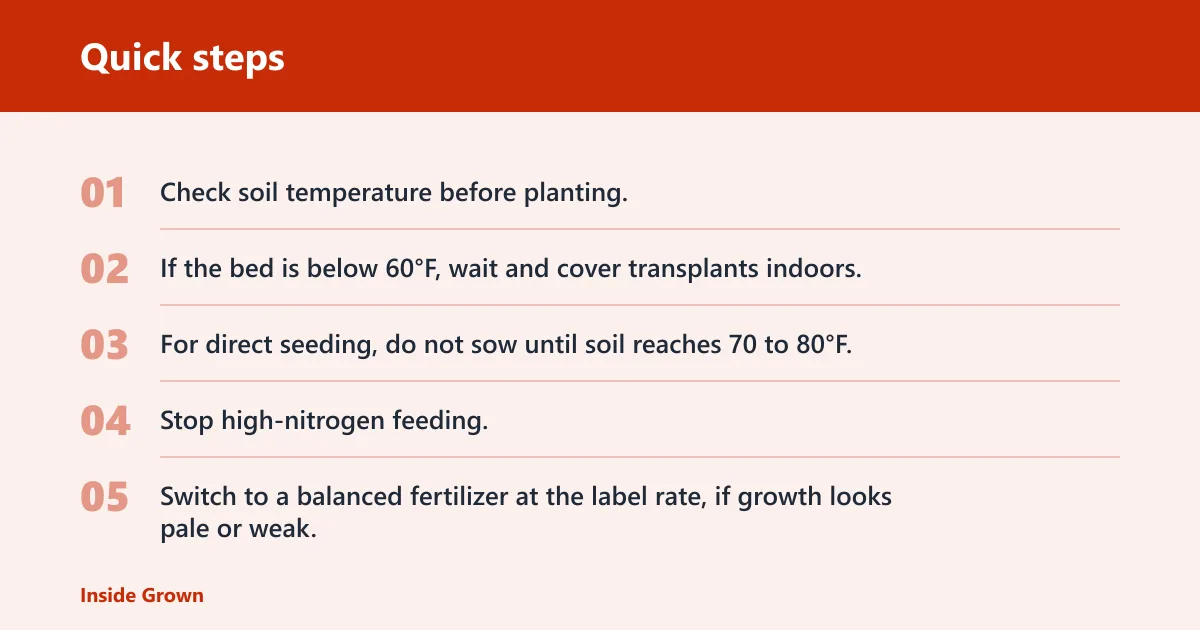
- Check soil temperature before planting.
- If the bed is below 60°F, wait and cover transplants indoors.
- For direct seeding, do not sow until soil reaches 70 to 80°F.
Too much fertilizer and too few peppers
- Stop high-nitrogen feeding.
- Switch to a balanced fertilizer at the label rate, if growth looks pale or weak.
- Recheck in 10 to 14 days before adding more.
Transplant shock, blossom drop, and poor fruit set
- Move plants only after 1 to 2 weeks of gradual outdoor exposure.
- Shade newly planted peppers for the hottest afternoon if heat swings are sharp.
- Keep the soil evenly moist, not soaked.
- If flowers fall after a hot spell, wait for steadier temperatures before expecting new set.
Suppose a pepper plant in a 10-inch pot curls its leaves by midafternoon every day. That usually points to fast-drying roots, not a disease. Move it into a larger container, mulch the surface lightly, and water until the mix is evenly moist through the full pot.
Picture a bed planted with sweet peppers during a cool spell after the last frost date. The plants survive, but they sit still for two weeks and drop buds once a warm front arrives. That pattern usually means the roots started in soil that was still too cold.
Frequently asked questions
How to grow green peppers at home
Give plants at least six to eight hours of full sun, steady moisture, and enough room for airflow. Harvest green fruit while it is firm and full-sized if you want earlier use. In containers, check moisture often because pots dry faster than beds.
Is it easy to grow peppers?
Peppers are straightforward once heat, spacing, and watering line up, but they are less forgiving than many summer crops. Success improves when you start with transplants, wait for warm nights, and avoid heavy nitrogen. The crop gets much easier in a long, warm season.
Do peppers regrow in grow a garden?
In a home vegetable garden, peppers are usually grown as annuals and not left to regrow after frost. In warm climates, a plant may survive longer, but productivity drops as conditions cool. For reliable harvests, plan on starting fresh each season.