Is Recycled Glass Mulch Safe for Vegetable Gardens?
Recycled glass mulch is generally considered chemically inert, but it is often a poor choice for vegetable gardens unless pieces are large, smooth, and kept out of planting and cultivation zones. Sharp shards can injure hands and tools, and dark glass can heat soil and stress shallow roots. This guide separates chemistry from real garden risks, including heat, contamination, cultivation damage, and whether it makes sense in edible beds.
Where glass mulch fits best away from vegetable rows
For edible beds, the safest answer is usually no for routine in-bed use and yes only in narrow, controlled cases. Recycled glass mulch fits decorative borders, paths, and other low-disturbance areas better than rows where you plant, weed, thin, and harvest often. Safety here means both material safety and garden-use safety.
What safety means here
Glass itself is often treated as chemically inert, but that is only part of the story. Vegetable beds raise extra concerns: soil contact with food crops, repeated hand work, possible contamination from the recycled stream, and surface heating in full sun. A material can be stable and still be the wrong tool for an edible bed.
A common first-timer mistake is putting decorative glass into a raised tomato bed because it looks tidy in the photo. The bed then needs staking, side-dressing, and pruning, which means more hand contact with the surface and more chances to scatter shards or scrape tools.
Where it fits better than vegetable rows
Glass mulch usually makes more sense in perimeter strips, entry paths, or ornamental beds where you do not dig often. It can limit weeds and reduce exposed soil in those zones, but it is still an inorganic mulch: it does not break down into nutrients, and it can make soil improvement harder if you later need to work the bed.
Glass mulch decision table
Use the recommendation column as a practical filter. If the bed will be dug, transplanted, or weeded by hand often, glass tends to fail the use-case even when the material itself is clean and tumbled.
| Bed type | Sun exposure | Crop type | Contamination risk | Maintenance burden | Recommendation |
|---|---|---|---|---|---|
| Perimeter strip | Partial sun | Non-edible border plants | Low if feedstock is sorted | Low | Acceptable |
| Walkway beside beds | Full sun | No crop contact | Low to moderate | Moderate | Acceptable with care |
| Established ornamental bed | Mixed light | Decorative plants | Moderate if source is mixed | Moderate | Usually acceptable if tumbled and clean |
| Mulched vegetable row | Full sun | Leafy greens, roots, herbs | Any uncertainty is a problem | High | Not recommended |
| Seedling bed or transplant row | Full sun | Young plants | Any uncertainty is a problem | High | Not recommended |
| Frequently cultivated bed | Any | Mixed vegetables | Moderate to high | High | Not acceptable |
How to read the recommendation column
“Acceptable” here means a controlled use where glass stays on top of the soil and away from frequent hand work. “Not recommended” means the bed will likely need digging, transplanting, or close-weeding, which raises injury and cleanup problems. That is a use decision, not a claim that glass is toxic.
Does recycled glass mulch leach chemicals?
Clean glass is generally described as non-leaching, and the company says glass mulch “will not leach harmful chemicals and toxins into soil or rainwater.” That does not end the question for edible beds, because recycled feedstock can carry paint, coatings, or residues from mixed waste streams. Source quality matters more than the word recycled.
Inert glass versus contaminated feedstock
There is a real difference between glass as a stable mineral material and glass made from poorly sorted waste. A batch can be made from bottles and jars, or it can include colored coatings, dirty mixed fragments, or material that picked up contamination before processing. In edible beds, that uncertainty matters.
The safest approach is to treat “recycled” as a processing label, not a food-safety label. For vegetables, you want clean, sorted material from a supplier that separates contaminants and describes the finish clearly. If you cannot verify that, use a different mulch.
Paints, coatings, and mixed waste streams
Painted glass, mirrored glass, and mixed demolition waste are not the same as tumbled landscaping glass. Even if the glass matrix itself does not react with water, the surrounding residue can matter. That is why a product spec sheet and source description matter for edible sites.
What makes tumbled glass different?
Tumbled glass has rounded edges and a smoother surface finish, so it is safer to handle than broken fragments. The company says decorative glass mulch has been tumbled so it has “no sharp edges.” That is better for maintenance, but it is not the same as harmless, especially in a bed you cultivate by hand.
Rounded edges versus crushed fragments
Crushed glass can cut skin, catch on gloves, and scatter more easily when you rake or thin plants. Tumbled glass reduces that hazard because the edges are softened. It still needs care, because any glass in a garden can migrate underfoot, slip into soil cracks, or end up in composting tools and buckets.
Handling, cleanup, and injury risk
Cleanup is one of the weakest points. Glass does not decompose, so spilled pieces stay there until you remove them. In a vegetable bed, that creates extra work during transplanting, weeding, or end-of-season bed turnover. Keep that in mind before choosing it for spaces you plan to disturb often.
Say a 4-by-8-foot raised bed is mulched with tumbled blue glass, then you decide to replace spring lettuce with peppers. Each transplant hole means digging through hard pieces, setting them aside, and trying not to leave shards in the planting zone. That is slow work in a food bed.
Does glass mulch get too hot?
Yes, it can. Glass does not burn, and the company lists a common glass melting temperature of 2700°F, with some glass able to withstand temperatures as high as 4200°F before melting. That says nothing about surface comfort or root-zone safety. In full sun, glass can still heat up and reflect light in ways that stress plants.
Heat retention in full sun
Dark or dense glass tends to absorb and hold more heat than lighter mulch materials. On raised beds, that extra surface warmth can be useful in cool weather, but it becomes a drawback for summer vegetables, especially shallow-root crops and transplants that already sit near the top layer of soil.
Heat matters most where the mulch and soil meet. Seedlings, lettuce, spinach, and other shallow-root crops can show stress sooner than established tomatoes or peppers. If your bed stays in full sun through the hottest part of the day, glass is a poor default choice.
Glare and reflected light
Glare is a second problem. Reflective surfaces can throw bright light toward leaves, hands, and eyes, which makes close work less pleasant and can add stress near tender plants. This is one reason glass often performs better as a path material than as an in-bed cover for vegetables.
Seedlings and shallow roots
Young transplants have less buffer against hot surfaces and drying soil. In that setting, reflective or heat-holding mulch can work against the crop. If the bed is for direct-sown carrots, lettuce, or basil, keep the surface simpler and easier to water evenly.
How should glass mulch be used?
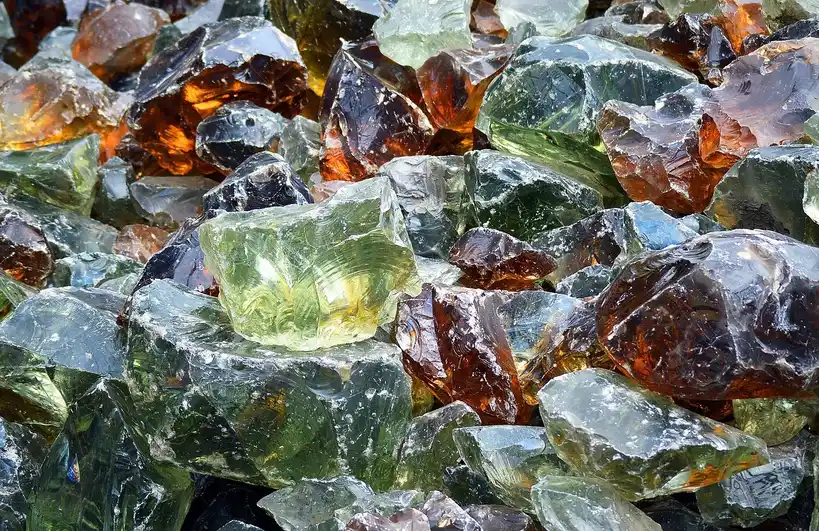
If you use glass at all, keep the layer modest and the placement controlled. A common rule of thumb for mulch depth is 2-3 inches, and Best Mulching Tips says mulch should be kept “at least an inch away from the plant stems.” For glass, that spacing matters even more because you want to avoid trapping heat and rubbing against stems.
Depth guidance for mulch layers
Too thick a layer reduces airflow and can interfere with water penetration. That problem is common to many mulches, but it matters more with inorganic material because glass will not break down and settle into the soil the way organic mulch does. A thick bed of glass can also be harder to move when you need to plant or rework a row.
Drainage and airflow limits
Glass can help hold moisture on the surface and limit weeds, but it does not improve soil structure. Organic mulch adds organic matter and supports soil biology as it decomposes; glass does neither. In a vegetable bed, that difference matters because the soil itself needs improvement, not just coverage.
- Use glass only where you do not dig often.
- Keep it out of seed rows and transplant holes.
- Choose tumbled, sorted material over sharp fragments.
- Apply a thin, even layer rather than piling it deep.
- Keep it away from stems and crowns.
- Stop using it if cleanup, glare, or scatter becomes a problem.
Why frequent cultivation is a problem
Weeding, thinning, and replanting are routine in vegetable beds. Glass works against that routine because each disturbance can expose edges, scatter pieces, or mix mulch into the soil surface. In a bed that changes crops several times a season, the maintenance burden rises fast.
Is recycled glass mulch better for walkways than beds?
Glass mulch is often better suited to walkways, perimeter strips, and other non-planted zones than vegetable rows. Walkways, perimeter strips, and other non-planted zones are better matches because they do not need constant digging, stem clearance, or seedling protection. The material still needs to be clean and stable, but the risk profile is lower than in an edible row.
Failure cases to watch
Glass mulch tends to fail in hot zones, transplanting areas, weeding lanes, and pet or kid areas. Wind scatter is another issue if the pieces are small or the site is exposed. Cleaning is harder than with bark or leaves, and any spill around a vegetable bed becomes a hand hazard.
| Failure case | What goes wrong | Practical effect |
|---|---|---|
| Hot zone | Surface heats and reflects more light | Greater stress on seedlings and shallow roots |
| Transplanting | Pieces must be moved aside for holes | Slow work and higher injury risk |
| Weeding | Tools and hands meet hard fragments | More scatter and cleanup |
| Pet or kid area | Hands, paws, and feet contact the surface | Cut risk and constant supervision |
What are safer mulch alternatives for vegetable gardens?
Organic mulch is commonly reported to decompose over time, add organic matter, and support soil biology, so it is often the safer default for edible beds. It decomposes over time, adds organic matter, and supports soil biology. It is also easier to rake aside when you plant or harvest. Glass can be useful in a few decorative places, but vegetables usually need a mulch that works with cultivation, not against it.
Better options for edible beds
Straw is a common choice for row crops because it is light and easy to move. Shredded leaves work well where you want to improve soil over time. Compost can be used as a topdressing or light mulch in some beds. Untreated wood chips are better suited to paths and longer-term borders than to frequent seed rows.
Best Mulching Tips says to avoid “stone and rubber mulches at all costs.” That warning fits the same general concern: non-organic surfaces can be fine in ornamental settings, but they are often a poor match for vegetable-garden maintenance and soil improvement.
Frequently asked questions
Is recycled glass mulch safe for vegetable gardens?
Usually not as a default choice. Recycled glass mulch is generally chemically inert, but edible beds also need safe handling, easy cultivation, and predictable soil temperatures. It is more appropriate for borders, paths, and other low-disturbance areas than for rows you weed, thin, and replant often.
Does glass mulch leach chemicals into soil?
Clean glass is generally considered non-leaching, and the company says it “will not leach harmful chemicals and toxins into soil or rainwater.” The bigger issue is contaminated feedstock. Paint, coatings, and mixed waste can introduce unwanted residues even when the glass itself is stable.
Can you use glass mulch around edible plants?
Only with caution, and usually only in limited spots away from the root zone. Around perennial herbs or established crops, it may be tolerable if it is tumbled, clean, and kept out of planting holes. For seedling rows and beds that get frequent hand work, another mulch is often safer.
Is tumbled glass mulch sharp or hazardous?
Tumbled glass has rounded edges and is safer to handle than crushed fragments. The company says it has “no sharp edges.” Even so, it remains glass, so you should still expect cleanup issues, scatter, and injury risk if the bed is disturbed or if pieces migrate into walk areas.
How thick should glass mulch be in a garden bed?
A common mulch target is 2-3 inches, and material should stay “at least an inch away from the plant stems.” For glass, thinner and more controlled is better than deeper. Too much material can reduce airflow, slow water penetration, and make bed work harder later.
Does glass mulch get too hot in full sun?
It can. Glass does not melt at garden temperatures, but it can still hold heat and reflect light. The company lists a common glass melting temperature of 2700°F and says some glass withstands 4200°F, but those figures do not prevent surface heating that can stress seedlings and shallow roots.