Bacillus Thuringiensis Safe for Vegetable Gardens?
Yes, Bacillus thuringiensis (Bt) is generally safe for vegetable gardens when you match the strain to the pest and follow the label. It is not a broad-spectrum insecticide. Use the wrong strain, and you waste spray while missing the pest. This guide explains which Bt strains work on common vegetable pests, how to apply them on edible crops, and what harvest and pollinator safety questions still matter.
What Bt is and how it works
Bacillus thuringiensis is a naturally occurring, soil-borne bacterium used as a microbial insecticide. It has been used for natural insect control for many decades, and Bt has also been registered as a pesticide in the U.S. More than 180 pesticide products registered in the United States contain Bt.
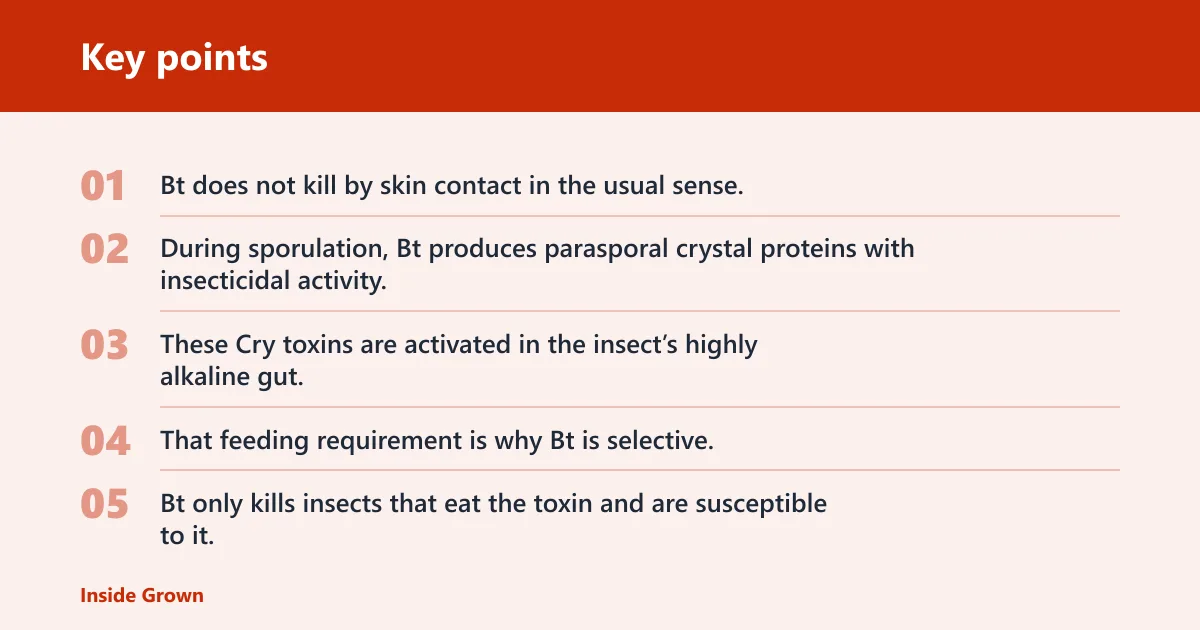
Bt does not kill by skin contact in the usual sense. The pest has to eat it. During sporulation, Bt produces parasporal crystal proteins with insecticidal activity. These Cry toxins are activated in the insect’s highly alkaline gut, where they damage the gut lining, stop feeding, and eventually kill susceptible larvae.
That feeding requirement is why Bt is selective. Bt only kills insects that eat the toxin and are susceptible to it. It is relatively safe for humans, birds, fish, and most beneficial insects when used as labeled.
Why selectivity matters in vegetable gardens
Selectivity is a strength, but it also creates failure cases. If the insect is not a leaf-chewer, Bt will not help. If the larvae are too large, or if rain washed the residue off the leaf, the spray may look “unsafe” only because it did not work.
Picture a row of kale with holes from tiny green caterpillars. Btk fits that problem. Picture whiteflies on tomatoes or aphids on peppers. Bt is the wrong tool there, even though the spray itself may be low risk.
Is Bacillus thuringiensis safe for vegetable gardens?
Yes, Bt is generally safe for vegetable gardens when you match the strain to the pest, spray only labeled crops, and respect harvest timing. The biggest practical risk is not toxicity to people or pets; it is using the wrong Bt product, which can leave the pest uncontrolled and encourage repeated spraying.
“Safe” on edible crops means more than low toxicity. It also means the product label allows that crop, the target pest is listed, and you follow the pre-harvest interval. An example product lists a 5-day pre-harvest interval, but that number is product-specific, not universal.
What can go wrong
A common first-timer mistake is buying a Bt spray for “garden pests” and using it on everything with holes. That can mean spraying Bti for a cabbage worm problem, or spraying Btk for fungus gnats in potting mix. In both cases, the issue is misuse, not a broad safety problem.
Another avoidable problem is late spraying. Bt works best on small larvae that feed actively. Once caterpillars are larger, they eat more before dying, and the damage may continue long enough to make the product seem ineffective.
Which Bt strain should you use?
Use Btk for most caterpillars on vegetables. Use Bti for mosquitoes, flies, and fungus gnats. Those are different strains with different target insects, so they are not interchangeable in the garden. The product label should name the strain and the pest.
Btk for caterpillars
Bacillus thuringiensis kurstaki, or Btk, controls most caterpillars. It targets moth and butterfly larvae, which are in the Lepidoptera group. That makes it the common choice for leafy vegetable pests such as cabbage worms, loopers, and other leaf-feeding larvae.
Bti for mosquitoes, flies, and fungus gnats
Bacillus thuringiensis israelensis, or Bti, targets mosquitoes, flies, and fungus gnats. It is often used in water garden containers, rain barrels, and damp potting areas. It is not the same product as Btk, and it will not solve a cabbage worm problem.
What pests and crops does Bt fit best?
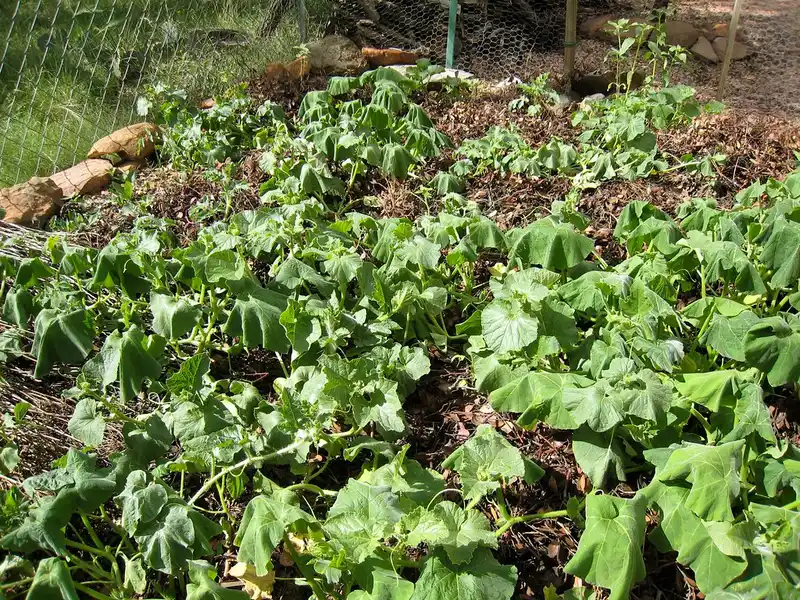
Bt fits best where the pest is a chewing larva and the crop is one you can spray according to the label. On vegetables, that often means brassicas, leafy greens, and other crops damaged by caterpillars. It is a poor match for aphids, beetles, thrips, and other sucking or non-lepidopteran pests.
Common good matches and poor matches
- Good match: cabbage worms on kale, cabbage, collards, and broccoli with Btk.
- Good match: imported cabbageworm larvae on leafy brassicas with Btk.
- Good match: fungus gnat larvae in moist potting media with Bti.
- Poor match: aphids on beans or peppers.
- Poor match: cucumber beetles, flea beetles, and other hard-bodied chewing pests.
- Poor match: spider mites or leaf miners unless the product label specifically covers them.
When should you apply Bt for the best results?
Apply Bt when larvae are small, feeding actively, and still easy to reach with spray. Small larvae are usually most affected, while older caterpillars can survive long enough to cause noticeable damage. Coverage matters because Bt must be eaten, not just brushed onto the plant.
Sunlight and rain break down residue on leaves, so repeat applications may be needed after weather exposure. Many gardeners recheck plants after a storm or strong irrigation. If leaves are wet enough to wash spray off, the residue may not last long enough for feeding larvae.
Spray timing and coverage
Spray in the evening or early morning when pollinators are less active and leaf surfaces are cooler. Focus on the undersides of leaves and the newest growth, where small caterpillars often feed first. Reapply according to the label if rain, overhead watering, or strong sunlight reduces residue.
Use the label as the timing rule
- Confirm the target pest is a caterpillar, mosquito larva, fungus gnat larva, or another labeled insect.
- Check the crop list and make sure your vegetable is on it.
- Look for the pre-harvest interval and write it down before spraying.
- Apply when larvae are small and feeding.
- Repeat only as the label allows, especially after rain or heavy UV exposure.
Decision table: Bt strain, pest, crop, and safety checks
This table separates strain choice from safety checks. The biggest error is not “Bt is unsafe”; it is using the wrong Bt product for the pest, crop, or harvest window.
| Bt strain | Common target pest | Vegetable crop examples | Reapplication trigger | Label safety checks |
|---|---|---|---|---|
| Btk | Cabbage worms, loopers, other caterpillars | Kale, cabbage, broccoli, collards, lettuce | After rain, strong UV exposure, or new hatch of small larvae | Check target pest, labeled crop, pre-harvest interval, and spray timing |
| Btk | Tomato hornworm or other Lepidoptera larvae | Tomatoes, peppers, eggplant, brassicas | When fresh feeding appears on new growth | Confirm the product is labeled for the crop and caterpillar use |
| Bti | Mosquitoes, flies, fungus gnats | Rain barrels, water gardens, seed-starting trays, houseplant mixes | After water changes or as the label directs | Use only where the label allows water or media treatment |
| Wrong strain | Any non-target pest | Any vegetable crop | Repeated spraying without pest control | Stop and match strain to pest before spraying again |
Label checklist for edible crops
- Target pest listed on the label.
- Crop listed on the label.
- Pre-harvest interval checked before application.
- Spray timing matches small larval feeding.
- Reapplication interval and weather restrictions reviewed.
Does Bt harm bees, ladybugs, or other beneficial insects?
Bt is usually selective and does not harm bees, ladybugs, or many other beneficial insects when used correctly. The main reason is that Bt must be eaten by a susceptible insect. Still, spray drift, direct contact during bloom, or using the wrong product can create avoidable exposure.
Pollinator activity at the garden edge
Spray when pollinators are least active, and avoid coating open flowers unless the label clearly allows it. On crops with blooms at the edge of the spray zone, drift matters. A product that is low risk in theory can still reach bees if you spray in windy conditions or oversaturate blossoms.
Ladybugs and lacewings are generally not the target of Btk on leafy vegetables. But if you spray repeatedly without checking the pest, you can strip the garden of food-web balance and still miss the real problem. That is a use error, not a Bt-specific toxicity claim.
Can Bacillus thuringiensis be used on edible crops?
Yes, many Bt products are approved for use on edible crops, including vegetables, but only when the product label lists that crop and pest. Organic agriculture approval also depends on the product label, the crop, and the intended use. The same strain may be allowed on one crop and not another.
For edible crops, wash produce as you normally would after harvest. Washing does not replace the label’s pre-harvest interval, but it can remove surface residue. The label remains the legal standard for harvest timing.
Is Bt safe for humans and pets?
Bt is generally considered low in toxicity for humans and pets when used as directed. It is a microbial insecticide with a narrow target range, not a broad poison. The main safety rule is simple: keep to the label, avoid inhaling spray mist, and store the product away from children and animals.
That low toxicity does not mean no caution. You still should not apply more than the label allows, mix products without directions, or spray food crops outside the listed harvest window. Safe use depends on following the product-specific instructions.
What is the difference between Btk and Bti?
Btk and Bti are different Bt strains with different target insects. Btk is the standard choice for caterpillars on vegetable leaves. Bti is used against mosquitoes, flies, and fungus gnats. If you mix them up, you may get no control and assume Bt failed when the real issue was strain mismatch.
Quick way to tell them apart
If the problem is chewing damage from a larva with a visible head capsule and segmented body on leaves, start with Btk. If the problem is tiny flies around damp soil or larvae in standing water, Bti is the relevant strain. That distinction is the fastest way to avoid a wasted application.
Frequently asked questions
Is Bt safe to spray on vegetables before harvest?
Yes, if the product label allows the crop and you respect the pre-harvest interval. One example product lists a 5-day pre-harvest interval, but that is not universal. The label, not the garden calendar, sets the harvest rule for that specific product.
Which Bt strain should I use for caterpillars in my garden?
Use Btk for most caterpillars on vegetables. It targets moth and butterfly larvae, which are in Lepidoptera. If the pest is not a caterpillar, Btk is usually the wrong choice, even if the damage looks similar at first glance.
How long does Bt take to work on caterpillars?
Bt starts working after the larva eats treated foliage, but visible control is not instant. Small larvae are affected faster and more reliably than older ones. If caterpillars keep feeding after spraying, check whether the target stage was too large, the spray washed off, or the wrong strain was used.
Can Bt be used in organic gardening?
Many Bt products are approved for organic agriculture, but approval depends on the specific product and label use. You still need to match the crop, pest, and application timing. Organic status does not replace the label’s directions for pre-harvest interval or target pest.