Why Some Seeds Need Soaking Before Planting
Soak seeds only when the coat is hard, thick, or repels water; for many vegetables, about 4 to 24 hours is enough, while some seeds should not be soaked. Skip the wrong pretreatment and you can slow germination, rot seed, or miss the cold or abrasion cues some species need. Use the seed’s coat, size, and dormancy needs to decide between soak, scarify, or stratify for common garden seeds.
Why some seeds need soaking
Soaking helps some seeds because dry seed tissue has to take up water before germination can begin. That water uptake is called imbibition. Once moisture reaches the embryo, enzymes wake up, metabolism starts, and the seed moves toward sprouting. Seeds with thin coats may do this on their own in moist soil, while hard-coated or wrinkled seeds often benefit from pre-wetting.
What soaking changes inside the seed
Dry seed is not dead; it is dormant or paused. Water softens the seed coat, then enters the seed and starts the internal chemistry that supports germination. In practical terms, soaking can shorten the time between planting and emergence for some species, but only if the seed is already ready to germinate once hydrated.
That is why soaking is a seed-specific choice, not a blanket rule. A hard seed coat can block water entry and oxygen movement, while a thin coat may absorb moisture fast enough in the potting mix or garden bed without any help.
How seed coat thickness affects water entry
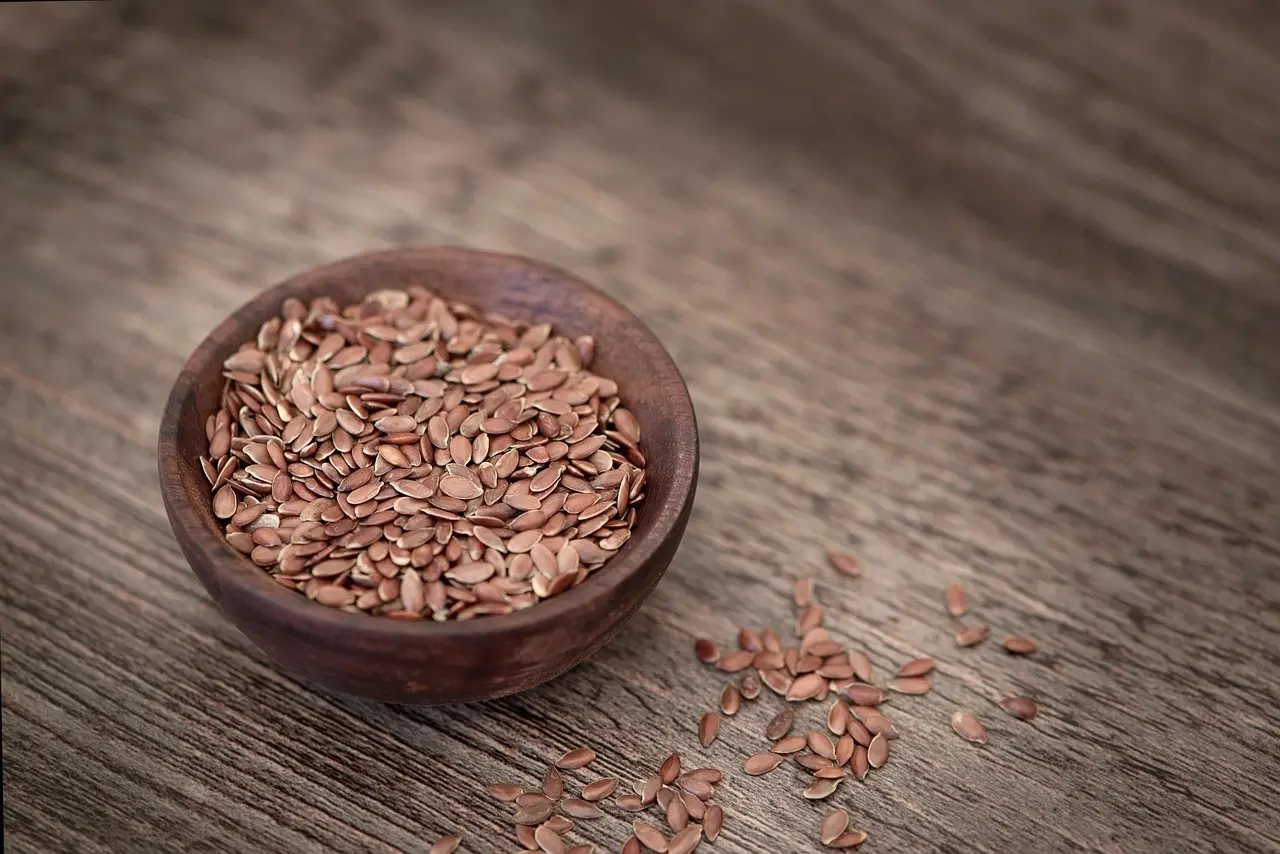
Seed coat thickness matters because it changes how fast water reaches the embryo. Hard-coated seeds, such as many beans or nasturtium, often absorb moisture slowly. Thin-coated seeds, such as lettuce or tomato, usually hydrate quickly and can be damaged by extra handling or prolonged soaking.
Wrinkled seeds often respond well because the outer coat can rehydrate and smooth out before planting. Larger seeds also tend to tolerate soaking better than tiny ones, which are easy to over-hydrate, clump, or lose in a bowl of water.
Where dormancy fits
Dormancy means the seed needs a specific cue before it will germinate. That cue can be moisture, abrasion, or a cold period, and it varies by species. Some seeds need soaking. Some need scarification first. Others need cold stratification before they are ready to sprout.
That is why a seed can fail even in perfect soil. If the seed is waiting for cold, soaking alone will not break dormancy. If the coat is so hard that water cannot enter, cold alone will not help much either.
Should you soak your seeds before planting?
Soak seeds when the species is known to have a hard coat, a slow first drink, or a history of uneven germination that improves with pre-hydration. Skip soaking when seeds are tiny, thin-coated, or need cold stratification first. Soaking can help, but it can also backfire if the seed is small, fragile, or planted too late after treatment.
When soaking helps
Soaking is most useful for larger seeds with tough coats, especially beans, peas, corn, okra, sunflowers, lupine, nasturtium, and sweet peas. MorningChores lists beans, peas, and corn as seeds that can benefit from soaking, and other gardening guides point to overnight soaking for some seeds. GardenersHQ says most seeds can be soaked for 8 to 12 hours, while some larger seeds can sit longer in cool water.
Seed soaking can also act as a simple priming step. That means pre-hydration short of full sprouting, which can speed emergence and make seedlings come up more evenly. It is different from pre-sprouting, where the seed is held until the root actually appears.
When soaking is unnecessary
Skip soaking when the seed is tiny, dust-like, or already quick to absorb water. Lettuce, basil, tomato, and carrot usually fall into this group, because soaking them can create handling problems without giving much benefit. Small seeds are also harder to plant evenly after they have been wet.
Some flower seeds also should stay dry. Not every flower seed wants the same treatment, and a species-specific list matters more than a blanket rule for “flowers.”
When soaking can backfire
Over-soaking can cause rot, softening, or disintegration. The same source says soaking too long can cause seeds to disintegrate. Wet seeds that sit too long in warm air can also mold, clump together, or crack if the coat becomes too weak before planting.
Soil temperature matters too. If the bed is cool and wet, soaked seeds may sit too long before they start. That means less oxygen at the seed surface and a higher chance of decay, especially for species that prefer warmer germination conditions.
Which seeds should you soak?
Start with seed size and seed coat texture. Large or hard-coated seeds are the best candidates, while tiny seeds usually should stay dry. If a seed is wrinkled, hard, or slow to take up moisture, soaking is more likely to help. If it is thin-coated and delicate, leave it dry unless a species guide says otherwise.
Large or hard-coated seeds
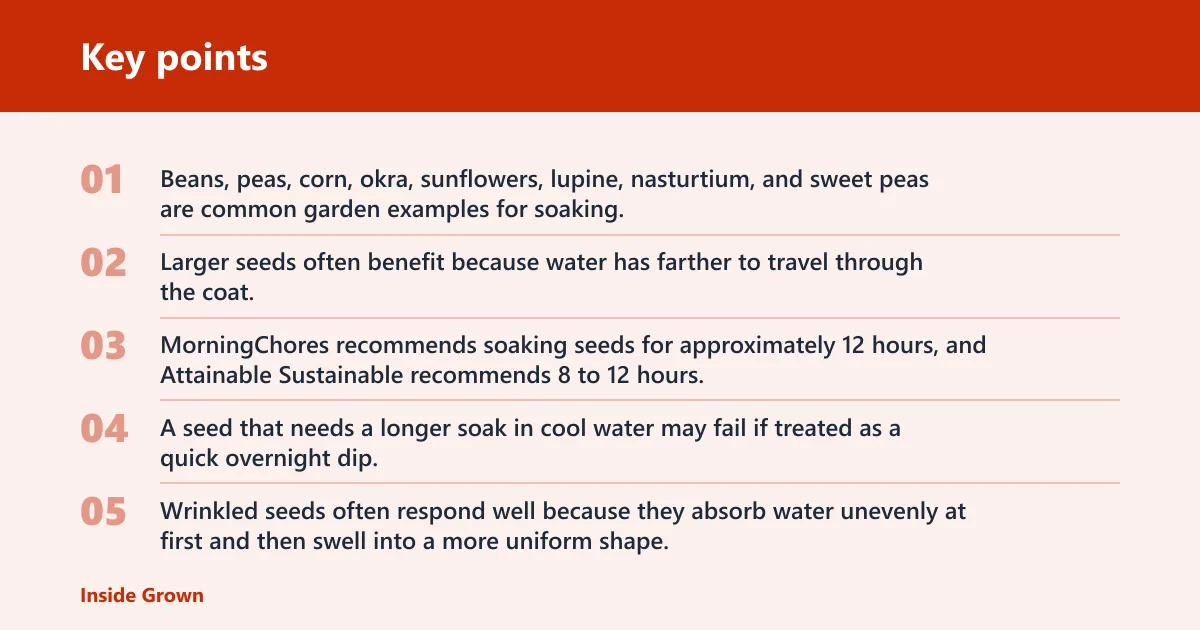
Beans, peas, corn, okra, sunflowers, lupine, nasturtium, and sweet peas are common garden examples for soaking. The same source says peas can be soaked for 12 to 24 hours in cool water, sweet peas can be soaked for 12 to 24 hours in cool water, and parsley seeds are sometimes soaked in warm water for 24 hours. Larger seeds often benefit because water has farther to travel through the coat.
The same source recommends soaking seeds for approximately 12 hours, and Attainable Sustainable recommends 8 to 12 hours. That range fits many common garden seeds, but it is still species-specific. A seed that needs a longer soak in cool water may fail if treated as a quick overnight dip.
Wrinkled seeds that often respond well
Wrinkled seeds often respond well because they absorb water unevenly at first and then swell into a more uniform shape. Peas are a good example. Soaking can help them hydrate before planting, especially when the soil is still cool and slow to wet the full seed coat.
Hot water can sometimes work better for certain seeds, and others may require hydrogen peroxide soaking. Those are special cases, not the default. Use them only when the species calls for it.
Small seeds that usually should stay dry
Lettuce, basil, tomato, and carrot are poor soak candidates in most home gardens. They are small, easy to damage, and difficult to handle once wet. If you need better stand uniformity with these crops, seed priming methods from the seed supplier are usually safer than an at-home soak.
Say your carrot seed pack says to sow thinly and keep the surface evenly moist. Soaking those tiny seeds first can turn them into a sticky mass, which makes spacing harder and can leave a clump that dries unevenly after planting.
Seed soaking decision table
This table turns the choice into a simple rule: soak, brief soak only, scarify first, or do not soak. It also shows the water temperature, a useful time window, and the main failure mode for each crop or flower.
| Seed | Action | Water temperature | Time window | Main failure mode |
|---|---|---|---|---|
| Beans | Brief soak only | Cool to room temperature | 8 to 12 hours | Over-soaking can soften the coat too much or invite rot |
| Peas | Soak | Cool water | 12 to 24 hours | Planting late after soaking can raise rot risk in cool soil |
| Corn | Brief soak only | Room temperature | 8 to 12 hours | Long soaking can reduce oxygen and weaken the seed |
| Beets | Do not soak | No soak | None | Wet seeds tend to clump and are hard to sow evenly |
| Chard | Do not soak | No soak | None | Clumping and uneven spacing after wet handling |
| Okra | Soak | Lukewarm | 8 to 12 hours | Hot water can damage the embryo |
| Sunflowers | Brief soak only | Room temperature | 8 to 12 hours | Too long can cause coat damage or rot |
| Lupine | Scarify first | Room temperature after scarify | 12 to 24 hours | Hard coat blocks water unless lightly nicked first |
| Nasturtium | Scarify first | Cool to room temperature after scarify | 8 to 12 hours | Untreated hard coat can stay dry inside |
| Sweet peas | Soak | Cool water | 12 to 24 hours | Over-soaking can lead to softening or disintegration |
| Lettuce | Do not soak | No soak | None | Wet seed is hard to distribute and can stick together |
| Basil | Do not soak | No soak | None | Small seeds clump and are easy to lose |
| Tomato | Do not soak | No soak | None | Extra moisture adds handling problems without much gain |
| Carrot | Do not soak | No soak | None | Wet seed sticks and sows unevenly |
| Parsley | Brief soak only | Warm water | 24 hours | Too cool or too short can leave germination slow |
| Beet relatives with fine seed | Do not soak | No soak | None | Small seed size makes soaking more trouble than benefit |
| Beans with very hard coats | Scarify first | Room temperature after scarify | 8 to 12 hours | Without a scratch, water entry can stay uneven |
| Hard-coated annual flowers | Scarify first | Cool to room temperature after scarify | 8 to 12 hours | Coat blocks imbibition unless opened first |
| Cold-stratified shrubs | Do not soak first unless species says so | No soak or cool soak only if directed | Then cold treatment | Wrong order can miss the dormancy cue |
| Tree seeds needing cold | Stratify first | No soak or brief soak only if directed | Cold period first | Soaking alone does not break dormancy |
How to soak seeds before planting
Use clean water, the right temperature, and a short soak window. Most seeds that benefit from soaking do well in a range of 8 to 12 hours, while some species need 12 to 24 hours. Plant them promptly after soaking so the soft seed coat does not dry out again or sit in wet air too long.
Water temperature and soak time
Room temperature water is the safest default for many seeds. Cool water can suit peas and sweet peas, while lukewarm water is often safer than hot water for seeds that need a little more help. The same source recommends approximately 12 hours, GardenersHQ says most seeds can be soaked for 8 to 12 hours, and Epic Gardening notes that many larger seeds can be soaked for 12 to 24 hours before sowing.
Suppose a pea seed sits in cool water for 18 hours and then goes straight into a moist bed. That is within the common range. If the same seed sat for 24 hours in warm water, the failure risk goes up because temperature and time both push the seed toward excess softening.
Rinsing before soaking
Why is rinsing seeds before soaking important? Rinsing removes dust, debris, and any surface residue that can cloud the soak water or encourage mold. It also gives you a better look at floaters, cracks, and damaged coats before you commit the seed to water.
A quick rinse is enough for most home seed packets. If the water turns cloudy right away, change it before the soak starts. Clean water is especially helpful for longer soak windows.
Planting promptly after soaking
After soaking, drain the seeds and plant them right away. Wet seed coats can dry unevenly in air, and long delays can let soft seeds rot before they reach soil. If you are direct sowing, prepare the bed first so the soaked seed spends as little time exposed as possible.
For indoor seed starting, fill the cells or pots before you soak. That keeps wet seeds from sticking to tools or fingers. It also lets you move from soak to sowing in one clean pass.
- Check the species first. Match the seed to soak, scarify, stratify, or leave dry using a species guide or packet note. A hard coat does not always mean soaking is enough.
- Choose clean water. Use room temperature, cool, or lukewarm water based on the crop. Avoid hot water unless the species guide specifically calls for it.
- Soak for the set window. Use 8 to 12 hours for many seeds, 12 to 24 hours for some larger or slower ones, and stop before the seed begins to soften too far.
- Drain and sow right away. Move the soaked seed into prepared soil or cells immediately. Delay is where rot and drying problems start.
When scarification or cold stratification is the better choice
Choose scarification when the seed coat is too hard for water to enter, and choose cold stratification when the species needs a chill period to break dormancy. Soaking can be useful, but it is not the right answer for every seed. Some seeds need abrasion first. Others need cold first. A few need both in sequence.
Seeds that need scarification first
Scarification means lightly nicking or scratching the seed coat so water can get in. It is used for very hard seeds such as lupine and nasturtium, and it can be paired with soaking afterward. The cut should be small. If the coat is cut too deeply, the embryo can be damaged.
After scarification, a short soak helps water enter through the weakened coat. That is useful when the seed is hard enough to resist direct soaking but still ready to germinate once the barrier is opened.
Seeds that need cold treatment first
Cold stratification is a cold treatment for some trees, shrubs, and flowers. It helps certain seeds break dormancy before they will germinate. In those cases, soaking may come first only if the species directions say so; otherwise, the cold period is the main cue.
Soaking alone will not replace that cold signal. If a species evolved to wait through winter, water alone does not tell it to start.
Cases where soaking and another treatment are combined
Some seeds use a combination path. A hard-coated seed may be scarified, soaked briefly, and then planted. A cold-requiring seed may be soaked first to start hydration and then moved into stratification. The order matters, because the wrong sequence can slow germination or increase decay.
A common first-timer mistake is to soak a cold-requiring flower seed and then leave it on the counter for several days. That turns a useful pre-treatment into a mold problem, especially if the seed coat is already softened.
Frequently asked questions
Should seeds be soaked before planting?
Only some seeds should be soaked before planting. Seeds with hard or water-repellent coats often benefit, while tiny or thin-coated seeds usually do not. The best choice depends on the species, the coat, and whether the seed also needs scarification or cold stratification.
Should I soak my seeds before planting?
If the seed is large, hard-coated, or known to germinate slowly, soaking can help. If the seed is small, delicate, or already quick to absorb water, skip it. MorningChores treats soaking as a matter of personal preference for some gardeners, which is another sign that species matters more than habit.
Does soaking seeds help germination?
It can, but only for the right seeds. Soaking starts imbibition sooner by letting water reach the embryo faster, which can shorten germination time and improve uniformity. It does not help every seed, and over-soaking can cause rot, disintegration, or poor emergence.
Should flower seeds be soaked before planting?
Some flower seeds should be soaked, but many should not. Sweet peas may benefit from soaking, while tiny flower seeds often perform better dry. Hard-coated annual flowers may need scarification first, and some perennial flowers need cold stratification before any soak makes sense.
Why is rinsing seeds before soaking important?
Rinsing clears off dust and debris so the soak water stays cleaner and the seed coats are easier to inspect. That matters because cracked coats, mold, and floaters are easier to spot before planting. It also reduces the chance that dirty water will turn stagnant during longer soaks.
What seeds need soaking before planting?
Beans, peas, corn, okra, sunflowers, lupine, nasturtium, sweet peas, and sometimes parsley are common examples. GardenersHQ, MorningChores, Epic Gardening, and Attainable Sustainable all point to soaking for some of these crops, but the exact time and temperature still depend on the species and the seed coat.