How to Stratify Seeds for Better Germination
Cold stratification is often done by sealing seeds with a slightly damp medium in a bag or pot and keeping them at about 34-41°F for the species’ needed period, often around 2-12 weeks; many perennial seeds need this cold phase, while most warm-season annuals do not. Skip it or do it poorly, and seeds may stay dormant, mold in storage, or rot before they sprout. This guide explains which seeds need chilling, how to do it in the fridge, how long to wait, and how to rescue seeds that start to fail.
What seed stratification means
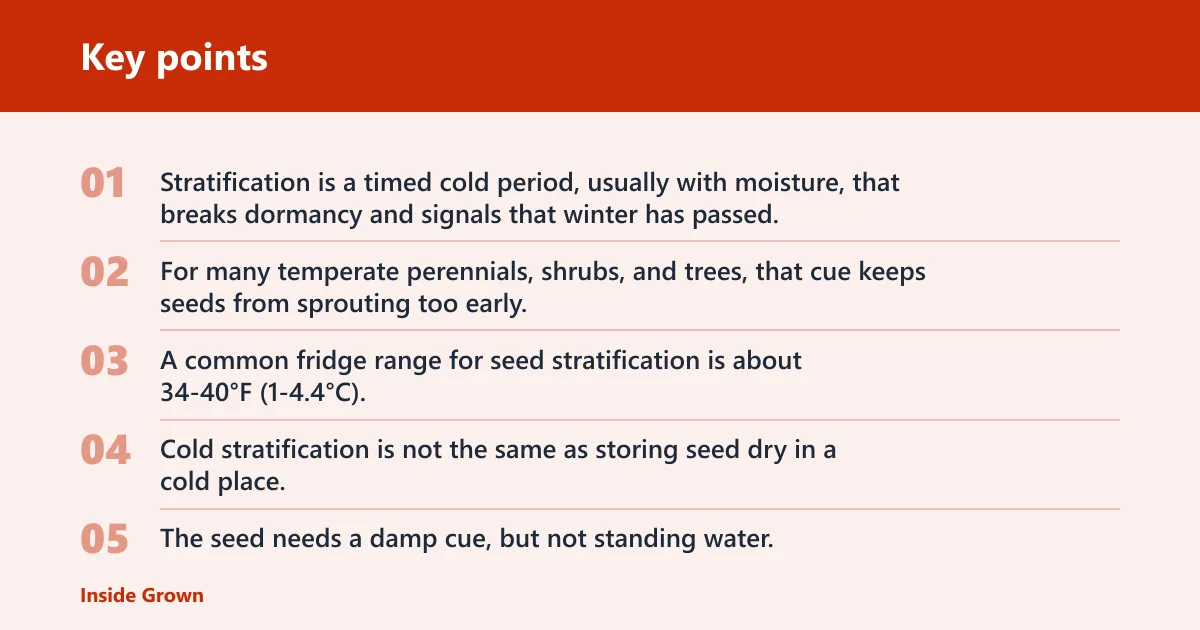


Stratification is a timed cold period, usually with moisture, that breaks dormancy and signals that winter has passed. For many temperate perennials, shrubs, and trees, that cue keeps seeds from sprouting too early. A common fridge range for seed stratification is about 34-40°F (1-4.4°C).
Cold stratification is not the same as storing seed dry in a cold place. The seed needs a damp cue, but not standing water. That balance matters because the wrong moisture level can trigger rot instead of germination.
Which seeds need it?
Seeds from cold-climate species are the main candidates, especially many perennial flower, shrub, and tree seeds. If the packet says “cold moist stratification,” follow that instruction exactly. If it gives a number of weeks or days, use that over any generic rule.
Cold stratification vs. scarification
Some seeds need both treatments, but not in the same order or to the same degree. Hard-coated seeds often need scarification first so water can reach the embryo, then they may need cold stratification. Scarification can mean lightly nicking the coat or rubbing it with sandpaper.
If the packet says the coat is hard, treat that as a separate cue from dormancy. A tough coat blocks water. Dormancy blocks timing.
How to read the seed packet
Look for exact wording such as “cold moist stratification,” “pre-chill,” or a specific number of weeks. Packet instructions should override generic advice because cultivars can vary. Mixed seed orders and seed-saving batches need the same check; do not assume every packet in the envelope wants the same treatment.
Common seed groups that often need cold treatment
Many flower seeds, native perennials, and woody plants fall into this group. Milkweed, lupine, and rudbeckia are commonly listed as stratification candidates. Apple seeds generally need about 6 weeks of cold stratification, and sea buckthorn needs 90 days of cold moist stratification.
Picture a packet of mixed meadow seeds with coneflower, rudbeckia, and a few grasses. One packet may want cold moist chilling, while the grasses may not. Sorting by packet label first keeps you from treating every seed the same.
What you’ll need
- Seed packets with the exact stratification note
- Zip bags or small labeled containers
- Paper towels, peat moss, or sand
- Clean water in a spray bottle or small cup
- A refrigerator shelf that stays near 40°F
- Permanent marker for dates and plant names
- Small pots or trays for sowing after chilling
Stratification decision table
| Seed type | Likely dormancy cue | Recommended method | Moisture level | Fridge time range | Warning signs | Next-step sowing action |
|---|---|---|---|---|---|---|
| Apple | Cold dormancy | Cold moist in a labeled bag | Moist, not dripping | About 6 weeks | Gray fuzz, sour smell, swollen seed coat | Sow at packet depth and keep evenly warm |
| Milkweed | Cold dormancy | Cold moist in paper towel or peat | Moist, not wet | About 4 to 6 weeks | Condensation pooling, early root tips | Move to pots as soon as root tips show |
| Lupine | Cold dormancy, often hard coat | Scarify first, then cold moist | Moist, not dripping | About 4 to 6 weeks | Cracked seed coats with softening mush | Sow promptly after chilling |
| Rudbeckia | Cold dormancy | Cold moist in paper towel | Lightly moist | About 4 to 6 weeks | Mold patches, seed staining | Sow at the surface or very shallowly |
| Sea buckthorn | Extended cold dormancy | Cold moist in peat or sand | Moist, never soggy | 90 days | No swelling after the first month | Continue chilling until the full period ends |
| Hardy tree seed | Deep dormancy | Cold moist in sand or peat | Moist, not wet | 4 to 5 months | Flattened, dried medium or mold | Sow after the full cold period |
How do you stratify seeds in the fridge?

Use a clean, labeled container with a damp medium and keep it in the refrigerator, not the freezer. The goal is steady cold and light moisture. Gardening Know How places the ideal fridge temperature around 40°F, and many seeds need between 1 and 3 months.
Fridge temperature callout: keep seeds near 34-40°F (1-4.4°C), away from freezing and away from the warmest door shelf.
Check the packet first. Follow the exact cold period if it is listed. If the packet names a specific number of days or weeks, use that instead of a generic range.
Choose the medium. Large seeds tend to do well in moistened peat or sand. Small seeds can be placed on moist paper towels for stratification. The medium should feel damp when squeezed, but no water should drip out.
Package and label. Put seeds in a zip bag or small container with the damp medium, then label the plant name and start date. This keeps mixed seed orders from getting confused later.
Store in the fridge. Place the bag where it stays near 34-40°F (1-4.4°C). Avoid the freezer and avoid the warmest shelf near the door if temperature swings are large.
Check weekly. Open the bag briefly to look for mold, excess condensation, or early root tips. If the medium is drying, add 1 teaspoon of water at a time, then recheck.
Can you stratify seeds without paper towels?
Yes. Paper towels are only one option. Sand and peat moss are common for larger seeds, and some gardeners use small pots filled with damp medium. The key is still the same: cold plus moisture, but no standing water.
Say your milkweed seeds arrive in late winter and the packet says 4 to 6 weeks. A damp paper towel in a labeled bag works well because the seeds are small and easy to inspect. If the towel is wet enough to pool, that is too much.
How long should seeds stay cold?
Short, medium, and long cold windows all exist. Many stratification instructions call for about 4 to 6 weeks. Gardening Know How notes that many seeds need between 1 and 3 months, while some hardy tree seeds need 4 to 5 months. Sea buckthorn needs 90 days.
What under-stratified seeds look like
Under-stratified seeds often stay hard, unchanged, or slow to sprout after sowing. You may see no swelling at all. If the packet says the seed needs cold moist stratification and nothing happens after the full period, extend the chill in two-week blocks unless the packet says otherwise.
What over-stratified seeds look like
Over-stratified seeds may start to send out a root in the fridge, or they may soften too far and start to break down. If a seed is splitting in storage, sow it immediately. Do not leave a sprouted seed in cold storage while waiting for a better time.
A common first-timer mistake is pulling seeds from the fridge after 10 days because they look unchanged. That often means the chilling window is simply too short, not that the batch failed. If the packet calls for 6 weeks, keep the schedule at 6 weeks before judging the result.
Common mistakes
Mold, extra moisture, and poor airflow are the usual problems. They can turn a good batch sour fast. The fixes are simple, but they need to happen early.
Mold and excess moisture
If the bag is foggy with condensation or the medium feels wet, open it, remove the seeds, and switch to cleaner medium. Replace wet paper towels, or mix in more dry sand or peat until it is only damp. If mold has spread, discard the worst seeds and keep the clean ones if they still look firm.
Premature sprouting
If root tips appear in the fridge, sow right away. Move seeds to pots at the proper depth and keep them warm and evenly moist. For many small seeds, that means a shallow cover or surface sowing so light can still reach them if the species needs it.
Winter sowing as an outdoor option
Winter sowing is a useful outdoor alternative for some hardy seeds, especially when the packet allows cold-moist treatment. Use protected containers, such as vented milk jugs or covered trays, and keep them where they get winter cold but are shielded from direct drying wind. It is not right for every seed, so check the packet first.
Suppose a tray of rudbeckia seeds has fine white fuzz after 12 days. The faster fix is to reduce moisture, open the bag for a little fresh air, and repackage the seeds in a barely damp medium. If the fuzz returns, the batch may need a cleaner container and less frequent closing.
Prevention: keep labels on every bag and check once a week. A missed date is one of the easiest ways to under-chill or over-chill a batch.
After stratification ends
Move seeds out of the fridge as soon as the required cold period is complete, then sow them right away. Match the sowing depth to the packet. Small seeds often need only a light dusting of mix or no cover at all, while larger seeds may need a deeper planting.
After sowing, give them warmth and steady moisture. Many seeds want bright light after emergence, but not full sun that bakes the surface dry. If the packet gives a germination temperature, use that number instead of guessing.
Frequently asked questions
What seeds need stratification
Many temperate perennials, shrubs, and trees do, along with some flower seeds such as milkweed, lupine, and rudbeckia. Apple seed is a common example, and sea buckthorn needs a long cold period. Warm-season annuals usually do not need this step unless the packet says so.
How long do seeds need cold stratification?
Many seeds fall in the 4 to 6 week range, but many others need 1 to 3 months. Some hardy tree seeds need 4 to 5 months, and sea buckthorn needs 90 days. Use the packet first, then use the species range only if the packet is silent.
How to warm stratify seeds
Warm stratification is a separate warm, moist holding period used by a smaller group of species that need warmth before cold. It is not a replacement for refrigerator chilling. Follow the packet exactly, because some seeds want warm moist conditions first, then cold moist conditions after that.