How to Plant Bean Seeds for a Uniform Row
Stretch a string, open a 1-inch-deep furrow, and drop bean seeds 2 to 4 inches apart, then cover and firm lightly for a straight row. If you skip the line or vary the depth, the row looks uneven and the seedlings come through at different times. This guide covers line placement, depth control, spacing, and a few simple ways to keep every seed in order.
When should you sow bean seeds?
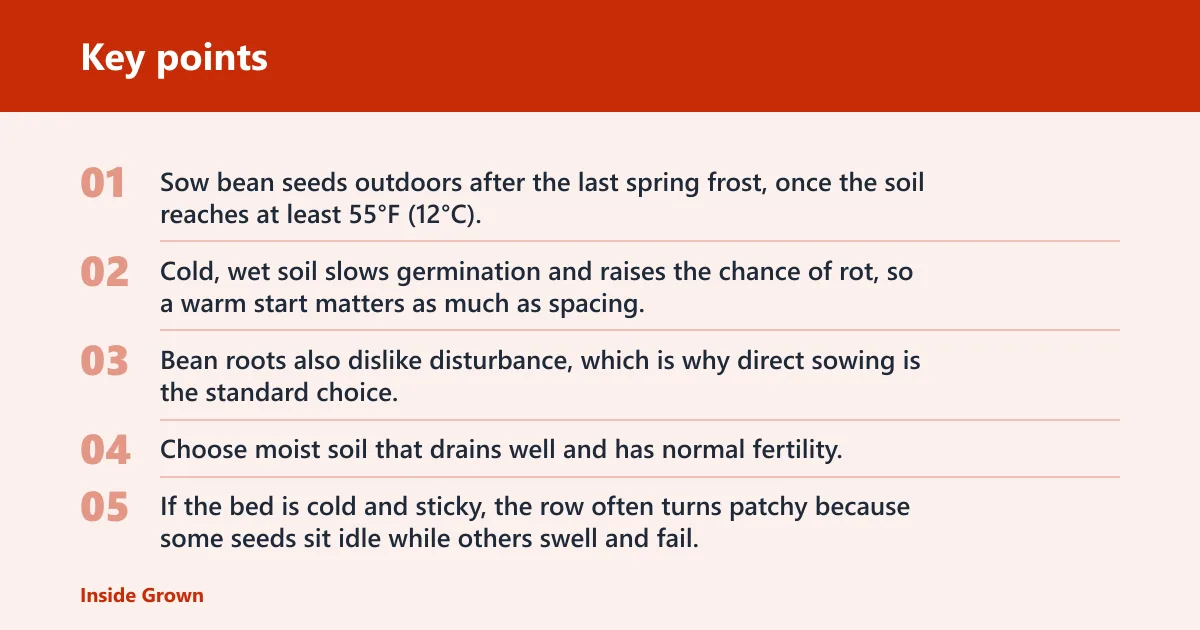


Sow bean seeds outdoors after the last spring frost, once the soil reaches at least 55°F (12°C). Cold, wet soil slows germination and raises the chance of rot, so a warm start matters as much as spacing. Bean roots also dislike disturbance, which is why direct sowing is the standard choice.
Choose moist soil that drains well and has normal fertility. If the bed is cold and sticky, the row often turns patchy because some seeds sit idle while others swell and fail.
Bush beans vs runner beans
Bush beans are compact and easier to row-sow tightly. Runner beans and other climbing types need support in place before planting, because the row layout changes once the stems begin to climb. That support also helps you place each seed where it belongs from the start.
For bush beans, the spacing is tighter and the sowing depth is shallower. For runner beans, the spacing is wider, and the deeper end of the sowing range is better when the soil is warm, loose, and drains freely; the shallower end suits heavier or moisture-holding soil where a deep hole would slow emergence. Winged bean seed is generally handled like a climbing bean in layout terms, with support required and a wider spacing pattern than bush beans, but the exact sowing depth can vary with local conditions and should not be forced deeper in cold or wet soil.
How do you mark a straight bean row?
Use a taut string line for the cleanest row from day one. Mark the furrow along the string, then place seeds at even intervals by hand or with a dibber. This keeps the row straight and makes each seed drop easier to judge.
Row evenness starts before the first seed goes in. A crooked line makes spacing look off even when the gaps are technically correct, and uneven depth becomes obvious once the seedlings appear.
Set the line first. Pull a string taut between two stakes so it marks the row clearly. Keep it low enough to guide your furrow, not so low that it sags into the soil.
Mark the planting spots. Use your fingers, a dibber, or a small marker to make shallow points along the line. For bush beans, keep the spacing at 2 inches in the row; for runner beans, use the spacing listed for that crop type.
Open a uniform furrow. Scratch or draw a shallow trench beside the line rather than digging a deep channel. A steady furrow depth helps the seeds sit at the same level and emerge together.
Drop one seed at a time. Keep the seed in your fingertips until it lands, instead of scattering a small handful. That one-by-one pace cuts down on clumps and skipped spots.
Cover and firm lightly. Pull soil back over the seeds, then press it gently so the seed makes good contact with moist soil. Firming helps draw moisture to the seed without burying it too deeply.
Say your row drifts a little wider near one end because the string moved while you worked. Correcting it before covering the seeds matters more than trying to straighten the row later, because emergence will reveal the error in a way that is hard to hide.
How deep should bean seeds go?
Bush beans are planted about 1 inch deep. That shallow depth suits their smaller, fast-emerging pattern and helps the row stay even in warm soil. Runner beans are usually planted deeper than bush beans, but the depth still needs to match soil texture and moisture, not just the seed size.
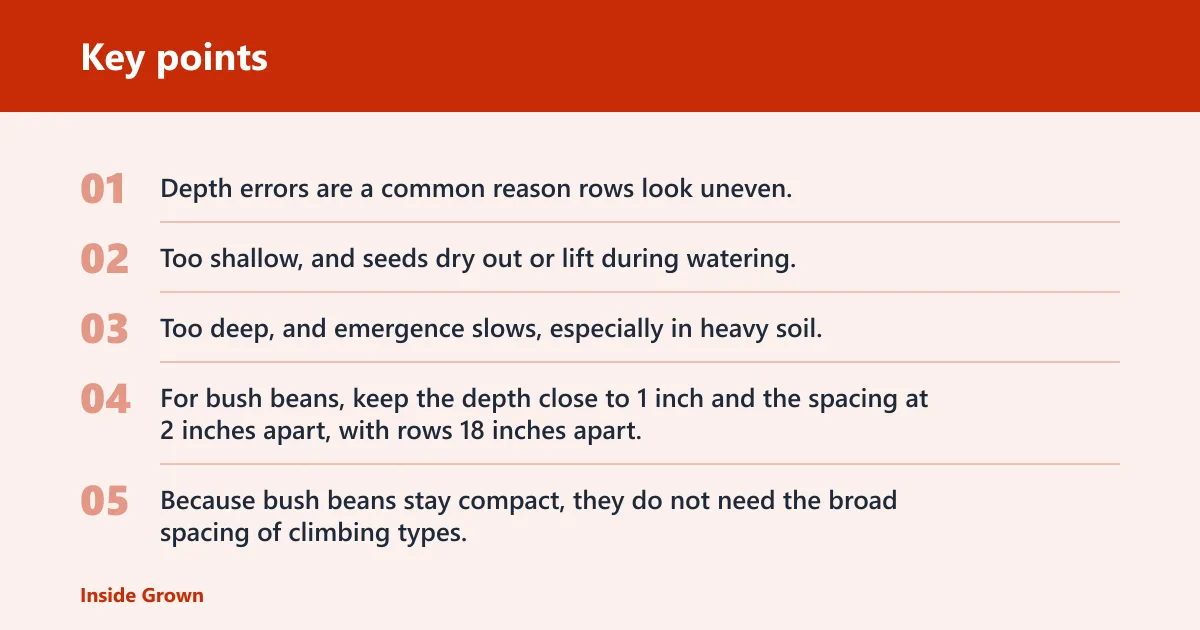
Depth errors are a common reason rows look uneven. Too shallow, and seeds dry out or lift during watering. Too deep, and emergence slows, especially in heavy soil.
Shallow sowing for bush beans
For bush beans, keep the depth close to 1 inch and the spacing at 2 inches apart, with rows 18 inches apart. That combination gives a neat row that is easy to thin only if needed, while still leaving enough space for compact growth.
Because bush beans stay compact, they do not need the broad spacing of climbing types. The row can look full early without crowding the plants later.
Deeper sowing for runner beans
Runner beans are usually sown 1 to 2 inches deep, with the shallower end better for heavy or moist soil and the deeper end better for warm, open, free-draining soil. They are often spaced about 20 cm apart, with about 60 cm between rows, and commonly planted one per cane base in a wigwam support. Support must already be in place.
Do not push runner seeds too deeply into heavy soil. A deeper hole in dense, wet ground can slow emergence enough to leave the row patchy, even when the spacing is right.
A common first-timer mistake is planting runner beans at bush-bean depth, then watering heavily. The seed swells, the soil crusts over the top, and the shoot has to fight its way out. That can turn a tidy row into an uneven one within a few days.
Bean row sowing checklist
Use this as a text-only uniform row sowing checklist before and during planting. It combines the main spacing and depth targets with the layout checks that keep the row even.
| Bean type | Depth | In-row spacing | Row spacing | Support |
|---|---|---|---|---|
| Bush beans | 1 inch | 2 inches | 18 inches | Usually none |
| Runner beans | 1 to 2 inches | 20 cm | 60 cm between rows | Teepee, wigwam, trellis, or stakes before sowing |
- Check that the soil is warm enough to sow, at least 55°F (12°C).
- Choose moist, well-draining soil with normal fertility.
- Put climbing supports in position before any seed goes in.
- Stretch a line so the row stays straight.
- Mark spacing points before you open the furrow.
- Drop seeds one at a time, not in clusters.
- Keep depth steady along the whole row.
- Cover lightly and firm the soil just enough to settle it.
- Water gently so the furrow does not wash seeds to one side.
What to avoid while sowing
Skip high-nitrogen fertilizer at planting. Beans fix nitrogen in root nodules, so extra nitrogen pushes leafy growth instead of a balanced start. Also avoid soaking the row so heavily that the soil turns cold and wet, since that works against even germination.
Soaking bean seeds before planting is optional, not required. If you choose to soak, keep it brief and treat it as a convenience, not a fix for cold soil or poor spacing.
What if the row is uneven after sowing?
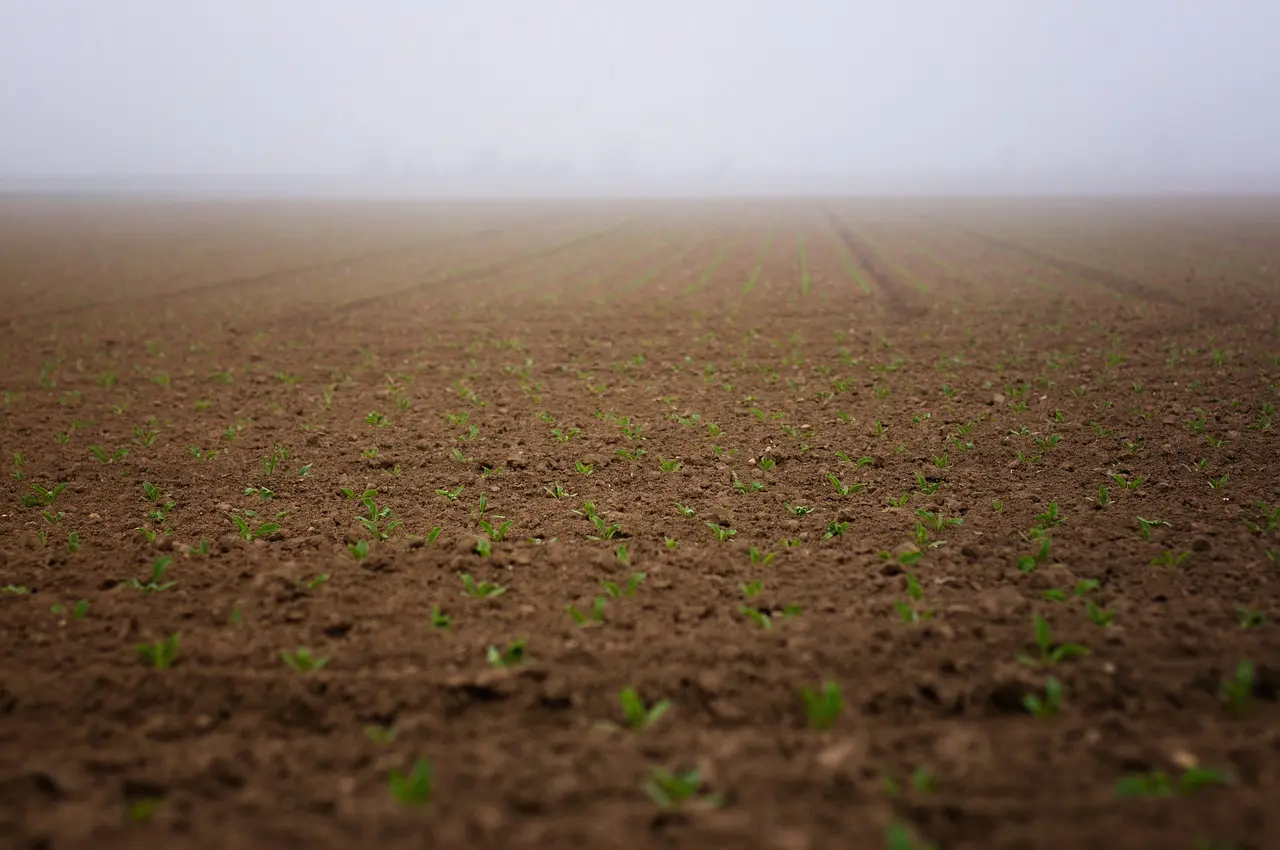
Fix clumps, gaps, and uneven depth before germination if you can. Once roots start, correction becomes harder and can leave the row visibly uneven for the rest of the season. The best time to repair a row is after sowing and before the first sprout appears.
Fixing clumps before germination
If two or three seeds landed in one spot, remove the extras carefully while the roots are still absent. Leave the strongest-positioned seed in place, or spread the seeds slightly if the furrow is still open. Keeping one seed per planting point helps the row read evenly later.
Suppose a section has three seeds pressed into one inch of soil while the next section has a gap of several inches. That clump will emerge as a crowded mound and the gap will read as a hole, even if the rest of the row is straight. Fixing both problems at once gives the cleanest result.
Filling gaps and correcting depth
If a spot was missed, fill it before watering the whole row. Make a small planting point at the correct depth, add a seed, and cover lightly. If one seed was buried too deeply, there is little to gain from digging it up unless the soil has barely been covered; in many cases, it is better to leave it and fill the gap next door.
Uneven watering can also distort a row. A strong stream can move soil away from shallow seeds and leave them exposed, while gentle watering keeps the surface level and the seeds in place.
Inspect the row line. Walk the full row before watering and look for crooked sections, clumps, and empty gaps. This is easier to correct while the soil still shows the planting marks.
Count the crowded spots. In each clump, keep only the seed that sits best in the row or separate the extras slightly if the furrow is still open. This keeps the stand from bunching up later.
Repair empty spaces. Add a seed to each gap at the same depth used for the rest of the row. Matching depth helps the new seed emerge at the same pace as its neighbors.
Correct the surface level. Pull a little soil over any exposed seed and remove any soil ridge that makes one section noticeably higher. A level surface helps the row dry and warm evenly.
Water gently once. Use a fine rose or soft spray so the furrow settles without washing seeds together. This final pass locks the row in place and preserves spacing.
Frequently asked questions
How deep should I plant bean seeds?
For bush beans, plant about 1 inch deep. Runner beans are often planted 1 to 2 inches deep, with the shallower end better for heavier or wetter soil and the deeper end better for lighter, warmer ground. The best depth is the one that keeps the seed moist without burying it so far that emergence becomes difficult.
Do bean seeds need to be soaked before planting?
No, bean seeds generally do not need to be soaked before planting. Soaking can be used as an optional step, but it is not required for a good stand. Warm soil, correct depth, and even spacing matter more for uniform emergence than a brief soak.
Should runner bean seeds be planted “right way up”?
Runner bean seeds usually germinate even if they are not oriented perfectly. If the eye or hilum ends up sideways or downward, that can help reduce water sitting on the seed in heavier soil, but it is better to focus on correct depth and firm, moist soil contact than on trying to force a precise orientation.