How to Protect Seeds From Slugs and Snails After Sowing
Cover newly sown seeds at once with fine mesh, copper tape, or slug pellets approved for edible gardens, then check them for about 72 hours; if fresh slime or damage appears, add a second barrier the same day. If that window is missed, slugs and snails can eat cotyledons before they emerge, which may force resowing and cost about a week or more in cool, wet weather. This guide gives a step-by-step sequence for beds, pots, and trays based on moisture and pest pressure.
What to do first after sowing
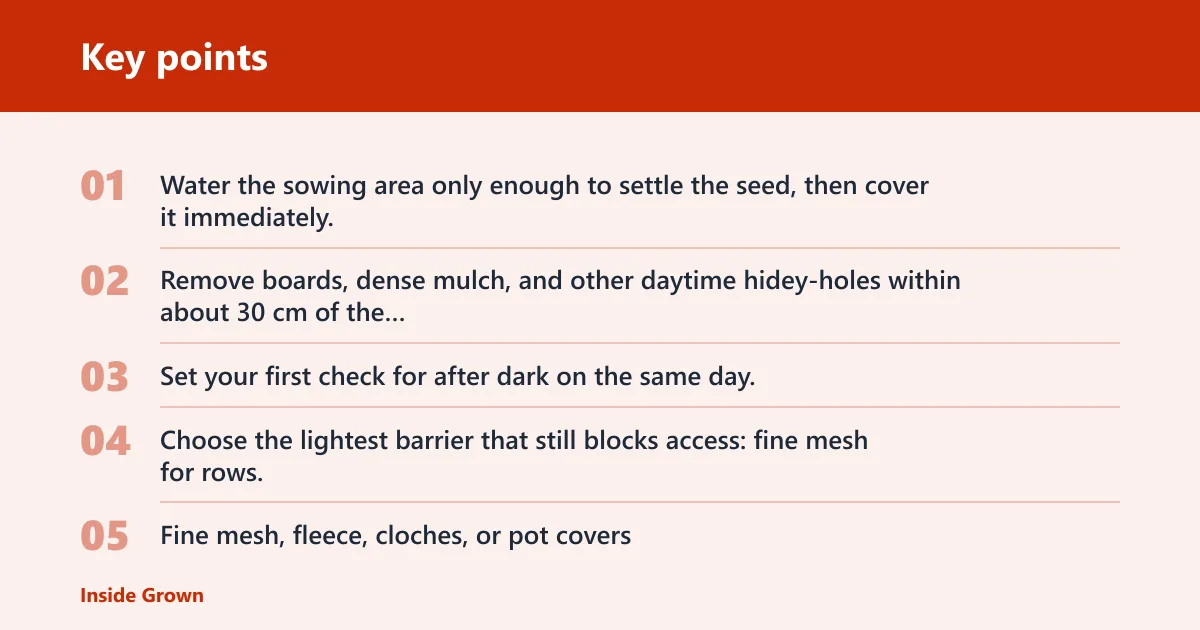


- Water the sowing area only enough to settle the seed, then cover it immediately. Slugs are most active from dusk to dawn, and they favor cool, moist conditions.
- Remove boards, dense mulch, and other daytime hidey-holes within about 30 cm of the sowing line or pot. That cuts shelter before nightfall.
- Set your first check for after dark on the same day, especially if rain is due or the bed is shaded.
- Choose the lightest barrier that still blocks access: fine mesh for rows, fleece for cold nights, cloches for individual plants, or a pot cover for trays and tiny seed rows.
What you’ll need
- Fine mesh, fleece, cloches, or pot covers
- Copper tape or slug rings for containers
- Gloves
- Flashlight or headlamp
- Shallow bucket for handpicking
- Beneficial nematodes, if the label fits the soil temperature and crop
- Beer traps or hidey-hole traps for use away from seedlings
- Short collars or mesh covers for narrow rows
How do I stop slugs from eating seeds after I sow them?
Block access in about the first 24 hours after sowing. Put a physical cover over the row, then check at night for fresh slime trails or clipped seedlings. If pressure is high, add a second layer the same day rather than waiting for visible losses.
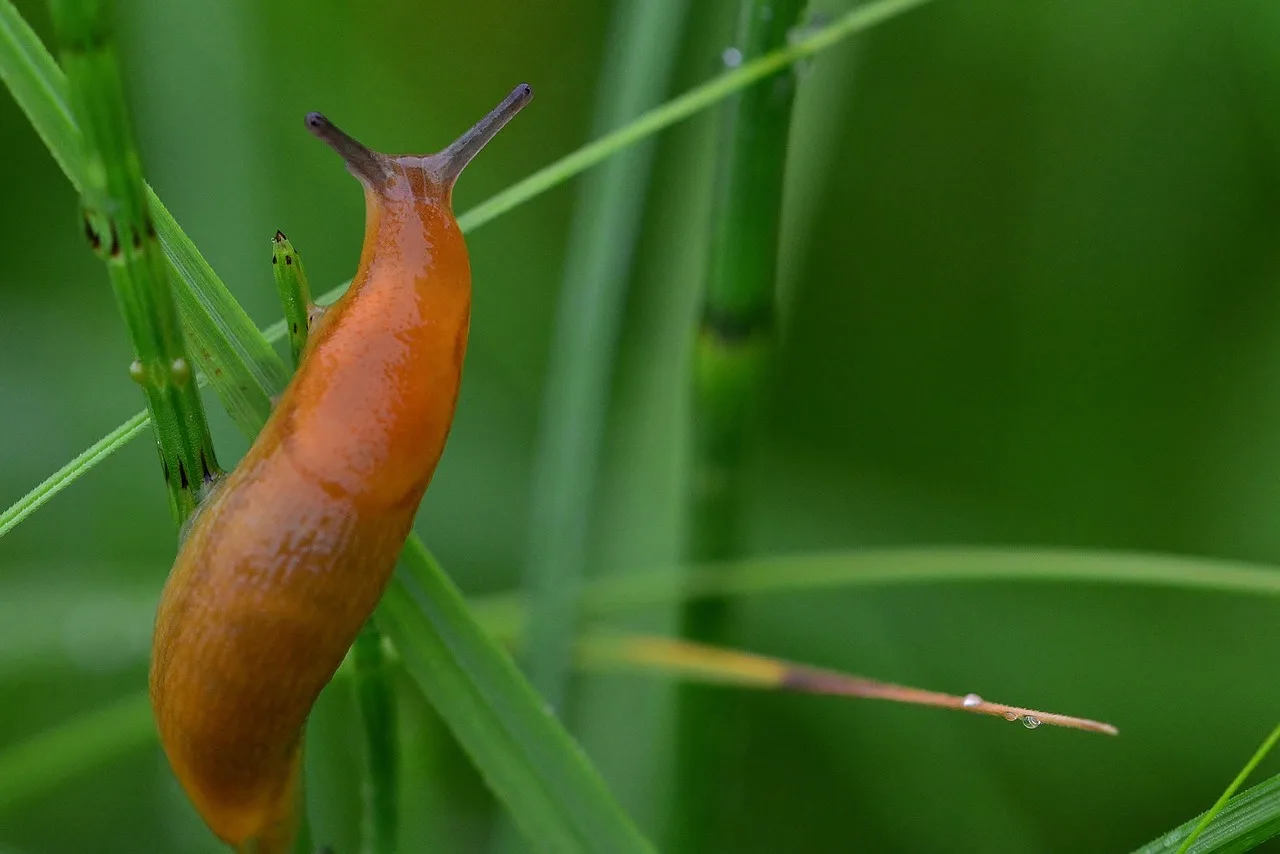
Snails leave slime trails too, hide under debris and pot rims, and can damage young plants after sowing. Slugs also leave shiny mucus trails and feed on seedlings and soft growth.
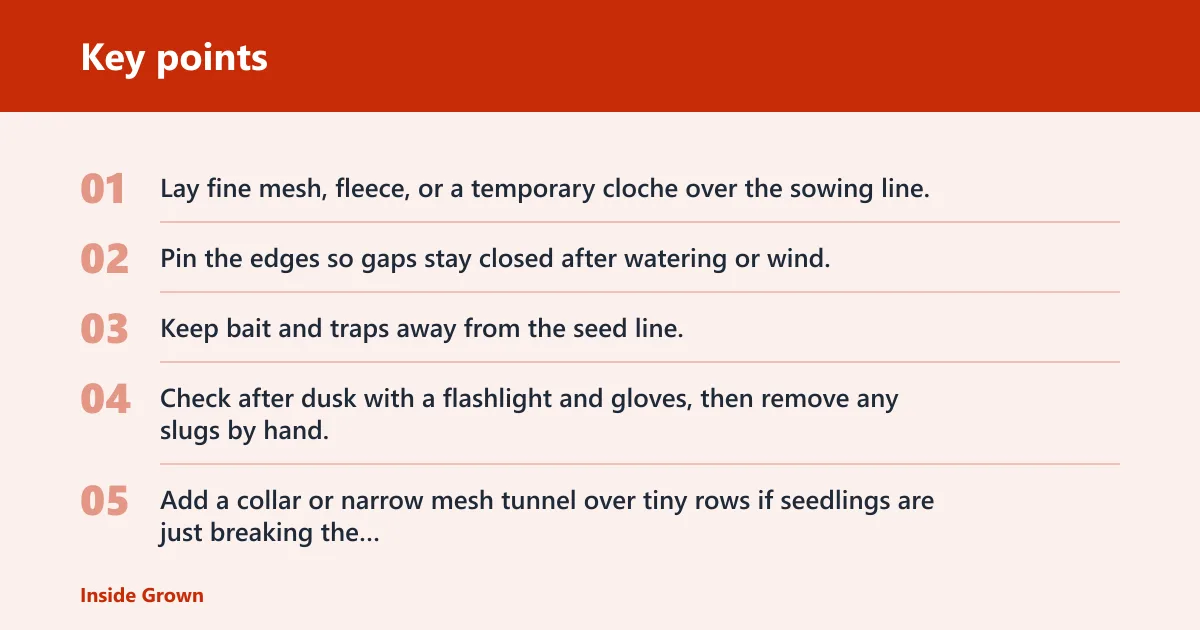
- Lay fine mesh, fleece, or a temporary cloche over the sowing line.
- Pin the edges so gaps stay closed after watering or wind.
- Keep bait and traps away from the seed line.
- Check after dusk with a flashlight and gloves, then remove any slugs by hand.
- Add a collar or narrow mesh tunnel over tiny rows if seedlings are just breaking the surface.
Say your bean row is 2 m long and the soil stays damp after a shower. A low mesh cover over the full row works better than one beer trap at the end, because the trap can miss the feeding zone while the seedlings sit exposed.
How do you protect pots, trays, and raised beds?
Pots and trays need perimeter protection first. Raised beds need edge control and less shelter around the frame. For isolated transplants, copper tape or slug rings can help, but they work best as barriers, not as the only defense.
- Wrap each pot with copper tape or fit a slug ring around the container.
- Raise trays off damp ground and keep rims clear of compost crumbs and leaf litter.
- Use individual covers for isolated transplants that sit alone on a bench, step, or patio.
- On raised beds, protect the perimeter and remove nearby debris instead of relying on surface bait alone.
- Recheck pot rims after rain, because snails often hide under them.
Suppose a 20 cm herb pot sits under a bench in a shady corner. A copper tape band around the pot rim plus a clear floor around the base gives more protection than bait scattered beside the stem.
Post-sow slug defense matrix
| sowing method | immediate protection actions | what to do after rain | warning |
|---|---|---|---|
| Direct sowing | Cover the row with fine mesh or a cloche; clear debris within 30 cm; check after dusk. | Lift the cover briefly, remove any slugs, then reseal the edges and inspect the soil surface. | Do not place beer traps beside the row or leave bait on top of the seed line. |
| Pots | Fit copper tape or a slug ring around the container; keep the rim clean; use gloves for night checks. | Wipe off wet grit, reset the barrier, and inspect under the pot rim for hiding snails. | A partial ring with gaps will fail fast. |
| Trays | Raise trays off the ground; use a mesh cover; keep compost spill from forming a bridge. | Drain standing water, then re-cover once the surface is no longer dripping. | Trays left flat on wet paving are easy targets. |
| Raised beds | Protect the perimeter with mesh or edge barriers; remove boards, dense mulch, and dark hiding spots nearby. | Inspect bed edges and corners, then replace covers before evening. | Do not rely on one trap or one bait point for the whole bed. |
When should you use traps, bait, and nematodes?
Use traps as one part of a wider plan. Beer dish traps are made from a shallow container sunk into the soil, and they should be set away from plants. Beneficial nematodes are a biological control for the soil, and competitors recommend them in April when conditions fit the label.
- Set beer traps or hidey-hole traps at a safe distance from seedlings.
- Empty traps often so they keep working.
- Store beneficial nematodes in the fridge until use.
- Mix them with water and apply with a watering can.
- Apply them soon after sowing if soil temperature and label directions fit.
These nematodes are microscopic worms that live in the soil and target young slugs in the soil. They work best when moisture stays steady and the bed is not baking dry.
What can I do at night to catch slugs after sowing?
Handpicking gives you the most direct night control. Go out after watering at dusk, use a flashlight, wear gloves, and remove slugs and snails by hand. During an outbreak, this needs repeated nightly effort because new individuals keep moving in.
- Wait until dark or just after dusk watering.
- Check along edges, under cloches, and under pot rims.
- Pick visible slugs into a bucket of soapy water or another disposal method you already use.
- Recheck the same route the next night.
A common first-timer mistake is one quick patrol after rain, then no follow-up. That misses the next wave of night-active gastropods that arrive from nearby shelter.
Common mistakes
- Putting beer traps beside seedlings instead of away from them.
- Trusting copper tape alone in heavy pressure.
- Leaving boards, wet mulch, or pot saucers next to new sowings.
- Skipping the first 72-hour check after rain or irrigation.
- Using bait or traps without emptying them regularly.
- Expecting one barrier to cover every sowing method.
If the first barrier fails, add a second one the same day. For example, a mesh cover over a direct-sown row can be paired with handpicking after dark, while a pot can get both a copper band and a clean, debris-free rim.
Frequently asked questions
What is the best way to protect newly sown seeds from slugs and snails?
The best approach is a combination: cover the sowing, remove shelter, and check at night. On damp sites, that means a temporary barrier over the row plus handpicking and a trap set well away from the seedlings.
Should I use copper tape around seed trays or beds?
Use copper tape on pots and containers, where it works as a perimeter barrier. It is less useful as a stand-alone answer for open beds, so pair it with covers, clean edges, and night checks.
Do beer traps work for slugs around seedlings?
They can catch slugs and snails, but they should sit away from plants and need regular emptying. A shallow container sunk into the soil is fine as one part of the plan, not the whole plan.
When should I apply nematodes after sowing seeds?
Apply them soon after sowing if the label fits the crop and soil conditions. Store the pack in the fridge until use, mix with water, and water them in with a can so they reach the soil where young slugs live.
How do I protect seeds in pots from slugs and snails?
Fit copper tape or a slug ring around the pot, keep the rim clear, and check under the container at night. Pots need perimeter protection because snails often hide under debris and pot rims before feeding.