Landscaping Services for Shade Garden Design
For a shade garden redesign, hire a landscaping service that starts with a site assessment of light levels, tree-root competition, and soil moisture; if roots dominate, choose a service with arborist input and drainage planning. Bad matches waste money on plants that fail, thin out, or struggle in dry, compacted soil. This guide explains which landscaping services fit deep shade, dappled shade, and root-heavy yards, and what to ask before you sign.
Shade garden design plan: What should be included
A solid shade garden design plan should document the site before any plants go in. At minimum, it should include a sun map, soil and moisture notes, drainage and grading observations, root-risk notes, a planting plan, irrigation zones, lighting, hardscape layout, and a maintenance schedule. That makes the design practical instead of aspirational and helps match plants to the real conditions of the yard.
- Sun map by time of day and season
- Soil texture and moisture test notes
- Drainage and grading observations
- Tree-root competition and root-risk notes
- Planting plan with shade zones
- Irrigation zones and watering method
- Lighting plan for paths and focal points
- Hardscape layout and access routes
- Maintenance schedule for pruning, mulch, and irrigation checks
Shade garden service matrix
Shade is not one condition. A bed under dense evergreens, a side yard with three hours of filtered sun, and a low spot under a maple need different services, different plant choices, and different installation priorities. The matrix below separates those jobs so you can match the redesign to the site.
| Shade condition | Exact services needed | Common failure to avoid | First 3 install priorities |
|---|---|---|---|
| Deep shade | Sun-map evaluation, shade-tolerant planting plan, soil amendment review, root-zone protection, lighting layout | Choosing sun-loving plants that stretch, yellow, or stop flowering | 1) Confirm light hours by season 2) Check root competition 3) Plan structure with groundcovers and understory shrubs |
| Dry shade | Soil moisture testing, drought-tolerant plant selection, mulching plan, irrigation review, grading for runoff control | Planting moisture-hungry species that fail fast in the dry root zone | 1) Improve soil where roots allow 2) Select drought-tolerant shade plants 3) Add irrigation only where water can reach roots |
| Wet shade | Drainage and grading, compaction relief, plant selection for moist soils, erosion control, seasonal cleanup plan | Ignoring standing water and planting into saturated soil | 1) Fix pooling 2) Shape grade away from stems and foundations 3) Choose plants that handle periodic wet feet |
| Dappled shade | 2D design renderings, layered planting plan, seasonal color planning, irrigation layout, edging and path layout | Overplanting with full-shade species that thin out in filtered light | 1) Map sunflecks across the day 2) Layer perennials and shrubs 3) Add paths or lighting where the bed meets traffic |
How do you tell what kind of shade you have?
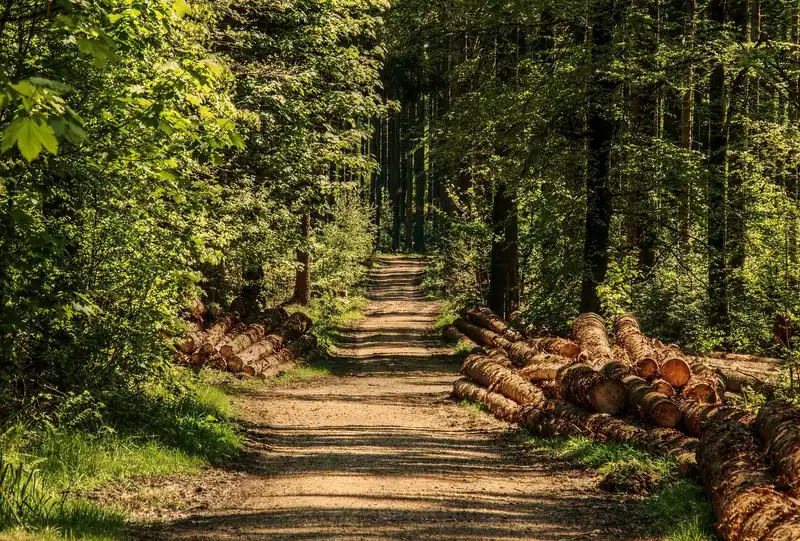
Use sun hours, not guesswork. Count direct sun at the bed, then match plants and services to that number. Full shade usually means less than 3 hours of direct sun, while partial shade often means 3 to 6 hours, usually with softer morning or late-day light. The right landscaping services for shade garden design start with that count, then adjust for seasonal changes, overhead cover, and reflected light. Extension guidance on shade gardening also emphasizes observing light over time rather than relying on a single snapshot, because plant performance changes as the sun angle and canopy change through the year. Penn State Extension
Measure sun exposure hours across the day
Watch the site in morning, midday, and late afternoon. A bed may receive two hours in spring and almost none after leaf-out. Mark the hours when direct sun reaches the ground, not when the sky is bright. That difference matters for plant compatibility and seasonal performance.
Separate full shade from partial shade
Full shade does not mean zero light. It usually means only brief direct sun, with the rest filtered or indirect. Partial shade gets enough sun for a broader plant palette, including some flowering perennials and shrubs. If the bed stays bright but never gets direct rays, treat it as filtered shade, not partial sun.
Check seasonal changes from leaf-out to leaf drop
Many yards shift from spring sun to summer shade once trees leaf out. That seasonal swing changes moisture loss, bloom timing, and leaf scorch risk. A design plan should note whether the site is brighter in early spring, darker in midsummer, or exposed again in late fall. University guidance on shade gardening and landscape design also notes that tree canopies and seasonal sun angles materially change plant performance. University of Minnesota Extension
Look for root competition, reflection, and overhead cover
Tree roots compete for water and nutrients. Pavement, fences, and pale walls can reflect heat and increase stress on plants even in shade. Overhead canopies change rain interception too. Those details guide the service package, because a shady site with dry roots needs a different plan than a shady site with pooling water. Root competition and soil drying under trees are widely documented in arboriculture guidance, and shade beds often need irrigation or soil management because roots occupy the same upper soil zone as new plantings. Penn State Extension ISA Trees Are Good
Which landscaping package fits your yard?
Pick the package by site condition, not by plant wishlist. Deep shade usually needs a design-and-planting bundle; dry shade adds irrigation and soil recovery; wet shade requires drainage and grading first; and dappled shade often benefits from a broader design package that includes hardscape and lighting. The right scope prevents repeated replanting and keeps the installation aligned with the yard’s actual constraints.
Deep shade package
Best for yards with very limited direct sun, dense tree cover, or narrow side beds. Typical scope includes a sun map, shade plant palette, layered planting plan, soil review, and low-light lighting layout. Choose this package when the bed is consistently dim and the goal is structure, foliage texture, and dependable performance rather than high bloom volume.
Dry shade package
Best for yards where trees, eaves, or hardscape create shade but the soil dries out quickly. Typical scope includes moisture testing, drought-tolerant plant selection, mulch strategy, and irrigation adjustments. Choose this package when plants wilt quickly after rain or when roots and runoff leave the bed chronically thirsty.
Wet shade package
Best for low spots, areas with pooling water, or shaded beds that stay saturated after storms. Typical scope includes drainage fixes, grading, erosion control, moisture-tolerant planting, and cleanup planning. Choose this package when puddling, slick soil, or rot-prone conditions make planting risky without site correction first.
Dappled shade package
Best for yards with filtered sun, shifting sunflecks, and more plant options. Typical scope includes a detailed planting design, edging, paths, lighting, and irrigation layout. Choose this package when the space can support mixed texture and color, but still needs a plan to handle changing light through the season.
What a site assessment should include
A site assessment should map light, water, soil, slope, access, and root pressure before any planting starts. That means sun exposure, soil texture, drainage patterns, topography, and the space available for equipment. Without that check, a planting plan is a guess.
Sun-map evaluation
A sun map records direct sun, bright shade, and full shade by time of day and season. It shows where a bed can support more flowering color and where foliage plants will do better. Property analysis should also account for changing canopy density across seasons, because shade definition can shift as trees leaf out and the sun angle changes. Penn State Extension
Soil conditions and drainage patterns
Shady soil often stays wetter longer, but not always. Under large trees it can be dry, compacted, and thin. A service should check whether water drains away, pools after storms, or never reaches the root zone. That determines whether you need drainage work, mulch changes, or soil correction before planting. For drainage symptoms in landscape beds, extension guidance commonly points to standing water, muddy soil, and root stress as red flags that warrant grading or drainage changes. Penn State Extension
Topography and slope
Slope changes where water runs and where erosion starts. A slight grade may push runoff away from plants too quickly, while a low spot can hold water around roots. Drainage and grading matter when the site has puddling, washouts, or a bed edge that sits below the surrounding yard.
Tree roots, compaction, and access limits
Tree roots can make digging risky and planting shallow. Compacted soil blocks water and oxygen. Limited access also affects the design, because large machines may not fit near the bed. When roots are the main constraint, the design should reduce excavation near trunks, avoid burying roots, and keep irrigation and mulch within arborist-safe limits. ISA Trees Are Good
Shade garden design services that matter most
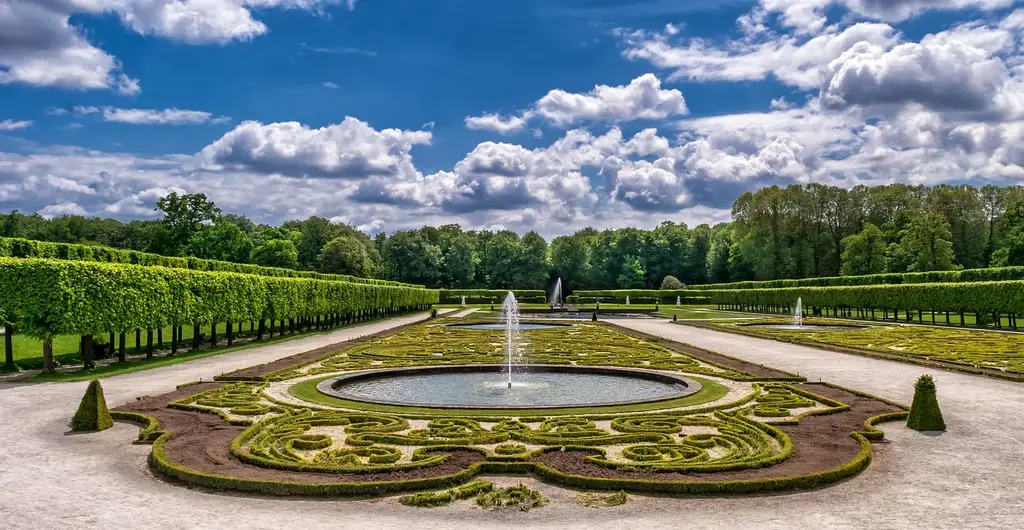
The most useful services for a shade redesign are the ones that fix site problems before plant selection. Custom planting plans, drainage and grading, irrigation, lighting, and hardscaping each matter, but they do different jobs. Good design puts them in the right order.
Custom planting plans
A planting plan should match shade level, moisture, and root pressure. It should also set height layers so the garden has structure in winter and movement in summer. Native and drought-tolerant plant selections, plus seasonal color schemes and year-round interest, are useful when the bed needs color without crowding.
For example, a narrow north-side bed beneath mature maples may work best with groundcovers, a few shade shrubs, and one small accent tree instead of a dense flower mix. That layout uses the vertical space without forcing sun plants into a site that cannot support them.
Drainage and grading
Drainage and grading are not backup services. In shaded yards they are often the fix that makes planting possible. That matters where shade, slope, and tree cover combine to trap water or send runoff where roots cannot use it. Proper grading and drainage can prevent standing water, root suffocation, and erosion in landscape beds. Penn State Extension
Irrigation installation, repairs, startup, and winterization
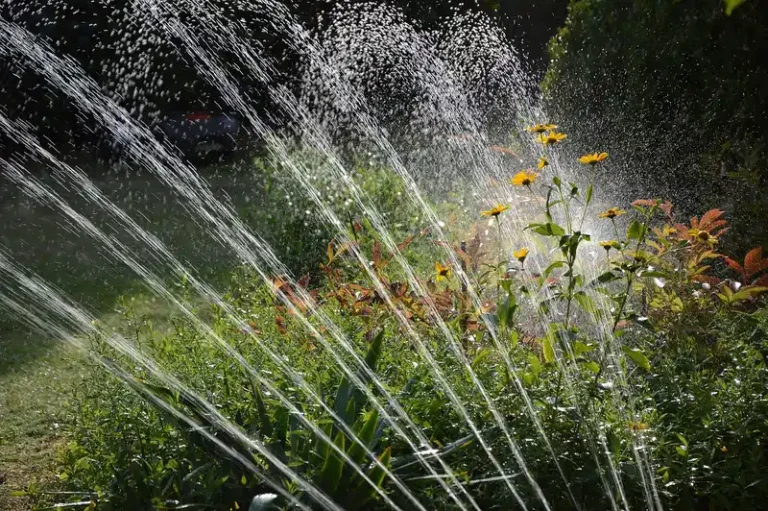
Irrigation helps only if the system matches the bed. Shade gardens often need less frequent watering than sunny beds, but tree-root competition can dry them out fast. A service should cover installation, repairs, startup, and winterization so the system works across seasons and does not leave lines exposed to freeze damage. Irrigation schedules should also reflect season and soil type, because shade and cooler conditions reduce evaporation but do not remove the need for consistent root-zone moisture checks. EPA WaterSense
Lighting and hardscaping
Lighting helps shaded spaces stay usable after dark and keeps paths safer. Hardscaping gives the garden shape without filling every inch with plants. Use hardscaping sparingly in shade. A small patio, a seat wall, or a short walk can solve access problems without blocking airflow or root space. In deep shade, a lighter paving layout and well-placed lighting often work better than a dense planting scheme alone.
What plants work best in shaded areas?
The best plants for shade depend on light level, moisture, and site stress. Native plants can fit local climate and support wildlife, but only when they suit the actual shade conditions. Drought-tolerant plants help where tree roots dry the soil, while moisture-loving species belong in wet shade or sheltered low spots.
Shade tolerance by light level and season
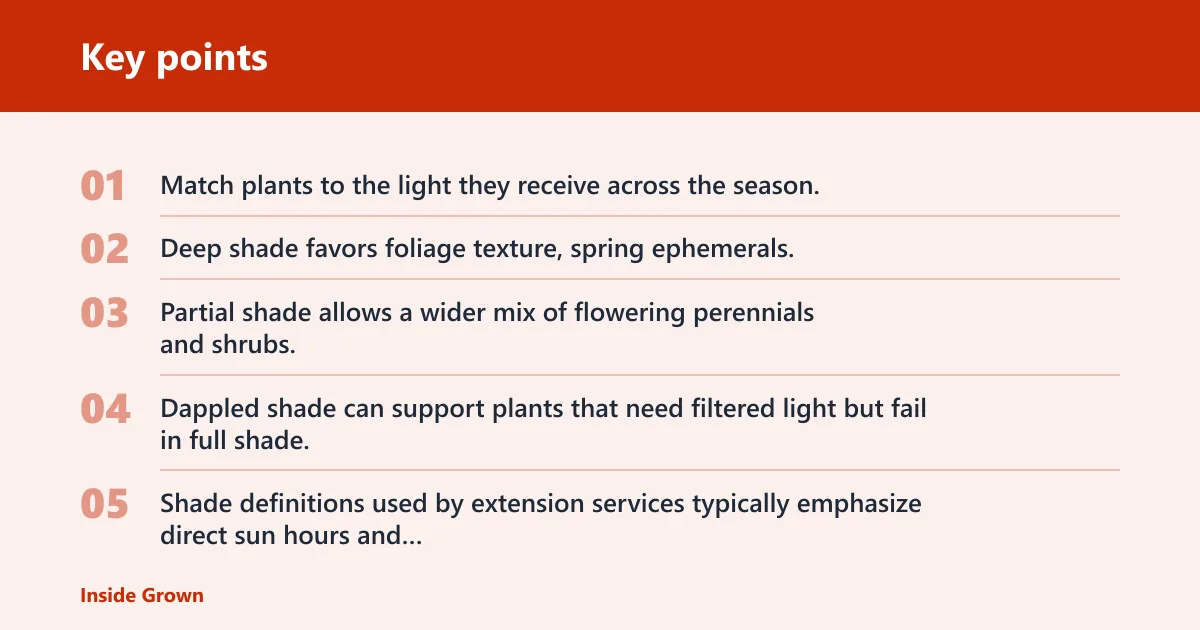
Match plants to the light they receive across the season. Deep shade favors foliage texture, spring ephemerals, and plants that hold color in lower light. Partial shade allows a wider mix of flowering perennials and shrubs. Dappled shade can support plants that need filtered light but fail in full shade. Shade definitions used by extension services typically emphasize direct sun hours and seasonal timing, which is why the same bed can behave differently from spring to midsummer. Missouri Botanical Garden
Native plants for local climate fit and wildlife support
Native plants are useful when they fit the site, not because they are automatically better. Local natives often handle regional temperature swings and support birds, pollinators, and insects more predictably than imports. In a shade bed, that can reduce irrigation demand and improve long-term performance, if the moisture and light match.
Drought-tolerant plants for low-irrigation shade beds
Drought-tolerant shade plants matter most in dry shade, where tree roots steal water. These beds need plants selected for low irrigation needs and shade compatibility, not dry-sun species forced into dim light. The goal is fewer failures, less replacement work, and less dependence on constant watering.
Layering groundcovers, perennials, shrubs, and small trees
Layering helps shade gardens read as designed, not empty. Groundcovers cover bare soil, perennials add seasonal bloom, shrubs give mass, and small trees or multi-stem forms create height where canopy space allows it. That structure also reduces weed pressure and keeps the bed from looking patchy after flowering ends.
A backyard example may include a large oak and a fence, with more dappled light in late spring and less after full leaf-out. A layered plan can use tough groundcovers near the dripline, mid-height perennials in the brighter edge, and a small shrub group where light stays strongest.
When do you need drainage or grading?
You need drainage or grading when water stays in the bed, moves toward the house, or strips soil from a slope. In shady yards, those problems often hide under leaves and canopy cover until plants decline. If the soil stays soggy, roots are blackened, or mulch floats after storms, drainage work should come before planting.
Water pooling under trees
Pooling under mature trees usually means the grade is flat or compacted. It can also mean roots block natural flow. If the bed stays wet for days after rain, choose drainage work before plant installation. Otherwise, new plants may fail from oxygen-starved roots even in an otherwise healthy shade garden.
Soggy beds after storms
A bed that turns soft or spongy after storms may need a drain line, a swale, or a subtle regrade. Shade slows evaporation, so wet spots can linger longer than expected. That is why a shade-garden service should inspect both the downspout path and the surrounding topography.
Slope correction and erosion control
On slopes, the problem can be the opposite: water runs off too fast. That can expose roots, move mulch, and leave the upper bed dry while the lower edge gets saturated. Retaining walls, terracing, and careful grading can slow the water and keep the planting zones usable.
Soil fixes before planting
Soil fixes should come before plant selection when structure is the real issue. Compacted soil, poor organic matter, and crusted top layers reduce root growth. In root-heavy shade, air spading or other soil work may be needed near trees so the bed can be improved without harming major roots.
How much maintenance does a shade garden need?
A shade garden often needs regular, smaller maintenance rather than big fixes. Because shade holds moisture and leaf litter, it can develop weed pressure, fungal spotting, and clogged mulch faster than a sunny bed. The schedule should often include pruning, debris removal, mulch refresh, and irrigation checks.
Pruning and thinning
Pruning keeps shrubs from overcrowding the bed and blocks stems from rubbing or shading themselves too heavily. Thin out dense growth so air can move through the planting. That helps reduce disease pressure and keeps the understory from becoming a tangle that traps debris.
Weed control and mulch refresh
Weeds still grow in shade, especially at the edges where light slips in. Mulch helps suppress them, but it breaks down faster in damp areas. Refresh mulch as needed so it does not pile against stems or roots. Too much mulch can hold excess moisture and cause rot near crowns.
Spring and fall cleanup
Spring cleanup removes winter debris, broken stems, and dead leaf mats that block new growth. Fall cleanup keeps leaves from smothering low plants and reduces slick surfaces on paths. In shady beds, cleanup also helps you spot drainage problems before they turn into spring failure zones.
Irrigation checks and seasonal adjustments
Shade gardens still need irrigation checks. Heads can get blocked by roots, runoff, or plant growth. In spring, verify coverage after leaf-out changes the light pattern. In fall, reduce watering as evapotranspiration drops. Winterization matters where lines need to be drained before freezing weather arrives.
Frequently asked questions
What landscaping services are best for a shade garden design?
The best services are site assessment, custom planting plans, drainage and grading, irrigation work, lighting, and maintenance. Those services solve the real shade problems first: low light, root competition, wet or dry soil, and limited access. Planting without that sequence often leads to replacements and uneven growth.
How do landscapers design gardens for deep shade?
They start with sun mapping and then design around low light, not around a wish list of bright-blooming plants. Deep shade usually needs foliage texture, layered structure, and careful soil work near roots. The strongest plans also account for seasonal light changes after leaf-out.
Do I need drainage or grading in a shady yard?
If water pools, soil stays soggy after storms, or a slope washes mulch and soil around, yes. Shade slows drying, so drainage problems last longer and damage roots faster. Grading, swales, or other drainage fixes should come before planting if the site holds water or erodes.
Can a landscaper add lighting to a shaded garden?
Yes. Lighting is a practical part of a shade redesign because it improves path safety and makes the space usable after dark. Low, targeted fixtures work best near walks, steps, seating, and specimen plants. Lighting should support the layout, not overpower the planting beds.