Landscaping Services for Houseplant Care Visits
Houseplant care can be offered as a recurring add-on, often on the same monthly or biweekly visit, and that cadence can suit homes with more than five indoor plants or any high-maintenance specimens. Skipping indoor checks leads to pests, root rot, dust buildup, and dead foliage that raise replacement costs fast. This guide explains what bundled houseplant care includes, how pricing and visit frequency usually work, and the plant-health checklist that catches common misses.
Whether landscaping providers can bundle indoor plant care
Yes, if the provider offers indoor plant care as a defined line item. A landscaper can bundle it with outdoor maintenance when the visit includes enough time to check watering, light, pests, and pruning inside the home. It should not be assumed. Ask for an indoor scope in writing.
When indoor plant care can be bundled with outdoor maintenance
Bundling works best when the same crew already visits on a recurring schedule and can move through the home safely, quickly, and with clear instructions. That usually fits homes that want both exterior maintenance and repeat indoor plant checks, especially if the plant list stays mostly the same.
Outdoor work and indoor care can share a route, a calendar, and a single invoice. The tasks are still different. Lawn mowing, trimming, and bed cleanup do not tell you whether a fiddle leaf fig is dry at the root ball or whether a pothos is trapping water in the saucer.
When to treat it as a separate service line
Houseplant care should be separate when the home has many plants, collector specimens, low-light rooms, or a vacation schedule that needs timed watering. It should also be separate when the crew is only booked for exterior work and has no indoor entry workflow, plant notes, or photo updates.
Separate line items help prevent scope drift. One price for “yard work” should not quietly become indoor watering, pest scouting, leaf dusting, and repotting decisions. A clear add-on protects both sides from missed tasks.
What homeowners should confirm before booking
Confirm whether the provider covers indoor plants, outdoor beds, or both. Then ask whether the visit is watering only or full care, which plants are excluded, how access works, and what happens if a plant is declining fast. Ask for notes after each visit.
- List each indoor plant by type and room.
- State the desired cadence: weekly, biweekly, monthly, or vacation-only.
- Ask whether the provider checks soil moisture, not just surface dryness.
- Confirm whether pest inspection is included.
- Request photo or written updates for problem plants.
What a houseplant care visit includes
A houseplant care visit should do more than pour water into a pot. A proper visit checks soil moisture, light, drainage, leaf condition, and pests, then records what changed. It may also include pruning, deadheading, dusting leaves, and a repotting trigger if roots are filling the container.
Watering, soil checks, and drainage saucers
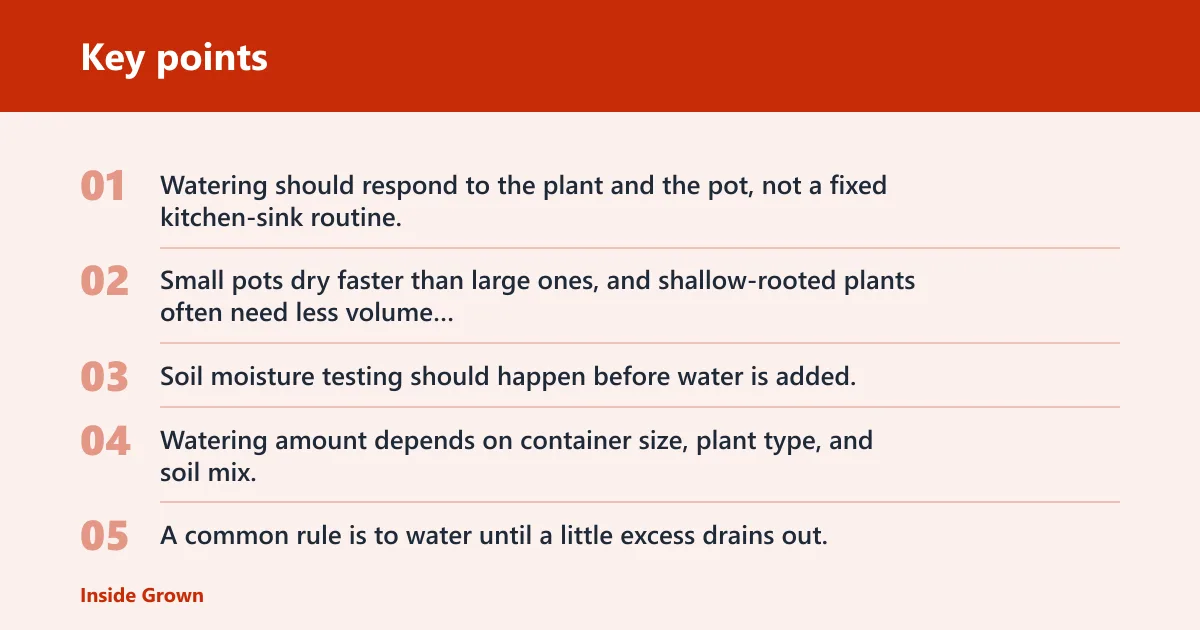
Watering should respond to the plant and the pot, not a fixed kitchen-sink routine. Small pots dry faster than large ones, and shallow-rooted plants often need less volume than thick-rooted tropicals. Soil moisture testing should happen before water is added, and drainage saucers should be emptied if runoff collects.
Watering amount depends on container size, plant type, and soil mix. A common rule is to water until a little excess drains out, then remove standing water so roots do not sit wet. For vacation-only care, the provider may top up only when the moisture check supports it.
Light checks, dusting, and pruning or deadheading
Light checks matter because indoor plants move slowly into decline when they are placed too far from windows or in rooms with seasonal shade shifts. Dust on leaves can reduce light capture. Wipe broad leaves gently and prune dead or damaged growth so the plant can keep new tissue healthy.
Deadheading applies to flowering houseplants and should be done before spent blooms rot or pull energy from active growth. Pruning should stay conservative unless the plant clearly needs shaping or removal of dead stems.
Pest inspection, yellowing leaves, and follow-up notes
Pest inspection should look for fungus gnats, sticky residue, webbing, scale, mealybugs, and leaf stippling. Yellowing leaves are not all the same: lower yellow leaves can signal old growth, while widespread yellowing may point to overwatering, poor drainage, or low light.
Notes should explain what was found, what was watered, and what needs follow-up. If a plant is too far gone for routine care, the visit should say so clearly instead of pretending a light mist and a quick trim will solve it.
Houseplant care visit checklist
This checklist is built for indoor plant care as a visit add-on. It helps the provider decide what to water, what to leave alone, and what needs follow-up. Use one row per plant type, then add room or location notes if the home has mixed light conditions.
| Plant type | Light level | Soil check | Water action | Pest scan | Follow-up interval |
|---|---|---|---|---|---|
| Snake plant | Low to bright indirect | Dry deep in pot | Water sparingly only after full dry-down | Check crown and leaf bases for scale | Monthly to vacation-only |
| Pothos | Medium to bright indirect | Top 1-2 inches dry | Water until slight runoff, then empty saucer | Check undersides for mealybugs | Biweekly to monthly |
| Peace lily | Medium indirect | Moist but not soggy | Water when top layer starts to dry | Check for fungus gnats near soil | Weekly to biweekly |
| Fiddle leaf fig | Bright indirect | Upper soil dries, lower root zone stays lightly moist | Water evenly; rotate if one side leans | Inspect new leaves and stems for mites | Biweekly |
| Succulent | Bright direct to bright indirect | Fully dry through pot | Water deeply, then dry out fully | Check for rot at base and mealybugs | Monthly to vacation-only |
| Fern | Medium indirect | Evenly moist | Water before soil dries out | Check fronds and crowns for pests | Weekly |
How often should indoor plants be checked?
Most indoor plants do well with weekly, biweekly, or monthly checks depending on species, light, pot size, and seasonal drying. Fast-drying plants and problem plants need closer attention. Vacation-only care works for short absences, but it is not a substitute for ongoing maintenance when plants are already stressed.
Weekly vs biweekly visits
Weekly care fits moisture-loving plants, newer plants, and homes with many small pots that dry quickly. It also helps when pests are active or when the house has warm, bright rooms that speed up evaporation. Biweekly care suits most mixed indoor collections with stable light and moderate watering needs.
For a home with about 10 or more plants, weekly or biweekly checks can help catch issues before they spread from one pot to the next. That matters with fungus gnats and mealybugs, which can move from a single plant to a whole shelf.
Monthly maintenance and seasonal shifts
Monthly care works for slower-growing plants, thicker-leaved specimens, and homes with lower light where soil stays wet longer. In winter, many plants dry more slowly because light is lower and evaporation drops. In summer, the same plants may need tighter intervals.
Seasonal changes should adjust the visit plan. A plant that needs biweekly care in July may need only monthly checks in January, but the reverse can also happen in a heated room near a sunny window.
Vacation-only care and short absences
Vacation-only care is for one-off trips, not routine health management. It should focus on safe watering, light-sensitive placement if needed, and quick checks for pest spread or soil failure. The provider should know the return date and whether any plants need to be moved.
Say your monstera sits in a bright living room and the soil is dry on top but damp two inches down. A vacation-only visit should not add water just because the top layer looks dry. That is how overwatering begins.
Scope and pricing by visit type
Pricing for houseplant care visits usually follows time, plant count, and depth of service. Watering only should cost less than full care with pruning, pest inspection, and photo notes. Exact rates vary by market, but the logic should be visible before booking.
| Visit type | Best fit | Typical scope | Pricing logic |
|---|---|---|---|
| Weekly | High-maintenance plants, many small pots, pest-prone homes | Watering, soil check, leaf dusting, pest scan, pruning as needed | Highest visit count, usually lowest risk of plant loss |
| Biweekly | Mixed collections with moderate light and moderate drying | Watering, light check, pest scan, deadheading, notes | Middle-tier cadence for most homes |
| Monthly | Slow-growing or low-water plants | Moisture check, watering if needed, light review, trim dead growth | Lower visit count, but more time spent triaging issues |
| Vacation-only | Short trips and temporary coverage | Targeted watering and problem spotting | One-time service; price should reflect limited scope |
Weekly care
Weekly visits are the right fit when plants dry quickly, pest pressure is active, or the household wants close monitoring. They can also be useful after repotting, after a move, or after a pest treatment, when the goal is close follow-up rather than basic watering.
Biweekly care
Biweekly care is the most practical middle ground for many homes. It gives enough time to see true drying patterns without letting the soil stay wet too long. It also makes room for leaf dusting, pruning, and a real pest scan.
Monthly care and vacation-only visits
Monthly care works best when the plant list is stable and the indoor environment is predictable. Vacation-only visits should be reserved for absences, not neglected plants. If a plant needs water every week, monthly service is the wrong fit.
What problems a visit should catch early
A strong houseplant care visit looks for early failure, not just thirsty soil. The most common misses are overwatering, underwatering, low light, rootbound growth, pests, and salt buildup. Each one leaves different signs, and the visit should note which sign appeared where.
Overwatering and underwatering
Overwatering often shows up as soft stems, yellowing lower leaves, slow growth, and sour soil. Underwatering usually looks like drooping, dry soil pulling away from the pot edge, crispy leaf tips, and sudden leaf drop. Both can happen in the same home if plant types vary.
A common first-timer mistake is watering every plant on the same schedule because they are all in the same room. A fern and a snake plant may sit side by side, but their water needs are not the same.
Low light and rootbound plants
Low light causes stretched growth, small new leaves, and gradual decline even when watering seems correct. Rootbound plants may dry out fast, circle the pot, or stop growing. When roots fill the container, a care visit should flag repotting instead of simply adding more water.
Pests, fungus gnats, and salt buildup
Pests can spread fast indoors because air movement is limited and plants are close together. Fungus gnats often show up when soil stays too wet. Salt buildup can leave crust on the soil surface or pot rim, especially when fertilizer is used without occasional flushes.
Suppose a jade plant has white crust on the rim, dull leaves, and slow growth. That may point to salt buildup and too much fertilizer, not a need for more water. A proper visit should note the pattern and change the care plan.
What to ask before hiring a provider
Ask exact scope questions before booking. Indoor plant care should not be hidden inside a broader maintenance package unless the provider spells out what is included, what is excluded, and how emergencies are handled. Photos, notes, and entry rules matter as much as the watering itself.
Indoor vs outdoor scope
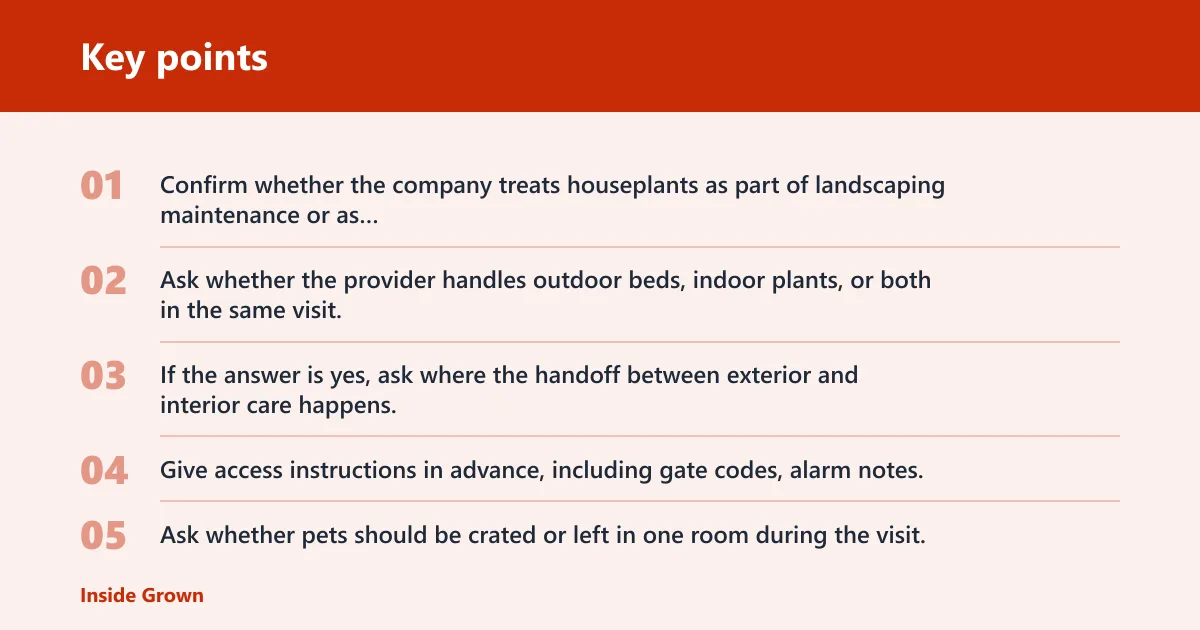
Confirm whether the company treats houseplants as part of landscaping maintenance or as a separate indoor service. Ask whether the provider handles outdoor beds, indoor plants, or both in the same visit. If the answer is yes, ask where the handoff between exterior and interior care happens.
Entry, pets, security, and photo updates
Give access instructions in advance, including gate codes, alarm notes, preferred entry timing, and any pet concerns. Ask whether pets should be crated or left in one room during the visit. Request before-and-after photos or short notes for each visit so you can see what changed.
Emergency rescue thresholds and plant replacement rules
Agree on the point where a plant is beyond routine care. That may include severe root rot, a heavy pest outbreak, or a plant that needs repotting and is no longer safe to water normally. Also ask whether the provider will suggest a substitute plant, pause care, or recommend removal.
For homeowners who want one provider for both yard care and indoor plants, that can work well if the scope is written clearly. Precision Lawn & Landscape says it has served customers for over 15 years and offers a design-and-build service category, while LawnStarter says it offers 50+ services in Ashburn and lists weekly or bi-weekly mowing as a recurring service option. Those facts do not make indoor plant care automatic. They only show that service menus vary widely.
Other providers publish different operational claims. Ashburn Lawn Care reports over 20 years of landscaping and lawn care experience and a 4.9/5 rating from 102 ratings. Angler Lawn & Landscape says it has provided lawn maintenance services in Fort Lauderdale since 1995 and reports 4.5/5 ratings from 150 customers. LawnStarter also says 9 out of 10 customers get service within 48 hours, only 2% of prices ever need adjustment, services are backed by $2 million in property protection, 1 in 30 pros pass its vetting and background check, and customer satisfaction is 95%. Those are useful signals, but they still do not replace a written indoor plant scope.
Frequently asked questions
Can a landscaper do houseplant care during regular home visits?
Yes, if the company offers indoor plant care as an add-on and the visit is long enough to cover watering, light checks, pest inspection, and notes. Do not assume outdoor maintenance automatically includes indoor plants. Ask for a written scope before the first visit.
What does a houseplant care visit include?
A proper visit includes soil moisture testing, watering only when needed, light checks, pest inspection, pruning or deadheading, dusting leaves, and follow-up notes. It may also flag rootbound plants, drainage problems, salt buildup, and repotting triggers. Watering alone is only a partial service.
How often should indoor plants be checked by a professional?
Weekly care fits high-maintenance plants, while biweekly care works for many mixed collections. Monthly care suits slower growers and low-light homes. Vacation-only visits are for short absences, not ongoing maintenance. The right cadence depends on plant type, pot size, and seasonal drying.
Do maintenance companies water indoor plants while I’m away?
Some do, but only if indoor plant care is part of the service agreement. Vacation watering should not be treated as a default add-on. The provider should know which plants to water, which to leave alone, and whether any need moving away from direct sun.
What should I ask before hiring someone for plant care visits?
Ask whether indoor plants are included, what the visit covers, how access works, how pets are handled, whether you will get photo updates, and what happens if a plant is beyond routine rescue. Also ask how the provider separates watering-only jobs from full-care visits.
What plants need weekly care versus monthly care?
Weekly care suits ferns, moisture-loving tropicals, and small pots that dry fast. Monthly care fits snake plants, many succulents, and other slow-drying plants in stable light. Biweekly care sits between the two and is often the best match for mixed indoor collections.
What happens if a houseplant is overwatered or underlit?
Overwatered plants often yellow, soften, and decline from the roots upward. Underlit plants may stretch, drop leaves, or stop producing healthy new growth. A visit should identify the pattern and reduce the cause, but severe cases may need repotting, a new light location, or plant replacement.
Is plant care included in maintenance packages?
Sometimes, but not always. Many maintenance packages focus on outdoor work, and indoor plant care is a separate line item or a premium add-on. Read the scope closely. If the package does not mention indoor plants, assume they are excluded until the provider says otherwise.