Landscaping Services for Container Garden Installation
Landscaping services for container garden installation usually include vessel selection, drainage, potting mix, planting, irrigation, and a refresh schedule; expect annuals to need replacement 2 to 4 times a year. Skip maintenance, and containers can fail fast: roots may suffocate, plants may thin out, water use can rise, and curb appeal can drop.
What container garden installation includes


Container garden installation is more than setting out pots and adding flowers. A proper service often starts with design and may include container selection, plant selection, soil or potting mix choice, fertilizer, mulch, delivery, planting, cleanup, and final placement.
Design, plant selection, and placement
A good installer should map where the containers will sit, how much light those spots receive, and what the containers need to do. A front walk display has different goals than a porch seat or a rental entryway. That affects height, color, plant density, and whether the design needs seasonal swaps.
Container gardens can fit balconies, driveways, and other small spaces, and they can also be integrated into large gardens. That makes them useful for homeowners and property managers who want a defined planting plan without committing to in-ground beds.
Containers, soil, fertilizer, mulch, and cleanup
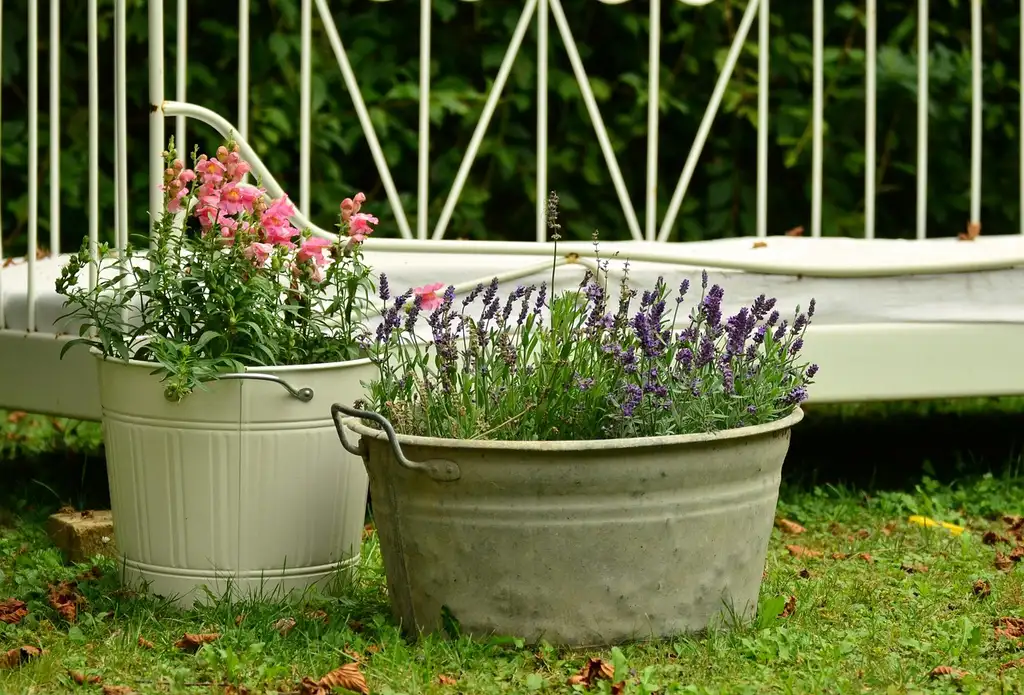
One-time container garden installation can include plants, containers, soil, fertilizer, and mulch. Container types vary by use. Window boxes suit narrow ledges. Patio containers fit seating areas. Hanging containers work when floor space is tight. Pedestal displays create height near entrances. Glass vases are usually better for decorative or protected settings than for exposed outdoor use.
What changes by budget and site conditions
Budget changes the container material, plant count, and how often the design is refreshed. Site conditions change the plant list even more. Full sun, afternoon heat, wind exposure, and limited floor space all affect survival. A shaded porch may support lush foliage. A hot driveway edge may need tougher plants and more water.
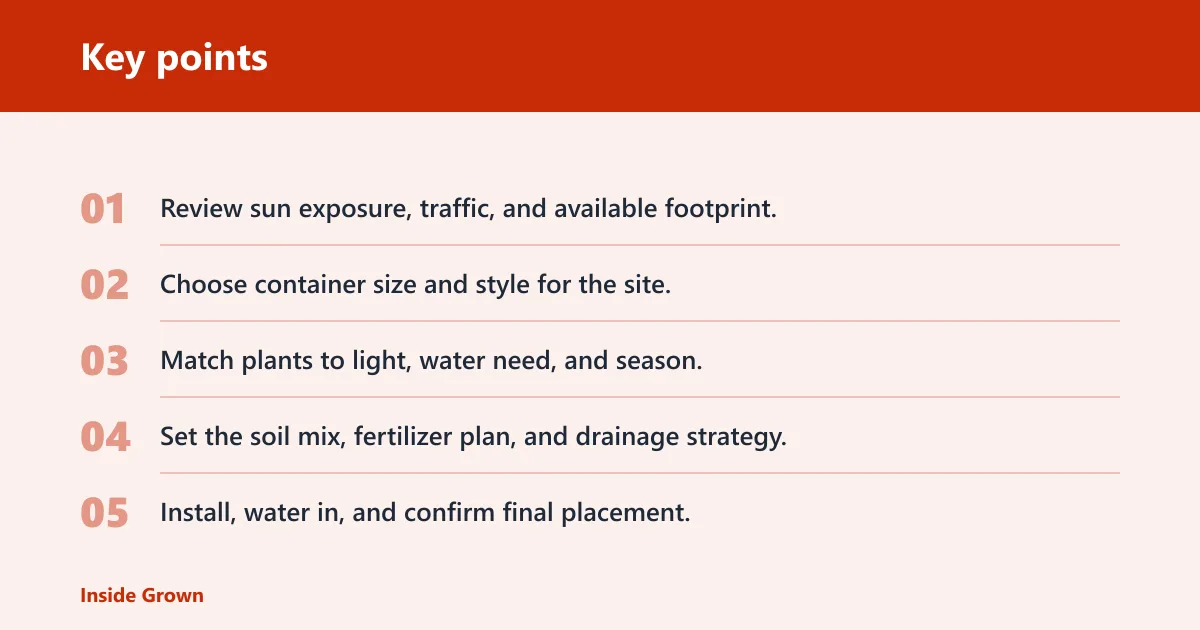
- Review sun exposure, traffic, and available footprint.
- Choose container size and style for the site.
- Match plants to light, water need, and season.
- Set the soil mix, fertilizer plan, and drainage strategy.
- Install, water in, and confirm final placement.
📊 Rutgers published a rain garden installation directory in 2010. Source: Rutgers.
Container garden service models compared
Many buyers choose among three service models: one-time installation, seasonal refresh service, and an ongoing maintenance plan. The right choice depends on how long the containers need to look good, how much labor the site can absorb, and whether plants must stay presentable through high-traffic months.
One-time installation
A one-time install is a setup service. It is best when the property needs a finished look for a short window, such as a listing photo period, a seasonal event, or a patio opening. It usually includes design, materials, planting, and placement.
Seasonal refresh service
Seasonal container gardening changes plants when the season changes. This model fits properties that want spring, summer, fall, or winter color changes without weekly labor.
Ongoing maintenance plan
A maintenance program is for sites that need containers to stay presentable all year. The service includes watering support, deadheading, pruning, cleanup, and replacement when plants decline.
Drop-off and pickup workflow
Some providers use a drop-off and pickup workflow. Containers are delivered, installed, and then collected or refreshed on a schedule. That model can work well for businesses that want consistent displays without storing extra vessels, soil, or replacement plants on site.
Container garden service comparison table
| Service item | One-time install | Seasonal refresh | Maintenance plan |
|---|---|---|---|
| Containers | Included once | Usually reused; replacement if broken or undersized | Usually reused and inspected on visits |
| Plants | Included once | Included at each seasonal change | Included as replacements when plants decline |
| Soil / potting mix | Included at install | Top-up or replacement during refresh | Replenished as needed |
| Fertilizer | Often included at install | Added during refresh | Reapplied during visits |
| Mulch | Often included at install | Renewed during refresh | Replaced as it breaks down |
| Delivery | Usually included or quoted separately | Often included in service route | Usually part of recurring route |
| Planting | Yes | Yes | Yes, plus replanting |
| Cleanup | Yes | Yes | Yes, on each visit |
| Recommended cadence | One-time or event-based | Quarterly or by season | Monthly, with extra visits in heat |
| Best-fit property type | Homes, rentals, short-term staging | Front entries, retail fronts, managed residences | Commercial entries, busy rentals, HOA sites |
| Common failure risks | Watering lapses, heat stress, root binding | Poor timing, drainage failure, weak replacement plan | Skipped visits, declining plants, soil exhaustion |
How much does container garden installation cost?
Cost depends on labor, materials, container size, plant choice, and how often the design must be replaced.
Labor versus materials
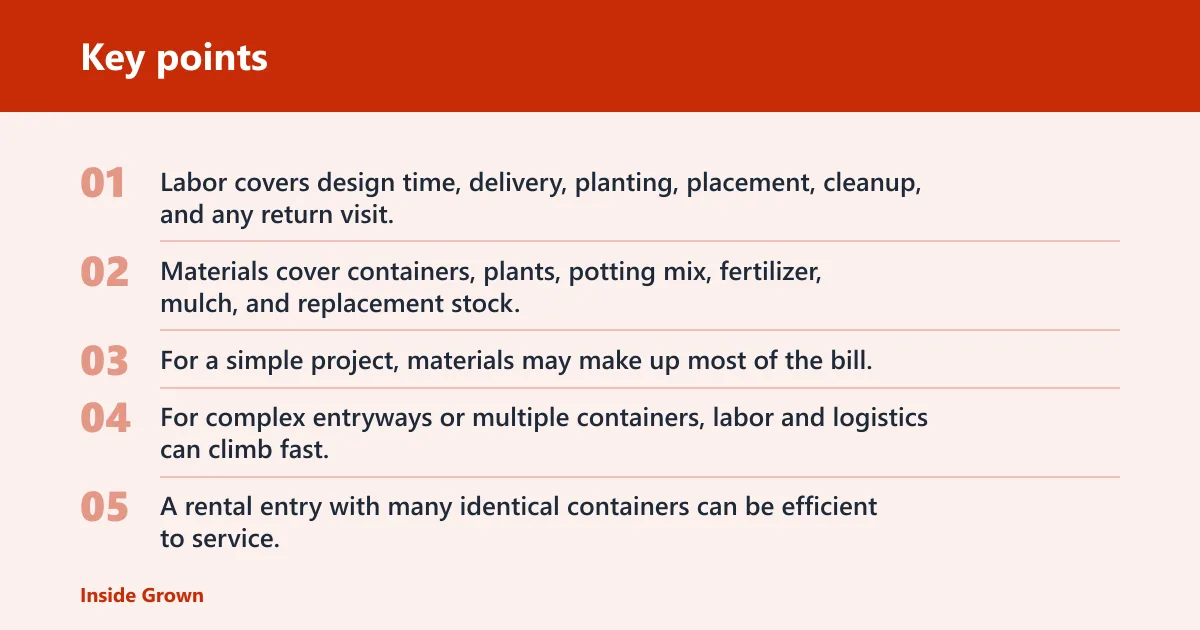
Labor covers design time, delivery, planting, placement, cleanup, and any return visit. Materials cover containers, plants, potting mix, fertilizer, mulch, and replacement stock. For a simple project, materials may make up most of the bill. For complex entryways or multiple containers, labor and logistics can climb fast.
Property type matters. A rental entry with many identical containers can be efficient to service. A business entrance with different vessel heights, custom colors, and weekly foot traffic usually takes more planning and more follow-up.
Replacement cycles and recurring costs
Annuals often need replacement about 2 to 4 times a year, depending on weather and design goals. That means the real cost of a container garden is not only the first install. It also includes watering, soil refresh, fertilizer replenishment, and plant replacement when color fades or growth slows.
Suppose a storefront uses six large containers at a main entrance. If the plants decline after one hot stretch, the cheapest fix may not be a full redesign. It may be a maintenance plan that replaces stressed plants before the whole display looks worn out.
What changes the price most
The biggest price drivers are container size, plant size, sun exposure, and how often the site needs new material. Full sun can shorten plant life. Wind and reflected heat can do the same. A shaded balcony may need fewer replacements, while a hot driveway edge may need more watering and more frequent swaps.
What plants and containers work best?
The best plant choice depends on light level, container volume, and the job the display has to do. Window boxes, patio containers, hanging containers, pedestal displays, and glass vases each support different heights, root space, and moisture needs. Annuals, perennials, herbs, and edible plants all fit different site conditions.
Matching container type to use case
Window boxes work well for narrow ledges and front-facing color. Patio containers suit seating areas where viewers are close to the plants. Hanging containers help when the floor area is limited. Pedestal displays add height near doors. Glass vases are mostly decorative and need more shelter from wind and temperature swings.
Annuals, perennials, herbs, and edibles by light level
Full sun usually supports flowering annuals and many edible plants better than deep shade. Part shade can work for foliage displays, herbs that tolerate less light, and some seasonal color plants. Perennials can reduce replanting in the right climate, but they still need room and the right container depth to survive long term.
A common first-timer mistake is putting a sun-loving plant into a shallow container on a west-facing porch. By midseason, the pot dries fast, leaves drop, and the display thins out even if the plant looked fine on install day.
Matching plant size to container volume
Container gardens are limited by soil volume. Smaller containers dry out faster and leave less room for roots. Bigger plants need bigger vessels. If the root ball outgrows the pot, the plant can become root-bound, water can move through too quickly, and growth slows or stalls.
Why drainage and potting mix matter
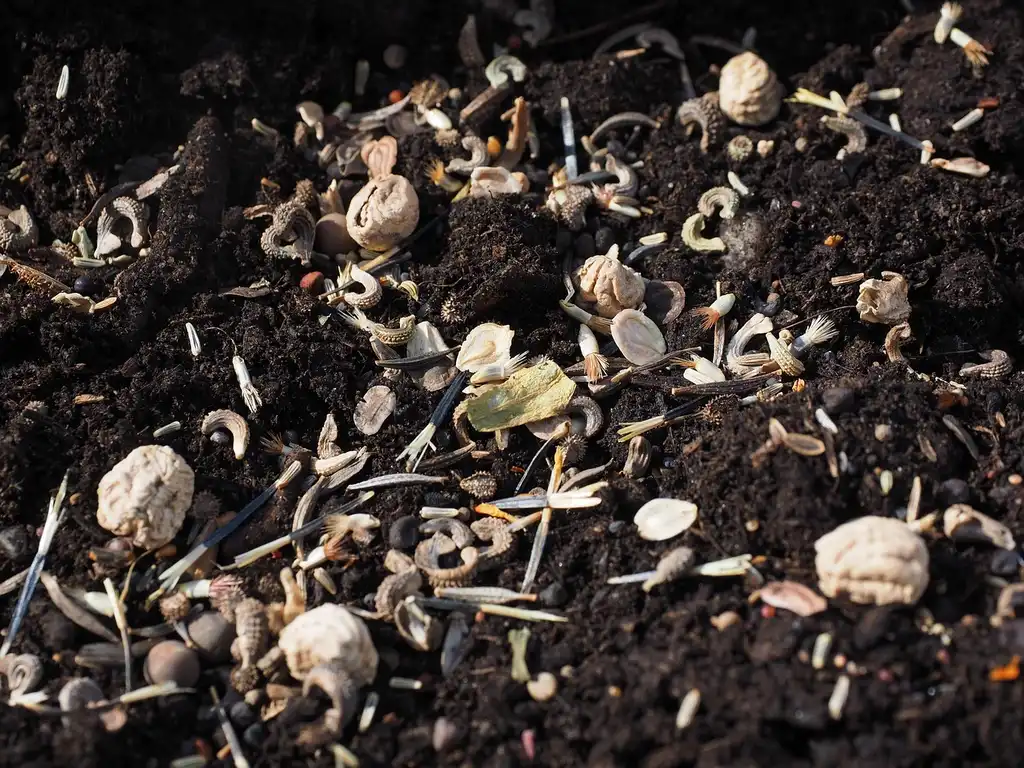
Drainage and potting mix are the difference between a display that holds up and one that collapses early. Containers need drainage holes, and they need a mix that drains well while still holding enough moisture for roots. Regular garden soil is usually too dense for containers and can compact fast.
Drainage holes and water retention
Without drainage holes, excess water stays near the roots. That raises the risk of suffocation and rot. With too little water retention, the opposite problem appears: the container dries too quickly and the plant wilts between visits. Good installation balances both conditions.
Soil volume limits in containers
Container soil volume is small compared with in-ground beds. That means fertilizer gets used up faster, moisture changes quickly, and roots run out of room sooner. For that reason, potting mix replacement or top-up is part of many service plans, especially on exposed sites.
Fertilizer replenishment and root binding
Fertilizer does not last forever in a container. Replenishment is needed because frequent watering washes nutrients through the mix. Root binding is another common failure case. When roots fill the vessel, they circle instead of spreading, and the plant can decline even if the top looks acceptable.
How often do container gardens need maintenance?
Most container gardens need regular maintenance because the root zone is limited and exposure is high. Deadheading, pruning, and plant replacement keep the display from turning patchy or stressed.
Monthly visits and watering frequency
The maintenance program includes visits when temperatures rise or rainfall is low. Watering frequency depends on container size, sun exposure, wind, plant type, and whether the soil mix holds moisture well. Hot, exposed sites usually need the most attention.
Deadheading, pruning, and cleanup
Deadheading removes spent blooms so the plant keeps pushing new growth. Pruning helps control shape and reduces overcrowding. Cleanup keeps fallen leaves, spent stems, and broken mulch from building up around the display. Those small tasks matter because container gardens show wear quickly.
When to replace declining plants
Replacement is the right move when plants stop recovering after watering, lose structure, or show repeated heat stress. Waiting too long usually makes the whole arrangement look tired. Seasonal programs replace plants on schedule. Maintenance plans replace them when decline appears, which can be more efficient for busy entrances.
Picture a condo balcony with two 24-inch containers facing afternoon sun. If the mix dries by midday and the plants are still limp at dusk, the issue may be both heat and volume. A larger pot, a different plant choice, or a maintenance plan can change the result without redesigning the whole space.
Frequently asked questions
What does container garden installation include?
Most installations include design, container selection, plant selection, potting mix or soil, fertilizer, mulch, planting, delivery, cleanup, and final placement. Some services also include irrigation setup or a refresh schedule.
Do landscapers supply the containers and plants?
Many do, and many clients prefer that arrangement because it keeps the design consistent. Some services supply containers, plants, soil, fertilizer, and mulch together. Others install client-owned vessels and only provide labor and plant material. Ask whether delivery, pickup, and replacement stock are included in the quoted price.
What plants work best for container gardens?
The best plants depend on light and container size. Full sun can support many annuals and edible plants. Part shade often suits foliage plants, herbs, and some seasonal color varieties. Perennials can work well when the container is deep enough and the climate fits the plant’s growth needs.
What should I ask before hiring a container garden installer?
Ask what the service includes, how often plants are replaced, who supplies containers and soil, whether drainage is part of the plan, and how maintenance is billed. Also ask about seasonal refresh timing and what happens if a plant fails early.