Can You Copyright a Themed Landscape Garden Design?
Creating a breathtaking themed landscape garden is a feat of artistry, horticultural mastery, and personal vision. Whether evoking the tranquil minimalism of a Japanese Zen retreat, the structured elegance of a French parterre, or the wild whimsy of an Alice in Wonderland-inspired haven, such gardens are immersive, living works of design. For landscape architects, garden designers, and passionate homeowners, a key question emerges: can you copyright a themed landscape garden design? As the value of distinctive outdoor spaces rises—both emotionally and financially—understanding the boundaries of intellectual property protection in the world of gardens has never been more important.
This issue sits at the intersection of law, art, and environmental design. Unlike a painting or a novel, a landscape garden is a dynamic, evolving composition shaped by nature as much as by human hands. Themed gardens are increasingly used in public spaces, luxury properties, and commercial developments, raising the stakes for originality and legal protection.
This article dives deep into the legal, creative, and practical aspects of copyrighting themed landscape garden designs, offering authoritative insights for designers, property owners, and anyone passionate about the art and business of beautiful outdoor spaces.
Key Takeaways
- Copyright protection for landscape garden designs is limited and highly specific; not all themed gardens qualify.
- Originality, fixed expression, and artistic authorship are required for copyright eligibility.
- Alternative protections such as patents, trademarks, and contracts can supplement (or sometimes replace) copyright.
- Real-world cases show both successes and failures in protecting garden designs.
- Practical steps can help designers safeguard their creative investment.
Credit: cactilandscape.com
The Fundamentals Of Copyright Law For Landscape Garden Designs
Navigating the world of copyright and garden design begins with understanding the fundamentals. U. S. and international copyright law are designed to protect original works of authorship, but not every creative idea, arrangement, or concept qualifies. What, exactly, does this mean for a themed landscape garden?
What Copyright Protects
Copyright law safeguards original works of authorship that are fixed in a tangible medium of expression. This includes:
- Literary works
- Musical compositions
- Visual arts (paintings, drawings, sculptures)
- Architectural works
For landscape design, the critical question is whether the garden is considered a work of visual art or a form of architecture. According to the U.S. Copyright Office, a garden design may be protected if it is sufficiently original, fixed, and displays artistic authorship beyond mere functional arrangement.
Copyright Vs. Other Intellectual Property Protections
It’s important to distinguish copyright from other forms of intellectual property, including:
- Patents: Protect inventions or new processes (may apply to unique garden structures or irrigation systems).
- Trademarks: Protect brand names or unique identifiers (rarely applicable to garden designs, except iconic features).
- Trade Dress: Protects the visual appearance of a product or environment, if it serves as a brand identifier.
The boundaries between these protections can be blurry, but most garden designs, unless highly distinctive and fixed in a permanent form, fall primarily under copyright—if at all.
International Perspectives
Copyright law varies globally. For example, the UK and EU offer broader protection for artistic works, sometimes including landscape architecture, whereas the U.S. is more restrictive. The Berne Convention ensures that signatory countries recognize the copyright of works created in other member states, but enforcement standards differ.
For a deep dive into international copyright principles, see the World Intellectual Property Organization (WIPO).
Credit: www.landscapingnetwork.com
What Makes A Themed Garden Design Eligible For Copyright?
Not every themed garden is eligible for copyright. The legal system looks for certain objective criteria to determine if a design can be protected.
Originality And Creativity
To qualify for copyright, a garden design must be original—meaning it is independently created and not copied from another source—and show a modicum of creativity. Standard layouts (like a basic rose garden or formal hedge maze) are not enough. A themed garden, such as a Monet-inspired water garden with unique plant selections, custom sculptures, and innovative spatial arrangements, is more likely to be considered original.
Fixed In A Tangible Medium
The design must be fixed in a tangible medium. This can include:
- Detailed plans, blueprints, or renderings
- Physical models
- Photographic documentation of the garden as built
A garden concept or a fleeting arrangement that is never documented cannot be copyrighted.
Artistic Authorship Vs. Functional Arrangement
A major legal hurdle is the distinction between artistic authorship and purely functional arrangement. Copyright does not protect ideas, procedures, or methods of operation—only the specific, original expression of those ideas.
For example, the precise placement of specific plant species to evoke a mythological story, combined with unique hardscape elements (like custom sculptures and water features), may be protectable. In contrast, a generic English cottage garden layout is likely not.
Case Example: Martha Schwartz’s Bagel Garden
A notable example is Martha Schwartz’s Bagel Garden (1980) in Boston, which used real bagels as a design feature. The originality and artistic intent were clear, but had someone replicated the idea with minor modifications, copyright enforcement would have been challenging due to the ephemeral and functional nature of plantings.
Exclusions And Limitations
- Common geometric arrangements and traditional layouts are not copyrightable.
- Plant species themselves cannot be copyrighted (though some can be patented).
- Functional elements (paths, fences, irrigation) are not protected unless they are part of an original artistic composition.
For more on U.S. copyright eligibility, visit the U.S. Copyright Office.

Credit: www.reflectionswatergardens.com
Registration, Enforcement, And The Limits Of Copyright Protection
Understanding the practicalities of registering and enforcing copyright for themed landscape garden designs is essential for creators and property owners.
How To Register A Garden Design
Registration is not required for copyright protection, but it is crucial for enforcement and litigation. To register a garden design:
- Document the design: Create detailed plans, sketches, renderings, or photographs.
- Submit an application: File with the U.S. Copyright Office or the relevant national authority.
- Pay the fee: Registration fees range from $45 to $85 (in the U.S.).
- Provide copies: Supply the best possible representation of the design.
For more details on registration, see the U.S. Copyright Office Registration Portal.
What Copyright Actually Protects
Even after registration, copyright:
- Protects only the specific expression of the design (not general concepts or themes)
- Does not cover plant varieties (see Plant Patents and Plant Variety Protection Acts for those)
- Does not prevent others from creating similar gardens using the same theme, unless the overall composition is substantially similar
Enforcement Challenges
Enforcement can be difficult due to:
- Ephemeral nature of living gardens (plantings change, die, and grow)
- Difficulty proving copying versus independent creation
- Cost and complexity of legal action
Real-world Case: The High Line, New York City
The design of the High Line in New York City—a celebrated urban park built on an elevated railway—was widely imitated after its opening. While the overall concept was copied, only specific design elements and artwork could be protected under copyright, not the idea of a linear park itself. This demonstrates both the power and limitations of copyright for garden design.
Comparison Table: Copyright Vs. Alternative Protections
| Protection Type | What It Covers | Duration | Enforcement Strength | Examples in Garden Design |
|---|---|---|---|---|
| Copyright | Original, fixed artistic expression | Life of author + 70 years (U.S.) | Moderate | Unique garden plans, artistic layouts |
| Patent | New, useful inventions or plant varieties | 20 years (plant patent) | Strong | Patented rose variety, irrigation device |
| Trademark/Trade Dress | Brand identifiers, distinctive appearance | Indefinite (with use) | Strong | Iconic topiary mascots, branded garden features |
| Contract | Terms agreed by parties | As specified in contract | Depends on terms | Confidentiality clauses, design non-disclosure |
Alternative Legal Protections For Garden Designs
Because copyright offers limited and uncertain protection for most themed gardens, designers and clients often turn to alternative legal strategies.
Design Patents
A design patent may be available for novel, ornamental features of hardscape elements (such as benches, fountains, or sculptures) within a garden, but not for the planting design itself.
- Example: A unique, patented garden bench can prevent others from replicating that specific bench, but not the overall garden layout.
Plant Patents And Plant Variety Protection
New plant varieties developed through breeding can be protected by:
- Plant patents (U.S.): Protects asexually reproduced new varieties for 20 years.
- Plant Variety Protection Act: Covers sexually reproduced plants.
However, these do not protect the arrangement of plants in a garden, only the specific variety.
Trademarks And Trade Dress
If a garden or a feature becomes strongly associated with a particular brand or business, trade dress or trademark protection may apply.
- Example: The distinctive Mickey-shaped topiaries at Disney parks are trademarked as part of Disney’s brand identity.
Contractual Agreements
Most practical protection for garden designers comes from contracts:
- Non-disclosure agreements (NDAs): Prevent clients or contractors from sharing or replicating designs.
- Design ownership clauses: Specify who retains the rights to the garden plans.
These agreements are enforceable in court and provide a layer of security beyond statutory intellectual property law.
Comparison Table: Legal Tools For Protecting Garden Designs
| Legal Tool | What It Protects | How to Enforce | Limitations |
|---|---|---|---|
| Copyright | Original artistic expression | Litigation, DMCA takedowns | Limited scope, hard to prove copying |
| Patent | Novel inventions, plant varieties | Patent litigation | Does not cover design layout |
| Trademark/Trade Dress | Distinctive branding features | Trademark infringement suits | Must be a brand identifier |
| Contract | Agreed terms between parties | Civil litigation | Only binds signatories |
For detailed legal guidance, consult the American Society of Landscape Architects or a qualified intellectual property attorney.
Real-world Examples And Case Studies
Examining actual cases provides insight into how copyright and alternative protections play out in the world of themed landscape garden design.
Case Study 1: Japanese Garden At The Fort Worth Botanic Garden
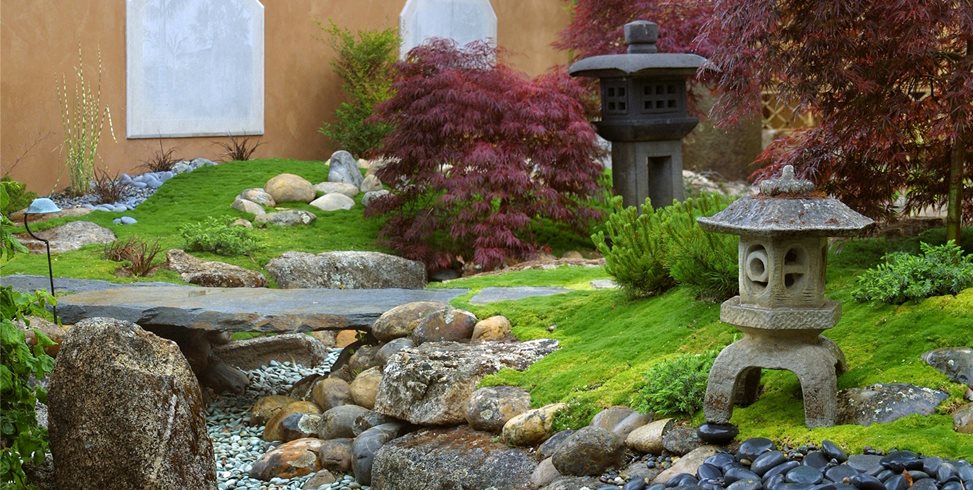
The Japanese Garden at the Fort Worth Botanic Garden is a carefully curated, stylistically consistent space featuring authentic Japanese elements, including bridges, koi ponds, and stone lanterns. While the garden’s overall theme cannot be copyrighted, specific artistic elements (e.g., custom stonework or sculpture) may be eligible. Thematic imitation by other gardens is common, but direct copying of unique artistic features could be actionable.
Case Study 2: Themed Gardens At Disney Parks
Disneyland and other Disney parks are renowned for their immersive themed landscapes. Disney leverages a combination of trademark, trade dress, and copyright to protect iconic features—such as the Mickey-shaped flower beds, themed topiaries, and custom sculptures. While the overall “fantasy garden” concept is not protectable, the specific arrangement and branded elements are legally enforced.
For more on Disney’s intellectual property strategies, see Wikipedia: Disneyland.
Case Study 3: Garden Bridge, London
The high-profile Garden Bridge project in London (ultimately unbuilt) featured designs by Thomas Heatherwick and Dan Pearson. While the concept was public, detailed design drawings and plant combinations were considered proprietary. Only the specific design renderings—not the idea of a garden bridge—were eligible for copyright.
Case Study 4: The Eden Project, Cornwall, Uk
The Eden Project is a world-famous botanical garden with themed biomes. While the architectural features (geodesic domes) are protected by copyright and patent, and the branding is trademarked, the themed plantings themselves are not. However, educational materials, design plans, and the visual art within the gardens can be copyrighted.
Learn more about the Eden Project at Eden Project Official Site.
Case Study 5: Monet’s Garden, Giverny
Monet’s Garden in Giverny, France, is one of the most imitated gardens in the world. The distinctive water garden with its Japanese bridge has been recreated globally. While the original plans and certain artistic features are protected, the overall concept—because it is widely known and in the public domain—is not.
Practical Steps To Protect Your Themed Garden Design
Given the complexities and limitations of copyright, what can landscape designers and property owners do to protect their creative investment?
Document Everything
- Create detailed plans: The more specific and original, the better.
- Photograph the completed garden from multiple angles and at different stages.
- Keep records of design drafts, correspondence, and contracts.
Register Your Work
- File for copyright where eligible (plans, renderings, artistic features).
- Consider design patents for novel hardscape elements.
- Trademark distinctive features or branding if used commercially.
Use Contracts Wisely
- Include intellectual property clauses in design contracts.
- Specify ownership of plans and renderings.
- Add NDAs or non-compete agreements to prevent unauthorized copying.
Monitor And Enforce
- Monitor for infringement: Online and in the real world, especially for commercial or public gardens.
- Send cease-and-desist letters when infringement is discovered.
- Be prepared for negotiation or litigation if necessary.
Educate Clients
- Inform clients about the limits of legal protection.
- Clarify usage rights—can they reproduce the design elsewhere, or share it with others?
For additional advice, see the ASLA’s Guide to Intellectual Property.
The Business And Creative Value Of Themed Garden Design
Protecting themed garden designs is not just about law—it’s about preserving the value of creative work in a competitive industry.
Competitive Edge
A unique, copyrighted or otherwise protected garden design can provide a powerful differentiator in the market, attracting high-value clients and projects.
Reputation And Recognition
High-profile themed gardens can become signature works, building a designer’s reputation and portfolio. Legal disputes over copying can damage or enhance a designer’s public profile, depending on the outcome.
Licensing And Royalties
In rare cases, a distinctive garden design may be licensed for use by others, generating royalties or additional income streams for the designer.
Collaboration And Attribution
Legal protection encourages attribution and collaboration, ensuring that designers receive credit for their work and are compensated appropriately.
Table: Creative And Business Benefits Of Legal Protection
| Benefit | Description | Example |
|---|---|---|
| Market Differentiation | Standing out with unique, protected designs | Custom themed gardens for luxury hotels |
| Reputation Building | Recognition for original work | Signature projects featured in media |
| Revenue Generation | Licensing, royalties, or exclusive contracts | Licensing design to multiple public parks |
| Collaboration | Joint ventures with clear rights and credit | Co-designed gardens for international expositions |
For more on the business of garden design, explore the Royal Horticultural Society’s Guide.
Frequently Asked Questions
Can I Copyright The Overall Theme Or Concept Of A Garden?
No, copyright does not protect general themes or concepts—only the specific, original expression of those ideas. For example, you cannot copyright the idea of a “fairy tale garden,” but you may be able to protect your unique layout, custom artwork, or original plans if they are creative and fixed in a tangible form.
What Legal Steps Should I Take Before Sharing My Garden Design With A Client Or Contractor?
Always document your design thoroughly, register your copyright where applicable, and use confidentiality or non-disclosure agreements when sharing plans. Specify in contracts who owns the design and what rights are granted to the client or contractor.
If Someone Copies My Garden, What Should I Do?
First, collect evidence of the copying (photos, plans, timelines). Attempt to resolve the issue amicably by contacting the infringer. If necessary, consult an intellectual property lawyer to explore cease-and-desist letters or legal action. Remember that copyright protects only the specific expression, not general similarities.
Can I Protect A Garden Design Internationally?
Yes, to a degree. The Berne Convention ensures that most countries recognize copyrights granted elsewhere, but enforcement varies. You may need to register or assert your rights separately in different jurisdictions and consider local laws.
Are Plant Varieties In My Garden Protected By Copyright?
No, plant varieties are not protected by copyright. Some can be protected by plant patents or plant variety rights if they are new and distinct. However, the arrangement of plants in a garden may be eligible for copyright if it meets the criteria for originality and artistic authorship.
As the world of garden design continues to evolve, understanding the legal landscape is essential for anyone who seeks to turn the earth into art. Themed landscape gardens are powerful expressions of culture, creativity, and place—but protecting them requires a blend of artistry, business acumen, and legal strategy.
By documenting your work, leveraging alternative protections, and staying informed about intellectual property rights, you can ensure your garden designs flourish both in the ground and in the marketplace.