Mulch Calculator: How Much Mulch Do You Need?
A mulch calculator estimates how many cubic yards or bags you need by multiplying area by depth; most beds need 2 to 3 inches of mulch, while trees need a wide, thin ring, not a mound. Buy too little and weeds stay exposed while roots dry out. Buy too much and you waste money, and can smother plants. This guide shows how to measure beds, convert to bags or bulk, and choose the right mulch depth for borders, trees, paths, and other yard areas.
How is this calculated?
Press Calculate to see the math with your numbers.
What this mulch calculator gives you


This kind of calculator turns your bed size and target depth into volume. The output is usually shown in cubic feet, cubic yards, and bag counts, which is why it works for bulk deliveries and bagged purchases. Some tools also estimate cost, so you can compare a small bag run against a bulk order before you buy.
Most calculators start with area and depth. Calculator.net estimates mulch needed based on area and depth and also estimates cost. LandscapeCalculator shows outputs in cubic yards and bag counts, including 2 cubic foot and 3 cubic foot bags. Inch Calculator supports calculations from length and width or from area, then reports results in cubic yards and cubic feet, with bag counts for 2 cubic foot and 3 cubic foot bags.
When to use bagged mulch versus bulk mulch
Bagged mulch makes sense for small beds, patch jobs, and touch-ups where the delivery minimum for bulk mulch would be more than you need. Bulk mulch usually fits larger beds, long borders, and whole-yard refreshes, especially when the project needs several cubic yards. If your total is close to a single yard, compare both formats before you order.
Bagged mulch is easier to carry and easier to portion into separate sections. Bulk mulch often costs less per unit, but the delivery fee and minimum load can change the math. That is why it helps to calculate both the volume and the likely purchase format.
What the calculator needs from you
- Measure the area in feet, yards, or meters.
- Choose the shape that matches the space.
- Pick a depth in inches based on the job.
- Decide whether you are buying bags or bulk.
- Add extra for settling, uneven ground, or waste.
How do you calculate how much mulch you need?
Start with the area, then multiply by the depth you want to apply. For simple rectangles and squares, measure length and width and convert to square feet before you choose the depth. For circles, borders, triangles, or trapezoids, use the matching shape formula or split the bed into smaller sections and total them.
Depth matters because mulch is sold by volume, not just by footprint. A 100-square-foot bed at 2 inches needs less material than the same bed at 4 inches. That is the key reason a mulch calculator asks for both area and depth instead of area alone.
Measure simple shapes first
For a rectangle, multiply length by width. For a square, use one side length twice. For a circle, use the diameter and the circle formula. If a border runs around a lawn or patio edge, measure the perimeter section by section rather than guessing from the outside outline.
Square feet are the most useful input for garden beds. Square yards can help when comparing bulk prices. Square meters are useful if your supplier uses metric pricing, especially when you want price per cubic meter.
Break irregular beds into smaller sections
Irregular spaces are easiest when you split them into rectangles, triangles, circles, or trapezoids, then add the pieces together. CalculatorSoup supports Square, Rectangle, Circle, Triangle, and Trapezoid mulch areas, plus Rectangle Border, Circle Border, and Annulus options for ring-shaped beds. That matters for curved beds and tree rings that do not fit a single simple shape.
Picture a curved front border that wraps around a walkway and then widens near the porch. Measure the straight section as a rectangle, the rounded end as a circle or annulus, and total the parts. That is more accurate than forcing the whole bed into one rough estimate.
Use depth to turn area into volume
Area tells you how much ground you cover. Depth tells you how much material that ground needs. The calculator converts inches of depth into volume so you can compare mulch sold by the cubic foot, cubic yard, or bag count. Most pages use this same workflow, but the job type should decide the depth.

Mulch coverage and depth guide
Most beds use 2 to 3 inches of mulch, but the right depth depends on the material and the job. Fine mulch usually goes down thinner than coarse mulch because the smaller pieces knit together and can hold moisture at a lower depth. Coarse mulch often needs a little more depth to form a complete cover.
Too-thick application can block water, reduce oxygen at the soil surface, and create a packed layer that sheds rain. Too-thin application leaves soil exposed, so weeds break through faster and moisture loss rises. The goal is an even layer, not a mound.
Typical depths by use case
Flower beds often do well at about 2 to 3 inches. Vegetable beds usually stay on the lighter side so you can refresh the surface without burying stems or seeding areas too deeply. Tree rings need a wider, thinner ring rather than a thick pile against the trunk. Playground surfaces and paths are different again, because they need a deeper functional layer for cushioning or footing.
Organic mulch, such as wood chips, bark, or straw, is usually chosen for planting beds. Inorganic mulch, such as rubber or stone, is often used where long life or lower maintenance matters more than soil building. Those choices change how you measure and how often you top up.
Fine mulch versus coarse mulch
Fine mulch, like shredded bark or finely chipped material, settles more tightly and often covers well at a thinner depth. Coarse mulch, like larger wood chips or chunky bark, needs more depth to close gaps between pieces. If you use a coarse product too thinly, the soil can show through and weeds can find openings.
Wood chips and bark are common organic choices for beds and tree rings. Straw is often used in vegetable beds or temporary coverage. Rubber and stone are common inorganic choices where decomposition is not wanted, but they do not add organic matter back to the soil.
How much area does a yard of mulch cover?
One cubic yard of mulch covers different areas depending on depth. The same yard spreads farther at 1 inch than at 3 inches, so coverage is always tied to the layer you plan to apply. Calculator pages often give both cubic-yards output and area coverage so you can compare purchase sizes quickly.
The CalculatorSite page says one cubic yard covers 324 square feet at 1 inch depth, and 162 square feet at 2 inches depth. That simple change shows why depth controls coverage. A thicker layer cuts the covered area in half when you double the depth.
Square feet covered by common depths
| Depth | Approximate coverage for 1 cubic yard | Practical use |
|---|---|---|
| 1 inch | 324 square feet | Light top dressing or very thin refresh |
| 2 inches | 162 square feet | Most light bed refreshes |
| 3 inches | 108 square feet | Common bed coverage |
| 4 inches | 81 square feet | Deeper coverage or coarse material |
Quick reference for approximate footprint planning
Coverage is easier to estimate when you think in footprints. A small front bed at 2 inches might be covered by a single yard, while a long border at 3 inches may take several yards even if it looks modest from the driveway. Shape and depth both change the order size.
Use the coverage number as a planning tool, not a final answer. Uneven soil, sloped beds, and thick root zones can all increase demand. That is where a small overage margin helps.
Mulch sizing table
This table pairs common jobs with a practical depth, what to measure, when to add extra, and the likely purchase format. It is built for planning, not guesswork. Use it before you price bags or request bulk delivery.
| Job type | Recommended depth | What to measure | When to add 10–15% overage | Likely buy format |
|---|---|---|---|---|
| Flower beds | 2 to 3 inches | Length and width, or split curves into sections | Add extra for uneven edging, plant gaps, and settling | Bags for small beds; bulk for larger borders |
| Vegetable beds | 2 inches, sometimes less near seedlings | Bed area after accounting for paths and planting rows | Add extra if the soil is rough or the bed is newly built | Bags are common for small plots |
| Tree rings | 2 to 3 inches, kept away from the trunk | Ring diameter and inner no-mulch clearance | Add extra if the ring is broad or the ground slopes away | Bulk is common for multiple trees |
| Playgrounds | Depth depends on product and use area | Play area footprint and edge containment | Add extra for settling and high-traffic displacement | Bulk delivery is common |
| Paths | Light to moderate layer, based on material | Length, width, and any curves or turns | Add extra for traffic, raking loss, and edges | Bulk for long paths; bags for short runs |
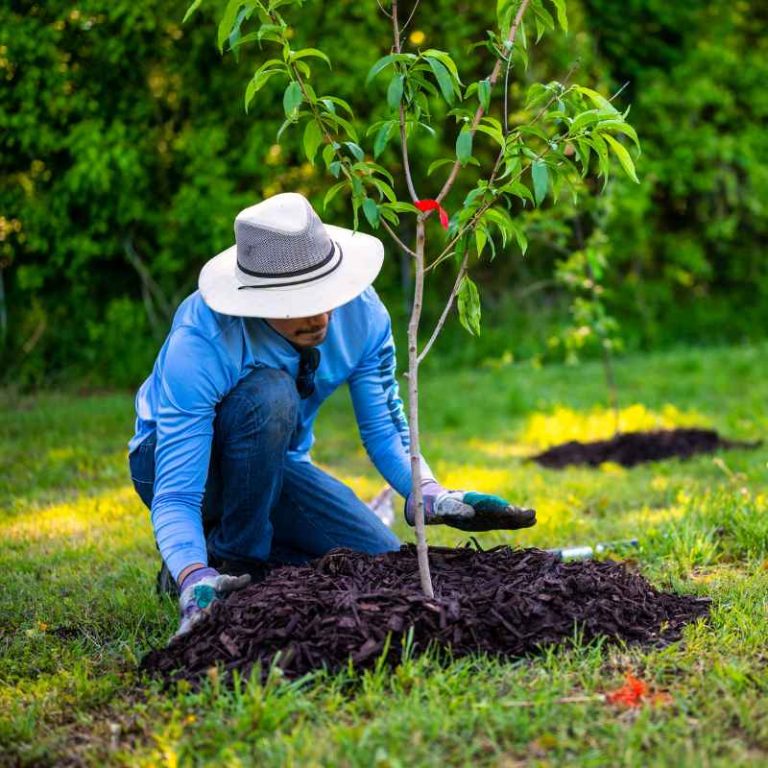
A common first-timer mistake is ordering a tree ring as if it were any other bed. Say your maple has a 6-foot-wide ring and you want a mulch layer around it, but you leave only a tiny hole at the trunk. That invites volcano mulch, which piles material against bark and raises rot risk. Keep the mulch pulled back from the trunk and spread it in a broad, shallow ring instead.
How many bags of mulch do you need?
Convert your total to cubic feet first, then divide by the bag size. A 2 cubic foot bag and a 3 cubic foot bag do not cover the same area, so the bag count changes even when the bed size stays the same. Round up to the next whole bag if your result is not exact.
Most calculators show both cubic feet and cubic yards, and some show bag counts directly. Inch Calculator reports results in cubic yards and cubic feet and also shows bag counts for 2 cubic foot bags and 3 cubic foot bags. LandscapeCalculator includes the same two bag sizes as output options.
Convert cubic feet to cubic yards
To convert cubic feet to cubic yards, divide by 27. That divisor is the standard unit conversion because one cubic yard contains 27 cubic feet. If your calculator gives you cubic feet, divide by 27 before you compare bulk prices.
For example, 54 cubic feet equals 2 cubic yards. That same result could also be sold as 27 bags of 2 cubic foot mulch or 18 bags of 3 cubic foot mulch, before any overage is added.
Count 2 cubic foot and 3 cubic foot bags
Bag count is the total cubic feet needed divided by the bag size. If you need about 20 cubic feet, that works out to about 10 bags at 2 cubic feet each or about 7 bags at 3 cubic feet each, with a little left over in the latter case. Always round up, because a partial bag is not a useful purchase format.
Bulk mulch pricing may be shown as price per cubic foot, price per cubic yard, or price per cubic meter. That lets you compare formats directly. If the supplier lists only a cubic-yard price, divide by 27 to estimate price per cubic foot.
Round up for waste and settling
Add about 10 to 15 percent when the bed is irregular, the soil is uneven, or the mulch is likely to settle after watering. Delivery minimums can also push you upward, especially if the order sits just below a full load. Small projects often need the extra margin more than large simple rectangles do.
Suppose a border totals 8 cubic yards on paper but includes curved corners and a sloped edge. Rounding up by 10 percent gives you about 8.8 cubic yards, which is safer than stopping at the exact number and running short halfway through the last section.
What mulch type should you buy?
Choose mulch by the job, not just by color. Organic mulch breaks down over time and can help improve soil structure. Inorganic mulch lasts longer and keeps a more stable surface, but it does not feed the soil the way organic material can.
Wood chips and bark are common for beds, borders, and tree rings. Straw is often used in vegetable beds and temporary coverage. Rubber and stone work better where long service life, drainage, or low maintenance matters more than soil improvement.
Match the material to the job
Use organic mulch for most planting areas where moisture control and soil health matter. Use inorganic mulch when you want a durable surface and less frequent top-up. If the area is around trees, keep the layer broad and even, and avoid packing it against the trunk.
Paths can use wood chips, bark, or stone, depending on how much traffic the area gets. Playground areas may require a material and depth chosen for safety and use, so the calculator should be paired with the site requirements rather than treated as a generic bed fill.
Tree rings need special attention
Tree mulch should cover the root zone, not the bark. The practical question is not only how much mulch you need, but how wide the ring should be and how much clearance stays open around the trunk. A wide ring with a clean trunk opening is safer than a high cone of mulch.
Keep the layer thin enough to avoid trapping moisture against bark. The failure pattern people call volcano mulch is simple: too much material is piled too high at the trunk, which can lead to decay and root problems. A flat, widened ring avoids that problem.
How do you calculate mulch coverage?
Coverage comes from volume divided by depth. One cubic yard covers a large area at a thin depth and a much smaller area at a thick depth, so the same pile never has one fixed footprint. Measure the space, choose depth, then convert the answer into yards or bags.
Calculator sites use the same basic math, but the best tool is the one that matches your shape and material. For a rectangle, you can measure length and width directly. For a border or ring, use a border or annulus calculator or split the shape into smaller pieces first.
Frequently asked questions
How do I estimate mulch for irregular areas like circles or borders?
Break the area into smaller shapes and add them together. CalculatorSoup includes Square, Rectangle, Circle, Triangle, Trapezoid, Rectangle Border, Circle Border, and Annulus options, which is useful for curved beds and ring-shaped projects. That method is more accurate than guessing from the outside outline alone.
How much area does 1 cubic yard of mulch cover?
Coverage depends on depth. Thicker layers cover less area, so compare your planned depth before deciding whether one yard is enough.
How much mulch do I need around trees without piling it against the trunk?
Use a wide, shallow ring with a clean opening around the trunk. The goal is to cover the root zone without touching the bark, because a mound at the trunk can trap moisture and lead to volcano mulch problems. Measure the ring diameter, not just the trunk circle.
What is the difference between bulk mulch and bagged mulch?
Bulk mulch is usually better for larger jobs because it is priced by volume and delivered in larger amounts. Bagged mulch is easier for small areas, touch-ups, and split projects. Compare price per cubic foot, price per cubic yard, or price per cubic meter, then include delivery and overage before you choose.